

Rockin Robin SongFlying The Web For News.
RobinPost Logo Amazon Prime Deals


Consumer Daily Reports

What you need to know before switching from your local pharmacy

By Kyle James of ConsumerAffairs
April 16, 2026
  • Amazon Pharmacy lets you order prescriptions online, compare prices upfront, and get medications delivered. There's no Prime membershiprequired, but Prime members get extra savings and perks.

  • The biggest savings come from generic drugs and programs like RxPass, where pricing can often beat traditional pharmacies if you know where to look.

  • It makes the most sense for ongoing medications and convenience but for urgent needs or complex care, your local pharmacy may still be the better option.


Amazon didnt just dip a toe into health care to test the waters. They built a full-service pharmacy that can realistically replace your regular stop at CVS or Walgreens.

But like most things that promise easy savings, the real value isnt automatic or guaranteed. It comes from understanding when it makes sense to use it, when it doesnt, and how to maximize your savings in the process.

Lets break it down in a practical, real-world way so you can decide if its actually worth adding to your routine.

What Amazon Pharmacy actually is (and isnt)

At its core, Amazon Pharmacy is an online prescription service that allows you to order your medications the same way you would order anything else on Amazon. Most recently, this also includes the GLP-1 drug Foundayo, with options for same-day delivery and even in-person pickup at Amazon Pharmacy kiosks.

You do not need to be a Prime member to use it, but if you are a member, youll get access to discounted generic drugs via the RxPass program, as well as free Prime shipping (more on this below).

But what really separates it from your local pharmacy is the level of transparency and control you get before you ever spend a dollar.

Instead of walking up to a counter and being told your price, you can:

  • See your insurance price ahead of time.
  • Compare it to the discounted cash price.
  • Decide which option makes more sense before committing.

And then, instead of making a trip, waiting in line, and potentially dealing with delays, your medication simply shows up at your doorstep.

That convenience matters more than most people realize, as pharmacy trips often turn into extra spending, not to mention the extra gas used. You grab a drink, a snack, maybe a random household item you dont necessarily need, and suddenly a simple Rx pickup turns into an extra $10$20.

What its not: Its important to realize right off the bat that Amazon Pharmacy isnt always the cheapest option across the board.

Its also not built for those urgent, same-day Rx needs, and it doesnt fully replace the value of in-person pharmacist interactions for more complex situations.

How Amazon Pharmacy works (step-by-step)

Step 1: Transfer or send your prescription

You can have your doctor send your prescription directly to Amazon, or you can transfer it from your current pharmacy, which is usually a simple process, but it can take a day or two depending on how responsive your current pharmacy is.

Because of that delay, this system works best for ongoing medications that you take regularly, rather than anything you need immediately.

Step 2: Compare pricing (this is where you win)

This is where Amazon really separates itself from traditional pharmacies.

Youll typically see:

  • Your insurance copay.
  • The discounted cash price.
  • Any savings already applied automatically.

At most pharmacies, you dont get this level of side-by-side comparison. Youre often just told what you owe and are expected to accept it.

Here, you can pause, compare, and choose the better deal before spending anything.

Step 3: Choose how to pay

You can pay using insurance, out-of-pocket pricing, or even FSA/HSA funds, which gives you flexibility depending on your situation.

Youd be surprised how often the cash price is actually cheaper than your insurance copay, especially with generic medications.

Step 4: Delivery (where it really pays off)

Once you place your order, Amazon handles everything:

  • Free two-day delivery for Prime members.
  • Faster delivery options in some areas.
  • Discreet packaging.
  • Auto-refill options to keep things consistent.

Pro tip: Be sure to turn on auto-refill. Not only does it help you avoid running out of medication, but it also removes one more thing you have to think about every month.

Where the real savings actually comes from
Photo

Generics (this is the sweet spot)

Amazon Pharmacy is strongest when it comes to generic medications, which include treatments for things like blood pressure, cholesterol, and other common conditions.

Because these medications are more common and theres a lot of competition, Amazon can often offer significantly lower pricing than your traditional pharmacies.

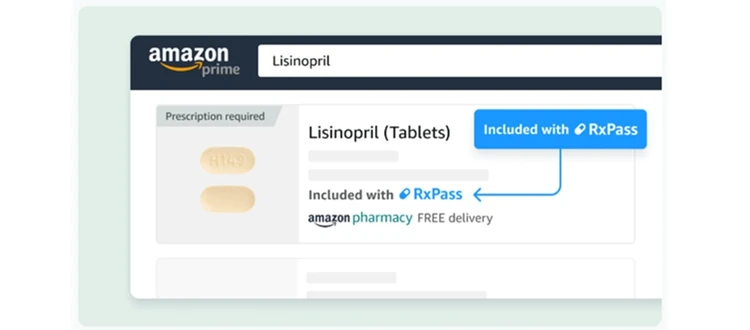
RxPass ($5/month strategy)

Amazons RxPass is one of the most underrated features.

For a flat $5 monthly fee, Prime members get access to a range of common generic medications. Doesnt matter how many generics you need, you only pay $5/month with free delivery included.

Heres the full list of RxPass medications so you can see if yours is included.

Even if youre only taking one medication, it can still be super helpful. But if youre taking two or more, the value becomes very obvious quite quickly.

Pro tip: Always use Amazon as your price baseline. Even if you end up not buying from Amazon, it gives you a reference point so you know if your local pharmacy is priced competitively.

When Amazon Pharmacy makes the most sense

Amazon Pharmacy works best when you:

  • Take regular, ongoing medications.
  • Dont need immediate, same-day access to something like antibiotics.
  • Prefer delivery over running errands.
  • You want predictable pricing and fewer surprises.

Its especially useful for people managing chronic conditions, busy families trying to simplify their routines, or anyone who wants to reduce the number of weekly errands they have to deal with.

Pro tip: If you take multiple medications, or are caring for an elderly family member, be sure to sign-up for the free service, PillPack. Amazon Pharmacy will sort your meds by date and time, and put them in handy individual packets. It will greatly simplify your routine, and more importantly, it will reduce mistakes.

When it doesnt make sense

There are still situations where a local pharmacy like Costcoor CVS is the better option.

If you need medication immediately, want in-person guidance from a pharmacist, or have insurance that offers better local pricing, it makes more sense to stick with what youre already doing.

The key here is to not to assume Amazon is always better, but be ready to use it when it makes sense and when it can save you money.


Posted: 2026-04-16 21:13:44

Get Full News Story On Consumer Affairs


Listen to this article. Speaker link opens in a new window.
Text To Speech BETA Test Version.


More News From This Category
Consumer News: Prime Day vs. Fourth of July sales: What to buy during each summer shopping event
Wed, 24 Jun 2026 22:07:08 +0000

Learn which products are worth buying now and which ones are better left for Fourth of July deals

By Kristen Dalli of ConsumerAffairs
June 24, 2026
  • Prime Day and Fourth of July sales excel in different categories: Prime Day is typically the best time to buy tech, electronics, beauty products, and back-to-school essentials, while Fourth of July sales shine for appliances, mattresses, patio furniture, and home improvement items.

  • Timing your purchases can lead to bigger savings: Shoppers can save more by splitting their shopping lists between the two events instead of buying everything during one sale.

  • Dont rely on sale tags alone: Checking price history, comparing retailers, and stacking promo codes, cash back offers, and rewards can help ensure youre getting a genuine deal.

Summer shoppers are getting an unusually early start on deal season this year, with Amazon Prime Day arriving before the Fourth of July sales rush.

While both events promise big savings, they arent necessarily interchangeable.

ConsumerAffairs spoke with RetailMeNot Retail Insights Expert Stephanie Carls, who explained knowing which products are typically discounted during each sale can help consumers avoid overspending and score the best prices. From laptops and beauty products to appliances and patio furniture, timing your purchases strategically could make a noticeable difference in how much you save.

What is Prime Day best for?

Carls broke down what categories consumers should focus on during Prime Day:

  • Tech and electronics: Amazon historically offers some of its steepest discounts on its own devices, including Echo speakers, Kindle e-readers, Fire tablets, and Ring security products. Competing retailers also roll out aggressive promotions on headphones, laptops, and smart home gadgets to capture Prime Day shoppers.

  • Back-to-school essentials: Prime Day's late-June timing aligns with the start of back-to-school shopping season, making it an ideal time to buy laptops, tablets, backpacks, dorm essentials, and school supplies before demand and prices pick up later in the summer.

  • Beauty and personal care: Expect strong discounts on everyday essentials like skincare devices, hair tools and beauty products.

  • Streaming devices and TVs: Major brands often release midyear TV promotions during Prime Day as they make room for incoming fall inventory. Streaming devices, soundbars and home entertainment accessories also see significant markdowns.

Best Fourth of July deals

On the other hand, Fourth of July has its own specialties, including:

  • Appliances: Fourth of July sales are one of the biggest appliance shopping events of the year, with retailers offering deep discounts on washers, dryers, refrigerators, and kitchen packages as they clear inventory ahead of Labor Day promotions and new model releases.

  • Mattresses and bedding: Mattress brands consistently use holiday weekends to run some of their strongest promotions, including bundle deals, free accessories, and extended financing offers.

  • Outdoor gear and patio furniture: Retailers begin clearing seasonal inventory after the peak spring shopping season, creating opportunities to save on grills, outdoor decor, patio sets, and lawn equipment while there's still plenty of summer left to enjoy them.

  • Tools and home improvement: Home improvement retailers often align Fourth of July promotions with peak DIY season, offering discounts on power tools, paint, hardware, and landscaping equipment as homeowners tackle summer projects.

Prime Day and the Fourth of July are built for different carts, Carls said. Prime Day is a tech event. The best drops are on electronics, Amazons own devices, laptops, and small kitchen appliances, and a lot of those hit their lowest prices of the year this week.

Fourth of July is a home and outdoor event, where the deals move to the big stuff you want to see before you buy: mattresses, furniture, large appliances, patio, and grills. If your list has both split it across the two events. Youll do better than trying to cram everything into June.

A true discount vs. inflated prices

One of the best things shoppers can do for both of these sales is take a little extra time and do your homework. You want to be sure that the sale price you see is actually a true discount and not just a markdown from an inflated price.

Know what the item cost last week, Carls said. Thats the whole trick. A crossed-out price and a lowest of the year badge are easy to print and they dont always mean much.

The fastest way to check is the price history. Amazons own shopping assistant will now pull up to a year of pricing on most products, and there are free browser tools that do the same. If the Prime Day price matches what its been all spring, the badge is doing the work, not the discount. Retailers are counting on you not remembering. A ten-second check fixes that.

Stack your savings

Whether youre shopping Prime Day, Fourth of July, or both, youll want to stack your savings to make the most of the sales.

Heres Carls best advice:

  • Start with the sale price, then stack on top of it. The biggest savings almost always come from stacking, not from a single promotion. A sale price plus a promo code plus cash back plus card rewards beats any one of those alone.

  • Use cash back youre already eligible for. Many shoppers leave it on the table. Prime members and cardholders often have cash back or rewards that apply right on top of Prime Day pricing, so the sticker price isnt actually the lowest price you can get. Savings and cash back sites like RetailMeNot will do all this stacking for you.

  • Compare across retailers before you commit. The same item can run lower at Walmart, Target, or Best Buy during the same week, and stacking a competitors promo with cash back can beat the Amazon price outright. The week belongs to whoever has the best final number, not the biggest banner.

The smartest move right now takes about thirty seconds, Carls said. Get clear on what you actually want, then set a price alert on it. Amazons Alexa will build you a deal guide and ping you when your items hit the number you wanted, so you stop refreshing and start letting the right deal come to you.


Read More ...


Consumer News: I used ChatGPT to help diagnose my truck repair — and it saved me money
Wed, 24 Jun 2026 22:07:08 +0000

Before approving your next repair, try this free second opinion

By Kyle James of ConsumerAffairs
June 24, 2026
  • ChatGPT can make you a smarter car owner: It translates repair estimates into plain English and helps you understand which repairs may be urgent.

  • It might save you money: When I used it on my Silverado repair bill, it suggested negotiating labor costs, which saved me $350.

  • Think of it as a second opinion: Use AI to review estimates, compare quotes, and learn what questions to ask before approving costly repairs.

When most people think about ChatGPT, they think about writing emails, planning vacations, or helping with homework. What many don't realize is that AI can also be surprisingly useful when dealing with car repairs.

I recently put it to the test with my own truck, a well maintained 2004 Chevrolet Silverado with about 145,000 miles on it.

After taking the truck to the dealership for brake work, the repair estimate quickly started growing. First, it was the brake pads and rotors. Then came new brake calipers. Then recommendations for fluid flushes. Then a new problem appeared after the repairs were completed: the parking brake was sticking and not releasing properly.

Rather than blindly approving every recommendation or spending hours digging through automotive forums, I turned to ChatGPT.

The experience showed me that AI isn't replacing mechanics anytime soon. But it can really help consumers ask smarter questions, better understand repair estimates, and potentially avoid unnecessary expenses.

What ChatGPT can do surprisingly well

One of ChatGPT's biggest strengths is translating mechanic-speak into plain English.

When my dealership's inspection report flagged issues like contaminated brake fluid, corroded bleeder screws, and multiple recommended flushes, ChatGPT helped explain:

  • What each item actually meant

  • Whether it represented a safety concern

  • Which repairs were urgent

  • Which repairs could potentially wait

Most repair estimates overwhelm consumers with technical terminology. AI can act as a translator, helping you understand what you're being asked to approve before authorizing hundreds or even thousands of dollars in repairs.

That's especially valuable because many consumers simply don't know enough about vehicles to confidently challenge recommendations.

Using AI to get a second opinion

One of the smartest uses of ChatGPT is obtaining an instant second opinion. That doesn't mean ignoring your mechanic, it just means getting additional context to help you make a decision.

For example, when my Silverado's dealer recommended replacing all four brake calipers because the bleeder screws were corroded, ChatGPT helped explain why that recommendation wasn't unreasonable on a 20-plus-year-old truck.

It also explained potential alternatives and helped identify questions worth asking before proceeding.

Similarly, when the parking brake began sticking after the brake work was completed, ChatGPT outlined several possible causes, including parking brake cable issues, improper adjustment, and hardware problems related to the repair.

That gave me enough background knowledge to have a more informed conversation with the service department.

Reading repair estimates like a pro

Many repair estimates include recommended services that aren't necessarily but may not be immediately necessary.

AI can help consumers sort through recommendations by asking:

  • Is this repair urgent?

  • What happens if I wait six months?

  • Is this preventative maintenance or a current problem?

  • Is this price reasonable?

  • Are there alternative repair options?

For example, my Silverado's estimate included coolant, brake fluid, and power steering flushes.

Instead of automatically approving everything, ChatGPT helped explain why each service might be recommended and what risks come from postponing them.

That information allowed me to prioritize repairs rather than simply approving every line item.

ChatGPT can make sure you dont get ripped off

This is perhaps the most important aspect of using AI with your auto repair.

When I specifically told ChatGPT what each repair would cost, it gave me a breakdown of what others in the country were paying for the repair. Both at the dealership and when using an independent mechanic.

ChatGPT even suggested that I ask for a reduction in the labor costs for the brake job since I was having the pads, rotors, and calipers all done at the same time. When I asked for this cost reduction, the service tech actually agreed and reduced my labor charge by $350.

In the end, I felt reassured that my repair bill, according to ChatGPT, was actually below what many dealerships charge for the same services.

AI can help identify patterns

One of ChatGPT's underrated strengths is recognizing common vehicle issues. If you can describe the symptoms clearly, AI can often point toward likely causes.

This includes things like strange noises, dashboard warning lights, fluid leaks, brake problems, and electrical issues.

You can even upload photos of worn parts, warning messages, or inspection reports and then ask for detailed explanations in laymans terms.

While AI won't provide a definitive diagnosis, it can often narrow down possibilities and help you understand what you're dealing with before visiting a shop.

What ChatGPT cannot do

Its important to realize that there are some things ChatGPT just cannot do when it comes to car repair.

For example, ChatGPT cannot:

  • Physically inspect your vehicle

  • Measure brake pad thickness

  • Detect fluid contamination

  • Identify hidden damage

  • Hear noises

  • Confirm a diagnosis

Think of AI as more of an informed assistant, not a certified mechanic. A qualified technician still has the tools, experience, and direct access to the vehicle.

The best approach is combining both by using AI to understand the problem, then use a mechanic to confirm it and make the repair.

Actionable tips for using AI on car repairs

  • Upload repair estimates: Instead of staring at a multi-page estimate full of technical jargon, upload it and ask: "What repairs are urgent and which can wait?"

  • Ask about repair priorities: If the estimate exceeds your budget, ask: "If I can only afford two of these repairs today, which should I prioritize?"

  • Compare repair quotes: Upload multiple estimates and ask ChatGPT to identify differences. You may discover one shop is recommending services another shop doesn't consider necessary.

  • Research common issues: Tell ChatGPT your vehicle year, make, model, mileage, and symptoms. The more details you provide, the more useful the response becomes.

  • Learn before approving: Ask: "What questions should I ask my mechanic before approving this repair?" This often produces valuable questions you wouldn't have considered on your own.

Before authorizing any significant repair, upload the estimate into ChatGPT and ask for a plain-English explanation. Even if you ultimately end up approving every recommendation, understanding exactly what you're paying for can make you a more confident consumer and help prevent costly misunderstandings.


Read More ...


Consumer News: New study compares popular GLP-1 drugs for weight loss results
Wed, 24 Jun 2026 22:07:08 +0000

Researchers analyze which medications deliver the biggest changes

By Kristen Dalli of ConsumerAffairs
June 24, 2026
  • A new analysis compared several GLP-1 medications used for weight loss in adults without diabetes.

  • Tirzepatide produced the greatest average weight loss, followed by semaglutide and liraglutide.

  • Researchers say the findings can help patients and providers better understand how these drugs stack up.

GLP-1 medications have transformed the way obesity is treated, with drugs like Wegovy, Zepbound, and Saxenda becoming household names. But while these medications all work by helping people feel fuller and eat less, researchers wanted to know whether some are more effective than others when it comes to weight loss.

A new analysis from researchers at the University of Georgia examined existing clinical trials involving adults with obesity or overweight who did not have diabetes. The goal was to compare the effectiveness and side effects of several GLP-1 medications and determine how they measure up against one another.

We were interested in finding which drug gives the most weight loss and doesnt have higher rates of side effects like nausea and gastrointestinal problems. Tirzepatide seems to be the better option, Pooja Gokhale, corresponding author of the review and a doctoral student in the UGA College of Pharmacy, said in a news release.

The study: A review of earlier clinical trials

Rather than conducting a new experiment, the team performed what is known as a systematic review and network meta-analysis. They searched the scientific literature for randomized controlled trials involving FDA-approved weight-loss medications in the GLP-1 class.

In total, the researchers identified 26 studies involving 15,491 participants. The trials evaluated three medications approved for chronic weight management in adults without diabetes: tirzepatide, semaglutide, and liraglutide. Researchers compared how much weight participants lost while also looking at side effects and treatment discontinuation rates.

Because the analysis combined data from multiple studies, it allowed investigators to compare medications even when they had not been tested directly against each other in head-to-head trials.

The results: Tirzepatide came out on top

The analysis found that tirzepatide produced the largest reductions in body weight, with participants losing more than 20% of their starting weight on average.

Semaglutide was associated with roughly 15% weight loss, while liraglutide led to an average reduction of about 8%. Higher doses generally resulted in greater weight loss across medications.

The researchers also found that gastrointestinal side effects, such as nausea and vomiting, were common across the medications. Tirzepatide had the highest likelihood of producing these side effects, although it also delivered the greatest weight-loss benefits.

Liraglutide was associated with the smallest weight reductions and requires daily injections, unlike the weekly dosing used with tirzepatide and semaglutide.

For consumers, the findings suggest that weight-loss medications do not all perform the same way. While effectiveness is one factor, side effects, dosing schedules, and individual circumstances are also important considerations when choosing a treatment with a healthcare provider.


Read More ...


Consumer News: Can five minutes of prayer help ease pain and anxiety?
Wed, 24 Jun 2026 22:07:08 +0000

New trial explores whether brief prayer sessions offer relief

By Kristen Dalli of ConsumerAffairs
June 24, 2026
  • A randomized clinical trial found that five minutes of in-person prayer was linked to greater reductions in pain and anxiety than listening to soft music.

  • Researchers followed 180 primary care patients immediately after treatment and again two and six weeks later.

  • Anxiety improvements persisted for at least six weeks, while pain relief was strongest immediately and at two weeks.

For many Americans, prayer is already part of daily life and personal wellness. Now, a new study published in The Annals of Family Medicine suggests that a brief, five-minute prayer session may provide some relief for people dealing with pain and anxiety.

Researchers from the University of Maryland School of Medicine examined a practice known as proximal intercessory prayer, or PIP. In this approach, a trained volunteer prays in person for another individual. The researchers wanted to see whether this type of prayer, used alongside standard medical care, could influence how patients felt after their appointments.

The findings point to prayer as a possible complementary option rather than a replacement for traditional treatment. Researchers noted that the intervention was well accepted by participants and no adverse events were reported.

"Proximal intercessory prayer was safe, effective, and well-received as complementary treatment for pain and anxiety," lead author Katherine Jacobson, MD, said in a news release. "It may be a low-cost, non-pharmacologic, effective adjunct to standard care with particular relevance for underserved populations."

How the study worked

The trial involved 180 adults receiving care at a university family medicine practice. Participants had clinically significant pain, anxiety, or both. Pain levels were measured using a 0-to-10 scale, while anxiety symptoms were evaluated using the GAD-7 questionnaire.

After their medical visits, participants were randomly assigned to one of two groups. One group received five minutes of Christian intercessory prayer from a trained volunteer, including laying on of hands. The comparison group spent five minutes listening to soft music.

Researchers assessed participants immediately afterward and then followed up again two weeks and six weeks later to see whether any changes lasted over time.

What the results mean for consumers

Both groups experienced improvements, but patients who received prayer generally reported greater reductions in pain and anxiety. Pain scores improved more immediately after the intervention and remained better than the music group at the two-week mark, although the difference was no longer statistically significant after six weeks.

Anxiety reductions were more durable. Participants in the prayer group experienced larger decreases right away, and those improvements were still evident at both the two-week and six-week follow-ups.

Researchers also found that Black participants experienced larger reductions in pain and anxiety than other participants. In addition, 97% of people who received prayer said they were neutral or favorable toward having the option available during future medical visits.

The authors concluded that brief, in-person prayer may serve as a low-cost, non-drug complement to conventional care. However, the study evaluated prayer as an addition to standard treatment, not as a substitute for it.

The prayer intervention was effective regardless of the patients faith or no faith, co-author Joshua W. Brown, Ph.D., said in the news release. Our findings add to research showing how prayer changes brain function in ways that promote health.


Read More ...


Consumer News: More drivers are skipping car insurance to save money — why that's a risky bet
Wed, 24 Jun 2026 19:07:06 +0000

One accident could wipe out years of insurance savings

By Kyle James of ConsumerAffairs
June 24, 2026
  • More drivers are skipping insurance: About 35% of drivers say they've driven uninsured in the past year because they couldn't afford coverage.

  • The risk can be huge: One at-fault accident could leave you paying for repairs, medical bills, legal costs, and fines out of pocket.

  • Look for savings elsewhere: Compare rates, ask for discounts, and adjust deductibles before dropping coverage altogether.

As auto insurance premiums continue climbing, some Americans are making a dangerous financial decision: driving without insurance.

A new survey from CoverageProfessor found that 35% of drivers admit they have driven without insurance at some point during the past year because of financial pressure. Meanwhile, 56% say they delayed renewals or missed payments, and 58% of uninsured drivers say they canceled coverage altogether because they simply couldn't afford it.

While skipping coverage may seem like an easy way to cut costs, the financial consequences can be devastating if you're involved in an accident.

Why uninsured driving can backfire

Many drivers try to justify the risk. According to the survey, 27% of uninsured motorists say they only drive short distances or stick to familiar roads, believing that reduces their chances of getting into an accident.

Unfortunately, accidents don't care whether you're driving across the country or just heading to the grocery store.

If you're found at fault in a crash while uninsured, you could be responsible for:

  • Vehicle repairs

  • Medical bills

  • Lost wages

  • Legal costs

  • Property damage

In some states, drivers can also face license suspensions, vehicle impoundment, fines, and other penalties.

Even a minor fender-bender can end up costing you thousands of dollars. Which as it turns out is far more than a year's worth of insurance premiums.

Why rates keep rising

Insurance companies point to several factors driving premiums higher, including more expensive vehicle repairs, higher labor costs, increased medical expenses, and more distracted driving accidents.

The result is that many households are struggling to fit insurance into already stretched budgets. In fact, the survey found that 34% of drivers have taken on a side hustle or second job to help pay for coverage.

If your rates have jumped recently, there are several ways to reduce costs without going uninsured.

Shop around every year

Many drivers stay with the same insurer for years without comparing rates. That can be a costly mistake.

Rates vary dramatically between companies, even for identical drivers. Getting quotes from three to five insurers can sometimes save hundreds of dollars annually.

Pro tip: Don't wait until your policy expires. Start comparison shopping 30 days before renewal to give yourself time to switch if necessary.

Raise your deductible

If you have adequate emergency savings, increasing your deductible can significantly lower premiums.

For example, moving from a $500 deductible to $1,000 often reduces monthly costs. Just make sure you can comfortably cover the higher deductible if you need to file a claim.

Ask about possible discounts

Many consumers never request available discounts.

Common savings opportunities include:

  • Safe-driver discounts

  • Multi-policy discounts

  • Low-mileage discounts

  • Good-student discounts

  • Defensive driving course discounts

  • Automatic payment discounts

  • Paperless billing discounts

Pro tip: Call your insurer once a year and specifically ask for every discount you qualify for. New programs are added regularly.

Consider usage-based insurance

Many insurers now offer telematics programs that track driving habits through a smartphone app or plug-in device.

Safe drivers who avoid hard braking, speeding, and late-night driving can often earn meaningful discounts. These programs aren't ideal for everyone, but they can be especially valuable for your low-mileage drivers.

Review your coverage on older vehicles

If your car is worth only a few thousand dollars, it may make sense to evaluate whether comprehensive and collision coverage are still cost-effective.

Dropping optional coverage can lower your premiums, though drivers should carefully weigh the potential out-of-pocket risk.

Pro tip: Before dropping coverage, compare the annual premium cost against the vehicle's actual cash value. The math just might surprise you.


Read More ...


Related Bing News Results
Consumer Reports and Yuka Test 40 Popular U.S. Foods, Find 1 in 4 Exceed Daily Safety Levels for Additives
Mon, 08 Jun 2026 11:20:00 GMT
A joint investigation by Consumer Reports and Yuka has measured the levels of eight controversial additives in 40 widely consumed packaged food products in the United States. The results show that one ...

Consumer Reports warns energy drinks may exceed caffeine limits for teens
Fri, 08 May 2026 16:50:00 GMT
INSIDE THOSE DRINKS MAY BE MORE THAN YOU’RE BARGAINING FOR. ENERGY DRINKS ARE EVERYWHERE THESE DAYS. MANY OF THEM LOOK LIKE SPORTS HYDRATION DRINKS AND TASTE LIKE CANDY. THEY HAVE FLAVORS LIKE JOLLY ...

Your Daily Protein Shake Might Be Exposing You to Lead, Consumer Reports Finds
Mon, 13 Oct 2025 17:00:00 GMT
For many people, protein powder is a staple in their kitchen pantry because of its accessibility and versatility. However, not all protein supplements are created equal, as Consumer Reports’ (CR) ...


Blow Us A Whistle


Related Product Search/Búsqueda de productos relacionados

Amazon Logo

Visit Our New Print-On-Demand Stores On Printify and Zazzle
Printify Zazzle





