Rockin Robin SongFlying The Web For News.

Article Tools/Herramientas de artículos

Consumer Daily Reports

A new survey from RELEX Solutions tracks the changes

By Mark Huffman Consumer News: Here’s how grocery shoppers are changing shopping habits to save money of ConsumerAffairs
June 18, 2026
  • Rising grocery prices are forcing consumers to rethink spending habits, with 61% reporting they have changed the amount of food they buy and many cutting back on discretionary items like snacks, alcohol, and beef.

  • Shoppers are becoming more selective rather than simply spending less, continuing to prioritize fresh groceries and household essentials while closely monitoring prices and looking for greater value.

  • The survey found consumers are increasingly adapting to higher costs by cooking more meals at home, reducing food waste, and making deliberate purchasing decisions as they brace for continued inflation and economic uncertainty.

Consumers are rethinking what goes into their shopping carts as persistent food inflation and economic uncertainty continue to strain household budgets. How they are changing may offer some money-saving tips.

A new survey by supply chain technology company RELEX Solutions found that 61% of consumers in the United States and the United Kingdom have changed how much food they buy because of higher grocery prices, signaling that inflation is still having a significant impact on everyday purchasing decisions.

Rather than cutting spending evenly across all categories, shoppers are making targeted tradeoffs. The survey found that 46% of consumers have reduced purchases of snacks and junk food, while 39% have cut back on beef and 34% have reduced alcohol purchases.

Some things are worth paying extra

At the same time, consumers continue to prioritize certain essentials. Nearly seven in 10 respondents (68%) said fresh groceries are still worth paying more for, while 49% said the same about household necessities.

The findings suggest that shoppers are becoming more selective rather than simply spending less overall. They also highlight several ways consumers are saving money.

  • 49% are closely monitoring beef prices as an indicator of their overall cost of living

  • 39% say efforts to reduce food waste are influencing how much food they purchase

  • 37% say healthier eating habits are influencing purchasing decisions

  • 10% say GLP-1s or other appetite-affecting medications have influenced how much food they purchase

  • 71% are cooking at home more often than they were a year ago

"For retailers and manufacturers, the biggest risk is assuming consumers are responding to rising costs in the same way," said Laurence Brenig-Jones, vice president of Product, Platform, RELEX Solutions.

"Consumers are making highly individualized decisions based on price, health goals, value and household priorities. What's interesting is that while shoppers are pulling back in some categories, they continue to prioritize fresh groceries. That creates a very different planning challenge than broad-based demand declines because retailers need to be able to respond to shifting demand at the category level. As those preferences continue to evolve, understanding category-level demand shifts is becoming increasingly important for managing supply chain, pricing, promotions and assortment."

Price is top of mind

Price remains the dominant concern. More than half of respondents (54%) said lower prices are the single most important action retailers can take to help consumers manage rising costs. Meanwhile, 49% said they closely monitor beef prices as a barometer of the broader cost of living.

Other factors are also influencing shopping decisions. Nearly four in 10 consumers said efforts to reduce food waste affect how much food they purchase, while 37% cited healthier eating habits. A smaller but growing segment 10% said appetite-suppressing medications such as GLP-1 drugs have affected how much food they buy.

Consumers are also changing how they prepare meals. The survey found that consumers are cooking at home more often, finding that cuts spending on food.

The RELEX findings are consistent with a growing body of research showing shoppers are becoming increasingly price-sensitive. Recent surveys have found consumers are switching to store brands, using more coupons, shopping multiple stores, and reducing impulse purchases in response to higher food costs.

According to the survey, many consumers expect the food price pressure to continue. More than 70% of respondents expressed concern that tariffs, geopolitical tensions, supply-chain disruptions and other global events will continue pushing up the cost of everyday goods over the next six months.


Posted: 2026-06-18 13:52:36

Get Full News Story On Consumer Affairs


More News From This Category
Consumer News: Home sales plunge to a 16-year low as prices and rates squeeze buyers
Fri, 13 Nov 2026 14:07:16 +0000
Home sales plunge to a 16-year low as prices and rates squeeze buyers

Existing-home sales fell 5.5% in October to their slowest pace since August 2010, as higher mortgage rates squeezed buyers. The median sales price rose 0.4% from a year earlier to $416,700, marking the 40th consecutive month of annual price increases. Buyers had more homes to choose from, but affordability worsened and first-time buyers accounted for a smaller share of purchases. Sales of previous...


Consumer News: Widespread Microsoft outage stretches into second day
Fri, 13 Nov 2026 14:07:16 +0000
Widespread Microsoft outage stretches into second day

A widespread Microsoft outage disrupted Outlook email and other Microsoft 365 services Thursday, with problems continuing into Friday morning. Nearly 130,000 Outlook problem reports were recorded on Downdetector around Thursdays peak, as users struggled to open inboxes and send or receive messages. Microsoft reported progress restoring service Friday but said intermittent problems remained. The co...


Consumer News: Drug ads can influence AI treatment recommendations, study finds
Fri, 13 Nov 2026 14:07:15 +0000
Drug ads can influence AI treatment recommendations, study finds

AI models recommended an advertised drug in 47.6% of responses, compared with 35% when no advertisement appeared. Advertising could shift recommendations among medically appropriate treatments, making its influence difficult to spot. Researchers called for greater transparency but did not establish whether the changes affected prescriptions or patient health. For years, the broadcast airwaves have...


Consumer News: Mortgage rates fall for a fourth straight week to 7.11%
Fri, 13 Nov 2026 14:07:15 +0000
Mortgage rates fall for a fourth straight week to 7.11%

The average 30-year fixed mortgage rate fell to 7.11% this week, down from 7.18%, according to Freddie Mac. The 15-year fixed rate declined to 6.45% from 6.57%, offering additional relief to borrowers. Rates reached their lowest level in seven weeks but remain substantially higher than a year ago. Mortgage rates declined for the fourth consecutive week, providing some relief to homebuyers confront...


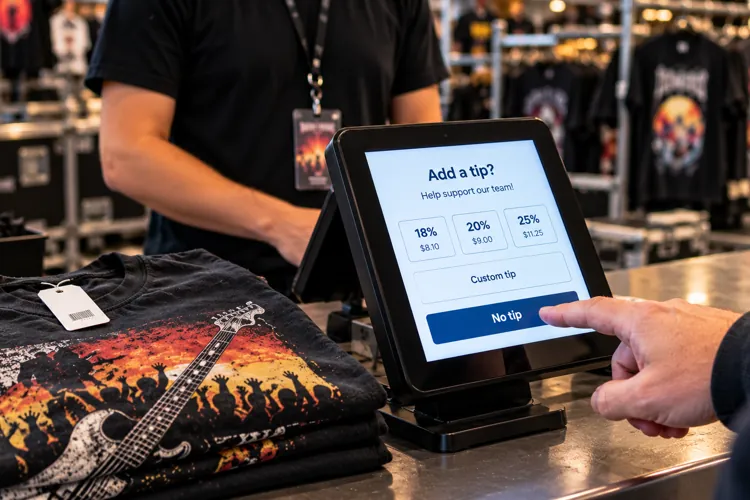
Consumer News: Tipping culture has gotten out of hand — 7 ways to push back without looking cheap
Thu, 12 Nov 2026 23:07:11 +0000
Tipping culture has gotten out of hand — 7 ways to push back without looking cheap

Tipping pressure is spreading: Customers are increasingly asked to tip at checkout, even for ordinary retail purchases. Being a generous tipper doesn't mean tipping everywhere: There's a difference between rewarding good service and feeling obligated to pay extra simply because a screen asks. You can push back without being rude: Seven practical strategies can help you avoid guilt tipping while st...


Related Bing News Results
Consumer Reports investigation: Do kids' vitamins contain what they say on the label?
Thu, 12 Nov 2026 08:04:00 GMT
Here’s what parents need to know before giving their child a daily vitamin.
Consumer Reports says this is the best kitchen countertop material
Mon, 09 Nov 2026 12:39:00 GMT
According to Consumer Reports, this is the best countertop material you can choose for your kitchen, thanks to its durability and stain-resistance.
Consumer Reports finds some kids’ vitamins contain up to 5 times the nutrients listed on labels
Wed, 11 Nov 2026 01:31:00 GMT
Consumer Reports tested 21 children’s vitamins and found each had at least one nutrient level that differed from its label—sometimes by as much as 500%. All products were considered safe, with heavy ...
Consumer Reports Labels, Explained: Recommended, Top Pick, Best Brand, Best of, Smart Buy, and #1 in Brand Reliability
Thu, 15 Oct 2026 03:00:00 GMT
Consumer Reports (CR) uses several designations to help shoppers quickly identify products and services that perform well in our independent evaluations. When data is available, these designations ...
Consumer Reports reveals 2026 best car brands with affordable winners
Wed, 10 Dec 2025 12:17:00 GMT
Foreign brands snagged 9 of top 10 spots on Consumer Reports magazine's 2026 Automotive Brand Report Card. Jeep placed last. Early adopters pay for innovation with reliability issues. The average ...

Blow Us A Whistle


RobinsPost Print On Demand Refund Policy With Printify
Printify

Related Product Search/Búsqueda de productos relacionados

Amazon Logo