

Think youve found a buyer? Watch for these Craigslist red flags
Beware of vehicle history report requests: Never pay for a report from a site a buyer insists you use, especially if you've never heard of the site before.
Watch for scripted behavior. This includes refusing to talk on the phone, ignoring your listing, and creating fake cash now urgency.
Set ground rules before selling. Avoid clicking unfamiliar links, protect your personal information, and always verify payment before handing over the title.
Within minutes of posting my dad's 2008 Ford F-150 for sale on Craigslist, my phone filled with texts from "buyers." Some were legitimate, while others were trying to scam me. The problem is that it can be hard to tell the difference, especially for seniors or those who arent tech savvy.
If you're planning to sell a vehicle privately, here's what I learned, and more importantly, how you can protect yourself. Screenshots of my actual text conversations are included so youll know exactly what wording to look for.
Scam #1: The fake vehicle history report request

This was by far the most convincing scam and the conversation started exactly how you'd expect.
"I'm interested."
"I'd like to come see it."
Then came the catch.
"Can you show me the VinData360 inspection report?"
Later the buyer followed up with:
"Before I come, I want to see the Vin Data 360 report."
At first, that might sound perfectly reasonable, as most buyers want to review a vehicle history report before making a purchase.
But scammers take advantage of that expectation by steering sellers to obscure websites you've probably never heard of.
Their goal isn't to buy your truck. It's to convince you to purchase a report from a site they control. Some sites charge $30 to $70 for a worthless report. Others go a step further and collect your credit card information or personal details.
Pro tip: If a buyer insists on one specific vehicle history website, that's a major red flag. A legitimate buyer can purchase any report they want using the VIN you provide. If you've already purchased a CARFAX or AutoCheck report, simply offer that. If they don't trust it, they can buy another report themselves, but don't pay for one just because a stranger asks.
Scam #2: Buyers who refuse to talk on the phone

One buyer, in particular, seemed very eager via text messages.
They wanted to meet, but they had zero questions for me about the truck. They introduced themselves by name, and then asked my name. Everything sounded fairly normal.
So, I replied with one simple request.
"You'll need to call me to set something up."
Immediately the excuses began.
"I'm at work. That's why I'm texting."
Later they promised: "I'll call you in the evening."
Not surprisingly, the call never came. By asking them to call you directly, this becomes one of the simplest ways to filter out scammers.
Most real buyers have no problem spending two minutes on the phone before driving across town.
Scammers often avoid live conversations because it exposes fake identities, scripted responses, overseas call centers, or simply because they're trying to contact hundreds of sellers at once.
Pro tip: Require a short phone conversation before giving out your address or scheduling a meeting. By doing so, you'll eliminate a surprising number of scammers in less than a minute.
Scam #3: They never actually read your listing

Another clue appeared almost immediately.
One buyer asked:
"How long have you owned it? Are you the first owner?"
The answers were clearly stated in the Craigslist ad, with the words original owner in the actual ad title.
That doesn't automatically make someone a scammer, as many buyers only skim the listings. But the fact remains that scammers often send identical messages to hundreds of sellers without ever reading anything. They're simply following a script.
Real buyers usually ask thoughtful follow-up questions about maintenance records, tires, recent repairs, or why you're selling.
The key here is knowing that scammers rarely move beyond their template.
Pro tip: A well-written listing saves time. Include maintenance history, ownership, title status, mileage, known issues, and plenty of photos. Serious buyers will appreciate the detail and scammers often expose themselves immediately by asking questions you've already answered.
Scam #4: Fake urgency

Notice how quickly many scammers try to build your excitement.
"I have cash on hand."
"I'll come today."
"I'll buy it now."
The goal is to get you emotionally invested before slipping in the real request usually paying for a VIN report or clicking an unfamiliar website.
Professional scammers understand psychology and once sellers believe they've found the perfect buyer, they're more willing to overlook warning signs.
Very few legit buyers are going to make you a cash offer without ever laying eyes on the vehicle.
The screenshot above was from Facebook Marketplace when I decided to also list the truck on that selling platform. So, while the scammers were less prevalent on Facebook, they still did exist, so be cautious.
Pro tip: Cash means nothing until someone is standing in front of you with it. Treat every inquiry the same until you've verified the buyer is legitimate.
Other Craigslist vehicle to watch for
Here are several other you should be aware of.
The overpayment scam. The buyer "accidentally" sends too much money and asks you to refund the difference. Eventually the original payment bounces, leaving you responsible for the money you refunded.
Fake cashier's checks. A cashier's check can look authentic while still being counterfeit. Banks sometimes make funds available before the check fully clears which is a process that can take several days.
Six-digit verification code . Someone claims they need to verify you're real and asks you to text back a verification code. That code is often being used to hijack one of your online accounts or create a Google Voice number tied to your phone.
Shipping company . The buyer claims they're out of state and will send movers after you receive payment. The payment eventually disappears.
How to protect yourself
Selling privately doesn't have to be risky.
Following a few basic rules dramatically reduces your chances of becoming a victim.
Meet somewhere safe. Many police departments now offer Safe Exchange Zones with surveillance cameras specifically for online transactions.
Never purchase reports for buyers. If they want another vehicle history report, they can buy it themselves.
Keep personal information private. Don't send photos of your driver's license, registration, or title before meeting.
Accept secure payment. Cash remains the simplest option. If using a cashier's check, meet at the issuing bank and verify that its legit before signing over the title.
Trust your gut instinct. If the conversation feels scripted, rushed, or overly complicated, move on. Remember, another buyer will always come along.
Before listing your vehicle on any only sales platform, purchase a reputable vehicle history report, gather your maintenance records, and write a detailed description of the vehicle and decide in advance.
Also, make a pact with yourself that you won't click on unfamiliar links or buy anything at a stranger's request. While it sounds obvious, having clear ground rules in place before the first text arrives makes it much easier to recognize (and avoid) .
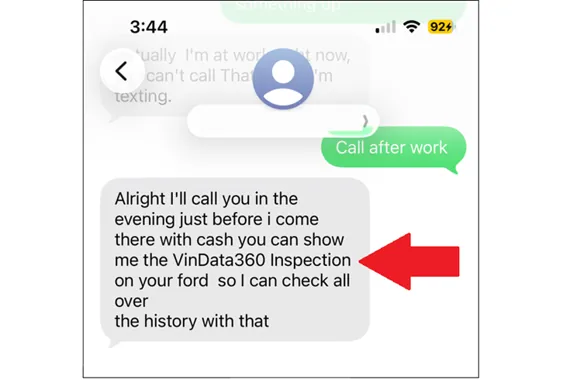
Photo By CNET
Posted: 2026-08-12 22:48:28