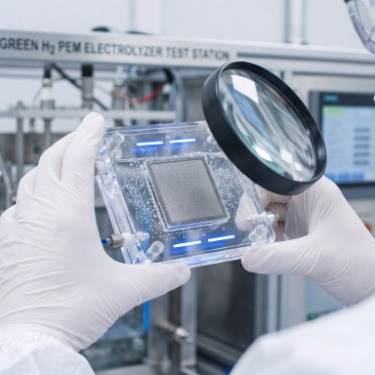
Hydrogen fuel cells might seem like something from a science fiction movie. They generate electricity without burning fuel, power vehicles without conventional engines, and produce water instead of exhaust fumes at the point of use. Yet the science behind them is surprisingly straightforward.
The real complexity lies inside.
Beneath the outer casing, thin membranes, microscopic catalysts, and precisely shaped metal components transform hydrogen into electrical power. Every layer performs a specific function, and even small imperfections can affect performance.
Understanding the hidden engineering of hydrogen fuel cells reveals the remarkable precision behind this technology.
How Hydrogen Fuel Cells Generate Electricity
Unlike conventional engines, hydrogen fuel cells don't burn hydrogen. Instead, they use an electrochemical reaction to convert hydrogen and oxygen into electricity.
The process resembles how a battery works, but with one difference: a fuel cell continues generating electricity as long as it receives hydrogen and oxygen.
The Journey From Hydrogen to Electrical Power
Hydrogen gas enters the fuel cell's anode, its negatively charged electrode.
A catalyst separates hydrogen molecules into positively charged hydrogen ions, called protons, and negatively charged electrons.
A specialized membrane allows protons to cross to the opposite electrode. However, it blocks electrons, forcing them through an external electrical circuit.
That movement generates usable electricity.
Meanwhile, oxygen enters the cathode, the positively charged electrode. There, oxygen combines with hydrogen ions and returning electrons to produce water. The reaction also releases heat, which engineers must manage to maintain efficient operation.
The Microscopic Components That Make Everything Work
Hydrogen fuel cells contain several specialized components. Although some appear remarkably simple, the hidden engineering behind them directly influences how hydrogen fuel cells produce electricity.
Proton Exchange Membranes: The Invisible Gatekeepers
The proton exchange membrane, or PEM, sits between the fuel cell's electrodes.
This thin polymer layer allows hydrogen ions to pass through while preventing electrons from taking the same route.
That separation makes electricity generation possible.
However, the membrane requires proper hydration. If it dries out, electrical resistance increases. Excessive moisture creates another problem by restricting gas movement.
Engineers must carefully balance moisture retention and water removal.
Catalysts: Small Materials With Big Responsibilities
Hydrogen molecules don't separate into protons and electrons quickly enough on their own to deliver practical fuel cell performance.
Catalysts accelerate these chemical reactions.
Many proton exchange membrane fuel cells use platinum-based catalysts. Although platinum works effectively, its high cost creates manufacturing challenges.
Researchers are developing methods to reduce platinum requirements without compromising performance. Some approaches improve existing catalyst structures, while others investigate alternative materials.
Why Metal Components Matter More Than You Think
Membranes and catalysts receive considerable attention, but metal components provide essential structural and electrical functions.
Inside a fuel cell stack, precisely manufactured plates control gas movement, transfer electrical current, and support delicate internal layers. These components must maintain their dimensions under demanding operating conditions.
Bipolar Plates: The Hidden Architecture
Bipolar plates are essential structural components in many hydrogen fuel cells. Their surfaces contain intricate channels that direct hydrogen and oxygen across the system's active areas.
These channels distribute gases where chemical reactions occur.
The plates also conduct electricity between neighboring cells and help manage heat.
Manufacturers use graphite, metals, and composite materials to produce bipolar plates. Each material offers different advantages.
Why Stainless Steel Plays an Important Role
Stainless steel attracts interest because it combines mechanical strength, formability, and corrosion resistance. Manufacturers can shape thin stainless steel sheets into complex channel patterns without relying on bulky structures.
This capability matters when engineers must reduce a fuel cell stack's weight and size.
Material thickness also influences assembly precision. Small dimensional variations can affect compression and electrical contact between layers.
For additional technical context, this overview of stainless steel in hydrogen fuel cell components examines material selection and manufacturing considerations in bipolar plate design.
The Challenge of Managing Heat and Water
Generating electricity is only part of the engineering challenge. Fuel cells must maintain suitable operating conditions to perform reliably.
Temperature and moisture directly affect efficiency and durability.
Keeping Temperatures Under Control
Hydrogen fuel cells generate heat during operation.
Without adequate cooling, internal temperatures can exceed their preferred operating range, potentially damaging sensitive components.
Many automotive proton exchange membrane fuel cells operate around 80 degrees Celsius, although temperatures vary by system design.
Some designs circulate liquid coolant through dedicated channels, while others use air cooling.
Why Water Management Requires Precision
Water is a natural product of the fuel cell reaction, but controlling it presents an unusual challenge.
The membrane needs moisture to function correctly, while electrodes require clear pathways for incoming gases.
Too much water can flood porous electrode structures and restrict oxygen delivery. Too little can reduce membrane conductivity.
How Engineers Build Powerful Fuel Cell Stacks
A single hydrogen fuel cell typically produces less than one volt during operation. That's insufficient to power a vehicle or supply substantial electricity to a building.
Engineers solve this limitation by connecting multiple cells in series to form a fuel cell stack. Each cell contributes to the total voltage.
Why Precision Matters During Assembly
Building a stack requires arranging membranes, electrodes, bipolar plates, and seals into a tightly controlled structure.
These components must align correctly to maintain electrical contact and consistent gas distribution.
Compression presents another challenge.
Too little pressure can increase electrical resistance or cause gas leakage. Excessive pressure can damage sensitive layers.
Engineers design supporting structures to distribute compression evenly.
The Technology Surrounding the Fuel Cell Stack
The stack is the heart of the system, but additional equipment keeps everything running.
Hydrogen Delivery and Air Supply
Hydrogen must enter at a suitable pressure and flow rate.
Regulators, valves, and sensors control delivery, while compressors or blowers supply oxygen from the surrounding air.
Engineers monitor these systems to maintain efficiency and identify potential faults.
Power Electronics and System Controls
Fuel cells produce direct-current electricity, but connected equipment may require different electrical characteristics.
Power electronics regulate voltage and distribute energy.
In fuel cell vehicles, batteries can store energy recovered during braking and provide additional power during acceleration.
Electronic controls coordinate these components as electrical demand changes.
The Challenges Behind Wider Adoption
Hydrogen fuel cells offer quiet operation, high efficiency compared with conventional combustion, and no carbon dioxide emissions at the point of use when operating on hydrogen. However, wider adoption depends on solving several challenges.
Hydrogen requires safe and careful production, transportation, and storage. Its environmental benefits also depend heavily on production methods.
Hydrogen generated from fossil fuels can carry substantial upstream emissions unless effective controls are in place.
Progress in catalysts, protective coatings, and precision manufacturing could help make fuel cell systems more practical.
Why the Smallest Engineering Details Matter
Hydrogen fuel cells demonstrate how sophisticated engineering transforms a relatively simple chemical reaction into useful electrical power. Their success depends on more than hydrogen and oxygen.
Membranes separate charged particles, catalysts accelerate reactions, and bipolar plates manage electrical connections. Cooling systems protect the entire assembly. Each component influences overall performance.
As hydrogen fuel cell engineering advances, improvements in materials and manufacturing could make systems more durable, compact, and affordable.
The future of hydrogen power may depend as much on perfecting microscopic layers as it does on developing large-scale infrastructure.
Bio: Casey is a passionate copyeditor highly motivated to provide compelling SEO content. Her expertise spans technical, consumer, and lifestyle industries with an emphasis on readability and detail.