Health and Human Services Secretary Robert Kennedy has begun his campaign to improve Americans health by increasing the U.S. Food and Drug Administrations oversight of the food industry. His first step was directing the FDA to explore eliminating the "self-affirmed GRAS" pathway for food ingredients.
GRAS stands for Generally Recognized As Safe. The directive signals a potential shift in how new food additives are introduced into the American marketplace.
The current CRAS rule allows manufacturers to determine the safety of new ingredients without notifying the FDA. While the agency encourages voluntary submissions through its GRAS Notification Program, many companies utilize the self-affirmation route, effectively bypassing formal FDA review.
Kennedy has long criticized this practice, labeling it a "loophole" that has allowed ingredients with potentially "unknown safety data" to enter the food supply undetected. He has cataloged a number of additives in American food that are not allowed in other countries.
"Eliminating this loophole will provide transparency to consumers, help get our nations food supply back on track by ensuring that ingredients being introduced into foods are safe, and ultimately make America healthy again," Kennedy said in a statement.
FDA is on board
Kennedyt said the FDA, under the leadership of Acting Commissioner Sara Brenner, has pledged to cooperate with the directive. Brenner said the agency is committed to further safeguarding the food supply by ensuring the appropriate review of ingredients and substances that come into contact with food.
If implemented, the proposed rule change would eliminate the voluntary provisions and mandate that companies seeking to introduce new food ingredients submit notifications, along with supporting safety data, to the FDA for review. The FDA said that would significantly increase the agency's oversight and provide public access to information about new food additives.
Currently, the FDA maintains a public inventory of GRAS notices submitted through its voluntary program, showcasing the agency's reviews and supporting data. However, the self-affirmed GRAS pathway remains outside this formal process.
HHS has also indicated its intention to collaborate with Congress to explore legislative options that would completely close the GRAS loophole.
Even before Kennedy was sworn in, some food companies announced they were open to change. In January, burger chain Shake Shack announced it would no longer use seed oil to cook its fries, but would switch to "100% beef tallow," as advocated by Kennedy.
Sign up below for The Daily Consumer, our newsletter on the latest consumer news, including recalls, scams, lawsuits and more.
Five Guys is offering a rare BOGO burger deal from March 1012, when you order through the app or website.
Chipotle is offering a BOGO entre from 34 p.m. on Friday the 13th with a tattoo, while Shake Shack has a BOGO K-Shack promotion through March 16.
Tropical Smoothie Cafe rewards members can get a free smoothie with purchase (March 915), Portillos has $1 cake slices with a $5 purchase, and Olive Gardens Buy One, Take One entre deal runs through May 3.
Several national chains are running limited-time March promotions that can score diners free food or deep discounts.
Here are some of the most notable deals right now.
Five Guys
This week, Five Guys is offering a BOGO deal where youll get a free burger with the purchase of any other burger.
Free entre when you buy one and show some ink, fake or real (a Sharpie tattoo will work too).
Valid in the U.S., Canada, U.K., France, and Germany.
Valid on Friday 3/13/26, from 3-4 pm local time only.
Don't overthink the tattoo.It's safe to assume they'll accept just about anything written on your body.
Shake Shack
Shake Shack is offering a BOGO deal on their K-Shack Korean menu.
Use promo code SPICYSWEET at checkout.
Valid through 3/16/26.
To qualify, you must add at least two of these items: K-Shack BBQ Burger, K-Shack Fried Chicken Sandwich, K-Shack Fried Chicken Bites, K-Shack Spicy BBQ Fries, K-Shack Spicy BBQ Cheese Fries, or the K-Shack Spicy Caramel Shake.
Wear something green in-person, or via the drive-thru, and get a freeGreen O'riginal Glazed doughnut.
No purchase necessary.
Olive Garden
Olive Garden is offering a buy one entre in-person, and take another entre home for later, with prices starting as low as $14.99 for both entres.
Valid for dine-in, to-go, and online ordering.
Included entres are Spaghetti with Meat Sauce, Angel Hair with Marinara, Four-Cheese Manicotti, Fettuccine Alfredo, Spaghetti & Meatballs, Lasagna Classico, and Chicken Parmigiana.
Promotion starts 3/16/26 and runs until 5/03/26.
Deals like this tend to appear through email or the Olive Garden eClub, so signing up can unlock some surprise offers.
Tropical Smoothie Cafe
Rewards members can get a free smoothie every dayyes, every day, with purchase.
Part of the chains Tropic Fan Fest.
Rewards members get a free 24-oz smoothie.
Must purchase a Tropic Bowl or food item.
Limit one per day.
Runs March 915.
Portillos
The folks at Portillos are offering a $1 slice of cake for rewards members, a small $5 purchase is required.
Available to Portillos Perks rewards members.
Buy $5 or more and get a $1 slice of birthday cake.
Valid from March 915.
Thispromotionis celebrating the chains 63rd anniversary and the first birthday of its rewards program.
The nations average price of gasoline has risen 51.1 cents over the last week and stands at $3.45 per gallon, according to GasBuddy data compiled from more than 12 million individual price reports covering over 150,000 gas stations nationwide.
The national average is up 54.1 cents from a month ago and 41.6 cents higher than a year ago.
The national average price of diesel jumped 85.9 cents in the last week to $4.599 per gallon.
U.S. motorists are facing one of the sharpest weekly increases in fuel prices in years as geopolitical tensions in the Middle East send shockwaves through global energy markets.
According to GasBuddy data, gasoline prices surged more than 50 cents per gallon in just a week after oil prices spiked following U.S. strikes on Iran and the effective closure of the Strait of Hormuz, a key shipping lane for global oil supplies. The sudden escalation has injected significant uncertainty into energy markets and raised concerns about prolonged supply disruptions.
In just a week, consumers have seen gasoline prices surge at one of the fastest rates in years after oil prices spiked following U.S. strikes on Iran and the effective closure of the Strait of Hormuz, said Patrick De Haan, head of petroleum analysis at GasBuddy.
With additional attacks across the Middle East over the weekend pushing oil above $100 per barrel for the first time in years, fuel markets are now rapidly recalibrating to the risk of prolonged disruption to global supply flows.
De Haan warned that prices may climb even further in the coming days. Gasoline prices in many states could rise another 20 to 50 cents per gallon this week, while diesel could jump by as much as 35 to 75 cents as global distillate markets react to the heightened risk.
Oil prices surge on Middle East tensions
Crude oil prices climbed over the past week as escalating tensions between Iran and Israel heightened fears of a broader regional conflict. Traders are particularly focused on the Strait of Hormuz, a critical chokepoint through which a large share of the worlds oil shipments pass.
In early Monday trading, West Texas Intermediate crude rose $5.39 per barrel to $72.41, up from $66.85 a week earlier. Brent crude increased $6.42 to $79.29 per barrel compared with $72.08 last Monday.
Energy markets had already been supported by geopolitical concerns and inventory data earlier in the week, but the latest escalation added a new risk premium and increased volatility. Analysts say developments involving Iran, especially any threat to production or shipping routes, are likely to remain the primary driver of oil prices in the near term.
Mixed signals in U.S. fuel supply data
The latest Weekly Petroleum Status Report from the U.S. Energy Information Administration shows mixed trends in domestic fuel inventories.
U.S. crude oil inventories rose by 3.5 million barrels in the week ending Feb. 27 but remain about 3% below the seasonal average for this time of year. The Strategic Petroleum Reserve remained unchanged at 415.4 million barrels.
Gasoline inventories declined by 1.7 million barrels but are still roughly 3% above the five-year seasonal average. Distillate inventories which include diesel edged up by 0.4 million barrels but remain about 3% below typical seasonal levels.
Refinery utilization increased slightly to 89.2%, while implied gasoline demand fell by 442,000 barrels per day to 8.292 million barrels per day.
Gas price patterns across the country
Despite the rapid national increase, prices vary widely depending on location.
The most common price motorists encountered nationwide was $3.19 per gallon, followed by $2.99, $3.49, $3.29, and $3.39. The median U.S. gas price stood at $3.29 per gallon, about 16 cents below the national average.
Stations in the top 10% of prices averaged $4.93 per gallon, while those in the lowest 10% averaged $2.88.
The lowest average gasoline prices were reported in Kansas ($2.90), Oklahoma ($2.95), and Arkansas ($2.98). The highest prices were in California ($5.14), Washington ($4.58), and Hawaii ($4.33).
Several states saw particularly large weekly increases, including Indiana (+57.8 cents), Florida (+57.2 cents), Michigan (+55.3 cents), Ohio (+54.6 cents), and California (+51.1 cents).
Diesel prices spike even more
Diesel prices have climbed even faster than gasoline in the past week, reflecting tighter global distillate supplies and strong freight demand.
The most common diesel price nationwide rose to $4.99 per gallon, followed by $4.49, $4.69, $4.59, and $4.29. The median diesel price reached $4.59 per gallon, about six cents below the national average.
The lowest average diesel prices were found in Texas ($3.93), Kansas ($3.95), and South Dakota ($3.99). The highest averages were in California ($5.87), Washington ($5.46), and Hawaii ($5.18).
States experiencing the largest diesel price spikes included Texas (+$1.11), North Carolina (+$1.10), Tennessee (+$1.10), Georgia (+$1.07), and Mississippi (+$1.04).
With tensions in the Middle East continuing to evolve, analysts say motorists should brace for additional volatility at the pump in the weeks ahead as global energy markets react to the rapidly changing geopolitical landscape.
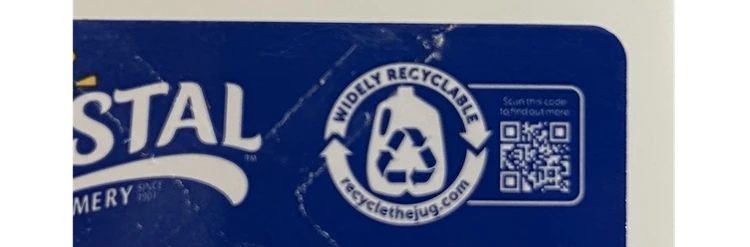
Some items recycle easily:Milk jugs, plastic clamshell containers (depending on where you live), clean aluminum foil, and plastic water bottles with the caps on.
Common recycling mistakes: Plastic grocery bags, disposable coffee cups, and household batteries should not go in curbside bins.
Simple rule:Empty containers, rinse them, and when in doubt, leave the item out so it doesnt contaminate the recycling batch.
Part of being a responsible consumer is being a responsible recycler.
However, sometimes recycling can be a very confusing sport. Water bottles and aluminum cans? Sure, thats easy. But what about items like milk jugs, pizza boxes, plastic bags, small batteries, and plastic clamshell containers?
Confusion often causes consumers to toss questionable items into the recycling bin, hoping theyll be processed. Unfortunately, this can contaminate recycling loads and cause entire batches to be thrown away.
Heres a quick guide to some of the most commonly misunderstood household items.
Plastic milk jugs: yes, these are recyclable
Those classic plastic milk containers, both the jugs and the cartons, are one of the easiest things to recycle.
Most milk jugs are made from HDPE plastic (#2), which recycling facilities actively want because its easy to process and can be turned into new products like detergent bottles, pipes, and plastic lumber.
What to do:
Empty and rinse the jug
Leave the label on
Put the cap back on (most programs accept caps now)
Pro tip: Flattening the jug can save some space in your bin, but its not required.
Plastic clamshell containers: usually recyclable
The clear plastic containers used for berries, salads, and baked goods are often recyclable, but it depends on the plastic type.
Many are made from PET plastic (#1), the same material used in water bottles.
Heres how to check:
Look for the recycling triangle with a #1.
Rinse out any food residue before placing it in the bin.
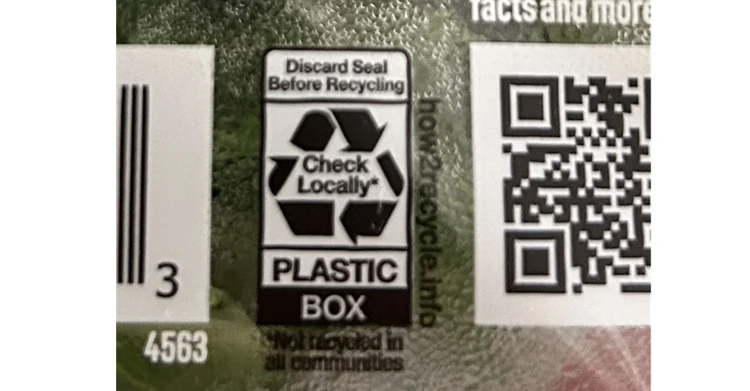
But if the package has the recycling triangle label and says Check Locally, youll have to verify with your towns recycling program if theyre accepted.
If the container is heavily coated with food or dressing, its usually better to throw it away or give it a good wash first.
Also, be sure to remove and discard the clear plastic seal from the container before you toss it in the recycle bin.
Greasy pizza boxes: sometimes recyclable
The greasy pizza box recycling question has been debated for some time now. And its no small amount of cardboard either. We love our pizza, and it accounts for 600,000 tons of cardboard annually in the United States.
A pizza box covered in oil used to be an automatic no for recycling. But many recycling programs will now accept them.
The key thing to consider is grease contamination and how bad the cardboard is coated.
Heres a good rule of thumb:
If the cardboard is mostly clean, go ahead and recycle it.
Tear off any greasy sections and throw those away. Recycle the rest.
Many facilities now process lightly soiled or greasy cardboard without any issues.
Plastic grocery bags: these are a no (in curbside bins)
Thin plastic grocery bags are one of the biggest recycling mistakes. They are meant for multiple uses, but sometimes they become pretty gross, and you just want to get rid of them.
Youre not supposed to put them in your curbside recyclers, as they can easily tangle in recycling machinery and can actually shut down sorting equipment.
Instead: Take them to designated drop-off bins at places like grocery stores or big-box retailers. These collection programs recycle bags along with other film plastics and recycle them properly.
Coffee cups: usually not recyclable
Disposable coffee cups look like paper, but most are lined with a thin layer of plastic to keep liquids from soaking through.
That lining makes them difficult for most recycling facilities to process.
So, unless the cup is specifically labeled as compostable or recyclable, it usually belongs in the trash.
Aluminum foil: yes if its clean
Aluminum foil is definitely recyclable and highly valuable to recycling programs, but only if its free of food residue.
How to recycle it:
Rinse off any grease or food.
Ball smaller pieces together so they dont slip through sorting equipment.
Clean foil can be melted down and reused indefinitely.
Plastic water bottle caps: yes recycle them (but leave them on)
Plastic water bottle caps used to be a major recycling debate.
For years, many recycling programs told consumers to remove the lids because they were made from a different plastic.
Most water bottle caps are made from polypropylene plastic (#5), while the bottle itself is usually PET plastic (#1). Modern recycling facilities can now separate these materials during processing.
The best way to recycle them today:
Empty and rinse the bottle.
Screw the cap back on tightly.
Place the entire bottle in the recycling bin.
By keeping the cap on the bottle tightly, you actually help prevent them from falling off and slipping through sorting equipment.
When they fall off, they can easily slip through sorting screens at recycling facilities. When that happens, they often end up in a landfill or contaminate other materials.
Attaching the lid securely ensures it stays with the bottle all the way through the recycling process.
Household batteries: it depends
While many U.S. states allow alkaline batteries in the trash, recycling them is still the better option because the metals and materials can be recovered and reused.
Do NOT put them in your curbside recycler, as recycling facilities arent designed to separate batteries from other materials.
Many major retailers these days offer free battery recycling bins near the entrance or near the customer service desk.
Youve probably seen these recycling bins at places like Home Depot, Lowes, Staples, Best Buy, or even at your local hardware store.
Just bring in your used AAA, AA, C, D, or 9-volt batteries (and even your small button batteries) and drop them in the bin the next time you go shopping.
Why recycling rules vary by city
One reason recycling feels confusing these days is that the rules can vary widely depending on where you live.
Cities and towns tend to differ in:
Equipment used at recycling plants.
Local demand for recycled materials.
Regional contamination rules.
If youre unsure about something, the best thing to do is to check your citys recycling website or use a tool like Earth911 recycling search. It actually lets you enter an item and your ZIP code, and it tells you how it should be handled locally.
Dollar Generals 7 Days of Savings event features a different limited-time deal each day.
The promotion focuses on everyday essentials, including cleaning and household products.
Shoppers can maximize savings by watching for daily deals and using the myDG app for added discounts.
If your cleaning supplies are running low, Dollar General is hoping to make restocking a little easier on your wallet.
The discount retailer has rolled out its 7 Days of Savings event, a limited-time promotion that offers shoppers a new deal every day for a week. The sale will run from Sunday, March 15 through Saturday, March 21.
The promotion is designed to help customers save on everyday essentials from cleaning products to household items at a time when many people are preparing for spring cleaning or stocking up on basics. Dollar General says the event is part of its ongoing effort to provide affordable options for shoppers looking to stretch their budgets.
With spring cleaning season approaching, our goal is to make it easier and more affordable for our customers to refresh their homes, Jenny ONeill, vice president and division merchandise manager of cleaning, paper and pet at Dollar General, said in a news release.
From great weekly deals to everyday savings through the $1 Value Valley and DG App, we are committed to offering value and convenience every step of the way.
How the 7 Days of Savings event works
During the 7 Days of Savings promotion, Dollar General releases a new daily deal thats available for a short window typically just one day. The offers can include discounts on household staples like laundry detergent, paper products, storage items, and cleaning supplies.
The goal is to help customers save on items they already use regularly, particularly during seasonal moments like spring cleaning or major events when households tend to stock up on supplies.
Another perk: shoppers who use the Dollar General app or website can also take advantage of the retailers myDG Delivery service, which offers same-day delivery from thousands of stores. As part of the broader promotion, customers who place a delivery order through their myDG account can receive one free delivery during the promotional period.
That means shoppers can potentially score daily deals without even leaving home.
The deals
Because the deals change daily, timing is key. If theres a specific product youre hoping to grab like laundry detergent or cleaning wipes youll want to keep an eye on the daily promotions so you dont miss the offer.
Heres a look at what the retailer has planned:
Sunday, March 15: Clorox Scentiva Lavender Jasmine Scent Bleach 81 oz. $4.45 Sale
Monday, March 16: NEW True Living Scented Candles (2ct. 6.8 oz.) Buy One, Get One 50% Off
Tuesday, March 17: True Living, Fresh Start, or Bella Kitchen and Pantry Organization Plastics Buy One, Get One Free
Wednesday, March 18: Mr. Clean Spin Mop or Clean All Power Scrubber Instantly Save $10
Thursday, March 19: Comfort Bay Bath & Hand Towels and Washcloths (excludes multipacks) 50% Off
Friday, March 20: XTRA Tropical Passion Scent Laundry Detergent 57.6 oz. Buy One, Get One Free
Saturday, March 21: Pro-Strength Liquid-Plumr Clog Destroyer 80 oz. $7.50 Sale
Amazon has launched a new Health AI assistant designed to help people manage everyday health care tasks.
The tool can answer health questions, explain lab results, and schedule appointments through Amazon One Medical.
Experts say AI tools like this could make health care easier to navigatebut theyre meant to supplement, not replace, doctors.
Amazon is expanding its push into health care with a new artificial intelligence assistant designed to help people manage their health more easily.
Called Health AI, the tool acts like a digital health helper that can answer questions, interpret medical information, and guide users toward the care they need.
The assistant is built into Amazons ecosystem and works with the companys primary care service, One Medical. The goal is to make health care less confusing and more convenient especially when it comes to everyday tasks like understanding test results, figuring out symptoms, or scheduling appointments.
Health AI is an agentic AI health assistant designed to make health care easier by providing you with insights into your health, helping you understand your medical records, and seamlessly connecting you with licensed health care professionals when you need them, the company wrote in an announcement.
While Health AI can provide general answers to health-related questions without an individuals medical information, its designed to be a personalized health agent that knows you and your medical history so it can provide more helpful responses and take meaningful action, including connecting you to the professionals, treatments, and account services you need to get and stay well.
What Amazons Health AI can do
Unlike a basic chatbot that only answers questions, Amazons Health AI is what the company calls an agentic AI, meaning it can actually take action on behalf of the user.
For example, the assistant can review a persons medical records, lab results, and medications to provide personalized guidance. It can also explain test results in plain language, answer questions about symptoms or conditions, and suggest the appropriate type of care.
The AI can also help with practical tasks like booking appointments, messaging health care providers, and managing prescriptions. If a situation requires professional care, it can connect the user directly with a health care provider through One Medical.
Another key feature is that the assistant operates around the clock, giving people access to health guidance at any time not just during a doctors office visit.
Amazon says the tool includes clinical safeguards and privacy protections designed to meet health care security standards, such as HIPAA compliance.
What consumers should know
AI tools are rapidly becoming part of the health care experience, and Amazons Health AI is one of the latest examples of how technology companies are trying to simplify medical care.
Heres a look at some of the logistics behind the new AI platform:
Introductory offer for Prime members: Eligible U.S. Prime members will receive an introductory offer of up to five free direct-message care consultations with a One Medical provider for more than 30 common conditions. Thats up to $145 in value at no additional cost when using Health AI.
What does it cost? After the introductory offer, customers pay $29 per Amazon One Medical Pay-per-visit telehealth visit. Or, you can purchase a One Medical membership for 24/7 virtual care. U.S. Prime members get One Medical membership for $99 per year (vs. $199 standard), and they can add up to five family members at $66 per year each.
Prime members can share access. Eligible Prime members can share the benefits with family members as part of Amazon Family, which allows Prime members to share benefits with those in the same household. Primes discounted membership programs, including Prime for Young Adults and Prime Access, are also eligible for this offer.
Do you have to be a Prime member or One Medical member to use it? The short answer: no! The special introductory offer is only for Prime members, but any Amazon customer can connect with a provider by phone or messaging, and theres free follow-up communication for 14 days after a treatment plan is initiated.
How do you get started? Health AI is accepting signs up now at sign up now at the Amazon Health page. After you sign up, you can create or sign into your Amazon health profile and start chatting with Health AI on the Amazon app or Amazon.com.
Related Bing News Results Consumer Reports investigates: Toxic ingredients in beauty products Mon, 09 Mar 2026 21:01:00 GMT Most of us don’t think twice about shampoo, deodorant, or lotion. Now, Consumer Reports reveals that some of those products may contain ingredients linked to cancer risk, hormone disruption, and other ... The 10 best cars of 2026, according to Consumer Reports Mon, 09 Mar 2026 17:30:00 GMT If you're eyeing a new vehicle purchase in 2026, due diligence is a must. Fortunately, Consumer Reports has a good idea of which cars really shine. This travel gadget can save your life, according to Consumer Reports Mon, 09 Mar 2026 08:47:00 GMT Vacation stays can hide a danger you can't see or smell. This small travel gadget can add peace of mind before you check in and call it a night. Here Are The Cars That The Consumer Reports Testers Disliked Most In 2025 Sat, 28 Feb 2026 13:05:00 GMT The Tesla Cybertruck, Toyota 4Runner, and Volvo EX30 were the cars Consumer Reports testers disliked most in 2025. The Volvo got the most disapproval. Consumer Reports retests protein powders, finds safer options Wed, 18 Feb 2026 17:22:00 GMT USES THESE SUPPLEMENTS. HERE’S MARISSA TANSINO. LAST FALL, CONSUMER REPORTS TESTED DOZENS OF PROTEIN POWDERS AND READY TO DRINK SHAKES. WHAT THE LAB FOUND RAISED RED FLAGS MORE THAN TWO THIRDS ...



 of ConsumerAffairs