

Rockin Robin SongFlying The Web For News.
RobinPost Logo Amazon Prime Deals


Consumer Daily Reports

The average cost per claim increased to nearly $70,000

By James R. Hood of ConsumerAffairs
April 25, 2025

Key takeaways

  • Dog bite claims surged 19% in 2024, with more than 22,000 incidents reported
  • Average cost per claim jumped to $69,272 an 86% increase over the past decad
  • California, Florida, and Texas led the nation in the number of dog-related claims

Dog bites are not just a public safety concern theyre increasingly a financial burden. U.S. insurers paid out a staggering $1.6 billion in dog-related injury claims in 2024, according to newly released data from the Insurance Information Institute (Triple-I) and State Farm.

The number of dog bite and related injury claims reached 22,658 in 2024, representing a 19% increase from 2023 and a 48% increase over the past decade, said Janet Ruiz, Triple-Is director of strategic communications.

Claims rising, so are costs
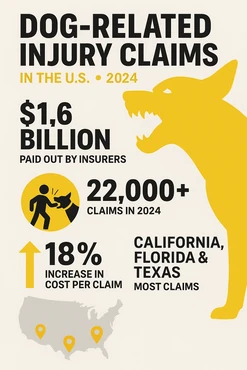
DescriptionAlong with the spike in incidents, the average cost per claim also saw a sharp risejumping 18% from $58,545 in 2023 to $69,272 in 2024. Over the past ten years, the average cost per dog-related claim has climbed 86%, driven by a mix of factors including increased medical expenses, higher settlements, and more frequent litigation.

The states with the highest number of claims were California, Florida, and Texasthree of the countrys most populous and dog-friendly states.

A widespread and growing risk

Dog bites remain a serious public health issue, with more than 4.5 million Americansmany of them childrenbitten each year. Nearly 45.5% of U.S. households have at least one dog, adding up to about 90 million canine companions nationwide.

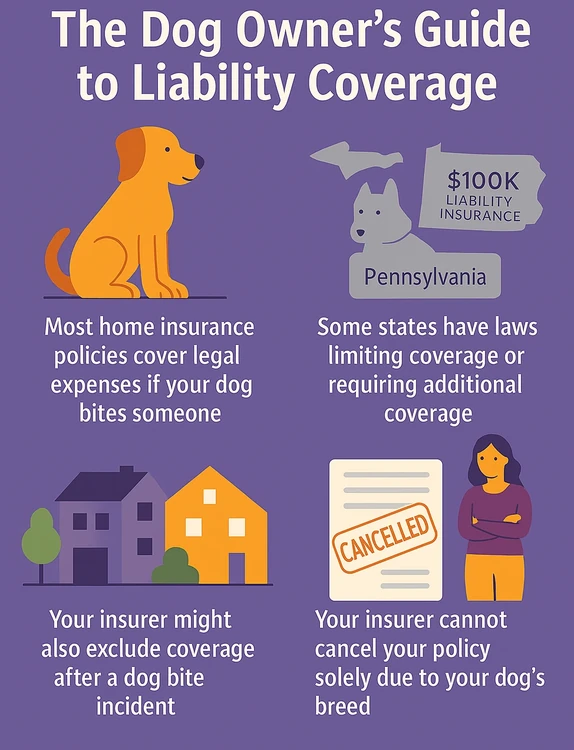
While most dogs never bite, even a single incident can carry significant legal and financial consequences. According to Triple-I, homeowners and renters insurance policies typically cover dog bite liability expenses up to policy limits, which usually range from $100,000 to $300,000. Anything beyond that is the owners responsibility.

Legal landscape varies by state

Regulations and insurance practices vary across the country:

  • Pennsylvania and Michigan prohibit insurers from denying or canceling coverage based on a dogs breed.

  • Ohio mandates that owners of dogs deemed vicious purchase at least $100,000 in liability coverage.

  • Some states allow insurers to exclude coverage after a dog bite, creating additional financial risks for owners.
Photo
Source: Triple I

As dog ownership continues to rise in the U.S., experts say both pet owners and insurers need to stay informed, vigilant, and committed to preventing bite-related incidents for the safety of humans and dogs alike.


Posted: 2025-04-25 16:37:47

Get Full News Story On Consumer Affairs


Listen to this article. Speaker link opens in a new window.
Text To Speech BETA Test Version.


More News From This Category
Consumer News: How much do you trust AI to recommend product purchases?
Thu, 23 Apr 2026 16:07:06 +0000

A new survey finds a lot of skepticism

By Mark Huffman of ConsumerAffairs
April 23, 2026
  • Only 2% of consumers say they would buy from an AI-recommended brand without researching it first

  • Nearly all shoppers (98%) take extra stepslike reading reviews or searching onlinebefore making a purchase

  • The findings highlight a major trust gap as AI becomes more embedded in shopping


As artificial intelligence becomes a bigger part of how people discover products and brands, a new survey suggests it is far from replacing traditional research habits.

Just 2% of U.S. consumers say they would purchase from an unfamiliar brand based solely on an AI recommendation, according to a new study from Idea Grove. By contrast, 98% of respondents said they verify the brand through other sources before making a decision.

The findings point to a clear divide between how consumers use AI and how much they trust it.

AI helps shoppers find options, but doesnt close the deal

AI tools like chatbots and recommendation engines are increasingly shaping the early stages of the buying journey, helping consumers discover new brands and narrow choices.

But the survey shows that most shoppers still rely on traditional signalssuch as online reviews, search results, media coverage, and a companys websiteto confirm whether a brand is credible.

AI is accelerating discovery, but its not replacing decision-making, the report suggests.

That pattern is consistent with broader research showing consumers use AI as a research assistant rather than a final authority. Many shoppers turn to AI for comparisons or suggestions, then verify information elsewhere before completing a purchase.

Trust remains the biggest hurdle

The reluctance to rely solely on AI recommendations underscores ongoing concerns about trust, accuracy, and transparency.

Consumers appear to treat AI suggestions as a starting point, not a guarantee of quality. Instead, they seek out familiar trust markers that predate AI, such as customer reviews and independent validation.

This skepticism is not new, but it is becoming more significant as brands invest heavily in trying to appear in AI-generated recommendations.

Implications for brands and consumers

For businesses, the message is clear: being recommended by AI tools may boost visibility, but it wont automatically translate into sales.

Companies still need to build credibility through strong online reputations, clear information, and positive customer feedback.

For consumers, the trend reinforces the importance of verification in an AI-driven marketplace. Even as technology streamlines shopping, the responsibility for making informed decisions largely remains with the buyer.


Read More ...


Consumer News: Pending home sales edged higher in March
Thu, 23 Apr 2026 16:07:06 +0000

But sales were clustered in the Northeast and South

By Mark Huffman of ConsumerAffairs
April 23, 2026
  • Pending home sales rose 1.5% in March, signaling modest momentum entering the spring housing season.

  • Contract activity remained below last years levels, falling 1.1% year over year.

  • Gains were uneven, with the South and Northeast improving while the Midwest and West declined.


Pending home sales posted a modest increase in March, offering a mixed but slightly encouraging signal for the spring homebuying season.

The National Association of Realtors Pending Home Sales Index, a forward-looking measure of contract signings, rose 1.5% from February to a reading of 73.7. However, activity was still down 1.1% compared with March 2025, underscoring ongoing challenges in the housing market.

NAR Chief Economist Lawrence Yun said the monthly gain reflects underlying demand despite affordability pressures. Contract signings rose in March despite higher mortgage rates, pointing to pent-up housing demand, Yun said, adding that increased inventory will be key to converting that demand into completed sales.

Regional performance mixed

The March data showed a divided housing market across regions. Pending sales increased in the Northeast and Southup 4.4% and 3.9%, respectivelywhile declining in the Midwest and West by 1.3% and 2.6%.

On an annual basis, only the South posted growth, with a 2.3% increase, while the other three regions recorded year-over-year declines.

Economists attribute the Souths relative strength to a combination of job growth, moderating home prices and more favorable homebuilding conditions, particularly in Sun Belt markets.

Mortgage rates and affordability remain key hurdles

Despite the monthly uptick, the housing market continues to face headwinds from elevated mortgage rates and affordability constraints, especially for first-time buyers. Yun noted that younger buyers are particularly sensitive to rate changes, highlighting the need for more smaller and affordable homes.

Even so, improving inventory levels are beginning to support activity. Increased housing supply could help ease price pressures and encourage more transactions in the months ahead, analysts said.

The March increase suggests the housing market may be stabilizing after a slower start to the year, though conditions remain uneven. But contracts signed dont always turn into actual sales.

Real estate brokerage Redfin reported this week that more than 50,000 sales contracts fell through in March, as many buyers had second thoughts or encountered financing issues.


Read More ...


Consumer News: Here’s why food prices could rise even more
Thu, 23 Apr 2026 16:07:06 +0000

An extended drought is affecting key food-producing regions

By Mark Huffman of ConsumerAffairs
April 23, 2026
  • More than half of the United States is experiencing drought conditions, stressing crops and livestock.

  • Reduced yields and higher feed costs are expected to push grocery prices upward in the coming months.

  • Consumers could see the biggest increases in produce, beef, and dairy.


After a wet winter, a widespread drought stretching across much of the United States is raising new concerns about food prices, as farmers grapple with shrinking water supplies and declining crop yields.

Recent data show that large portions of key agricultural regions including the Midwest, Plains, and parts of the West are experiencing moderate to severe drought conditions. For consumers, the effects may soon show up at the grocery store.

That would be on top of the inflation shoppers have already experienced. The March Consumer Price Index showed grocery prices were up nearly 2% in the last 12 months, with fruit and vegetable prices rising at twice that rate.

Crops under pressure

Dry conditions are already affecting staple crops such as corn, soybeans, and wheat. These commodities form the backbone of the U.S. food system not only for direct consumption, but also as feed for livestock.

When yields fall, supplies get tighter. That can push prices higher. Farmers are also facing higher irrigation costs where water is available, adding another layer of expense that often gets passed on to consumers.

Fresh produce may be particularly vulnerable. Fruits and vegetables grown in drought-stricken areas can be smaller, scarcer, or more expensive to harvest, leading to noticeable price increases at supermarkets.

Meat and dairy costs could rise

The impact doesnt stop with crops. Ranchers are dealing with parched grazing land and rising feed prices, forcing some to reduce herd sizes. While that can temporarily increase meat supply, it often leads to higher prices later as production tightens.

Dairy products may follow a similar path. Higher feed costs and water scarcity can squeeze dairy farmers, potentially resulting in more expensive milk, cheese, and other staples.

That can create ripple effects for consumers. Economists warn that the drought could contribute to broader food inflation, especially when combined with other pressures like energy costs and supply chain disruptions.

For households already coping with higher living expenses, even modest increases in grocery prices can add up quickly.

What shoppers can expect

While price spikes may not be immediate, experts say consumers should be prepared for gradual increases over the coming months, particularly in:

  • Fresh fruits and vegetables

  • Beef and dairy products

  • Packaged goods that rely on grain inputs

If drought conditions persist into the growing season, the impact could extend well into next year.

For now, much depends on weather patterns in the weeks ahead. But with little relief in sight, the dry spell is shaping up to be more than just an agricultural problem it could soon become a household budget issue nationwide.


Read More ...


Consumer News: More homebuyers are walking away from contracts
Thu, 23 Apr 2026 16:07:06 +0000

About 13% of deals fell through in March

By Mark Huffman of ConsumerAffairs
April 23, 2026
  • More than 50,000 U.S. home-purchase agreements were canceled in March, representing a significant share of pending sales.

  • The spike reflects growing economic uncertainty, high housing costs, and shifting market power toward buyers.

  • The trend signals continued instability in the housing market during what is typically the busiest home-buying season.


The housing market has definitely turned in favor of buyers. More than 50,000 home purchase contracts fell through in March, highlighting mounting strain in the U.S. housing market, as buyers grow increasingly cautious.

A new report from real estate brokerage Redfin found that roughly 52,000 home-sale agreements were canceled during the month, accounting for about 13% of all pending transactions. The elevated cancellation rate illustrates a housing market where deals are increasingly fragile, even after contracts are signed.

The rise in failed transactions comes amid a larger slowdown in housing activity. Existing-home sales dropped 3.6% in March to an annual rate of 3.98 million, as high mortgage rates, elevated home prices, and weakening consumer confidence discouraged buyers.

Industry analysts say buyers now have more leverage than in recent years, allowing them to walk away from deals more freely. A growing imbalance between the number of sellers and buyers has created more options for house hunters, leading some to cancel contracts over pricing concerns, inspection issues, or changing financial conditions.

Economic uncertainty

Economic uncertainty is also playing a role. Concerns about job security, inflation, and rising borrowing costs have made prospective buyers more hesitant to commit, particularly when mortgage rates fluctuate between the time an offer is made and finalized.

At the same time, housing affordability remains a major hurdle. Even as sales slow, home prices have continued to climb due to limited inventory, pushing the median price to a record high for March and further squeezing buyers.

The surge in contract cancellations suggests that the spring home-buying season typically the busiest time of year is off to a weak start. Analysts expect continued volatility in the coming months as economic conditions and borrowing costs remain uncertain.


Read More ...


Consumer News: Specialty, discount grocers lead grocery industry shakeup, new data show
Thu, 23 Apr 2026 16:07:06 +0000

Struggling consumers seek value, more affluent consumers seek quality

By Mark Huffman of ConsumerAffairs
April 23, 2026
  • Specialty and discount grocers are gaining market share and foot traffic, outpacing traditional supermarkets.

  • Consumers are splitting spending between low-price retailers and premium specialty stores.

  • Traditional supermarkets are losing share as shoppers prioritize value, convenience, and targeted purchases.


Higher prices are changing consumer behavior, especially where they shop for groceries.

A new analysis from Consumer Edge shows a growing divide in the grocery industry, with specialty and discount chains outperforming traditional supermarkets, as shifting consumer habits reshape where Americans shop for food.

The report finds that value-oriented and specialty grocers are capturing a larger share of customer visits and spending, while conventional supermarkets are gradually losing ground. The shift reflects broader economic pressures and changing shopper priorities, particularly around price and product differentiation.

Rising food costs have pushed consumers to seek out lower prices, boosting discount chains such as Aldi and Grocery Outlet. Transaction data shows discount grocers have increased their share of the grocery market in recent years, driven by widespread value-seeking behavior across income groups.

But not all consumers are struggling. Specialty grocers including chains focused on organic, fresh, or unique products are attracting shoppers willing to pay more for quality and curated assortments. These retailers have posted stronger traffic growth than traditional supermarkets, with consumers often traveling farther to shop their offerings.

Two kinds of consumers

Together, these two segments are driving what analysts describe as a bifurcation of grocery spending: budget-conscious shoppers gravitating to discounters, while higher-income consumers increasingly favor specialty stores.

Traditional supermarkets, meanwhile, are caught in the middle. While they still account for the majority of grocery visits, their share has been steadily eroding, with foot traffic slipping in recent years as shoppers spread purchases across multiple store types.

The shift is also changing how people shop. Instead of making one large weekly trip, consumers are making smaller, more frequent visits often across multiple retailers to manage costs and find specific items.

Industry insiders say supermarkets are responding by emphasizing private-label products, promotions, and value-focused formats, but the competitive pressure is intensifying. The long-term outlook suggests continued fragmentation, with no single grocery format dominating as consumers balance price, convenience, and quality in new ways.


Read More ...


Related Bing News Results
consumer reports
Thu, 23 Apr 2026 03:11:00 GMT
Eken Group has issued a firmware update to resolve major security issues with its doorbell cameras that were uncovered by Consumer Reports. The cameras are sold under the brands Eken, Tuck, Fishbot, ...

Consumer Reports explores digital minimalism
Wed, 22 Apr 2026 17:38:00 GMT
A survey shows Americans spend over four hours daily on their phones, with nearly half feeling addicted, as experts highlight the impact on mental health and suggest ways to cut back.

Consumer Reports: How to use digital coupons to maximize your savings
Mon, 20 Apr 2026 22:25:00 GMT
In many stores, the best discounts have gone digital! Consumer Reports breaks down how to use digital coupons to maximize your supermarket savings.

Consumer Reports analysis of multiple at-home hair dyes and hair chalk found issues with all of them
Sat, 18 Apr 2026 05:00:00 GMT
It can be fun to switch up your personal aesthetic with hair dye. However, a Consumer Reports analysis of several at-home hair dyes found issues with each one.

Consumer Reports: What’s really inside energy drinks?
Fri, 17 Apr 2026 11:12:00 GMT
Energy drinks are all the rage, colorful, sweet, and hugely popular with teens. Now, an important warning for parents: a new Consumer Reports investigation finds what’s inside those drinks may be ...


Blow Us A Whistle


Related Product Search/Búsqueda de productos relacionados

Amazon Logo

Visit Our New Print-On-Demand Stores On Printify and Zazzle
Printify Zazzle













