

Rockin Robin SongFlying The Web For News.
RobinPost Logo Amazon Prime Deals


Consumer Daily Reports

Nutritionists wants to call out sugar, sodium, fats more clearly

By James R. Hood of ConsumerAffairs
July 15, 2025
  • Coalition Urges Stronger FDA Front-of-Package Labels on Sugars, Sodium, Fats
  • 28 consumer and health groups plus 12 researchers back mandatory nutrition labels

  • Advocate simpler High In warnings and sweetener disclosures

  • Industry expected to push back in favor of voluntary labeling


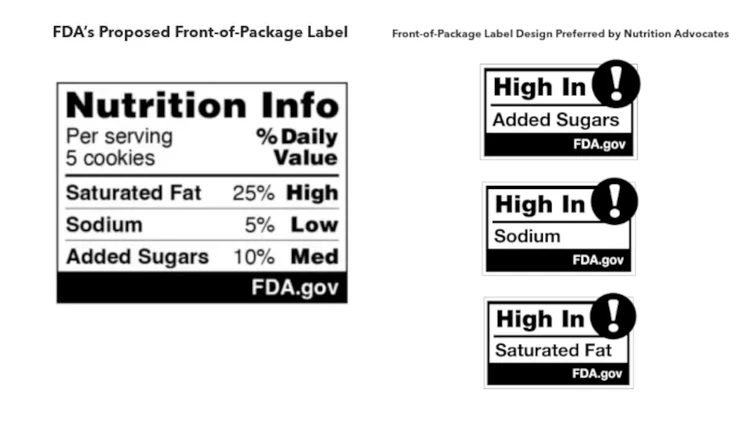
A broad coalition of 28 leading consumer, public health, and nutrition organizations, alongside 12 academic researchers, has called on the U.S. Food and Drug Administration (FDA) to adopt a strong and simplified front-of-package nutrition labeling system that clearly alerts consumers when foods are high in added sugars, sodium, or saturated fat.

The joint comments, submitted this week, respond to the FDAs January 2025 proposed rule requiring prominent front-of-package labels to classify packaged foods as high, medium, or low in key nutrients of concern.
Photo

The rule would apply to products marketed to adults and children aged four years and older and was advanced under the Biden administration. It now awaits potential finalization under the Trump administration, which has not yet released its regulatory agenda but has signaled that nutrition labeling remains a priority.

While endorsing the FDAs push for mandatory, interpretive labels, the coalitionincluding the Center for Science in the Public Interest (CSPI)urged regulators to go further. They recommended using simpler, attention-grabbing icons, such as an exclamation mark, to quickly communicate health risks posed by excessive added sugars, sodium, or saturated fats.

"It's time to act"

Front-of-package labeling is one of the most impactful approaches we have to address overconsumption of harmful ultra-processed foods and improve our nations health, said CSPI senior policy scientist Eva Greenthal. Its time to act on evidence-based solutions.

The groups also pressed the FDA to require front-of-package disclosures for products containing non-nutritive sweeteners, especially since these calorie-free additives are not recommended for children. Such disclosures, they argued, would help deter manufacturers from reformulating products with these ingredients as a workaround to avoid high in labels. The original Biden-era proposal did not address this issue.

Additional recommendations included extending front-of-package labeling requirements to foods intended for infants and toddlers and pairing the new rules with robust public education to ensure consumers understand and use the labels effectively.

Despite the coalitions support, the FDAs proposal faces likely resistance from the food and beverage industry, which has long favored a voluntary Facts Up Front labeling system. Studies show the voluntary labels fail to help consumers quickly identify foods high in unhealthy nutrients, while High In-style warnings have been proven to influence healthier purchasing decisions, encourage product reformulation, and reduce deaths linked to diet-related diseases.

CSPI also submitted separate comments detailing further steps the agency could take to maximize the rules impact on public health.

FDA officials have not yet set a timeline for issuing a final rule.


Posted: 2025-07-15 17:20:23

Get Full News Story On Consumer Affairs


Listen to this article. Speaker link opens in a new window.
Text To Speech BETA Test Version.


More News From This Category
Consumer News: Walmart’s return policy simplified: What you can return, what you can’t, and a few insider tips
Tue, 12 May 2026 22:07:07 +0000

The return rules most shoppers dont realize exist

By Kyle James of ConsumerAffairs
May 12, 2026
  • Most items get 90 daysbut not everything: Electronics often only get 30 days, phones 14 days, and major appliances must be reported damaged within twodays.

  • No receipt? Refunds get trickier: Walmart may allow exchanges or store credit, but repeated no-receipt returns can eventually get denied.

  • Smart shoppers use a few simple tricks: Keep electronics packaging, save digital receipts with Walmart Pay, and watch for third-party Marketplace sellers online.


Walmarts return policy is actually fairly shopper-friendly, but only if you understand all the fine print, and theres quite a bit of fine print.

While most shoppers assume Walmart gives you 90 days to return everything, there are a ton of exceptions. These include shorter return windows, receipt requirements, and category-specific rules that can catch even savvy shoppers off guard.

Heres a full breakdown of how Walmarts return policy currently works, plus the smartest ways to protect yourself and maximize your future refunds.

The standard Walmart return window

For most items bought in-store, on Walmart.com, and through the Walmart app you get 90 days from purchase, or delivery, to return the item.

That 90-day return window includes most:

  • Household goods
  • Clothing
  • Toys
  • Home dcor
  • Small kitchen items
  • Automotive accessories

You can return items in-store, via the mail, and via Walmarts app return process.

Refunds generally go back to your original payment method that you used.

Pro tip: Similar to Amazon, the Walmart website sells items that come from third-party sellers, called Walmart Marketplace. Be aware that sometimes these items come with a shorter return window. So, before buying expensive items on Walmart.com, check:

  • Sold by Walmart versusMarketplace seller
  • Seller ratings
  • Return policy details
  • Restocking fees

Many shoppers never notice theyre buying from a third party, then get a big surprise when they try to return the item.

Electronics have a MUCH shorter return window

This is where many shoppers get burned as they automatically assume everything is 90 days.

Most consumer electronics sold by Walmart only have a 30-day return window.

This includes things like:

  • TVs
  • Laptops
  • Tablets
  • Cameras
  • Gaming systems
  • Drones
  • Hoverboards

Wireless phones have an even shorter return window of just 14 days.

Pro tip: Keep the original packaging for electronics until you know youre keeping the item. Walmart is much more likely to process a smooth return when everything is included.

Major appliances have one of the strictest deadlines

Walmart has followed the lead of stores like Home Depot and Lowes, and has severely restricted their return policy when it comes to major appliances.

Specifically, you only have twodays to report damage or any issues. That means you should inspect appliances immediately after delivery. Or better yet, refuse delivery if the appliance shows up damaged or not in working order.

The one thing you dont want to do is leave an appliance sitting in the garage for a week before checking it out.

This includes the following major appliances:

  • Refrigerators
  • Washers
  • Dryers
  • Dishwashers
  • Freezers

You have seven days to return food items

Walmarts policy on returning food is one of the more confusing parts of their return policy, because the rules are not clearly explained on their website.

After speaking with several Walmart employees, I was told that food items generally need to be returned within sevendays, regardless of whether the item is perishable or unopened. If you try to return food beyond that timeframe, youll likely need what employees call a managers exception for the return to be approved.

I was also told that returning food without a receipt is extremely difficult, andin many stores, not allowed at all. That policy applies to frozen foods as well.

Employees say this is mainly due to fraud-prevention policies involving EBT purchases, although practices can vary slightly by store and state.

Some stores may allow for exchanges only, especially if you simply want an identical replacement of the item.

Another interesting detail: I was told that returned food items are often immediately opened and discarded by employees as a safety precaution, even if the product appears unopened.

Lost your receipt? You still have options

Walmarts no-receipt return policy can definitely feel a little confusing, especially because the rules have tightened up over the years.

The good news is that you can often still return an item even if you lost the receipt. The catch is your refund options become much more limited.

According to Walmart employees thatve Ive spoken with, shoppers are typically allowed a limited number of no-receipt returns within a certain time period before the system may automatically deny additional returns.

I actually had a Walmart manager tell me that you get three "no-receipt returns" within a 45-day period. After that, youll have to wait to try again when your 45 days resets.

Heres what you can generally expect with a no-receipt Walmart return:

  • Youll need a valid photo ID:Walmart requires a government-issued ID for most no-receipt returns. The ID must be valid, untampered with, and match the information stored in Walmarts return-verification system.
  • Straight exchanges are usually the easiest option:In many cases, Walmart will allow you to exchange the item for the exact same product even without proof of purchase.
  • Cash refunds are limited:If the returned item is valued at $10 or less, you may be eligible for a cash refund, although manager approval is often required.
  • Store credit is more common for larger returns:For items valued over $10, Walmart will typically issue the refund on a Walmart gift card instead of giving you cash back.

Pro tip: If you regularly shop at Walmart, using Walmart Pay or ordering through your online account can make returns dramatically easier because your receipts are stored digitally.

Some items are basically final sale

There are quite a few products that Walmart sells that you cannot return for any reason.

These currently include:

  • Gift cards
  • Diabetic supplies
  • Firearms
  • Pepper spray
  • Certain opened health/medical items
  • Some prescription products
  • Trading cards
  • RV sewer lines
  • Prescription drugs

Mattresses sold at Walmart also have separate manufacturer return rules depending on the brand and seller. Youll want to ask about your particular mattress at the store you purchased it from.

Pro tip: If youre buying expensive electronics near the holidays, you often get a much longer test drive period than normal. This is because every year Walmart has an extended return deadline for purchases made between October and December, allowing shoppers to returnall the way until late January.

The bottom line for Walmart shoppers

Walmart still has one of the more flexible return policies in retail, but the key is understanding the exceptions before you buy.

The biggest mistakes shoppers make are:

  • Assuming everything gets 90 days
  • Tossing receipts too early
  • Waiting too long to open electronics
  • Not realizing Marketplace sellers follow different rules

If you know the deadlines and keep your receipts organized, Walmarts return system can actually work heavily in your favor.


Read More ...


Consumer News: Landscaping are on the rise — Here’s how homeowners can protect themselves
Tue, 12 May 2026 22:07:07 +0000

The landscaper red flags too many homeowners miss

By Kyle James of ConsumerAffairs
May 12, 2026
  • Watch for major red flags: Scammers often claim they have leftover materials and pressure you into making a same-day deal.

  • Never hand over large upfront payments: Experts recommend smaller payments instead of paying for most of the project before work begins.

  • Do your homework first: Read negative reviews, verify licensing and insurance, ask for references, and always insist on a written estimate.


A California homeowner says he lost thousands whenhe was he was pressured into paying $2,500 after a landscaper allegedly tried charging him $5,000 for a mulch job that he believed should have cost only a fraction of that amount, according to a recent report from CBS 8 San Diego.

Unfortunately, consumer experts say cases like this are becoming far more common as spring and summer landscaping season ramps up nationwide.

The often follow a predictable pattern:

  • A contractor happens to be in the area with extra material.
  • Theyre too busy to provide a proper estimate.
  • They promise fast work and low prices.
  • They often request a large upfront payment.
  • Work either never starts, drags on endlessly, or is left unfinished.

Legitimate contractors should always be willing to provide:

  • A written estimate
  • A basic contract
  • A breakdown of costs
  • A payment schedule

Watch out for 'leftover materials'

This was the crux of the CBS 8 report. A landscaping crew showed up at the homeowners residence offering to mulch his yard for $10 a bag, which was a significant discount.

The homeowner added that the landscaper claimed they couldnt provide a written estimate because they were too busy, which is an obvious warning sign.

Once the work was completed, he was handed a $5,000 bill, the equivalent of 500 bags of mulch. The homeowner figured it was about a 50-bag job, so he knew he was being scammed.

He got the police involved but was told it was a civil matter and he needed to work it out with the landscaper. He ended up paying the scammer $2,500 to have him leave his property and avoid any future issues or harassment.

Be wary of anyone knocking on your door claiming:

  • They just finished work nearby.
  • They have leftover mulch, pavers, or asphalt.
  • They can offer a huge discount but for today only.

This high-pressure tactic is extremely common in contractor .

Legitimate landscapers rarely:

  • Demand same-day decisions
  • Pressure homeowners at the door
  • Offer steep discounts for immediate payment

A big red flag: Large upfront deposits

While deposits are normal for legitimate landscaping jobs, experts say homeowners should be cautious anytime a contractor demands a very large percentage upfront.

Thats especially true if they:

  • Pressure you to pay immediately
  • Only accept cash
  • Claim the deal expires today"
  • Ask for payment before materials arrive

A safer approach is to make smaller payments that are tied to actual work completed.

For example:

  • Small deposit upfront
  • Payment after demolition
  • Payment after materials arrive
  • Final payment after completion

Pro tip: Paying with a credit card (if possible) can provide stronger fraud protections than cash, checks, or payment apps.

Fake reviews are making harder to spot

One reason these are spreading is because scammers now look far more believable online. A polished website and dozens of five-star reviews no longer guarantee a company is legitimate.

Before hiring anyone:

  • Read negative reviews first
  • Check how long the business has existed
  • Search the company name plus complaints or scam
  • Verify licensing and insurance directly
  • Ask for local references

Pro tip:Reverse-image search any landscaping photos on their website or social media pages. Some scammers will steal project images from legitimate companies.

The bottom line

Landscaping are growing because homeowners are spending heavily on outdoor projects while scammers know many people want quick (and cheap) fixes during spring and summer.

The good news is that most share the same warning signs like inability to provide an estimate, large deposits, and rushed decisions.

Taking an extra day to research a landscaper and insisting everything is put in writing could potentially save you thousands of dollars and a massive headache later.


Read More ...


Consumer News: Amazon launches delivery in around 30 minutes in select cities
Tue, 12 May 2026 19:07:08 +0000

The retailer tested the service in Seattle and Philadelphia

By Mark Huffman of ConsumerAffairs
May 12, 2026
  • Amazon is expanding its new Amazon Now service to dozens of U.S. cities, promising delivery of groceries and household essentials in about 30 minutes or less.

  • The service will initially reach millions of customers in metro areas including Atlanta, Dallas-Fort Worth, Philadelphia, and Seattle, with more cities planned by years end.

  • Prime members will pay delivery fees starting at $3.99, while Amazon positions the service as its fastest mainstream delivery option yet.


Several decades ago, a pizza chain promised delivery within 30 minutes or less. Now Amazon is making that promise in select cities sort of.

The company has announced that the ultra-fast delivery service around 30 minutes is expanding to dozens of cities across the United States after initial pilot programs in Seattle and Philadelphia. Amazon said the service is now broadly available in Atlanta, Dallas-Fort Worth, Philadelphia,and Seattle, while additional expansion is planned for cities including Houston, Phoenix, Denver, Orlando, Minneapolis,and Oklahoma City.

Amazon Now focuses on high-demand items customers may need immediately, including groceries, household essentials, over-the-counter medications, pet supplies, and small electronics. Amazon executive Udit Madan said the service is designed for situations where consumers need or want the convenience of rapid delivery.

The service operates through smaller urban fulfillment hubs stocked with roughly 3,500 frequently purchased products. Those facilities are significantly smaller than Amazons traditional warehouses and are intended to shorten delivery times in densely populated areas.

What it costs

Prime members will pay delivery fees beginning at $3.99 per order, while non-Prime customers will pay $13.99. Amazon also plans to charge small-order fees for purchases under $15.

The launch intensifies competition among retailers racing to provide near-instant fulfillment. Walmart already offers express delivery on more than 100,000 products, and app-based services such as Instacart and DoorDash have conditioned consumers to expect faster delivery windows.

Amazon executives said the company has seen strong demand for faster shipping options, noting that orders for everyday essentials are growing faster than other delivery categories. The company has steadily shortened delivery windows over the past decade, moving from two-day Prime shipping to same-day and one-hour delivery in some markets.

Still, analysts cautioned that ultra-fast delivery can be expensive and difficult to scale profitably.

Amazon also appears mindful of comparisons to Dominos Pizzas abandoned 30 minutes or less guarantee, which ended in the 1990s after lawsuits tied to delivery crashes. Amazon said it will not guarantee delivery times and emphasized that workers and drivers are not expected to rush orders.


Read More ...


Consumer News: Inflation picked up speed in April, led by gas prices
Tue, 12 May 2026 19:07:08 +0000

But the cost of groceries added to the pain

By Mark Huffman of ConsumerAffairs
May 12, 2026
  • Consumer prices rose 0.6% in April, pushing the annual inflation rate to 3.8%, as higher energy and shelter costs continued to pressure household budgets.

  • Energy prices posted some of the sharpest gains, with gasoline up 5.4% for the month and nearly 28.4% over the past year, while airline fares climbed 20.7% annually.

  • A few categories provided relief for consumers, including new vehicles, communication services, and medical care, which all declined in April.


Inflation accelerated again in April as higher gasoline, housing, and grocery costs drove consumer prices sharply higher, according to the latest Consumer Price Index report released by the Bureau of Labor Statistics.

The CPI rose 0.6% on a seasonally adjusted basis in April after increasing 0.9% in March. Over the last 12 months, prices climbed 3.8%, up from a 3.3% annual rate the previous month.

Energy costs remained one of the biggest inflation drivers. The energy index increased 3.8% in April and accounted for more than 40% of the monthly increase in overall inflation, the report said. Gasoline prices jumped 5.4% during the month and were up 28.4% compared with a year earlier. Fuel oil prices surged 54.3% over the past 12 months.

Housing costs also continued climbing. The shelter index rose 0.6% in April and increased 3.3% over the last year. Owners equivalent rent and rent indexes both advanced 0.5% during the month.

More expensive groceries

Food prices also moved higher. Grocery prices rose 0.7% in April, led by a 2.7% jump in beef prices and a 1.8% increase in fruits and vegetables. Restaurant prices increased 0.2% for the month and were up 3.6% from a year ago.

Outside of food and energy, so-called core inflation rose 0.4% in April and 2.8% over the past year. Among the categories posting notable monthly increases were airline fares, household furnishings, personal care,and apparel. Airline fares were up 20.7% compared with a year ago.

Some categories, however, showed modest declines. Prices for new vehicles and communication services each fell 0.2% in April, while the medical care index slipped 0.1%. Hospital services declined 0.3% during the month.


Read More ...


Consumer News: California flavor bans tied to lower teen vaping rates, study finds
Tue, 12 May 2026 19:07:07 +0000

Massive youth survey suggests local tobacco restrictions may reduce e-cigarette use over time

By Kristen Dalli of ConsumerAffairs
May 12, 2026
  • Researchers analyzed survey data from more than 2.8 million California middle and high school students.

  • Areas with flavored tobacco bans reported lower youth vaping rates than areas without restrictions.

  • The study found no evidence that the bans led to an increase in cigarette smoking among teens.


Flavored vape products have been at the center of public health debates for years, especially because flavors like fruit, mint, and candy are often seen as appealing to younger users. Now, a new California-based study suggests local restrictions on flavored tobacco products may be linked to lower rates of teen vaping.

Researchers from University of California San Diego and San Diego State University examined how local flavored tobacco bans affected youth vaping habits across California communities. Their findings, published in JAMA Health Forum, showed that students living in areas with these policies were less likely to report current e-cigarette use compared with students in places without such bans.

Our findings suggest that local flavored tobacco bans can be an effective strategy for reducing youth e-cigarette use, researcher Eric Leas, Ph.D., MPH, said in a news release.

Importantly, we did not find evidence that these policies led young people to switch to cigarettes, which has been a major concern raised in policy debates.

The study

To study the impact of those local policies, the research team analyzed responses from 2,805,708 students who participated in the California Healthy Kids Survey between 2017 and 2022. The survey included students in seventh, ninth, and eleventh grades and asked questions about tobacco and e-cigarette use during the previous month.

Researchers compared students attending schools in jurisdictions that had active flavored tobacco bans with students in areas that did not. They used a statistical method known as a dynamic difference-in-differences analysis, which allowed them to evaluate how vaping trends changed over time as different communities adopted the restrictions at different points.

The analysis also adjusted for several community-level factors that could influence tobacco use, including racial and ethnic diversity, poverty levels, and educational attainment. According to the study, this approach helped researchers better isolate the association between flavored tobacco bans and youth vaping behaviors.

The results

The results showed lower vaping rates among students living in areas with flavored tobacco restrictions. In jurisdictions with bans in place, 6.2% of students reported current e-cigarette use, compared with 7.7% in jurisdictions without bans.

Researchers also found that the reductions appeared to strengthen over time. Three years after a ban was implemented, youth vaping rates were nearly two percentage points lower in areas with restrictions. Four years after implementation, the difference grew to more than nine percentage points.

At the same time, the study found no significant association between flavored tobacco bans and youth cigarette smoking. Cigarette use among teens remained relatively similar in jurisdictions with and without the policies, addressing concerns that some young users might switch from vaping to traditional cigarettes if flavored products became harder to access.

The authors said continued monitoring will be important as Californias statewide flavored tobacco restrictions remain in effect. They also noted that future research could help determine how enforcement and community differences influence the long-term impact of these policies.

Local policies gave us a valuable window into how flavored tobacco restrictions may influence youth behavior over time, researcher Giovanni Appolon, MPH, said in the news release. As more jurisdictions adopt these policies, continued monitoring will help determine how enforcement, policy design and community context shape their public health impact.


Read More ...


Related Bing News Results
Consumer Reports: Ready to try digital minimalism?
Mon, 11 May 2026 10:06:00 GMT
Most of us know we spend a little too much time on our phones — but the numbers may still surprise you. A recent survey found Americans check their phones nearly 200 times a day on average and spend ...

Here's what to buy in May 2026 | Consumer Reports
Mon, 11 May 2026 08:54:00 GMT
Memorial Day brings deals on appliances, mattresses, and grills. Consumer Reports has tips to help you choose wisely.

Consumer Reports Compared Affordable Refrigerators And One Came Out On Top
Sun, 10 May 2026 09:29:00 GMT
Consumer Reports members ranked this affordable refrigerator the highest in several categories, awarding it a near-perfect predicted reliability score.

Consumer Reports: What to buy in May 2026
Wed, 06 May 2026 13:35:00 GMT
May brings a wave of deals on all sorts of products thanks to two major holidays. Consumer Reports shares how you can save big while honoring the mothers and veterans in your life. With Mother's Day ...

This Instant Coffee Delivers the Most Caffeine, According to Consumer Reports
Tue, 05 May 2026 03:19:00 GMT
Consumer Reports analyzed caffeine levels in both instant coffees and takeout brews — and found they can vary widely. In some cases, a large cup can approach or even exceed the FDA’s 400-milligram ...


Blow Us A Whistle


Related Product Search/Búsqueda de productos relacionados

Amazon Logo

Visit Our New Print-On-Demand Stores On Printify and Zazzle
Printify Zazzle













