Rockin Robin SongFlying The Web For News.
RobinPost Logo Amazon Prime Deals


Consumer Daily Reports

Report warns healthcare could consume 20% of GDP by 2033

By James R. Hood of ConsumerAffairs
October 7, 2025

  • U.S. health spending is growing faster than the economy and will reach 20.3% of GDP by 2033.

  • Six structural problemsfrom price disparities to chronic diseaseare pushing the system toward crisis.

  • Trilliant Health says stakeholders must either enact reform or face government-imposed change.

Photo

Health expenditures continue to rise faster than the nations GDP, creating what Trilliant Health calls an unsustainable imbalance. The firms 2025 Trends Shaping the Health Economy Report projects that healthcare will consume more than one-fifth of the economy within eight years.

Medical prices have surged 54.5% since 2009, with negotiated commercial rates for the same inpatient procedure varying by an average of 8.5 times nationwide. Even within the same facility, the price can differ by up to sevenfold depending on the payer.

Americans are living shorter, sicker lives

Despite higher spending than peer nations, Americans are experiencing declining life expectancy and worsening health. Rising mortality rates among adults aged 18 to 44, combined with falling fertility, are shrinking the population covered by employer-based insurance.

The delivery system rewards high-margin specialty care instead of primary care. Primary care visits fell 5.6% last year while behavioral health visits rose 11.4%, marking the first time behavioral health utilization surpassed primary care.

Fraud, waste and abuse remain entrenched

Upcoding is driving costs upward, with high-complexity ER visits increasing from 36.6% to 47.8% of visits between 2018 and 2024. Vertical integration also reshapes incentives, as UnitedHealthcare reportedly pays its own Optum providers more than competing doctors.

Outpatient migration is accelerating, with ambulatory surgery centers now handling more than half of eligible surgeries. At the same time, pharmaceutical therapies such as GLP-1 drugsup 744% since 2018are displacing procedure-based care like bariatric surgery.

Past government programs have produced minimal savings, but Trilliant warns that mounting political pressure could soon drive sweeping reform. Unless employers and providers deliver value for money, policymakers may resort to structural interventions, including price controls.

A system at a crossroads

Everybody says they know about these problems facing our healthcare system, said Allison Oakes, Ph.D., Trilliants chief research officer. But the lack of action by industry stakeholders has allowed them to persist. The choice is whether to implement radical change from the insideor wait for it to be forced from the outside.

Read the full report here: Trilliant Health 2025 Trends Report


Prevention / What consumers can do

Even though this report is focused on systemwide economics, here are some tips for consumers:

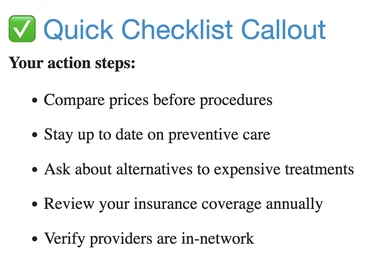
  • Shop around for care: Even within the same cityor the same hospitalprices for the same procedure can vary by thousands of dollars. Use insurer cost-estimator tools and independent price-transparency platforms before scheduling.

  • Invest in prevention: Schedule regular primary care and preventive screenings. The report highlights that the system is rewarding specialty care over prevention, but individuals can prioritize prevention to stay healthier longer.

  • Understand your plan: Rising premiums and deductibles mean higher out-of-pocket exposure. Review your coverage each year and consider whether a high-deductible plan paired with an HSA makes sense.

  • Ask about alternatives: New therapies, like GLP-1 medications for weight loss, may offer different risk/benefit tradeoffs than surgeries or procedures. Patients should ask providers to explain all available treatment paths.

  • Be wary of surprise billing: Price variation is extreme. Always confirm in-network status for both facilities and individual providers before care.


Consumer Guide

How to navigate an expensive, inefficient system:

  1. Check quality ratings: CMSs Care Compare, Leapfrog, and state report cards can provide useful hospital and provider benchmarks.

  2. Dont skip primary care: A strong relationship with a primary care doctor reduces the risk of late-stage chronic disease.

  3. Monitor prescriptions: More than 75% of FDA-approved drugs are not deemed cost-effective abroad. Ask about generics and evidence-based alternatives.

  4. Leverage employer benefits: Employers often offer wellness programs, telehealth options, or incentives for preventive care. Use them.

  5. Know when to escalate: Emergency room upcoding has surgedmeaning patients are billed at higher levels of care. If the situation isnt life-threatening, consider urgent care or telehealth first.


Posted: 2025-10-07 13:36:46

Get Full News Story On Consumer Affairs


Listen to this article. Speaker link opens in a new window.
Text To Speech BETA Test Version.


More News From This Category
Consumer News: Consumer confidence fell this month as Americans worry about jobs and the economy
Wed, 26 Aug 2026 13:07:14 +0000

Theres growing concern about what the next few months will bring

By Mark Huffman of ConsumerAffairs
August 26, 2026
  • U.S. consumer confidence fell for a second straight month in August as Americans became more pessimistic about the economys direction.

  • Consumers viewed current job and business conditions more favorably, but expected slower income growth and fewer employment opportunities ahead.

  • Prices, interest rates and household finances remain concerns, prompting consumers to reconsider some discretionary purchases and services.


Gas prices, electric bills, food prices theyre all taking a toll. Americans are feeling somewhat better about todays job market, but their confidence in the months ahead continues to deteriorate.

The Conference Boards Consumer Confidence Index declined 0.8 points in August to 89.4, down from 90.2 in July. It marked the second consecutive monthly decline, according to the organizations August Consumer Confidence Survey.

The relatively small change in the headline number masked a growing divide between how consumers view current conditions and what they expect over the next six months.

The Present Situation Index, measuring views of current business and labor market conditions, rose 6.8 points to 121.2. But the Expectations Index, which measures the outlook for income, jobs and business conditions, dropped 5.8 points to 68.2.

An Expectations Index reading below 80 has historically been associated with an increased risk of recession. However, the survey found that consumers still viewed the likelihood of a recession over the next year as relatively low.

Consumer confidence moderated slightly in August for a second consecutive month, Dana Peterson, chief economist at The Conference Board, said in a statement. She noted that improved assessments of present conditions were offset by greater pessimism about the future.

Job market looks better today, less certain tomorrow

Consumers views of the current labor market improved significantly. Twenty-seven percent said jobs were plentiful, up from 24.4% in July. Meanwhile, the share saying jobs were hard to get fell to 19.5% from 21.7%.

The outlook was less encouraging. Only 14.6% expected more jobs to become available over the next six months, down from 16.4%. More than one-quarter 26.1% expected fewer jobs.

Income expectations also weakened. The share of consumers expecting their income to increase declined to 17.6% from 19.5%, while 13.8% expected their income to fall, up from 12.6%.

The findings suggest that even consumers who feel secure today may be growing more cautious about major purchases and taking on additional debt.

Prices remain a persistent concern

When consumers were asked what was affecting their view of the economy, references to prices remained elevated. Respondents frequently mentioned oil and gasoline, while concerns about groceries, trade, jobs and international conflicts increased during August.

Both average and median inflation expectations for the next 12 months rose slightly. In addition, 61.3% of consumers expected interest rates to increase over the coming year, although that was down from 62% in July.

Higher borrowing costs can affect household budgets by making credit card balances, auto loans and mortgages more expensive. Expectations of continued inflation can also cause consumers to reduce discretionary spending, particularly if they are unsure about future income.

Confidence was highest among consumers younger than 35 and among higher-income households. Generation Z and millennials remained more confident than Generation X, baby boomers and members of the Silent Generation.

Spending plans turn more cautious

Consumers continued to show strong interest in buying cars, while homebuying expectations slipped slightly. Furniture and smartphones remained the most desired durable goods, although plans to purchase smartphones continued to moderate.

Planned spending on televisions showed the largest decline. Consumers also expected to spend less on airfare, hotels, movies, amusement parks, museums and other discretionary activities.

Restaurants, utilities and streaming, internet and mobile services remained among consumers top spending priorities. Pet-care spending also stayed relatively strong.

The results point to a consumer who has not stopped spending but is becoming more selective. That caution could matter to the broader economy because consumer spending accounts for roughly two-thirds of U.S. economic activity.


Consumer confidence fell this month as Americans worry about jobs and the economy

Photo By CNET

Read More ...


Consumer News: Your boss may be watching: Workplace surveillance has become more sophisticated
Wed, 26 Aug 2026 13:07:14 +0000

The practice increased significantly during COVID

By Mark Huffman of ConsumerAffairs
August 26, 2026
  • Employers can monitor emails, web browsing, keystrokes, locations, conversations and even physical movements, often using artificial intelligence to evaluate the data.

  • Workplace surveillance has expanded with remote work and increasingly sophisticated software, but research raises questions about its accuracy and effects on morale.

  • Monitoring is generally legal on company-owned systems, although state laws vary and employers may face limits involving discrimination, labor organizing and protected communications.


Employers have always kept an eye on workers, but the digital workplace has given them far more ways to do it.

Companies can now track when employees sign in, which websites they visit, how often they move their mouse and how quickly they complete individual tasks. Monitoring may also extend beyond the computer to include vehicle locations, recorded conversations, wearable sensors and artificial intelligence that analyzes worker behavior.

The trend accelerated as millions of employees began working remotely during the COVID-19 pandemic. Employers wanted a way to determine whether people outside the office were working, creating a growing market for employee-monitoring software sometimes called bossware.

A 2024 Government Accountability Office report concluded that employers across a range of industries were increasingly using digital surveillance. The most frequently mentioned tools included cameras and microphones, computer-monitoring software, location tracking, mobile apps and wearable devices.

Computer software can record keystrokes and mouse movements, take screenshots, review browser histories and measure how long a user remains active. Some programs periodically photograph employees through their webcams or use artificial intelligence to flag behavior considered unusual.

Monitoring is not limited to office workers. Delivery companies may use GPS to measure routes, speed and stops. Warehouses can track how quickly employees select or package products.

Call centers routinely record conversations and measure the time representatives spend on each call. Trucking companies may use inward-facing cameras to check whether drivers are distracted.

Wearable devices can monitor body movements and, in some cases, collect biometric information such as heart rate or blood pressure, according to the GAO report.

Why companies monitor workers

Employers say monitoring can serve legitimate purposes. It can help protect customer information, detect cyberattacks, investigate theft and document harassment or other misconduct. GPS systems can improve delivery routes, while cameras and wearable sensors may help prevent accidents.

Recorded customer-service calls can be used for training, and access logs can alert a company when an unauthorized person attempts to view sensitive files.

Problems arise when monitoring intended for security or safety is also used to generate productivity scores or make decisions about discipline, promotions and dismissals.

A worker may appear inactive while reading printed documents, talking with a customer or thinking through a difficult problem. Software that primarily counts keystrokes or mouse movements may not recognize those activities as productive work.

That can encourage productivity theater, in which workers focus on looking busy instead of completing meaningful work. Some employees use automated mouse-moving devices or keep unnecessary documents open to prevent monitoring programs from labeling them inactive.

The effects on workers

The American Psychological Association found that employees who knew they were being monitored were more likely to report stress and concerns about their psychological safety at work. Monitored employees were also more likely to feel tense during the workday and to say their workplace harmed their mental health.

Data suggests that electronic monitoring is associated with psychological distress, the APA said in reporting its survey results.

The GAO found sharply divided opinions about surveillances effect on productivity. Some employers and technology providers said it improved performance by identifying areas where workers needed coaching. Workers, unions and researchers said it could lower morale, increase stress and produce misleading performance measurements.

Privacy was the most frequently raised concern in the GAOs review. Stakeholders also warned that automated scoring systems could discriminate against pregnant employees, workers with disabilities and people who need additional or more frequent breaks.

Surveillance can also create labor-law issues if it is used to identify or discourage employees discussing working conditions or organizing a union.

Is workplace monitoring legal?

In the United States, employees generally have limited expectations of privacy when using a companys computer, phone, email account or network. Employers usually have broad authority to monitor company equipment when there is a legitimate business reason.

However, the rules are not unlimited. Some states, including New York, Connecticut and Delaware, require certain employers to notify workers about electronic monitoring. State laws may also restrict audio recording, biometric-data collection and GPS tracking.

Monitoring that captures private health information, interferes with protected union activity or is applied in a discriminatory manner may violate other laws. Recording audio can be especially complicated because consent requirements differ by state.

Workers should assume activity on a company-owned device or network may be visible to the employer. Personal email, banking, medical searches and other sensitive activities are best kept off workplace equipment.

Employees can also review their companys technology and privacy policies and ask what information is collected, how long it is stored and whether it is used in employment decisions.

Workplace monitoring is likely to keep growing as AI makes it easier to analyze enormous amounts of employee data. The concern is not simply whether employers are watching, but whether the information they collect accurately measures performanceand whether workers know how it will be used.


Your boss may be watching: Workplace surveillance has become more sophisticated

Photo By CNET

Read More ...


Consumer News: Grand Central Bakery recalls sourdough bread after nail found in loaf
Wed, 26 Aug 2026 13:07:14 +0000

Its a limited recall but one of several caused by metal fragments

By Mark Huffman of ConsumerAffairs
August 26, 2026
  • Grand Central Bakery has recalled three varieties of Potato Sourdough bread that may contain pieces of metal.

  • The bread was sold Aug. 10 at grocery stores, restaurants, wholesalers and Grand Central Bakery cafs in the Seattle and Tacoma areas.

  • No injuries or illnesses have been reported, but consumers should discard any recalled bread they still have.


Metal continues to show up in human and pet food, triggering recalls. Grand Central Bakery is recalling several Potato Sourdough bread products sold in Washington state after a pallet nail was discovered in a loaf.

The Seattle bakery said the recalled bread may contain pieces of metal and should not be eaten. The problem was traced to a single batch of dough, according to a company announcement posted by the U.S. Food and Drug Administration.

The recall was originally announced Aug. 13 and later expanded to add Metropolitan Market locations to the list of stores that sold the bread.

The recalled products were sold on Aug. 10 in the Seattle and Tacoma metropolitan areas. They include:

  • Potato Market Loaf, 20 ounces, packaged in a paper bag with UPC 733163001576

  • Potato Table Loaf, 20 ounces, sold without packaging

  • Mini Potato Loaf, 12 ounces, sold without packaging

All three products were sold under the Grand Central Bakery brand. They are ready-to-eat breads intended to be consumed without further preparation.

What to do

The affected bread was distributed through grocery stores, select restaurants, wholesalers and four Grand Central Bakery caf locations in Burien, Eastlake, Wallingford and Wedgwood.

Grocery retailers that may have carried the bread include Central Co-op, Fred Meyer, Hilltop Red Apple, Kens Market, Marketime Foods, PCC Community Markets, QFC, Town & Country Market, Thriftway, Whole Foods Market, Yakima Fruit Market and Metropolitan Market.

Because the bread has a listed shelf life of only one day, most loaves are unlikely to remain in consumers homes. However, people who froze the bread or otherwise still have it should check when and where it was purchased.

No injuries or illnesses associated with the recalled bread had been reported as of the companys announcement. Metal fragments in food can cause cuts or other injuries to the mouth, throat and digestive tract.

Consumers who purchased any of the affected products on Aug. 10 should throw them away. The company did not instruct customers to return the bread to a store.

Questions may be directed to Grand Central Bakery at 503-232-0575 from 8 a.m. to 3 p.m. Pacific time, Monday through Friday. Consumers may also email seasales@grandcentralbakery.com or use the contact form on the companys website.


Grand Central Bakery recalls sourdough bread after nail found in loaf

Photo By CNET

Read More ...


Consumer News: Dolly Parton, country music icon and cultural force, dies at 80
Wed, 26 Aug 2026 13:07:13 +0000

Her influence extended far beyond music

By Mark Huffman of ConsumerAffairs
August 26, 2026
  • Dolly Parton died peacefully Tuesday in Nashville at age 80, according to her publicist.

  • Her music crossed generations and genres, influencing country, pop, rock, and bluegrass performers.

  • Parton also created an international childrens literacy program and helped support COVID-19 vaccine research.


Dolly Parton, the singer-songwriter who turned a childhood in rural poverty into one of the most successful and influential careers in American entertainment, died Tuesday in Nashville. She was 80.

Parton died peacefully, according to a statement from her publicist. A cause of death was not immediately disclosed. Her family plans to have a small private service and has asked fans to support Dolly Partons Imagination Library in place of sending flowers.

Although Parton was usually described as a country star, that label never fully captured her reach. Her songs became pop standards, movie themes, workplace anthems, and social-media favorites discovered and rediscovered by successive generations.

Timeless classics

Her best-known compositions include Jolene, Coat of Many Colors, 9 to 5, and I Will Always Love You. The last of those became a worldwide hit for Whitney Houston, but Parton originally wrote and recorded it as a farewell to her longtime television and musical partner, Porter Wagoner.

That ability to turn a complicated experience into a simple, emotionally direct song was central to Partons success. Her lyrics addressed poverty, ambition, heartbreak, jealousy, and the struggle to maintain dignity when life becomes difficult.

Born Dolly Rebecca Parton on Jan. 19, 1946, near Sevierville, Tennessee, she was one of 12 children. Her family had little money, and Parton frequently drew on those early experiences in her music.

She moved to Nashville shortly after graduating from high school and initially found success as a songwriter. Her appearances on The Porter Wagoner Show introduced her to a national country audience, but she eventually left the partnership to build a solo career.

The decision paid off. Parton became one of the few country performers to move easily between country and mainstream pop without abandoning her musical identity.

She won 10 Grammy Awards and earned 55 nominations across categories that included country, pop, gospel, bluegrass, and spoken word. The Recording Academy also presented her with a Lifetime Achievement Award, while Jolene and I Will Always Love You entered the Grammy Hall of Fame, according to Partons Recording Academy biography.

An anthem for working people

Parton reached an even wider audience through the 1980 movie 9 to 5, in which she starred alongside Jane Fonda and Lily Tomlin. The comedy focused on three women pushing back against a dishonest and abusive boss.

Its title song became one of Partons biggest hits and remains an instantly recognizable description of workplace frustration. Decades later, the song continued to appear in movies, television programs, political campaigns, and online videos.

Parton also appeared in films including The Best Little Whorehouse in Texas and Steel Magnolias. She later expanded into television production, books, and Broadway.

Her business career was equally successful. Dollywood, her theme park in East Tennessee, became a major tourist attraction and employer in the region. Unlike celebrities who simply licensed their names to a product, Parton maintained a close public connection to the park and the surrounding community.

Turning fame into something useful

Partons most far-reaching project may be the Imagination Library, which she created in 1995. The program mails free, age-appropriate books to children from birth until they begin school, regardless of family income.

What began as a local effort in Tennessee expanded into an international literacy program that has delivered hundreds of millions of books.

Parton also donated $1 million to Vanderbilt University Medical Center for coronavirus research. Some of that funding supported early research connected to Modernas COVID-19 vaccine.

Her generosity was part of a carefully maintained public identity that crossed many of the divisions common in American culture. Parton rarely engaged in partisan politics, but she consistently supported literacy, disaster relief, and equal treatment.


Dolly Parton, country music icon and cultural force, dies at 80

Photo By CNET

Read More ...


Consumer News: Waiting for the economy to get better? 4 money moves you shouldn't put off
Wed, 26 Aug 2026 01:07:10 +0000

Nearly half of Americans are delaying financial decisions but waiting can leave you more vulnerable

By Kyle James of ConsumerAffairs
August 25, 2026
  • Nearly half of Americans are delaying financial decisions. Many are waiting until the economy feels more stable, but this can leave your finances more vulnerable.

  • Start with moves you can afford now. Build a small emergency fund, attack high-interest debt, and contribute enough to capture your employers full retirement match.

  • Check for holes in your financial safety net. Review your insurance, deductibles and beneficiaries, and ask which unexpected expense would hurt your household the most.


Nearly half of Americans are waiting for the economy to feel safer before making an important financial move.

That's according to Mutual of Omaha's 2026 Protection Index Report, which found 46% are delaying a financial decision until the economy feels more stable. Just 21% are considered Protection Confident, down from 26% in 2023.

So what should you not put off?

ConsumerAffairs interviewed Nate Hobson, vice president of sales, Advisor Network at Mutual of Omaha, to find out.

The challenge is that waiting can sometimes leave you more exposed, Hobson told us. You don't need a lot of extra money to start making progress.

Here are four smart places to start.

1. Build a $500 'life happens' fund

You've probably heard that an emergency fund should cover three to six months of expenses. That's a great goal. It's also intimidating when you have $37 in savings. So, start smaller.

Maybe it's setting aside $10, $25, or $50 a month to start building an emergency fund, Hobson said.

Your first target could simply be enough to prevent an ordinary financial headache like a flat tire, veterinarian bill, or broken appliance from landing on a high-interest credit card.

The survey found emergency savings was one of the top things Americans associate with feeling financially secure.

Pro tip: Name your savings account something painful. Emergency Savings is easy to raid, instead try something like Don't Put the Water Heater on Visa or Car Repair Fund. Giving the money a specific purpose can make dipping into it for concert tickets or a new TV feel a lot less tempting.

2. Make expensive debt your financial emergency

If you're carrying a high-interest credit card balance, waiting for the economy to improve isn't going to stop the interest meter.

Hobson says putting even a modest amount toward a credit card balance can reduce debt and improve credit utilization.

And consumers clearly have debt on their minds. When survey respondents were asked what they'd do with an unexpected $1,000, paying down debt was the most popular answer, followed by adding to savings.

If you have several balances, consider directing extra money toward the debt charging you the highest interest rate while making minimum payments on the others.

Pro tip: Calculate your interest rent. Look at your latest credit card statement and find how much interest you were charged last month. Multiply it by 12. Seeing that you're potentially paying $900 or $1,500 a year just for the privilege of carrying debt can provide considerably more motivation than staring at an APR.

3. Don't accidentally turn down part of your paycheck

Retirement can feel like the easiest financial goal to postpone because you won't need the money tomorrow.

But there's one contribution you should be especially reluctant to skip which is the amount needed to capture your employer's full retirement match, if one is offered.

If your employer offers a retirement match, that's an opportunity you don't want to overlook, Hobson said.

If money is too tight for a major contribution increase, try moving the percentage up gradually. Going from 4% to 5% probably won't transform your paycheck. Repeating that move over several years could transform your retirement savings.

Pro tip: Give your next raise to your future self before you meet it. When you get a 3% raise, immediately send one percentage point to retirement. Your take-home pay still increases, but so does your savings rate. It's much easier than trying to cut spending later to find that same money.

4. Find the financial hole that could sink you

Some expenses are too big for even a healthy emergency fund. That's why Hobson recommends looking beyond savings and reviewing the insurance protecting you and your family.

Only 4% of Americans surveyed said they feel fully financially protected, even though 89% feel responsible for protecting their family's financial future.

Hobson says you may actually be in better financial shape than you think if you're keeping debt manageable, regularly saving something, and have appropriate insurance for the people who depend on you.

The warning signs that youre struggling financially are fairly straightforward. If one surprise expense could push you further into debt, saving keeps getting crowded out by other priorities, or you're unclear about whether your insurance would be enough when it matters, your financial safety net may have some gaps, he said.

Review your life, disability, homeowners or renters, and auto coverage. Check your deductibles and beneficiaries while you're at it.

Pro tip: Do the gone tomorrow test. Ask yourself, If my paycheck disappeared tomorrow, what bill would create the biggest financial disaster for my family? Your answer can reveal whether your biggest weakness is emergency savings, debt, disability coverage, life insurance, or something else entirely.

You might be doing better than you think

One of the more interesting findings from the Protection Index is the disconnect between what Americans are doing and how secure they feel.

Despite low confidence, 57% are cutting nonessential spending, 54% use rewards programs, 39% compare prices or switch providers, and 38% follow a monthly budget.

Those aren't the behaviors of people who have completely given up on their finances.

The problem may be that financial security can feel like an all-or-nothing achievement: Either you've got six months of expenses saved, no debt, a huge retirement account and perfect insurance coverageor you're failing.

Hobson's advice is much more practical. Small steps, done consistently, can put you in a much stronger position over time.

Read More ...


Related Bing News Results
Consumer Reports car safety alert: Preventing hot car fatalities
Mon, 24 Aug 2026 14:29:00 GMT
It’s a frightening number: On average, 37 children die every year after being left behind or becoming trapped in a car. Those numbers come from a national group that tracks pediatric heatstroke deaths ...

This is the best French door refrigerator, per Consumer Reports
Sat, 22 Aug 2026 06:39:00 GMT
French door refrigerators are popular for their aesthetic design, but some models can be prone to problems. Consumer Reports rated this one the highest.

Consumer Reports: Simple steps to help slash daily screen time
Fri, 24 Apr 2026 01:25:00 GMT
Most of us know that too much scrolling on our phones isn’t great for our mental health. And now, a new approach to dialing down the digital noise is ironically trending on social media—of all places.

Consumer Reports Just Dropped $3 Million on Its Biggest Ad Push in Five Years
Tue, 03 Mar 2026 09:13:00 GMT
Why is my laundry taking two hours? Is this sunscreen water-resistant? Will my dishes be dry when the dishwasher finishes? In its first major marketing push in more than five years, the non-profit ...

Consumer Reports Labels Explained: Recommended, Top Pick, Best Brand, Best of, and Smart Buy
Tue, 10 Feb 2026 03:30:00 GMT
Consumer Reports (CR) uses several designations to help shoppers quickly identify products and services that rate well in our independent evaluations. When data is available, these designations also ...


Blow Us A Whistle


RobinsPost Print On Demand Refund Policy With Printify
Printify

Related Product Search/Búsqueda de productos relacionados

Amazon Logo