

Rockin Robin SongFlying The Web For News.
RobinPost Logo Amazon Prime Deals


Consumer Daily Reports

The hidden pages and buttons Amazon hopes youre too busy to click

By Kyle James of ConsumerAffairs
December 10, 2025
  • Use the Amazon app to break the price by tapping through sizes, colors, and pack counts, and compare per-unit prices the non-default option is often cheaper

  • Start on the Amazon Coupons page, clip a coupon for something you already buy, then stack it with Subscribe & Save for extra savings (and cancel later if you want)

  • Before paying full price, check Amazon Resale for open-box Like New or Very Good items, often 2070% off on electronics, appliances, kids gear, and seasonal stuff


Amazon is really good at convincing you that youre already getting the best possible deal. Limited-time deal, little strikethrough was prices, lightning deals flashing at you from every corner of the screen.

But there are a few features buried on their website that flip the power a bit back in your favor. They dont require promo codes, browser extensions or being glued to your phone 24/7, just a little setup and some patience.

Here are three under-used ways to quietly pay less on Amazon.

1. Use the app to Break the price: sizes, colors, and pack tricks
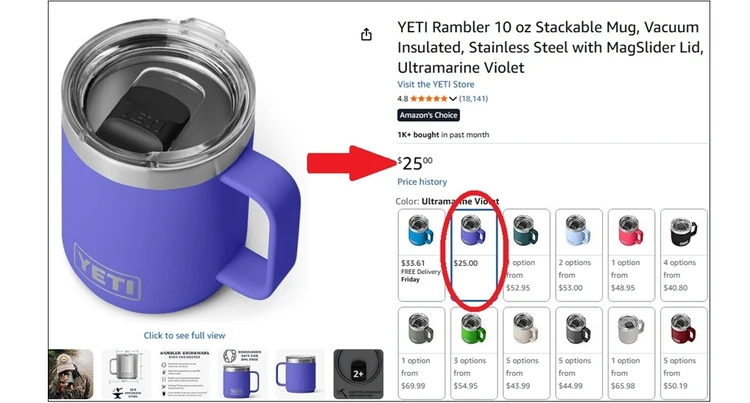
Photo

Amazon rarely charges the same price for every version of the same item. Have you ever noticed that sometimes a different size, color, or pack count is dramatically cheaper for no logical reason? The only way to see it is to start tapping around.

Think of it as breaking the price and looking for the one-off. That one weird variant that the Amazon pricing algorithm forgot to mark up.

How to do it in the Amazon app

The first thing youll want to do is find an item you actually buy regularly. Think items like detergent, T-shirts, or snacks. Then do the following test:

  1. Open the product page and scroll just below the main price.
  2. Tap through every size option (16 oz, 24 oz, 32 oz, 3-pack, 6-pack, etc.). Watch how the price changes each time.
  3. Do the same with colors and styles. Some colors cost more simply because theyre more popular. Others are weirdly cheaper.
  4. Tap Other sellers when they appear. Youll want to do that as sometimes a 3rd party seller will have the exact item cheaper than Amazon directly, but in a slightly different size or pack. Thats when you want to pounce on the savings.

Pro tip: The key with this tip is to always watch the per-unit price, not just the total price. For example, a giant value pack of a product, that looks like a deal, will often be more expensive per ounce, or per count, than a smaller size in a different color or scent.

Where this hack saves the most

  • Household staples: Products like paper towels, toilet paper, detergent, dish soap, trash bags, and pet food.
  • Basics with lots of variants: Underwear, socks, shoes, T-shirts, water bottles, storage bins, phone cases.
  • Snacks and pantry foods: Different flavors or pack sizes of the same chips, bars, or coffee can vary wildly.

Example: The 120-count pack of trash bags might be more per bag than the 80-count in a different scent. Or the navy hoodie is mysteriously $26 while the black one is $34.

Quick rule of thumb

  • I like to always change at least one thing (size, color, pack count) before I buy. Ive found that if you get in the habit of only buying the default option, you end up overspending.
  • Also, heres a tip if youre in a rush. Check one smaller size and one larger size and one different color. If the per-unit price doesnt move much, go ahead and buy it. If the price jumps around, its worth a deeper look when you have more time.

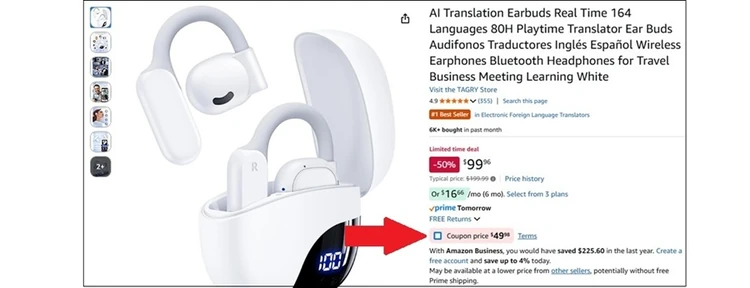
2. Stack the Secret coupon page with Subscribe & Save
Photo

Amazon has a dedicated coupons hub that most shoppers never think to visit. Instead, they only notice coupons when they happen to see a small orange or green coupon flag under a price on a product page.

You need to actually flip that around and always start on the coupon page, then work backward to the product.

How to use the coupon page:

  1. Search for Amazon Coupons in Amazons search bar and it will take you to the main coupons page.
  2. You can then filter by category (for example, Grocery, Home, Electronics).
  3. Scroll down until you see something you actually buy anyway. Think laundry detergent, trash bags, razors, and snacks.
  4. Click Clip coupon before adding the item to your cart. The discount applies automatically at checkout so if you dont clip it, you pay full price even though a coupon was available. Not good.

The secret move: combine with Subscribe & Save

For eligible items, you can stack the following:

  • The clipped coupon you found.
  • Then stack that with the Subscribe & Save discount which is often 515% off. Sometimes the discount is more depending on how many active subscriptions you have.

That combination will often beat any sale price youll find at your local store.

When this works best

  • Try to use this hack when buying non-perishables that youll definitely use. Things like paper towels, dish soap, dog food, toilet paper, and vitamins.
  • Are you flexible on the brand? If so, always start from the coupon page and let the coupon decide what you buy, instead of searching your usual brand name and paying more.

Watch-outs

  • Track your subscriptions. If prices creep up over time, the subscription discount can mask a higher base price.
  • Set reminders to re-check prices every few months and cancel anything thats no longer a deal.

Pro tip: Amazon lets you cancel the subscription as soon as the first product is sent. So if you wanted to sign-up for the Subscribe & Save, get the discount, then cancel, there is nothing stopping you. Just be careful to not do this too much as it might get your account flagged.

3. Shop Amazon Resale (open-box) instead of paying new prices

One of Amazons biggest under-the-radar money-savers is Amazon Resale (used to be called Amazon Warehouse).

Its basically the place where a lot of their returns end up. They are your open-box, pre-owned, and slightly imperfect items sold at a big discount, often in the 2070% off range.

These items are inspected and graded (Like New, Very Good, Good, Acceptable), and most are still eligible for Prime shipping and the standard return window.

How to find Amazon Resale deals

  • Search Amazon Resale or Amazon Warehouse in your browser to go directly to the storefront, or
  • Look for condition options (Used Like New, Used Very Good, etc.) under the Other sellers section on a product page.

Once youre there:

  1. Filter by category (electronics, home & kitchen, tools, baby, etc.).
  2. Sort by price or discount size if possible.
  3. Read the condition notes carefully. They are usually very good at telling you about any damage. You want to know if the damage is just to the packaging or to the actual product itself.

The products where this saves you the most

  • Electronics & gadgets: In particular you can find deals on headphones, laptops, monitors, tablets, routers, and Bluetooth speakers.
  • Small appliances: Think things like air fryers, mixers, vacuums, and coffee makers. These items are often returned by shoppers after testing them once and nit-picking a small detail and returning them.
  • Kids gear and seasonal items: You can find really good Resale deals on strollers, playpens, patio furniture, and even holiday dcor. All products where you care more about function than if the packaging has a small crease or rip in it.

Things to watch out for

Ive found that items that are good deals can disappear quickly from the Resale section. In other words, if you see a highly discounted Like New item, especially if its something you already planned to buy, youd be smart to buy it quickly. Otherwise, theres a great chance it wont be there the next time you look.

Also, be sure to always double-check that the seller is Amazon (or an Amazon Resale listing) if you care about the standard 30-day return window. Sometimes 3rd parties have a wonky return policy, so be sure you know what it is before buying from them.


Posted: 2025-12-10 02:12:27

Get Full News Story On Consumer Affairs


Listen to this article. Speaker link opens in a new window.
Text To Speech BETA Test Version.


More News From This Category
Consumer News: Your smart TV may be tracking everything you watch—Here’s how to stop it
Fri, 01 May 2026 22:07:07 +0000

The privacy setting most TV owners never change

By Kyle James of ConsumerAffairs
May 1, 2026
  • Many smart TVs use ACR to track everything on your screennot just apps, but cable, gaming, and anything connected via HDMI.

  • This data is used to build ad profiles and track your viewing habits, often with settings turned on by default during setup.

  • You can limit tracking by turning off ACR and ad settings, reviewing privacy controls, or disconnecting your TV from Wi-Fi.


Smart TVs have quietly become one of the most overlooked privacy risks in your home.

A recent study found that many TVs are essentially taking digital snapshots of your screen every 15 to 60 seconds and capturing what youre watching. They dont just do it through streaming apps either, they capture screenshots via almost anything you have connected to your TV. This including cable boxes, streaming devices, gaming consoles, and even your laptop.

Its happening through a technology called Automatic Content Recognition (ACR). And for most people, its turned on by default when you take your TV out of the box and plug it in.

Heres whats actually going on, and more importantly, how to shut it down.

What your TV is really doing behind the scenes

ACR works like a constant identification system running in the background of your TV.

But instead of only tracking what you watch through apps like Netflix or Hulu, its designed to recognize anything that appears on your screen, no matter the source.

Heres how it actually works:

  • Captures tiny visual fingerprints of your screen
  • Matches them against databases
  • Sends that data back to the manufacturer

That means your TV can track:

  • Streaming apps
  • Live TV
  • Gaming sessions
  • Anything plugged in via HDMI

In other words, your TV isnt just tracking what you stream. Its actually tracking everything you watch on that screen, regardless of where it comes from.

Why companies are doing this

Its important to realize that companies arent snapping screenshots of your TV to improving your viewing experience. Theyre doing it to collect your data.

TV manufacturers are no longer just selling you a device so you can watch your favorite shows. Theyre actually building advertising businesses based on your viewing habits.

That data they collect can then be used to:

  • Target ads more precisely
  • Sell aggregated viewing data to other companies
  • Track your behavior across multiple devices

And in many cases, users dont fully realize theyve agreed to it.

Why this matters for everyday consumers

For most households, this isnt just a tech issue, its a much bigger privacy issue.

The biggest concerns are:

  • Tracking happens even outside streaming apps
  • Opt-in consent is often buried deep in setup screens
  • Opting out isnt always straightforward

And unlike your phone or laptop, TVs tend to get much less attention when it comes to privacy settings.

How to turn off tracking on your smart TV

The good news is that you can disable most of this tracking in just a few minutes. You just need to know where to look in the TV settings.

Look for things in your settings like:

  • Viewing Information Services
  • Live Plus
  • ACR
  • Interactivity Services
  • Advertising ID

Brand-specific shortcuts:

  • Samsung: Settings Support Terms & Policy Viewing Information Services Turn off
  • LG: Settings All Settings Support Additional Settings Live Plus Turn off
  • Vizio: Settings System Reset & Admin Viewing Data Turn off

Also, its worth noting that turning these settings off will not affect your ability to use streaming apps.

5 simple ways to protect your privacy right now

If you want to go further, here are a few easy steps that make a big difference:

1. Review your TV settings today. Most people never revisit their setup choices. Spend fiveminutes going through privacy and data settings and youll likely find multiple tracking features enabled.

2. Disconnect devices you dont use. If you have old HDMI devices plugged in (like unused consoles or cable boxes), unplug them. ACR can still see those inputs.

3. Limit ad personalization. Look for options related to:

  • Interest-based ads
  • Ad tracking
  • Personalized recommendations"

4. Consider buying an Apple TV. Apple TV is the only major streaming device that doesnt have ACR built into it. So, if youre concerned about giving up too much privacy, and you're in the market for a new streaming device, youll definitely want to consider an Apple TV.

Be warned that Roku, Google TV, and Amazon Fire Stick allfeature ACR straight out-of-the-box.

But heres how to disable ARC on these three popular devices:

  • Amazon Fire Stick: Settings Preferences Privacy Settings Toggle Automatic Content Recognition to "Off"
  • Roku: Settings Privacy Smart TV Experience Uncheck "Use info from TV inputs"
  • Google TV: Settings Privacy Ads then select Delete Advertising ID

5. Disconnect your TV from Wi-Fi (if you can)

If you mainly use cable, a digital TV antenna, or external devices, disconnecting your TV from the internet stops most tracking immediately.

Dont forget about smart speakers too

Devices like Amazon Echo or Google Nest are always listening for a wake word like Alexa or Hey Google. While theyre not actively recording everything, theyre constantly scanning audio in the background to detect when you speak.

That creates a few potential issues:

  • Accidental recordings:The device can mishear a word and start recording without you realizing it.
  • Stored voice data:Commands and snippets are often saved to your account in the cloud.
  • Data used for training and ads:Companies use this data to improve voice recognition and personalize experiences.

For most users, the bigger concern isnt one single recording, but rather the accumulation of hundreds of small interactions over time.

What to do:

  • Review and delete your voice history regularly in your account settings.
  • Turn off the microphone when youre not using the device.
  • Check privacy settings for options like help improve services or data sharing and turn them off.

Many people never realize their voice history is stored. Its worth checking, as youll likely find months (or years) of recordings saved.


Read More ...


Consumer News: Why vapes are becoming a bigger risk for young kids
Fri, 01 May 2026 19:07:08 +0000

New data shows nicotine dangers are shifting inside homes

By Kristen Dalli of ConsumerAffairs
May 1, 2026
  • A new study found nicotine exposures from cigarettes declined in young children, while vape-related incidents rose sharply.

  • Researchers reviewed more than 92,000 poison control reports involving children age 5 and younger.

  • Unlike cigarettes, many recent vape exposures involved children directly inhaling from devices.


For years, cigarettes were considered one of the biggest nicotine-related hazards for young children at home. But a new study suggests that risk is changing as vaping devices become more common.

Researchers found that while traditional tobacco exposures among young children have been declining, incidents involving e-cigarettes are rising quickly instead.

The concern isnt just that children are getting into nicotine products its how theyre being exposed. Unlike traditional cigarettes, which often involve accidental ingestion or contact, many newer cases linked to e-cigarettes involve children actually inhaling from the devices.

Because many vapes are colorful, compact, and easy to activate, researchers say they may be more accessible and more appealing to curious young children.

"This significant spike in children breathing in these substances tells us the risk has changed: Its no longer just about a toddler swallowing something they found on the floor, researcher Perry Rosen said in a news release. Many recent cases involve children actively using e-cigarette devices after gaining access to them.

How the study worked

Researchers from the New Jersey Poison Control Center analyzed reports from the National Poison Data System, a database that collects poison exposure cases from across the United States.

The team looked specifically at nicotine exposure reports involving children age 5 and younger between 2016 and 2023. In total, the study included more than 92,000 reported exposures.

The researchers compared different types of nicotine products, including conventional tobacco products such as cigarettes, as well as newer products like disposable e-cigarettes and nicotine pouches.

Their goal was to better understand how childrens nicotine exposure risks have changed as the nicotine product landscape has evolved. According to the study, this was the first analysis to examine exposure trends across all nicotine product categories in young children over this time period.

What researchers found

The study found that exposures involving conventional tobacco products dropped by 43% during the study period.

At the same time, incidents involving e-cigarettes increased by 243%. Researchers also found that children exposed to e-cigarettes were more likely to require evaluation at a healthcare facility compared with children exposed to cigarettes.

Researchers noted that existing safety measures, such as child-resistant liquid nicotine containers, may help reduce accidental swallowing but do not address a newer pattern of exposure: children mimicking adults or older family members who vape.

The authors suggest that future safety efforts may need to focus not only on packaging, but also on device-level protections that make products harder for children to use.

Current laws, which focus on child-resistant packaging for nicotine liquids, are no longer enough, said researcher Diane Calello, executive and medical director of the New Jersey Poison Control Center.

This study underscores the need for safety regulations at the device level. For example, manufacturers should be required to include flow restrictors or designs that make it more difficult for a child to activate a device.


Read More ...


Consumer News: The summer spending shift is already happening — Here’s how to stay ahead
Fri, 01 May 2026 19:07:08 +0000

The early summer trends that could impact your budget

By Kyle James of ConsumerAffairs
May 1, 2026
  • Spending isnt dropping: Its being redirected toward basics and home-focused activities, with less going to convenience and extras.

  • The best way to save right now is to shop more intentionally:Cook from scratch, plan purchases, and take advantage of sales and cash back.

  • Prices on gas and seasonal items are rising early: Buy sooner, combine trips, and expect more spending at home instead of travel.


Summer hasnt officially started yet, but your wallet can already feel it.

New data from Ibotta shows shoppers arent necessarily spending less; theyre just spending differently. Instead of cutting everything, people are shifting money away from convenience and splurges and putting it toward essentials and at-home living.

Heres whats changing and how you can actually use it to save money this summer.

1. Shift your grocery strategy (This is where the biggest savings are)

Shoppers are moving away from convenience foods like frozen meals and pre-made items, and back toward basics like meat, produce, and pantry staples.

Consumers are realizing that convenience comes at a price, and right now, people are trying to stretch every dollar.

What to do:

  • Build meals around ingredients, not shortcuts like expensive pre-made/frozen meals.
  • Buy larger packs of meat and portion it yourself.
  • Stick to a simple weekly meal plan to avoid those impulse buys.

Pro tip: The middle aisles (snacks, cereal, frozen meals) are where budgets quietly blow up. Shop the perimeter first.

2. Expect to spend more at home And plan for it

A lot of people are scaling back travel this summer. Costs are up, and according to the data, nearly a third of shoppers say theyre taking fewer trips.

But heres the catch: that money doesnt just disappear, it tends to shift to other things. More cookouts. More grocery runs. More well just stay in tonight.

What to do:

  • Be sure to budget for higher grocery bills, not lower ones.
  • Stock up on grilling staples when they go on sale (meat, buns, condiments).
  • Plan those low-cost staycation activities ahead of time.

Pro tip: Treat your at-home spending like a trip budget this summer. Its smart to set a weekly cap so those small purchases dont add up fast and ruin your budget.

3. Promotions matter more than ever

Data shows that items on sale are outperforming everything else right now. Shoppers are actively chasing deals and winning because of it.

What to do:

  • Stack store sales + coupons + cash back whenever possible.
  • Time your purchases around promotions (especially summer staples).
  • Use rebate apps to cash in those receipts.

4. Watch where prices are quietly rising

Gas prices are out of control this year, and its forcing people to cut back in other areas, especially on groceries and extras.

Thats why youre seeing fewer impulse buys and more smart shopping.

What to do:

  • Combine errands to save on gas.
  • Avoid high-traffic gas stations (theyre almost always more expensive).
  • Use a gas app like GasBuddy to find cheaper fill-ups.

5. Start summer shopping earlier than usual

Most shoppers miss the fact that summer demand typically starts before summer actually begins.

Were already seeing price spikes in:

What to do instead:

  • Try to buy seasonal items before peak demand hits.
  • Watch for early-season sales instead of waiting until June.
  • Stock up gradually when you find a good price instead of panic-buying everything at once.

Read More ...


Consumer News: Can food be medicine? A new study tests the idea in heart failure patients
Fri, 01 May 2026 19:07:07 +0000

Experts say better food choices can improve long-term quality of life

By Kristen Dalli of ConsumerAffairs
May 1, 2026

  • A clinical trial tested whether delivering healthy food helps people recover after heart failure hospitalization.

  • The program was highly feasible, with strong participation and satisfaction among patients.

  • While it didnt reduce hospital visits, patients reported meaningful improvements in quality of life.


The idea that food can play a role in medical care has been gaining traction but how well does it actually work in real life?

A new clinical trial led by UT Southwestern Medical Center set out to answer that question in people recovering from heart failure, a condition affecting millions of Americans.

After leaving the hospital, many patients face a tough transition. Managing medications, following dietary guidelines, and accessing healthy food can all be challenging especially for those experiencing food insecurity.

Researchers wanted to know whether directly providing nutritious food could help. Their approach sometimes called food as medicine focused on giving patients the tools and resources to eat better during a critical recovery window.

This was designed as a pilot trial to answer a very practical question: Can we actually deliver food-as-medicine interventions to patients in the vulnerable period after a heart failure hospitalization and will patients accept them? researcher Ambarish Pandey, M.D. said in a news release.

What we showed is that this approach is not only feasible, but patients also really valued it.

How the study worked

The trial included 150 patients who had recently been hospitalized for heart failure at two hospitals in Dallas between April 2024 and October 2025. Participants were enrolled within two weeks of discharge and followed for 90 days.

They were randomly assigned to one of three groups: one received medically tailored meals designed by dietitians, another received boxes of fresh produce along with recipes, and a third group received standard care with dietary counseling alone.

Among those receiving food support, researchers also tested whether tying deliveries to behaviors like attending clinic visits or filling prescriptions made a difference.

The study tracked several outcomes, including how consistently food was delivered, how much participants used it, and whether it affected hospital readmissions or emergency department visits. Researchers also measured quality of life using a standardized questionnaire.

What the researchers found

Overall, the program proved highly workable. More than 90% of food deliveries were completed, and about 96% of participants stayed in the study strong indicators that patients were willing and able to engage.

However, when it came to clinical outcomes, the results were more nuanced. Providing food did not significantly reduce hospital readmissions or emergency visits during the 90-day follow-up period.

That said, patients who received food support reported meaningful improvements in their quality of life. Many said they felt better overall, suggesting that access to healthy food may play an important role in day-to-day well-being even if it doesnt immediately change medical outcomes.

Another interesting finding: participants tended to prefer fresh produce boxes over pre-prepared meals, possibly because they allowed for more flexibility and cultural preferences in cooking.

Because this was a relatively short, pilot study, researchers emphasized that larger and longer-term trials are needed. Still, the findings show that food-based interventions can be successfully delivered and that patients value them laying the groundwork for future research.

We are still early in building rigorous evidence for food as medicine, especially in heart failure, Dr. Pandey said. This trial helps establish a foundation for larger, longer-term studies that can test whether these initiatives can ultimately improve clinical outcomes while being delivered in real-world health care settings.


Read More ...


Consumer News: Common IBS treatments may carry hidden long-term risks
Fri, 01 May 2026 19:07:07 +0000

Large U.S. study finds small but notable mortality link

By Kristen Dalli of ConsumerAffairs
May 1, 2026
  • A large U.S. study found some IBS medications are linked to a higher risk of death over time.

  • Antidepressants and certain antidiarrheal drugs showed the strongest associations.

  • Researchers stress the overall risk remains small and not cause-and-effect.


For millions of Americans living with irritable bowel syndrome (IBS), daily symptom management often means relying on medication. But a new large-scale study is raising questions about how safe some of those treatments are over the long haul.

Researchers from Cedars-Sinai examined commonly used IBS medications and found that some may be associated with a small but measurable increase in the risk of death. While that might sound alarming, experts emphasize that the overall risk for any one person remains low.

Many patients are diagnosed with IBS at a young age and may remain on medications for years, researcher Ali Rezaie, M.D. said in a news release However, most clinical trials of these medications last less than a year, so we know very little about their long-term safety. This study begins to address that gap.

How the study was conducted

To better understand long-term safety, researchers analyzed nearly two decades of electronic health records from more than 650,000 adults in the United States diagnosed with IBS. This makes it the largest real-world study of its kind.

The team compared patients taking different types of IBS treatments, including FDA-approved medications, antidepressants, antispasmodics, and opioid-based antidiarrheal drugs like loperamide and diphenoxylate.

Using this large dataset, researchers evaluated how these medications were associated with all-cause mortality over time.

Importantly, the study was observational, meaning it looked at patterns in existing data rather than testing medications in a controlled trial. That distinction matters: the findings show associations, not proof that the drugs directly cause harm.

What the researchers found

The results revealed clear differences between medication types. Long-term use of antidepressants was associated with about a 35% higher risk of death compared to non-use. Meanwhile, two commonly used antidiarrheal drugs loperamide and diphenoxylate were linked to roughly double the risk.

On the other hand, several other treatments did not show this association. Antispasmodics and certain FDA-approved IBS medications were not linked to increased mortality risk.

Researchers also noted that the increased risk may be tied to higher rates of serious health issues such as cardiovascular events, falls, or stroke among patients taking certain medications.

IBS patients should not panic, but they do need to understand and weigh the small but meaningful risks when considering long-term treatments, Dr. Rezaie said. Patients should speak with their healthcare provider about the safest and most effective options for managing their symptoms.

Treatment for IBS patients should focus on identifying the underlying causes and using the safest, evidence-based options available rather than relying on a single class of medications for long-term management.


Read More ...


Related Bing News Results
Consumer Reports investigation: Home hair dye kits
Wed, 29 Apr 2026 17:04:00 GMT
Consumer Reports investigation: Home hair dye kits ...

Consumer Reports investigation: Energy drinks risky for teens
Wed, 29 Apr 2026 10:01:00 GMT
Energy drinks are colorful, sweet, and hugely popular with teens. But they come with an important warning for parents. A new Consumer Reports investigation finds what’s inside those drinks may be more ...

What's inside those popular energy drinks teens consume
Mon, 27 Apr 2026 10:14:00 GMT
Consumer Reports says many drinks double the daily caffeine limit recommendation ...

Parents should keep an eye on what energy drinks their teens are drinking
Mon, 27 Apr 2026 08:12:00 GMT
Energy drinks are everywhere these days. Many of them look like sports hydration drinks and taste like candy. “They have flavors like Jolly Rancher flavor and sour gummy worms," said Consumer Reports ...

consumer reports
Thu, 23 Apr 2026 03:11:00 GMT
Eken Group has issued a firmware update to resolve major security issues with its doorbell cameras that were uncovered by Consumer Reports. The cameras are sold under the brands Eken, Tuck, Fishbot, ...


Blow Us A Whistle


Related Product Search/Búsqueda de productos relacionados

Amazon Logo

Visit Our New Print-On-Demand Stores On Printify and Zazzle
Printify Zazzle





