

Rockin Robin SongFlying The Web For News.
RobinPost Logo Amazon Prime Deals


Consumer Daily Reports

The tricks arent coupons - theyre policies, timing, and scoring used tool deals

By Kyle James of ConsumerAffairs
December 17, 2025
  • Price match identical items, then hunt yellow tags: .06 = clearance, .03 = final markdown (check the tag date)

  • Do a 10-second app check in the aisle. If its cheaper online, buy online and choose store pickup

  • Use the money-saver lane: check Daily Deals, save receipts with free Pro Xtra, and rent or buy retired rental tools instead of buying new


The Home Depot is one of those stores where its easy to overspend because a tool often looks like a deal and you think you cant live without it. The trick to saving at Home Depot isnt about a being a coupon wizard or DIY expert. Its all about knowing a few policies + pricing secrets + timing tricks that consistently cut your total bill.

Here are 7 Home Depot hacks that will change the way you shop in the land of orange aprons moving forward.

Get a Home Depot price match

Home Depots price-match policy is pretty clear, as long as the item is identical (same brand/model/size), and the competitor has it in-stock, theyll match the lower price.

Heres how to make it happen in 60 seconds:

  • Pull up the competitors product page on your phone.
  • Zoom in on the model number and the in-stock message to make sure it qualifies.
  • Bring the exact Home Depot listing to an employee and theyll verify it and get you the lower price.

Pro tip: Keep in mind that most price-match attempts fail because people show similar items. Home Depot tells you up front that the item must be identical, down to the color.

Learn to decode the Home Depot price tag
Photo

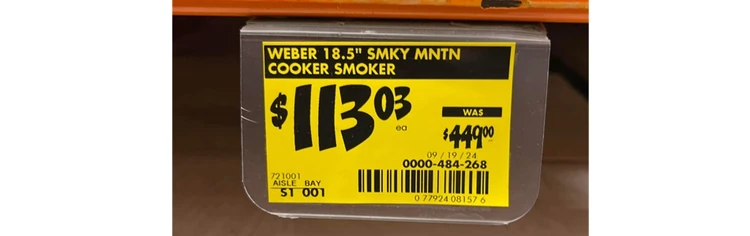
Over the years Ive had several friendly Home Depot employees help me decode their price tags. Information you can use to figure out how good of a deal youre actually getting in-store.

Heres what you need to know:

  • Prices ending in .06 on a yellow price sticker: An employee who handles price changes at his store told me a yellow tag with a price ending in .06 is on clearance and typically has about six weeks before the next markdown.
  • Prices ending in .03 on a yellow price sticker: The employee also told me that if an item still hasnt sold after that 6-week window, it may drop again to an ending price of .03. Thats basically the last call price. In his experience, once an item reaches .03, it has about three weeks before its liquidated and removed for good.

Pro tip: Always check the date printed at the bottom of the yellow tag. Its a great clue for how long the item has been sitting on the shelf and whether another markdown is likely coming soon. If theres a lot of inventory, and its almost been six weeks since the tag was created, wait and come back next week and get it even cheaper.

Always check online vs. in-store pricing

The Home Depot website explicitly says that HomeDepot.com will not match their in-store prices, and stores do not match their online pricing.

The translation for smart shoppers is that the same item can often be cheaper depending on where you click/pay. Ive even had employees verify this over the years and they always tell me to shop one against the other, and always look for the best price.

The fastest way to stop overpaying:

  • When standing in an aisle at The Home Depot, pull out their app and search the exact item.
  • If the online price is cheaper, dont overthink it. Just buy it online, choose store pickup, and grab it on the way out and move on with your life.

Why it matters:

If Home Depot wont match their own website (and the website wont match the store), your discount is sometimes going to be simply choosing the cheaper checkout lane.

Start with Daily Deals before you pay full price

Most shoppers are not aware that Home Depot has a Daily Deals / Special Buy of the Day page that rotates deals across appliances, home dcor, and home improvement items.

This is where you should always check first when your purchase is not time critical, especially if youre not shopping for a particular brand, just the best deal.

Look for great deals on the following:

  • Lighting
  • Rugs
  • Storage/organization
  • Small appliances
  • Some tool bundles

Heres what the smart shopper does:

  • If your project can wait 4872 hours, be sure to check Daily Deals first.
  • If todays deals arent in the category you need, check back again tomorrow.

Home Depot literally tells you its a one-day deal setup, so the savings often comes down to timing and the ability to wait for the deal you need.

Join Pro Xtra even if youre not a Pro

Home Depots FREE Pro Xtra program is framed as a Pro loyalty program with some cool perks, promos, and the ability to track your spending.

Heres why regular shoppers should care:

Home improvement returns and price adjustments live and die by your proof of purchase. If youre doing a project over several weeks or months, that paper receipt is basically guaranteed to vanish.

Use Pro Xtra for the boring money-saver stuff:

  • Track purchases/spend (useful for projects and warranty claims)
  • Keep receipts organized instead of digging through your car console

If you dont want to sign-up for a Pro Xtra account, at least be aware that Home Depot offers the ability to look-up your receipt through your regular account.

Pro tip: If youre knee deep in a DIY project and still in the planning phase, be sure to look for quantity discounts from Home Depot before you make any purchases. You can get savings up to 20% when buying large quantities of lumber, building hardware, insulation, and even roofing materials.

Rent the expensive tool youll use once

Most Home Depot locations have a full tool and equipment rental operation. Using their tool rentals is one of the most practical save hundreds moves because buying tools for one project is how budgets explode.

Renting usually beats buying for:

  • Floor sanders
  • Pressure washers
  • Tile saws
  • Post-hole augers
  • Carpet cleaners

Quick decision rule (simple, not perfect):

  • If you wont realistically use it 23 more times, renting is often the cheaper path.

Also, renting forces you to finish the job quickly as youre getting charged by the day. This basically forces you to save money and get the job done in a timely manner.

The underrated hack: buy retired rental tools

Photo

Heres a Home Depot trick most shoppers dont even know exists. Some stores actually sell their retired rental tools at a huge discount.

That means you can sometimes get a legit brand-name tool for way less because its being cycled out of their rental fleet.

How to use this without wasting a Saturday:

  • Go to the stores Tool Rental area.
  • Ask: Do you sell retired rental tools? What do you have right now?
  • Inspect it like youre buying a used car:
    • Check the cord/battery contacts
    • Look for cracks, missing guards, stripped screws
    • Ask whats included (case, charger, accessories)
  • Or visit their Used Tools page on their website and enter your Zip Code to see if your local store has used tools available for purchase.

Why its worth it:

If you want to own an expensive tool but cant justify the brand new price, retired rentals can really help your budget. Think of them as cheaper than new, but way better than sketchy marketplace tool listings.


Posted: 2025-12-17 18:31:36

Get Full News Story On Consumer Affairs


Listen to this article. Speaker link opens in a new window.
Text To Speech BETA Test Version.


More News From This Category
Consumer News: Could breast cancer screening get smarter than mammograms?
Wed, 04 Mar 2026 20:07:07 +0000

A major trial suggests tailoring screening to individual risk is safe and might reduce unnecessary tests

By Kristen Dalli of ConsumerAffairs
March 4, 2026

  • A large U.S. clinical trial found that risk-based breast cancer screening where screening frequency is tailored to each womans individual risk is just as safe as yearly mammograms for catching advanced cancers.

  • Women were grouped using genetics, lifestyle, and clinical factors; those at highest risk got more intensive screening, while lower-risk women had less frequent imaging.

  • Most women preferred risk-based screening when given the choice, and the approach led to fewer mammograms overall without increasing dangerous late-stage cancers.


For decades, routine breast cancer screening in the U.S. has largely meant annual mammograms starting in middle age a one-size-fits-all approach based mostly on age.

But what if screening could be smarter?

Thats exactly what researchers set out to test in the WISDOM trial, a large study coordinated by the University of California, San Francisco (UCSF) that asked a simple question: Can we use individual risk profiles to decide who needs what kind of screening?

Published in JAMA and presented at a major cancer symposium, the trial enrolled tens of thousands of women ages 4074 and compared traditional yearly mammograms with a personalized plan driven by each womans unique risk factors including genetics, breast density, lifestyle, and other health details.

These findings should transform clinical guidelines for breast cancer screening and alter clinical practice, Laura J. Esserman, M.D., MBA, director of the UCSF Breast Care Center, said in a news release. The personalized approach begins with risk assessment, incorporating genetic, biological, and lifestyle factors, which can then guide effective prevention strategies.

How the study worked

Instead of automatically giving everyone a mammogram every year, researchers built risk scores that placed participants into different screening pathways.

Women in the highest risk group based on things like genetic predisposition or very high calculated risk were advised to get imaging every six months, switching between mammograms and MRI.

Those with elevated risk still got annual mammograms plus counseling on ways to lower their risk. Most women fell into the average risk category and were recommended to have mammograms every two years. At the lowest end, women with especially low estimated risk were told they could safely delay screening until later often up to age 50 unless their calculated risk rose.

This design also offered tools for personalized risk reduction, like diet and exercise guidance or conversations about medications that may lower cancer risk. Women who chose not to be assigned randomly could pick their own screening approach in an observational group and most picked the risk-based route.

What the results showed

After about five years of following more than 28,000 women, the core finding was that the risk-based screening plan was as safe as traditional annual mammography.

Researchers looked especially at the number of advanced cancers (stage IIB or higher) detected and found that the risk-based group did not have more of these serious cases in fact, the rate was slightly lower across the study period, meeting the trials main goal of noninferiority.

Interestingly, women in the risk-based strategy had fewer mammograms overall but similar rates of biopsies and cancer detection meaning the personalized approach didnt miss cancers or lead to more invasive follow-ups even with less frequent imaging for many.

Whats more, when given the choice, a large majority of participants opted for the risk-based strategy, showing that many people appreciate tailoring screening to their specific profile.


Read More ...


Consumer News: Sugar substitute sorbitol connected to liver disease risk
Wed, 04 Mar 2026 20:07:07 +0000

A new study explains how the sweetener travels from the gut to the liver

By Kristen Dalli of ConsumerAffairs
March 4, 2026
  • Sorbitol, a common sugar alcohol used in zero-calorie foods and found naturally in some fruits, isnt just a passive sweetener it can be converted inside the body into compounds that stress the liver.

  • In experiments with zebrafish, sorbitol formed in the gut moves to the liver and becomes a fructose derivative, which fuels fat buildup linked to liver disease.

  • Friendly gut bacteria normally break down sorbitol, but high levels or an imbalance of microbes may allow more sorbitol to reach the liver.


Sorbitol has long been marketed and often enjoyed as a healthier option for people trying to cut calories or manage blood sugar. Its a sugar alcohol that adds sweetness without the glycemic spike of table sugar, popping up in sugar-free candies, gums, and many diet goodies.

But recent research out of Washington University in St. Louis is prompting scientists and consumers alike to rethink that assumption.

The work suggests that sorbitol may not be quite as biologically innocent as its packaging implies especially when it comes to how the liver handles it.

The study

To understand how sorbitol behaves inside the body, the research team used zebrafish a species scientists often study because many of its metabolic processes work in ways similar to humans. The goal was to follow sorbitol step by step and see where it goes after its produced or consumed.

The researchers focused on the gut and the liver, two organs that play major roles in processing sugars. Using advanced lab tools that let them track tiny molecules, they discovered that cells in the intestine can actually turn glucose into sorbitol. That means sorbitol isnt just something we eat it can also be made inside the body.

In simple terms, the study followed sorbitols journey through the body and found that whether it stays in the gut or reaches the liver may depend heavily on the health of the gut microbiome.

What the results mean and dont mean

The researchers discovered that when sorbitol remains in the gut, certain bacteria can break it down before it causes problems. But when those helpful microbes are reduced or overwhelmed, more sorbitol is able to travel from the intestine to the liver.

Once it reaches the liver, sorbitol doesnt just pass through harmlessly. The liver converts it into a compound related to fructose. Unlike glucose, which the body uses widely for energy, fructose is processed almost entirely in the liver. That process can trigger the production of fat inside liver cells.

In the zebrafish studied, this chain reaction sorbitol moving from the gut to the liver and then being converted was linked to fat buildup in the liver, a hallmark of steatotic liver disease.

The findings suggest that sorbitol may contribute to liver fat accumulation under certain conditions, particularly when the gut microbiome isnt able to effectively break it down first.

While the study was conducted in zebrafish and more research is needed to understand how this translates to humans, the results highlight how a sweetener often considered a safer alternative can still have meaningful effects inside the body.


Read More ...


Consumer News: Starbucks’ spring menu is back — here’s how to try it for less
Wed, 04 Mar 2026 20:07:07 +0000

Before you order that $6.95 latte, read this

By Kyle James of ConsumerAffairs
March 4, 2026
  • Customize instead of ordering the full drink Order a plain cold brew or latte and add toasted coconut or lavender syrup. This can save $1$2.

  • Use Rewards promos Look for Triple Star Days, bonus Star offers, and BOGO deals in the Starbucks app to earn free drinks faster.

  • Split it or make it at home Divide a grande into two smaller servings, or recreate the drink at home for about $1$2.


Starbucks spring menu officially landed this week, bringing tropical and floral flavors back into the spotlight.

The headline drinks include:

  • Reimagined Chai
  • Iced Ube Coconut Macchiato
  • Toasted Coconut Cream Cold Brew
  • Toasted Coconut Latte
  • Iced Lavender Cream Chai
  • Lavender Latte
  • Lavender Crme Frappuccino

Theyre colorful and theyre definitely social-media ready. And in many cities, theyre pushing $6 to $7 per drink.

Heres how to enjoy the new menu without blowing your coffee budget.

Order smarter (skip the 'full build')

Many of their new seasonal drinks are fairly simple and breakdown like this:

Cold brew or espresso + flavored syrup + flavored cold foam

Instead of paying full-price and ordering the fully branded drink, try this instead:

  • Order a plain cold brew
  • Add 12 pumps of toasted coconut syrup
  • Ask for a light splash of sweet cream cold foam

By ordering this way, youll often save $1$2 compared to the pre-built version.

Same thing goes with their new lavender drinks.

Try ordering an iced chai or latte and add onepump of lavender syrup instead of the full lavender cream foam build.

Ask for half sweet to cut both sugar and cost creep.

Time it with rewards (this is key)

If youre going to try a $6.95 drink anyway, be sure to do it strategically in conjunction with their updated Rewards program.

Watch for:

  • Bonus Star promotions
  • Triple Star Days
  • Try the new drink offers
  • BOGO afternoon deals

Sixty stars now gives you $2 off your order, with the goal of stacking stars toward a completely free handcrafted drink (200 stars).

The best way to be kept in-the-know of upcoming promotions, before they hit the app, is to follow Starbucks on social.

Instagram: https://www.instagram.com/starbucks

TikTok: https://www.tiktok.com/@starbucks

Split the drink hack

This tip works especially well with layered drinks like the Ube Coconut Macchiato.

Order a grande and ask for an empty tall cup on the side. Or better yet, instead of asking for a tall cup, order a free water and theyll hook you up with a cup full of ice that you can use for splitting.

Then you can split the drink into two smaller servings. Its not perfect, but it stretches one premium drink into two lighter ones. This is especially helpful with the super-rich flavors like the ube and coconut.

Recreate it at home for 7080% less

While these drinks might look complex, they really arent. You can easily make them at home and save a ton of money.

At-home Ube Coconut Macchiato

  • Brew strong coffee or espresso
  • Mix coconut milk with a spoonful of ube powder or ube jam
  • Add vanilla syrup
  • Pour over ice and top with coffee

Estimated cost: $1.50$2 per drink.

At-home Lavender Cream Chai

  • Use chai concentrate
  • Add milk of choice
  • Make cold foam with heavy cream + lavender syrup
  • Pour over ice

Estimated cost: About $1 per drink.

Search TikTok or Instagram for Starbucks ube copycat or lavender chai copycat and youll find dozens of step-by-step videos from creators who break it down in under 60 seconds.


Read More ...


Consumer News: FDA warns telehealth companies about misleading GLP-1 drug claims
Wed, 04 Mar 2026 20:07:07 +0000

The agency points out the compounded drugs are not the same as FDA-approved drugs

By Mark Huffman of ConsumerAffairs
March 4, 2026
  • The FDA has issued 30 warning letters to telehealth companies over misleading claims about compounded GLP-1 drugs.

  • Regulators say some companies implied their compounded products were equivalent to FDA-approved medications or obscured where the drugs were made.

  • The action is part of a broader crackdown on misleading direct-to-consumer pharmaceutical advertising launched last September.


The U.S. Food and Drug Administration (FDA) has issued warning letters to 30 telehealth companies for making false or misleading claims about compounded GLP-1 drugs promoted on their websites.

The agency said the companies marketed compounded versions of GLP-1 medications in ways that suggested the products were the same as FDA-approved drugs or failed to clearly disclose where the medications were produced.

Its a new era. We are paying close attention to misleading claims being made by telehealth and pharma companies across all media platformsand taking swift action, said FDA Commissioner Dr. Marty Makary.

Dr. Makary said compounded drugs can play an important role in addressing shortages or meeting specific patient needs, but warned that compounders should not attempt to bypass the FDAs drug approval process.

Second wave of actions

The warning letters mark the second wave of enforcement actions targeting telehealth companies since the FDA launched a broader effort last September to police misleading direct-to-consumer pharmaceutical advertising.

Over the past six months, the agency said it has sent thousands of warning letters to pharmaceutical and telehealth companies directing them to remove misleading advertisements more than were sent during the entire previous decade.

According to the FDA, the most common violations involved claims that compounded GLP-1 products were the same as FDA-approved medications. Other companies promoted drugs using their own brand names or trademarks without clarifying that a separate pharmacy actually compounded the medications.

The FDA emphasized that compounded drugs are not FDA-approved, meaning the agency does not review them for safety, effectiveness,or quality before they are sold. The agency also noted that compounded drugs are not equivalent to generic drugs, which must undergo FDA review and approval.

The warning letters require the companies to correct the violations and remove misleading claims from their marketing materials. Failure to comply could result in further regulatory action, the agency said.


Read More ...


Consumer News: Gas prices have risen 20 cents per gallon since the start of the Iran conflict
Wed, 04 Mar 2026 20:07:07 +0000

Midwest and Gulf Coast states are feeling the most impact

By Mark Huffman of ConsumerAffairs
March 4, 2026
  • U.S. gasoline prices have jumped more than 20 cents per gallon since the conflict with Iran began, pushing the national average to about $3.19 a gallon, according to AAA.

  • Drivers in West Coast states are paying the most, with California averaging nearly $4.74 per gallon about $1.50 above the national average.

  • Southern and Midwestern states still have the lowest prices, but many have seen some of the fastest daily increases as oil markets react to the war.


Gasoline prices across the United States are climbing quickly after the outbreak of the war involving Iran, as fears of disruptions to global oil supplies ripple through energy markets.

AAA reports the national average price for regular gasoline reached about $3.19 per gallon on March 4, up sharply from roughly $3.00 just days earlier.

The spike follows escalating military strikes and retaliatory attacks in the Middle East, raising concerns that tanker traffic or oil production could be disrupted in the Strait of Hormuz, a narrow shipping lane that carries roughly one-fifth of the worlds oil supply.

Oil prices jumped more than 5% after the fighting intensified, pushing U.S. crude toward $75 a barrel and driving wholesale gasoline prices higher.

Because gasoline prices are tied to global crude markets, analysts say geopolitical shocks can quickly show up at the pump even though the United States produces much of its own oil.

Some states feeling the surge faster

While prices have increased nationwide, the impact varies widely by region.

West Coast states continue to have the highest gasoline prices due to higher taxes, stricter fuel blends, and supply constraints. The latest AAA data show:

  • California: $4.736/gallon

  • Washington: $4.409/gallon

  • Hawaii: $4.418/gallon

  • Oregon: $3.990/gallon

  • Nevada: $3.829/gallon

Meanwhile, several Midwestern states where prices often react quickly to wholesale changes are also seeing noticeable jumps.

Average prices include:

  • Illinois: $3.318/gallon

  • Michigan: $3.243/gallon

  • Indiana: $3.145/gallon

  • Ohio: $3.095/gallon

  • Wisconsin: $2.936/gallon

Southern states still cheapest for now

Drivers in the South continue to pay the lowest prices in the country, though increases have accelerated in recent days.

AAA lists several of the lowest statewide averages as:

  • Mississippi: $2.739/gallon

  • Oklahoma: $2.735/gallon

  • Texas: $2.817/gallon

  • Arkansas: $2.836/gallon

  • Louisiana: $2.835/gallon

Even in these states, prices are rising quickly. In Texas, gasoline jumped about 12 cents in a single day as crude oil markets reacted to the conflict.

Mid-Atlantic and Northeast prices

In the Mid-Atlantic and Northeast regions heavily dependent on refined fuel shipments prices are hovering close to the national average.

Examples include:

  • Virginia: $3.032/gallon

  • Maryland: $3.115/gallon

  • Pennsylvania: $3.297/gallon

  • New Jersey: $3.083/gallon

  • New York: $3.105/gallon

  • Massachusetts: $3.047/gallon

  • Connecticut: $3.043/gallon

AAA says crude oil accounts for 5060% of the price of gasoline, meaning any shock to global supply can quickly translate into higher pump prices.

What drivers can expect next

Energy analysts warn that prices could rise further if the conflict continues or if shipping through the Persian Gulf is disrupted.

Some forecasts suggest crude oil could approach $100 per barrel if the war escalates, which would likely push gasoline prices significantly higher nationwide.

Seasonal factors may also add pressure. Gas prices typically rise in spring as refineries transition to summer fuel blends and travel demand increases.

For now, experts say the biggest factor affecting what drivers pay will be the course of the conflict itself.


Read More ...


Related Bing News Results
Consumer Reports tests caffeine levels in popular coffee brands
Wed, 04 Mar 2026 06:14:00 GMT
Consumer Reports examined caffeine levels in various coffee brands, revealing significant differences and emphasizing the importance of moderation.

Some baby formula brands contain lead, arsenic and other heavy metals, Consumer Reports says
Wed, 04 Mar 2026 05:56:00 GMT
Tests of dozens of baby formulas by Consumer Reports found that nearly half contained potentially dangerous chemicals.

Trader Joe's Daily Facial Sunscreen SPF 40
Wed, 25 Feb 2026 05:13:00 GMT
We've tested and reviewed products since 1936. Read CR's review of the Trader Joe's Daily Facial Sunscreen SPF 40 sunscreen to find out if it's worth it.

Consumer Reports retests protein powders, finds safer options
Wed, 18 Feb 2026 17:22:00 GMT
Researchers have tested more popular brands, including five reader-requested chocolate protein powders from Clean Simple Eats, Equate, Premier Protein, Ritual and Truvani.

CR Investigates: Toxic beauty ingredients
Tue, 17 Feb 2026 17:52:00 GMT
Most of us don’t think twice about shampoo, deodorant, or lotion. Now, Consumer Reports reveals that some of those products may contain ingredients linked to cancer risk, hormone disruption, and other ...


Blow Us A Whistle


Related Product Search/Búsqueda de productos relacionados

Amazon Logo

Visit Our New Print-On-Demand Stores On Printify and Zazzle
Printify Zazzle





