Rockin Robin SongFlying The Web For News.
RobinPost Logo Amazon Prime Deals


Consumer Daily Reports

Find real savings hiding in plain sight

By Kyle James of ConsumerAffairs
January 22, 2026
  • Dont be afraid to ask. At Lowes, damaged items, floor models, and canceled special orders can unlock 1060%+ off just by asking the right employee.

  • Decode the price tags. Yellow clearance labels, price endings, and back-aisle items reveal when prices are truly bottomed out and when waiting can pay off.

  • Shop the dead zones. The best deals show up after demand drops, not during holidays plus easy wins like mis-tint paint and hidden clearance sections.


Lowes has a great selection of home improvement products, and their pricing is pretty darn competitive. However, there exist some clever ways to save even more moneyif you know what youre doing.

From knowing when to ask for a discount, to how to read their price tags, to where in the store you canfind the best deals, these seven tips will hopefully change the way you shop at Lowes forever.

1. Ask for a discount on damaged items

Lowes employees are encouraged to mark stuff down forshoppers if there's damage, as those items are hard to sell at full-price.

The damage can be as simple as dented packaging, cosmetic flaws, sun fading, missing manuals, or even shelf wear.

Look for this most often on these items:

  • Ceiling fans and lighting fixtures (fragile boxes).
  • Grills and patio sets (warehouse handling damage).
  • Power tools with beat-up packaging.
  • Vanities, toilets, and sinks with damaged boxes from shipping.

The markdown depends on how badly Lowes wants the item gone. But Ill often start by asking for a 20% discount and settle for 10-15% off.

Also, keep in mind that bigger items = more flexibility, as Lowes hates storing bulky merchandise, especially at the end of the season when theyre trying to clear out merchandise to make room for new stuff.

Pro tip: Point out the flaw in a polite, conversational way. Dont exaggerate the damage. Ask an employee in that specific department for a discount. Dont wait until checkout as cashiers have limited authority.

2. The Lowes price tag decoder
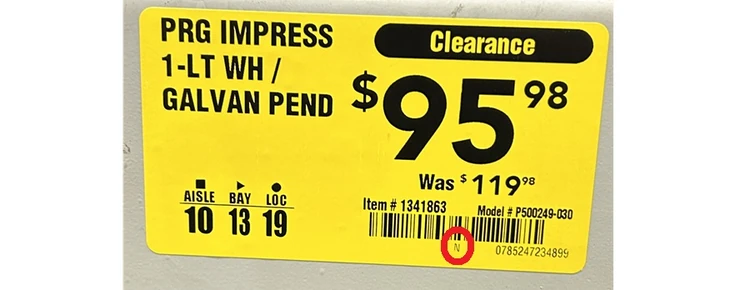
Photo

Heres how to decode Lowes pricing signals like an insider and know when to buy and when to wait for a better deal.

Yellow Tags = Clearance (but not all clearance is equal)

While yellow price tags are the universal signal that an item is on clearance, there are a couple secrets to tell how good the deal is and if it might get better.

Take a close look at those yellow price stickers:

  • N below the Barcode I was told by an employee that this means the item is discontinued and its up to the manager to lower the price further. The price is probably not the lowest its going to get, so if theres a lot of inventory, wait until the price goes down to buy it.
  • No N below the Barcode This means the item is priced to sell and its at a rock-bottom price. The best advice is to buy it before its gone.
  • .02 Liquidation The product has been liquidated and the vendor has typically already paid Lowes for it. If you find one of these on the sales floor by accident, you can try and buy it, but you probably wont be able to.

3. Always negotiate a deal on floor model appliances

Floor model appliances at Lowes are some of the better deals you can find on refrigerators, ovens, dishwashers, and washing machines.

Whether theyre a return or simply a display model that they need to sell, you can often get a better deal by doing the following:

Hunt for flaws

Dents, scratches, chipped paint, torn boxes, missing manuallook for any visible imperfection as it gives you a legitimate reason to ask for another 10% off.

Bundle to boost leverage

Negotiation works best when youre buying multiple items. Pair big purchases like a washer and dryer, or a refrigerator and microwave and ask an employee if a discount is available if you buy both now.

Pro tip: Lowes typically marks down already-reduced appliances every 710 days, especially floor models, damaged items, or repaired returns. So be sure to flip over the Reduced price tag and youll see the following information:

  • The date the item first went on clearance.
  • How many times its been marked down.

If youre near the seven-day mark, waiting another day or two can mean an extra 2025% off, assuming the item doesnt sell first.

4. Buy paint the frugal way and save big

Mis-tint and abandoned custom paint is one of the easiest wins in the store. This is especially true if youre simply looking for a neutral color and not super picky about brand.

Lowes is always mixing paint that customers either dont pick-up or reject. This happens literally every day. Those cans get marked down quickly because they cant be returned to normal inventory.

These paints are:

  • Brand new
  • Fully usable
  • Often premium brands

You can find the oops paint rack right next to the paint mixing station. Just ask if you cant locate it.

Employees usually put a sample of the color on the lid so you know exactly what youre getting.

You can typically find gallons of premium paint for just $5-$10, and quarts for only $1-2.

Pro tip: These mis-tint paints are ideal for garages, basements, closets, fences, rentals, or accent walls. Contractors use mis-tints constantly for special projects and many homeowners just havent caught on yet.

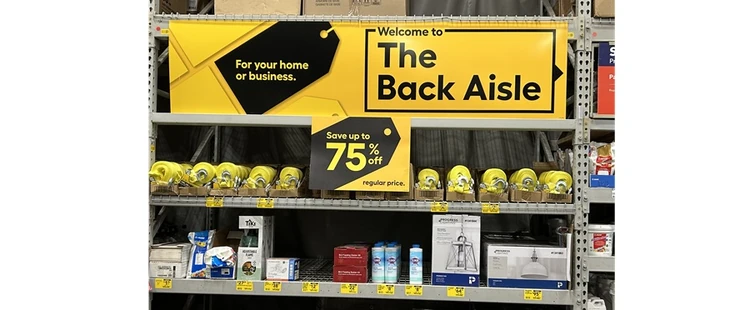
5. Make The Back Aisle your first stop
Photo

At Lowes, one of the easiest ways to score deals is to head straight to the back of the store to the clearance section called The Back Aisle.

At most locations, this clearance section exists along the middle of the back wall.

This is where each department dumps its deep-discount leftovers, often marked down 5075% off.

You wont find big-ticket items here, but you will find lots of useful stuff for super cheap:

  • Paint brushes and rollers
  • Batteries and flashlights
  • Garden tools and planters
  • Cleaning supplies
  • Lawn and seasonal items

None of it is glamorous, but its the kind of everyday stuff that adds up fast if you buy it at full price.

A quick walk through the back aisle can easily knock $20$40 off your total without changing what you planned to buy.

6. Shop seasonal dead zones, not holidays

Holiday sales at Lowes are designed to move lots of stuff quickly, while clearance deals are designed to eliminate all the leftovers.

This means that Lowes starts to discount seasonal items when customers interest drops, not necessarily when the season officially ends.

Here are the best seasonal dead zones to target:

  • Patio furniture: Late AugustSeptember When back-to-school season rolls around it kills the demand, and Lowes wants the floor space back.
  • Lawn equipment: October The grass stops growing and interest drops fast.
  • Space heaters: February - Cold fatigue sets in even though winter isnt over.
  • Snow blowers: March - One warm week and stores often start toclear them out.

These markdowns often happen fairly quietly, without any banners or ads.

So, if youre in the market for any of these items, visit regularly and snatch the deal when it inevitably pops up.

7. Special order cancellations are gold mines

When shopping for appliances, doors, windows, or flooring, always ask if there are any canceled or returned special orders.

These are often instant write-offs for the store, which means managers are far more flexible on price. If youre renovating and not picky about exact styles or brands, this can save you some serious money.

Theyll often sell them at a big discount, typically 30-60% off the retail price, to get rid of them quickly.

This includes:

  • Custom doors and windows
  • Vanities and cabinets
  • Flooring and tile
  • Countertops and fixtures

Ask an employee about any abandoned special-orders and they can point you in the right direction. Its important to ask, as many never hit the main sales floor so you wouldnt know otherwise.

Pro tip: Dont be afraid to also ask at the Pro Desk or customer service directly. If youre flexible on size, color, and finish, you can score some great deals on other peoples cancellations.


Posted: 2026-01-22 22:23:36

Get Full News Story On Consumer Affairs


Listen to this article. Speaker link opens in a new window.
Text To Speech BETA Test Version.


More News From This Category
Consumer News: FDA reports recall of more than 2.5 million prescription eye drop bottles
Fri, 10 Jul 2026 13:07:06 +0000

The agency said the product may contain a foreign substance

By Mark Huffman of ConsumerAffairs
July 10, 2026
  • More than 2.5 million bottles of prescription steroid eye drops have been recalled nationwide after the U.S. Food and Drug Administration identified a potential contamination issue.

  • The recall affects Prednisolone Acetate Ophthalmic Suspension, USP, 1%, manufactured by Lupin Pharmaceuticals Inc., because of the possible presence of a foreign substance.

  • The FDA has classified the recall as Class II, meaning use of the affected product could cause temporary or medically reversible adverse health consequences, with the risk of serious harm considered remote.


Consumers who use prescription steroid eye drops should check their medicine cabinets after the U.S. Food and Drug Administration reported a nationwide recall affecting more than 2.5 million bottles of Prednisolone Acetate Ophthalmic Suspension, USP, 1%.

According to the FDA's enforcement report, Lupin Pharmaceuticals Inc. recalled the products after discovering the possible presence of a foreign substance in the eye drops. The affected medication is supplied as a 1% ophthalmic suspension in 5 mL, 10 mL and 15 mL bottles.

The FDA designated the action as a Class II recall on June 30. A Class II recall means use of or exposure to the product may cause temporary or medically reversible adverse health effects, while the likelihood of serious adverse health consequences is considered remote.

Used to treat inflammation

Prednisolone acetate is a prescription corticosteroid eye drop commonly used to reduce inflammation caused by allergies, eye injuries, surgery and certain infections. Because the medication is applied directly to the eye, any contamination can pose a risk to patients.

The recall covers approximately 2.53 million bottles distributed nationwide. FDA records indicate the affected products were manufactured at Lupin's facility in Pithampur, India, and include dozens of lot numbers with expiration dates extending into 2028. Consumers and healthcare providers should consult the FDA's enforcement report to determine whether a specific bottle is included in the recall.

The FDA's enforcement report identifies the reason for the recall as the "presence of foreign substance." The agency has not publicly disclosed additional details about the nature of the material, and Lupin Pharmaceuticals had not publicly commented on the recall at the time of publication.

What to do

Patients who believe they have an affected bottle should contact their pharmacist or healthcare provider before discontinuing a prescribed medication, especially if it is being used to control inflammation following eye surgery or to treat another serious eye condition. Anyone experiencing unusual eye pain, redness, swelling, vision changes or signs of infection after using the product should seek medical attention promptly.

The recall comes only months after another large eye-drop recall involving more than 3 million over-the-counter products because of concerns about sterility, underscoring continuing scrutiny of ophthalmic drug manufacturing.


Read More ...


Consumer News: Existing-home sales fell in June as home prices reached another record
Fri, 10 Jul 2026 13:07:06 +0000

Sales tumbled by 2.4% from June as the spring housing market ended

By Mark Huffman of ConsumerAffairs
July 10, 2026
  • Existing-home sales fell 2.4% in June from May to a seasonally adjusted annual rate of 4.09 million, ending the spring selling season on a weaker-than-expected note.

  • The median existing-home price climbed to a record $440,600, up 1.8% from a year ago, extending a streak of annual price gains despite slower sales.

  • The National Association of Realtors says affordability remains a challenge, but wage growth continues to outpace home price appreciation, offering some encouragement for prospective buyers.


Sales of previously owned homes declined in June as higher mortgage rates and affordability challenges continued to sideline many prospective buyers. Even so, home prices climbed to another all-time high.

The National Association of Realtors (NAR) reports that existing-home sales fell 2.4% from May to a seasonally adjusted annual rate of 4.09 million units. While that marked a 2.8% increase from June 2025, the pace was below economists' expectations and underscored the sluggish housing market that has persisted for much of the past several years.

At the same time, the median existing-home sales price rose to a record $440,600, an increase of 1.8% from a year earlier. In June, the median home price for all housing types was $440,600. In January 2020, before the COVID-19 pandemic, it was $266,300, 65% less than in June. June was the 36th consecutive month of year-over-year price gains, reflecting a market where limited inventory continues to support home values despite softer demand.

At these prices, todays mortgage rates are a problem

NAR Chief Economist Lawrence Yun said homebuyers are benefiting from improving income growth, even though elevated mortgage rates remain a significant hurdle.

"Wage gains are outpacing home price appreciation," Yun said, noting that the combination has modestly improved affordability compared with recent years. However, he added that higher borrowing costs continue to discourage many would-be buyers from entering the market.

Inventory remains constrained, although conditions have improved somewhat. At the end of June, there were 1.56 million existing homes available for sale, representing a 4.6-month supply at the current sales pace. While inventory has increased from a year ago, it remains below the level many economists consider necessary for a balanced housing market.

Slightly more first-time buyers

The share of purchases by first-time buyers edged up to 33% in June but remained below the historical average of about 40%, highlighting the ongoing affordability challenges facing younger households and those trying to enter the housing market.

Sales activity varied by price range. Higher-priced homes continued to perform well, with sales of properties priced above $1 million rising sharply from a year ago. Meanwhile, sales of lower-priced homes remained weak, suggesting affordability pressures continue to weigh most heavily on entry-level buyers.

The housing market has also been affected by recent increases in mortgage rates. Rates rose after renewed geopolitical tensions in the Middle East pushed Treasury yields higher, making home financing more expensive. Economists say even modest increases in mortgage rates can have an outsized effect on buyer demand.

Despite the June slowdown, NAR maintains that the market has shown modest improvement compared with last year. Existing-home sales during the first half of 2026 were higher than during the same period in 2025, suggesting buyers are gradually returning as more homes become available, although affordability remains the industry's biggest challenge.


Read More ...


Consumer News: Mortgage rates climb back to 6.49%, adding to homebuying costs
Fri, 10 Jul 2026 13:07:06 +0000

Bond yields are rising amid inflation worries, pushing rates higher

By Mark Huffman of ConsumerAffairs
July 10, 2026
  • The average rate on a 30-year fixed-rate mortgage rose to 6.49% this week, up from 6.43% a week ago, according to Freddie Mac.

  • The increase pushes borrowing costs higher for homebuyers after rates briefly fell to a seven-week low last week.

  • Economists say rising Treasury yields, inflation concerns and renewed geopolitical tensions have added upward pressure on mortgage rates.


The average rate on a 30-year fixed-rate mortgage climbed to 6.49% this week, reversing last week's modest decline and increasing borrowing costs for prospective homebuyers during the peak summer homebuying season.

Mortgage buyer Freddie Mac reports that the average rate increased from 6.43% last week. A year ago, the benchmark mortgage averaged 6.72%, meaning today's rates remain below year-earlier levels but are still high enough to weigh on affordability. The average rate on a 15-year fixed mortgage, popular with homeowners refinancing, also edged higher to 5.82% from 5.79% the previous week.

"The 30-year fixed-rate mortgage averaged 6.49% this week," Freddie Mac Chief Economist Sam Khater said, noting that mortgage rates have changed little in recent weeks despite ongoing economic uncertainty.

Mortgage rates generally track movements in the 10-year Treasury yield, which has risen amid renewed inflation concerns and geopolitical uncertainty. Analysts point to higher oil prices and investor concerns surrounding the renewed conflict involving Iran as factors pushing long-term bond yields higher, which in turn increases mortgage borrowing costs.

Affordability challenges

The latest increase comes as the housing market continues to struggle with affordability challenges. Elevated mortgage rates, combined with still-high home prices, have limited purchasing power for many would-be buyers and contributed to sluggish home sales.

Existing-home sales fell 2.4% in June, according to the National Association of Realtors, underscoring the ongoing weakness in the market. Economists have repeatedly noted that even relatively small changes in mortgage rates can significantly affect monthly payments and buyer demand.

For buyers, the difference between last week's 6.43% rate and this week's 6.49% may appear modest, but over the life of a typical 30-year mortgage, even a small increase can add thousands of dollars in interest costs.

Many housing economists still expect mortgage rates to remain in the mid-6% range for much of the year unless inflation eases more quickly or the bond market rallies. Until then, affordability is likely to remain one of the biggest obstacles facing the housing market.


Read More ...


Consumer News: What America's founding fathers can still teach us about saving money (and one lesson they got wrong)
Thu, 09 Jul 2026 22:07:06 +0000

Frugality never goes out of styleeven after 250 years

By Kyle James of ConsumerAffairs
July 9, 2026
  • Founding Fathers advice on avoiding debt, limiting waste, and living below your means remains surprisingly relevant.

  • Small habits can save big money by cutting unused subscriptions, repair instead of replace, and pause before making impulse purchases.

  • Even brilliant people made financial mistakes as Thomas Jefferson's debt shows that earning more doesn't matter if you spend even more.


As America recovers from all of the 250th anniversary celebrations, it's worth looking back at some of the financial lessons that helped shape the nation's earliest leaders.

While the Founding Fathers didn't have credit cards, online shopping, or subscription services, they absolutely faced economic uncertainty and rising prices. Some became models of frugality, while others made costly money mistakes that still serve as cautionary tales today.

Here are seven timeless lessons consumers can still apply.

1. Benjamin Franklin: Beware of the little expenses

If there was a personal finance guru among the Founding Fathers, it was definitely Benjamin Franklin.

In Poor Richard's Almanack, Franklin famously wrote:

"Beware of little expenses; a small leak will sink a great ship."

More than 250 years later, that advice may be more relevant than ever. Small recurring charges like streaming subscriptions, food delivery fees, premium apps, and impulse online purchases can quietly drain hundreds or even thousands of dollars each year.

Today's takeaway: Review your recurring expenses every few months. Eliminating just a few unused subscriptions can create surprisingly meaningful savings.

2. Benjamin Franklin: Avoid unnecessary debt

Franklin also warned against borrowing money unnecessarily, writing:

"Rather go to bed supperless than rise in debt."

While today's economy often requires mortgages, auto loans, and student loans, the principle remains sound: avoid carrying high-interest debt whenever possible.

Today's takeaway: Pay off credit card balances each month whenever you can, and avoid financing purchases that quickly lose value.

Pro tip: Make your budget a family conversation. John and Abigail Adams regularly discussed household finances and priorities. Setting aside a monthly "money meeting" can help everyone stay on the same page and work toward shared financial goals. Abigail kept careful records of expenses while managing the family farm, proving that knowing where your money goes is the first step toward keeping more of it.

3. George Washington: Waste as little as possible

At Mount Vernon, George Washington carefully managed one of America's largest estates. Supplies were repaired, materials were reused, and waste was kept to a minimum whenever practical.

The goal wasn't environmentalism, but rather it was all about simple economics.

Today's takeaway: Before replacing something, ask whether it can be repaired. Maintaining appliances, vehicles, clothing, and tools often costs far less than buying new ones.

4. George Washington: Grow what you can

Washington's estate also included productive vegetable gardens, orchards, grain fields, and livestock that supplied much of what the household consumed.

Few people today have 8,000 acres, but the lesson still applies.

Today's takeaway: Even a small backyard or patio garden can produce herbs, tomatoes, peppers, or lettuce that reduce grocery costs throughout the growing season.

5. Benjamin Franklin: Think long term

Franklin also believed that careful planning and delayed gratification were keys to financial success. He encouraged saving, investing in education, and making thoughtful purchases rather than impulsive ones.

Today's takeaway: Before making a major purchase, give yourself at least 24 hours to decide. A short pause can prevent those expensive impulse buys.

6. Samuel Adams: You don't need luxury to live well

Unlike some of his fellow founders, Samuel Adams spent much of his life with modest financial means. He lived relatively simply and focused more on public service than accumulating wealth.

Today's takeaway: Financial security isn't about owning the most expensive home, car, or gadgets. Living below your means remains one of the most effective ways to build wealth.

7. Thomas Jefferson: Income doesn't guarantee financial success

Not every Founding Father practiced sound financial management.

Thomas Jefferson, despite his extraordinary intellect and accomplishments, accumulated massive debts through years of expensive building projects, imported luxury goods, and overspending. When he died in 1826, his estate had to be sold to satisfy creditors.

His story serves as an important reminder that earning, or even possessing significant wealth, doesn't automatically lead to financial stability. Lifestyle inflation can affect anyone. As income grows, avoid automatically increasing spending at the same pace.

Pro tip: Build an emergency fund before chasing bigger financial goals. Alexander Hamilton spent much of his career focused on strengthening the nation's finances through planning and preparation. Having three to six months of essential expenses saved can help you weather unexpected setbacks without relying on high-interest debt.

The bottom line

America has changed dramatically over the past 250 years, but many of the financial principles that helped shape the nation's early leaders remain surprisingly timeless.

Watch the small expenses. Avoid unnecessary debt. Repair instead of replace. Grow what you can. Live below your means. And remember that even brilliant people can make costly financial mistakes.

Those lessons were valuable in 1776, and they're just as useful for consumers today.


Read More ...


Consumer News: These breakfast cereals look healthy — but nutritionists say don't be fooled
Thu, 09 Jul 2026 19:07:07 +0000

Don't let wholesome packaging fool your shopping cart

By Kyle James of ConsumerAffairs
July 9, 2026
  • Don't trust the packaging. Words like whole grain, honey, and oats can make cereals seem healthier than they really are.

  • Compare varieties carefully. Even trusted brands can have flavored versions with significantly more added sugar than the original.

  • Read the Nutrition Facts label. Aim for cereals with 10 grams or less of added sugar, at least 3 grams of fiber, and as much protein as possible.


Words like "whole grain," "honey," "oats," and "protein" can make a cereal seem like a healthy way to start the day. But according to a recent roundup by Tasting Table, several cereals with wholesome-sounding names or healthy-looking packaging still contain surprisingly high amounts of added sugar.

The publication consulted registered dietitians to identify cereals they recommend limiting on your pantry shelf. Not just because of the sugar levels, but also because many are low in fiber and protein, making them less filling than consumers might expect.

Here are five cereals that may not be as healthy as their packaging suggests.

Cheerios Oat Crunch Oats 'N Honey

Original Cheerios has only one gram of sugar in 1.5 cups. This stuff packs a whopping 15 grams of sugar in just one cup. Yes, they shrunk the serving size on the box, otherwise 1.5 cups would have well over 20 grams of sugar.

So, while the Cheerios name gives this cereal a healthy reputation, this version contains considerably more added sugar than Original Cheerios.

While oats and whole grains are part of the recipe, the added sweetness makes it less nutritious than many shoppers assume.

If you like Cheerios, be sure to compare the Nutrition Facts labels, as there are now many varieties available. I have yet to find a variety that has sugar levels as low as the original.

Special K Chocolatey Delights

For years, Special K has been marketed as a better-for-you cereal, but the chocolate variety tells a different story.

Dietitians point to its added sugar (12 grams per cup) and refined ingredients, saying it's closer to a sweet snack than a balanced breakfast.

Don't assume every cereal in a healthy brand lineup is equally nutritious. Flavored varieties often contain much more sugar than the original.

Honey Ohs

With words like "Honey" and images of golden cereal pieces, Honey Ohs looks like a fairly wholesome breakfast option.

Nutritionists say the reality is different, citing multiple added sweeteners (18 grams of sugar per cup) and relatively little fiber to balance them out. It actually has more sugar than the Oreos cereal.

Shopping tip: Ignore buzzwords on the front of the box and check the "Added Sugars" line on the Nutrition Facts panel.

Honey Smacks

Whole-grain wheat is the first ingredient, but it's quickly followed by several forms of added sugar.

Nutritionists say a single serving contains about 18 grams of added sugar, making it one of the sweeter cereals in the aisle.

Shopping tip: A cereal can contain whole grains and still be high in sugar. Thats why its so important to look at the full nutrition label before assuming it's a healthy choice.

Apple Jacks

The name and colorful apples on the box may suggest fruit, but experts note that the cereal gets its apple flavor primarily from added flavorings rather than real fruit.

Combined with its sugar content (13 grams of sugar per cup), it's another example of marketing creating a "health halo."

Shopping tip: Pictures of fruit don't necessarily mean a cereal contains meaningful amounts of fruit. Especially when fruit is spelled froot.

The cereals that probably won't surprise you

Nutritionists also included several cereals that most shoppers already recognize as treats rather than health foods, including:

  • Golden Crisp

  • Cap'n Crunch's Crunch Berries

  • Marshmallow Fruity Pebbles

  • Oreo Puffs

  • Krave Double Chocolate Brownie Batter

Shop smarter in the cereal aisle

Rather than judging a cereal by its front label, flip the box over and read the Nutrition Facts panel.

Nutrition experts generally recommend choosing cereals with 10 grams or less of added sugar, at least three grams of fiber, and as much protein as possible. Pairing cereal with Greek yogurt, nuts, or fresh fruit can also create a more balanced breakfast.


Read More ...


Related Bing News Results
Consumer Reports finds concerning levels of food dye in popular products
Mon, 06 Jul 2026 05:12:00 GMT
"Companies in the U.S. are not required to disclose the amount of a specific additive or contaminant that's actually in their products," said Paris Martineau, Consumer Reports investigative reporter ...

Consumer Reports and Yuka Test 40 Popular U.S. Foods, Find 1 in 4 Exceed Daily Safety Levels for Additives
Mon, 08 Jun 2026 11:20:00 GMT
A joint investigation by Consumer Reports and Yuka has measured the levels of eight controversial additives in 40 widely consumed packaged food products in the United States. The results show that one ...

Consumer Reports retests protein powders, finds safer options
Wed, 18 Feb 2026 17:22:00 GMT
USES THESE SUPPLEMENTS. HERE’S MARISSA TANSINO. LAST FALL, CONSUMER REPORTS TESTED DOZENS OF PROTEIN POWDERS AND READY TO DRINK SHAKES. WHAT THE LAB FOUND RAISED RED FLAGS MORE THAN TWO THIRDS ...

How Much Lead Is in Protein Powder? Consumer Reports Shares Latest Findings
Mon, 12 Jan 2026 16:00:00 GMT
Consumer Reports released new findings after testing five reader-requested chocolate protein powders for lead and other heavy metals. The nonprofit organization previously revealed in late 2025 that ...


Blow Us A Whistle


Related Product Search/Búsqueda de productos relacionados

Amazon Logo

Visit Our New Print-On-Demand Store On Printify
Printify