


Never pay the retail price again (seriously, never)
-
Check price history before you buy. Use CamelCamelCamel or Keepa to see if the deal is legit or just a marked-up fake discount.
-
Stack discounts in the right order. Activate cashback, apply the best promo code you can find, then pay with a rewards credit card.
-
Slow down and test the cart trick. Leave items in your cart and wait 2448 hours many retailers will email a 1015% coupon to close the sale.
Online shopping is definitely convenient, but if youre not careful, its also very easy to overpay.
Retailers smartly use things like countdown timers, auto-applied coupons that arent actually the best deal, and only threeleft! warnings to push you into a quick purchase.
But the good news is that once you understand how the system works, you can flip it in your favor.
Heres your practical online shopping playbook to save at practically any retailer.
Step 1: Start with a price history check
Before you even think about looking for a coupon code to bring your total price down, ask yourself one simple question first:
Is this actually a good price?
For Amazon purchases, the best way to figure out what kind of a deal you're getting is to use one of these tools:
- Ask Rufus, Amazons AI tool for the price history
- CamelCamelCamel
- Keepa
These tools show the price history of any product Amazon sells, making it easy to see if the deal is real or just a temporary markup followed by a fake discount.
For other retailers, not named Amazon, Google search the following to see if the price is a deal or not:
Product name + price history
Or you can also check if the brand sells direct to shoppers. Often time brands will discount their own products more aggressively than online marketplaces do.
Pro tip: Heres a good rule-of-thumb, if the current price is within 5%10% of the lowest historical price, its usually safe to buy and a solid deal.
Step 2: Run the coupon stack (in the right order)
Never assume the promo code on the retailers homepage is the best one available.
Before you checkout, do the following:
- Check the retailers promo page as they often hide the best promo codes.
- Then Google: Store name + promo code + February 2026
- Then install one of these browser extensions that will automatically find coupon codes for you while you shop:
Then once you have a browser extension installed, you can start stacking the discounts.
Heres the savings stack that I always aim for:
- Sitewide promo code
- Email signup discount
- Cashback portal
- Credit card rewards
Even if you only shave off 8%12%, that compounds across a year of online purchases and it turns into significant money.
Step 3: Always activate cashback first
If youre not familiar with online cashback portals, they exist to offer you cashback when shopping at individual websites like Macys, Best Buy, IKEA, and Walmart.
Some of the bigger players include the following companies:
- Rakuten
- TopCashback
- BeFrugal
- RetailMeNot
You simply sign-up and start your online shopping on one of these cashback sites, and you can expect these types of returns:
- 1%7% on everyday purchases.
- 8%15% during promo events.
- Higher bonuses around Black Friday, back-to-school, and holiday sales.
I realize it doesnt sound like much, but if you spend about $500 a month shopping online, getting 5% back is $300 you werent getting before.
Step 4: Use the abandon cart trick (yes, it still works)
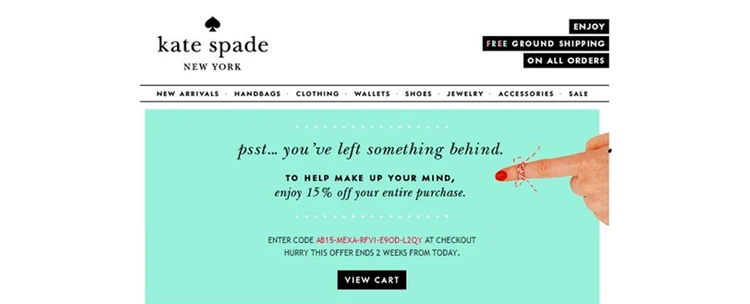
This is by far my most passive aggressive way to save money when shopping online, and yes, it still works in 2026.
You simply add items to your online cart, then leave without finalizing your purchase.
This will automatically trigger many online retailers to email you one of the following:
- 10%15% come back codes
- Free shipping offers
- Limited-time discounts
Of course it doesnt work everywhere, but it works often enough to make it worth trying, especially on significant purchases like electronics, laptops, and expensive clothing.
Step 5: Compare shipping thresholds vs filler items
Free shipping thresholds like spend $50, get free shipping are specifically designed to get you to spend more.
Heres the classic example:
- Your cart: $42
- Free shipping at: $50
- Shipping cost: $6.99
So, if you spend the $8 more, and buy a filler item you dont need, youve essentially spent $8 to save $6.99.
Heres a good rule-of-thumb, only add a filler item in these scenarios:
- Its something you were already going to buy.
- It costs less than the actual shipping fee.
- It wont cause you to overspend later.
I know it hurts, but sometimes the smartest move is to just pay the dang shipping fee.
Step 6: Time your purchases strategically
Online deals and sales events follow some very predictable patterns every year.
By knowing when stuff tends to get cheaper, you can time your purchases and maximize your savings when shopping online.
Here are the general timing trends you should consider:
- January: Fitness, organization, bedding
- February:TVs (Super Bowl), winter clearance apparel
- March:Craft & art supply, jeans, family apparel
- May: Major appliances
- July & October: Major online sales events like Prime Day
- September:Patio furniture, grills/BBQs, summer clothing
- Late November: Black Friday / Cyber Monday
Heres the real takeaway from this: If its not an urgent need, waiting a couple weeks to 30 days can make a real difference and easily save you 20-50%.
Step 7: Dont fall for the fake urgency
Online stores absolutely love to use tricks to make you think youre about to miss out on your only chance to save money.
Here are the tricks to we tend to always see:
- Countdown timers
- Only two left
- 30 people are viewing this
- Deal expires in 05:00
Im here to tell you that these are all ploys to create fake urgency in your brain which always transfers down to your wallet.
Dont believe me? The next time you see wording like Only twoleft, do your own experiment and come back the next day and see what the site says. Often it will be reset to Only 10 left, or the wording will be completely gone.
Pro tip: If the dealhappens to disappear, just check a competing website for the same product and youll often find it even cheaper.
Always remember that scarcity isjust a marketing tool never a smart shoppers reality.
Posted: 2026-02-17 22:18:48







