

Rockin Robin SongFlying The Web For News.
RobinPost Logo Amazon Prime Deals


Consumer Daily Reports

Learn to shop Ross like a pro (and stop wasting time)

By Kyle James of ConsumerAffairs
May 4, 2026
  • Shop early and often: Ross Dress for Less turns over inventory quickly, so weekday mornings, especially Monday and Tuesday, give you the best shot at fresh deals.
  • Dont shop by size alone: The best finds are often misplaced, so check nearby racks and dig past the front.
  • Target high-value sections: Shoes and accessories usually offer the biggest discounts grab them before theyre gone.

Shopping at Ross Dress for Less can either feel like a goldmineor a complete waste of time.

Some people walk out with $200 worth of name-brand gear for $60. Others leave frustrated after digging through messy racks for 45 minutes. The difference isnt luck. Its strategy.

Ross operates very differently than traditional retail. If you understand how their pricing, inventory, and markdown system actually works, you can consistently find deals most shoppers miss.

First: How Ross pricing actually works (this explains a lot)

Ross isnt running sales like a normal store does.

Instead, the store is built on more of an opportunistic buying model. The products you find on their shelves and racks are typically one of the following:

  • Excess inventory from big brands
  • Cancelled orders from department stores
  • Past-season merchandise
  • Overproduction directly from manufacturers

Thats why youll regularly see:

  • Top brands like Nike, Calvin Klein, Michael Kors, etc.
  • Consistent pricing 20%60% below department store pricing

But the key difference is that Ross will rarely, if ever, restock the same item.

They tend to buy small batches, sell them fast, and move on.

Thats why youll notice:

  • Inventory is constantly changing
  • Sizes are very inconsistent
  • Deals disappear quickly

Once you understand that, your entire approach should change.

The #1 mindset shift: Ross is not a storeits a system

Most people lose money at Ross because they:

  • Go in looking for something specific
  • Get frustrated
  • Then impulse-buy something else

Thats backwards. Instead, Ross rewards:

  • Flexibility
  • Patience
  • Repetition

Think of it this way, youre not necessarily shopping for super-specific items at Ross, but instead you win by looking for the best values.

The best days and times to shop Ross

Most people lose money at Ross because they walk in looking for something specific, get frustrated, then often impulse-buy something else.

Instead, you have to be flexible, patient, and learn to time your purchases.

Specifically, the best time to shop is right after new inventory hits the shelves. Ross receives shipments multiple times per week and most stocking happens in the morning.

From having talked to many Ross employees over the years, weekday mornings, particularly early in the week (on a Monday or Tuesday)is the best time to shop.

This is because a lot of restocking happens on Mondays, as stores try to replenish from weekend sales. Many stores also do their new clearance markdowns on Monday and Tuesday when the store is less crowded.

So, if at all possible, hit your local Ross on Monday, a couple hours after opening, through Tuesday, and youll be able to shop fresh inventory (and deals) before they get picked over.

Pro tip: If you leave this article only remembering one thing, it should be shop Ross more often, not for longer. Instead of one long trip, savvy Ross shoppers make quick, frequent visits, and look for new inventory and fresh clearance markdowns.

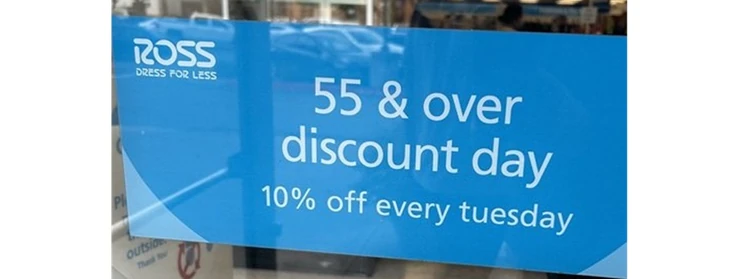
Aged 55 or older? Gotta shop on a Tuesday
Photo

Not only will you get first dibs on new inventory on a Tuesday, but if youre 55 or older, youll also save an additional 10% off everything you buy.

There's also no sign-up required to get their senior discount. All you need to do is flash your ID at check-out, and Ross will happily give you an extra 10% off.

Where the best deals are hiding inside the store

Ross isnt built for easy shopping. Its built to move inventory fast. Stuff comes in, stuff goes out, and nobodys carefully organizing it in between. That chaos? Thats where the savings live if you know how to work it.

1. The wrong-size racks (this is where the gold is)

People grab a medium, hold it up to look at it, decide its not right for them and often toss it wherever theyre standing. Very rarely does someone walk it back to the right rack.

So now youve got:

  • Smalls hiding in larges
  • Premium brands mixed into random sections
  • Clearance-level deals sitting in plain sight just in the wrong spot

If youre only shopping your exact size rack, youre missing a huge chunk of inventory.

What to do instead:

  • Always scan the rack one size upand one size downfrom your actual size.
  • Check racks right next to your section (especially those endcaps).
  • Look for higher-quality fabrics or brands first, then check for your size.

From shopping at Ross over the years, Ive found that a lot of my best finds felt more like mistakes. Because they are.

Pro tip: Buy now, decide later. Because the good stuff at Ross disappears quickly, when you find a good deal, buy it and decide at home. Ross has a generous 30-day return window which gives you plenty of time to try it on at home when youre not rushed.

2. The back of racks (where patience pays off)

Most Ross shoppers shop like this: Quick glance grab whats in front move on

That means the front of every rack gets picked over fast. Whats left behind or shoved back?

Usually, the better stuff that just didnt catch someones eye in twoseconds.

Youll find:

  • Name brands pushed behind generic items
  • Nicer pieces hidden behind loud or outdated styles
  • Out-of-season gems that people overlooked

If youre willing to actually dig, you instantly have less competition.

Simple rule: Dont trust the first fiveitems on any rack. Thats just what everyone else already rejected or skimmed.

Instead, try this:

  • Slide hangers over and scan everything
  • Look for quality (stitching, fabric, weight) instead of just style
  • Take twoextra minutes per rack

This is the difference between Ross is picked over and Ross is amazing.

3. Shoes and accessories (highest ROI in the whole store)

If you only have 1015 minutes, skip the clothing entirely and go here.

Ross quietly crushes it in:

  • Athletic shoes
  • Brand-name sneakers
  • Handbags and backpacks

Why this section matters more:

Clothing discounts are nice, but shoes and accessories often have the biggest price gaps vs retail.

Youll regularly see:

  • $80$120 sneakers marked down to $30$50
  • Recognizable brands that people specifically search for
  • Items that hold resale value if you know what youre looking at

This is why resellers camp-out in this section.

How to shop it smarter:

  • Check multiple sizes (people try on and ditch boxes everywhere)
  • Look for slight box damage price is the same, product isnt
  • Scan quickly for known brands before digging deeper

Even if you dont resell, this is where youll feel the biggest wow, thats cheap moments.

Pro tip: Learn your stores patterns by talking to employees. Every Ross location is slightly different. So, by starting up a friendly conversation, youll learn your stores exact restock schedule, clearance markdowndays, and the best days to shop.


Posted: 2026-05-04 21:48:55

Get Full News Story On Consumer Affairs


Listen to this article. Speaker link opens in a new window.
Text To Speech BETA Test Version.


More News From This Category
Consumer News: Why you get a voicemail even though your phone doesn’t ring
Fri, 15 May 2026 16:07:06 +0000

Its part of an elaborate scam operation

By Mark Huffman of ConsumerAffairs
May 15, 2026
  • Consumers across the U.S. are reporting mysterious blank voicemails from unknown numbers, often without their phone ever ringing.

  • Experts say the messages are usually part of a robocall verification scheme designed to identify active phone numbers for future .

  • Consumers should avoid calling the numbers back, delete the messages, and use carrier spam-blocking tools to reduce future targeting.


Millions of smartphone users have experienced it: You glance at your phone and see a new voicemail notification, even though the phone never rang. When you listen to the message, theres either silence, a brief rustling sound, or a robotic click before the message ends.

Cybersecurity experts say these ghost voicemails are rarely harmless glitches. In many cases, they are part of a larger robocall operation aimed at identifying working phone numbers and targeting consumers for future .

How the scam works

The scam typically begins with an automated dialing system that places thousands sometimes millions of calls in rapid succession. Rather than allowing the phone to ring normally, the system disconnects almost immediately or routes the call directly to voicemail.

That leaves behind a blank or nearly blank message.

While the message itself may seem meaningless, the real objective is data collection.

Scammers use the tactic to determine whether a phone number is active and monitored by a real person. If the voicemail system answers and stores a message, the number is flagged as live. That information can then be sold to telemarketers, scam networks, or criminals conducting phishing attacks.

Why your phone doesnt ring

Several technologies allow calls to bypass the normal ringing process.

One common method involves ringless voicemail technology, originally developed for marketers. The system deposits a message directly into voicemail servers without completing a traditional phone call.

Legitimate businesses have used ringless voicemail for advertising campaigns, but scammers increasingly exploit the same technology because it avoids some robocall detection systems and reduces the chance consumers will immediately block the number.

In other cases, scammers simply hang up after one partial ring, too quickly for the consumer to notice, but long enough for the carrier to route the call to voicemail.

The bigger objective

The blank voicemail itself is usually only the first step.

Once scammers know a number is active, consumers may begin receiving:

  • Fake bank fraud alerts

  • Phony package delivery texts

  • Medicare or insurance

  • Tech support

  • Cryptocurrency investment pitches

  • AI-generated voice impersonating relatives or employers

Some operations also use verified numbers to build detailed consumer profiles that can later be combined with breached personal information purchased online.

The result is a more convincing and potentially more dangerous scam attempt down the road.

Can listening to the voicemail harm you?

In most cases, simply listening to a blank voicemail will not infect your phone with malware.

However, experts warn consumers not to call the number back, click links sent afterward, or respond to follow-up texts.

Returning the call confirms to scammers that the consumer is engaged and reachable, which can lead to even more robocalls.

There is also a financial risk in some cases. Certain direct consumers to international premium-rate numbers that generate charges when called back.

What consumers should do

Experts recommend several steps to reduce exposure to these schemes:

  • Dont call back unknown numbers: If the voicemail is blank or suspicious, avoid returning the call unless you can independently verify the caller.
  • Block the number: Most smartphones allow users to block suspicious callers directly from the call log or voicemail screen.
  • Use spam-filtering tools: Wireless carriers offer free or low-cost robocall filtering services, including:
    • AT&T ActiveArmor

    • Verizon Call Filter

    • T-Mobile Scam Shield

Third-party apps such as Hiya, Truecaller, and RoboKiller can also help screen suspicious calls.

  • Report persistent scam calls: Consumers can file complaints with:
    • The Federal Trade Commission (FTC)

    • The Federal Communications Commission (FCC)

    • Their wireless carrier

  • Keep voicemail passwords secure: Some scammers attempt to hack voicemail accounts using default PINs. Consumers should use strong, unique voicemail passwords whenever possible.

Read More ...


Consumer News: Foreclosure activity increased 18% in April
Fri, 15 May 2026 16:07:06 +0000

Delaware, South Carolina and Florida saw the most activity

By Mark Huffman of ConsumerAffairs
May 15, 2026
  • U.S. foreclosure filings rose 18% in April from a year earlier, continuing a steady upward trend in distressed properties.

  • Delaware, South Carolina and Florida posted the nations highest foreclosure rates, while Lakeland, Florida, led major metro areas.

  • ATTOM says foreclosure activity remains below historical norms but suggests mounting financial pressure on some homeowners.


Two reports issued this week may point to growing trouble in the housing market. The Federal Reserve Bank of New York reported there was an increase in mortgage delinquencies in the first quarter of 2026.

Also, real estate data firm ATTOM reported that foreclosure filings jumped last month.

ATTOM reported 42,000-plus U.S. properties with foreclosure filings in April, up 18% from the same month a year ago. The filings include default notices, scheduled auctions and bank repossessions, so not every filing means a homeowner lost their house.

Foreclosure hot spots

The report found that one in every 3,388 housing units nationwide had a foreclosure filing during the month. Delaware recorded the highest foreclosure rate, with one filing for every 1,739 housing units, followed closely by South Carolina at one in every 1,745 units. Florida ranked third at one filing for every 2,092 housing units.

Among metropolitan areas with populations above 500,000, Lakeland, Florida, posted the highest foreclosure rate, followed by Columbia and Charleston, South Carolina, along with Bakersfield, California, and Cape Coral, Florida.

Still below historical averages

Foreclosure activity continues its gradual climb, ATTOM CEO Rob Barber said in the report, noting that while levels remain below historical averages, the increases in foreclosure starts and completed foreclosures may indicate that some homeowners are increasingly strained financially.

The April data follow a wider first-quarter trend. ATTOM previously reported that foreclosure filings rose 26% year over year in the first quarter of 2026, with foreclosure starts up 20% and bank repossessions jumping 45%.

Housing analysts say rising insurance premiums, property taxes, elevated mortgage costs and broader affordability issues are contributing to homeowner stress, particularly among borrowers with government-backed loans.


Read More ...


Consumer News: Waymo recalls its fleet of robotaxis
Fri, 15 May 2026 16:07:06 +0000

One unoccupied vehicle drove into flood waters and was swept away

By Mark Huffman of ConsumerAffairs
May 15, 2026
  • Waymo is recalling nearly 3,800 robotaxis after one autonomous vehicle drove into floodwaters in San Antonio, Texas.

  • Federal regulators said the software could slow for flooded roads but not always stop, creating a potential crash risk.

  • The recall adds to growing scrutiny of autonomous vehicle safety, as Waymo expands service across major U.S. cities.


Waymo, Alphabets self-driving vehicle subsidiary, has issued one of the largest recalls in the history of the autonomous vehicle industry after a software flaw allowed some robotaxis to enter flooded roadways.

The voluntary recall affects 3,791 vehicles equipped with the companys fifth- and sixth-generation automated driving systems, according to filings with the National Highway Traffic Safety Administration (NHTSA).

The action follows an April 20 incident in San Antonio, Texas, in which an unoccupied Waymo robotaxi drove into a flooded roadway during severe weather and was swept into a creek. No injuries were reported, but regulators said the incident exposed a dangerous weakness in the companys response to extreme weather conditions.

Flooded roads may be problematic

NHTSA documents state that on higher-speed roads, Waymo vehicles could detect standing water and reduce speed, but might still continue forward instead of stopping completely. Regulators warned that entering flooded roadways could lead to loss of vehicle control and increase the risk of crashes or injuries.

Waymo said it has already implemented interim software updates across its fleet, including tighter weather-related operating restrictions and revised mapping data designed to limit access to flood-prone areas. The company is also developing a permanent software remedy.

We are working to implement additional software safeguards and have put mitigations in place, including refining our extreme weather operations during periods of intense rain, a Waymo spokesperson said.

The recall represents another high-profile setback for the rapidly growing robotaxi industry, which has promoted autonomous vehicles as potentially safer than human drivers. Waymo currently operates commercial driverless ride-hailing services in cities including Phoenix, San Francisco, Los Angeles, and Austin, and recently expanded testing into additional U.S. markets.

Growing scrutiny

Despite its expansion, the company has faced mounting regulatory scrutiny over safety incidents involving its autonomous fleet. Federal investigators have previously examined reports of Waymo vehicles colliding with roadway barriers, illegally passing stopped school buses, and entering restricted traffic areas.

Still, Waymo continues to argue that its vehicles are safer overall than human-operated cars. A company-backed study published last year found Waymo vehicles experienced significantly lower crash rates than human drivers across tens of millions of autonomous miles traveled.

Industry analysts say the latest recall highlights one of the most difficult challenges facing autonomous driving technology: handling unpredictable real-world conditions such as flooding, snow, debris, and other hazards that humans often navigate using judgment and context rather than strict rules.

The recall also underscores the growing role of software updates in modern automotive safety. Unlike traditional recalls that require physical repairs, Waymos fix is largely being deployed through over-the-air software updates, allowing vehicles to receive new operating instructions remotely.


Read More ...


Consumer News: Mortgage rates seemed to stall this week
Fri, 15 May 2026 16:07:06 +0000

For buyers, its probably the best they could hope for

By Mark Huffman of ConsumerAffairs
May 15, 2026
  • The average rate on a 30-year fixed mortgage edged down to 6.36% this week from 6.37%, according to Freddie Mac.

  • Economists expect mortgage rates to remain relatively stable in the next few weeks, hovering in the mid-6% range.

  • Inflation concerns, Treasury yields, and uncertainty over future Federal Reserve moves are likely to keep rates from falling sharply anytime soon.


Mortgage rates arent going down very much, but at least they arent going up.

Rates drifted slightly lower this week, offering modest relief for homebuyers entering the late spring housing market, but economists say borrowing costs are likely to remain elevated through the next several weeks.

Freddie Mac reports that the average rate on a 30-year fixed-rate mortgage dipped to 6.36%, down from 6.37% last week. A year ago, the benchmark mortgage averaged 6.81%. Rates on 15-year fixed mortgages, popular with homeowners refinancing, slipped to 5.71% from 5.72% the previous week.

Recent data points to slightly better conditions for buyers, Freddie Mac said in its weekly survey, pointing to growing housing inventory and lower median new-home prices.

However, mortgage analysts caution that the improvement is unlikely to signal the beginning of a major downward trend.

Following bond yields

Mortgage rates closely follow the yield on the 10-year Treasury note, which has remained elevated as investors weigh inflation pressures, global instability, and the Federal Reserves next moves on interest rates. The 10-year Treasury yield recently hovered around 4.4%, well above where it stood earlier this year.

Housing economists said they generally expect rates to stay in a narrow range between about 6.2% and 6.5% through the early summer unless there is a significant shift in inflation or economic growth.

Federal Reserve policymakers have held their benchmark interest rate steady this year after several cuts late in 2025, signaling continued concern that inflation remains stubbornly above the Feds 2% target. Although the Fed does not directly set mortgage rates, its policies heavily influence broader borrowing costs.

Second half of the year may see improvement

Industry forecasts suggest mortgage rates may gradually ease later in 2026 if inflation cools and the Fed resumes rate cuts. Freddie Mac, Fannie Mae, and the Mortgage Bankers Association all project rates could fall closer to 6% by years end, though few analysts expect a return to the ultra-low rates seen during the pandemic era.

For consumers, the near-term outlook means affordability challenges are likely to persist, especially as home prices remain high in many markets. But slightly lower rates and increased inventory may give some buyers more negotiating power than they had during the frenzied housing market of recent years.


Read More ...


Consumer News: Waymo recalls its fleet of robotaxis
Fri, 15 May 2026 13:07:07 +0000

One unoccupied vehicle drove into flood waters and was swept away

By Mark Huffman of ConsumerAffairs
May 15, 2026
  • Waymo is recalling nearly 3,800 robotaxis after one autonomous vehicle drove into floodwaters in San Antonio, Texas.

  • Federal regulators said the software could slow for flooded roads but not always stop, creating a potential crash risk.

  • The recall adds to growing scrutiny of autonomous vehicle safety as Waymo expands service across major U.S. cities.


Waymo, Alphabets self-driving vehicle subsidiary, has issued one of the largest recalls in the history of the autonomous vehicle industry after a software flaw allowed some robotaxis to enter flooded roadways.

The voluntary recall affects 3,791 vehicles equipped with the companys fifth- and sixth-generation automated driving systems, according to filings with the National Highway Traffic Safety Administration (NHTSA).

The action follows an April 20 incident in San Antonio, Texas, in which an unoccupied Waymo robotaxi drove into a flooded roadway during severe weather and was swept into a creek. No injuries were reported, but regulators said the incident exposed a dangerous weakness in the companys response to extreme weather conditions.

Flooded roads may be problematic

NHTSA documents state that on higher-speed roads, Waymo vehicles could detect standing water and reduce speed, but might still continue forward instead of stopping completely. Regulators warned that entering flooded roadways could lead to loss of vehicle control and increase the risk of crashes or injuries.

Waymo said it has already implemented interim software updates across its fleet, including tighter weather-related operating restrictions and revised mapping data designed to limit access to flood-prone areas. The company is also developing a permanent software remedy.

We are working to implement additional software safeguards and have put mitigations in place, including refining our extreme weather operations during periods of intense rain, a Waymo spokesperson said.

The recall represents another high-profile setback for the rapidly growing robotaxi industry, which has promoted autonomous vehicles as potentially safer than human drivers. Waymo currently operates commercial driverless ride-hailing services in cities including Phoenix, San Francisco, Los Angeles and Austin, and recently expanded testing into additional U.S. markets.

Growing scrutiny

Despite its expansion, the company has faced mounting regulatory scrutiny over safety incidents involving its autonomous fleet. Federal investigators have previously examined reports of Waymo vehicles colliding with roadway barriers, illegally passing stopped school buses and entering restricted traffic areas.

Still, Waymo continues to argue that its vehicles are safer overall than human-operated cars. A company-backed study published last year found Waymo vehicles experienced significantly lower crash rates than human drivers across tens of millions of autonomous miles traveled.

Industry analysts say the latest recall highlights one of the most difficult challenges facing autonomous driving technology: handling unpredictable real-world conditions such as flooding, snow, debris and other hazards that humans often navigate using judgment and context rather than strict rules.

The recall also underscores the growing role of software updates in modern automotive safety. Unlike traditional recalls that require physical repairs, Waymos fix is largely being deployed through over-the-air software updates, allowing vehicles to receive new operating instructions remotely.


Read More ...


Related Bing News Results
Consumer Reports: Ready to try digital minimalism?
Mon, 11 May 2026 08:15:00 GMT
Most of us know we spend a little too much time on our phones — but the numbers may still surprise you. A recent survey found Americans check their phones nearly 200 times a day on average and spend ...

This Instant Coffee Delivers the Most Caffeine, According to Consumer Reports
Tue, 05 May 2026 03:19:00 GMT
Consumer Reports analyzed caffeine levels in both instant coffees and takeout brews — and found they can vary widely. In some cases, a large cup can approach or even exceed the FDA’s 400-milligram ...

Consumer Reports: Simple steps to help slash daily screen time
Fri, 24 Apr 2026 01:25:00 GMT
Most of us know that too much scrolling on our phones isn’t great for our mental health. And now, a new approach to dialing down the digital noise is ironically trending on social media—of all places.

consumer reports
Thu, 23 Apr 2026 03:11:00 GMT
Consumer Reports has published an extensive ranking of vehicle reliability, and the results pour cold water on EVs and plug-in hybrids. The survey says electric vehicles suffer from 79 percent more ...

Consumer Reports retests protein powders, finds safer options
Wed, 18 Feb 2026 17:22:00 GMT
USES THESE SUPPLEMENTS. HERE’S MARISSA TANSINO. LAST FALL, CONSUMER REPORTS TESTED DOZENS OF PROTEIN POWDERS AND READY TO DRINK SHAKES. WHAT THE LAB FOUND RAISED RED FLAGS MORE THAN TWO THIRDS ...


Blow Us A Whistle


Related Product Search/Búsqueda de productos relacionados

Amazon Logo

Visit Our New Print-On-Demand Stores On Printify and Zazzle
Printify Zazzle





