

Rockin Robin SongFlying The Web For News.
RobinPost Logo Amazon Prime Deals


Consumer Daily Reports

But more importantly...it can help shoppers save money

By Kyle James of ConsumerAffairs
May 19, 2026
  • Shoppers can now check price history on multiple items at once, easily compare products, and even avoid fake sale prices without leaving Amazon.

  • Price alerts can help curb impulse buying as users can set target prices and let Alexa notify them when the price is right or even buy it automatically.

  • Alexa can now analyze photos you take and recommend cheaper alternatives.For the DIYer, it can help you troubleshoot broken appliances and electronics.


Amazons AI shopping assistant is quietly turning into something much bigger than a voice assistant that tells you the weather.

The latest version of Amazons Alexa+ for Shopping now helps users compare products, track price history, set automatic purchase triggers, build shopping guides, and even monitor deals across the web. And for shoppers trying to avoid overpaying online, some of the new features are surprisingly useful.

Heres how consumers can actually use Alexas shopping tools to save money and shop smarter.

Echo device no longer required, or a Prime account
Photo

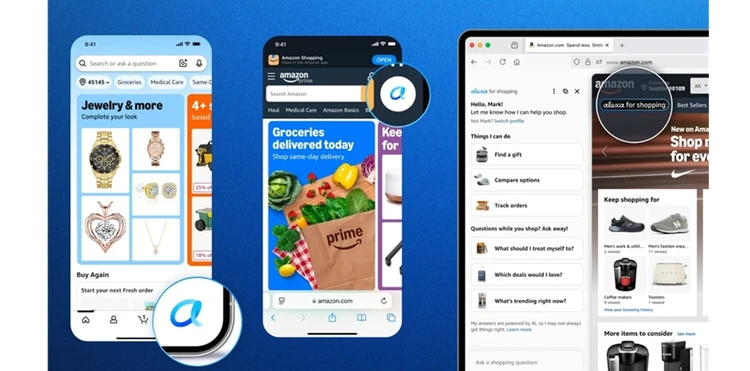
To take advantage of this new technology, you just need to be signed into your Amazon account. You dont need a Prime membership, an Echo device, or the Alexa app to make it happen.

All you have to do is tap the Alexa icon in the bottom navigation bar in the Amazon app, or youll find it at the top of your screen when on a laptop or desktop.

Use price history before buying anything expensive

One of the most useful new features is Alexas built-in price history tracking.

Shoppers can now ask Alexa:

  • Has this item been cheaper recently?
  • Whats the price history?
  • Has this gone on sale before?

Alexa will then show:

  • 30-day pricing history
  • 90-day pricing history
  • Full 365-day pricing trends

That matters for shoppers because many Amazon sales are not really sales at all. A product marked 25% off today may have sold for the exact same price two weeks ago.

The nice thing is that when youre looking at five possible gift ideas, Alexa will show the price history on each. This is a new feature and a huge time saver when looking for a real deal.

Pro tip: Use price history especially on electronics, kitchen appliances, vacuums, coffee makers, and headphones. Those categories tend to fluctuate constantly on Amazon.

Set price alerts instead of panic-buying

Setting targeted price alerts just might be the best feature for deal hunters.

Users can now tell Alexa:

  • Alert me when this drops below $50
  • Buy this when it hits 30% off
  • Purchase this when it falls to $15

Alexa will monitor pricing automatically and either:

  • Send an alert
  • Or complete the purchase automatically using your default payment method

That removes a lot of the obsessive checking prices every day behavior many shoppers fall into. And it can prevent impulse buying simply because something looks temporarily discounted.

Compare products side-by-side faster

Amazon also added AI-powered product comparisons directly inside their search results.

So, instead of opening 14 browser tabs trying to compare things like coffee makers, laptops, vacuums, and headphones, Alexa can now summarize major differences in:

  • Price
  • Features
  • Reviews
  • Weight
  • Battery life
  • Waterproofing
  • Materials

This feature alone can save shoppers a surprising amount of time and frustration.

Pro tip: Use comparisons to eliminate bad options quickly instead of endlessly researching tiny differences between similar products.

Use Alexa to avoid forgetting recurring household purchases

One underrated feature is Scheduled Actions.

Alexa can now automate repetitive shopping tasks like:

  • Reordering pet food
  • Restocking paper towels
  • Buying detergent
  • Refilling protein bars
  • Tracking new book releases

This can help families avoid expensive last-minute purchases at convenience stores or grocery stores where prices are often much higher. For example, running out of paper towels unexpectedly may cost twice as much locally compared to buying in bulk online ahead of time.

You can also say things like, Add this dog food to my cart if the price drops below $35 and I havent purchased it in over 30 days.

Upload photos to find cheaper alternatives

I have to admit that this is a pretty cool new feature. Alexa can now analyze your uploaded photos and help you find similar products.

For example:

  • Upload a photo of a handbag
  • Snap a picture of a chair
  • Screenshot shoes from social media

Then ask Alexa to:

  • Find something similar under $100
  • Find cheaper versions
  • Compare similar styles

This can be especially useful for avoiding overpriced influencer products or trendy impulse buys.

Amazon is known for cheaper versions of more expensive name-brand items. So by being able to analyze your photos, they can help you easily find products that have a very similar style, but cost significantly less.

Something break? Ask Alexa for help

For a DIYer like myself, this might be the single best feature of Amazons new shopping feature.

Heres a scenario that youll inevitably come across:

  • Your clothes dryer suddenly stops heating.
  • You type into the Alexa for Shopping search bar: Why is my dryer blowing cold air?
  • Since you previously ordered a replacement lint filter for your Samsung dryer through Alexa+, it already knows the exact model you own.
  • Alexa for Shopping explains that the issue is commonly caused by a tripped thermal fuse or clogged vent line on that model and walks you through a few troubleshooting steps to try before scheduling a repair.
  • After cleaning out a heavily clogged exterior vent, the dryer starts heating normally again.

Be careful with automatic purchasing

While the convenience is impressive, its smart to be very cautious with your auto-buy settings.

If left unchecked, automatic purchasing can easily lead to:

  • Overspending
  • Duplicate purchases
  • Subscription-style shopping habits
  • Buying things simply because they hit a sale price

Just because something gets cheaper does not necessarily mean you still need it.

Pro tip: Create price alerts only for items you already planned to buy anyway. Otherwise, the deal itself becomes the reason for spending money.


Posted: 2026-05-19 20:16:17

Get Full News Story On Consumer Affairs


More News From This Category
Consumer News: Grocery stores are responding to cost-conscious shoppers with more deals
Fri, 10 Jul 2026 16:07:06 +0000

Some chains are promising permanent price reductions

By Mark Huffman of ConsumerAffairs
July 10, 2026
  • Major grocery chains are rolling out aggressive price cuts, expanded store-brand offerings and richer loyalty rewards as financially strained shoppers become more selective about where they buy food.

  • Retailers are increasingly competing on value rather than convenience, hoping to prevent customers from shifting more of their spending to Walmart, Aldi, Costco and warehouse clubs.

  • Industry analysts say grocers recognize that consumers are making more frequent price comparisons, shopping multiple stores and delaying discretionary purchases to stretch household budgets.


American households continue to feel the pressure of higher living costs and changing what, and how much they buy. The nation's grocery chains are responding with a renewed focus on value, hoping to keep shoppers from taking their business elsewhere.

While inflation has cooled from its pandemic-era highs, many families are still grappling with elevated prices for food, housing, insurance and other essentials. Grocery executives say consumers have become far more deliberate about every dollar they spend, forcing supermarkets to rethink pricing strategies that had remained largely unchanged for years.

Perhaps the most significant shift is taking place at Kroger, the nation's largest traditional supermarket operator. New CEO Greg Foran has announced plans to reduce prices on thousands of products, saying the average grocery basket needs to become more affordable if the company hopes to compete effectively with Walmart, Costco and Aldi.

Cutting expenses to lower prices

Rather than absorbing the costs through lower profits alone, Kroger says it will finance many of the reductions by cutting operating expenses, simplifying sourcing, importing more products directly and using technology to improve efficiency. The company plans to test price reductions before expanding them across more stores.

The strategy reflects a trend sweeping the grocery industry.

According to Grocery Dive, traditional supermarket chains are moving beyond weekly sales promotions and are increasingly relying on permanent price reductions, "price lock" campaigns, expanded loyalty programs and larger selections of private-label products to narrow what analysts call the "value gap" between conventional supermarkets and discount retailers.

Walmart, long viewed as the nation's price leader, is also intensifying the battle. The retailer recently announced price reductions on thousands of grocery products, including fresh meat, produce and pantry staples, while Sam's Club has lowered prices on hundreds of popular food items.

Price wars

The growing competition has sparked what some retail analysts describe as an emerging grocery price war, with chains increasingly unwilling to cede budget-conscious shoppers to rivals.

Another area receiving renewed attention is store-brand merchandise.

Private-label foods generally carry lower prices than national brands while providing retailers with better profit margins. Some recent price comparisons have found Kroger's store-brand basket edging out competitors, illustrating how supermarkets are using their own brands to attract value-seeking consumers.

Retailers are also expanding digital coupons, personalized discounts through loyalty apps and targeted promotions based on customers' shopping habits. These incentives encourage shoppers to remain within a retailer's ecosystem instead of splitting purchases among multiple stores.

More comparison shopping

Industry experts say consumers have become increasingly willing to comparison shop. Warehouse clubs, discount grocers and dollar stores have all benefited as households search for the lowest prices on everyday necessities.

For traditional supermarkets, the challenge extends beyond lowering prices. Consumers increasingly expect convenience features such as curbside pickup, same-day delivery, digital shopping lists and personalized offers in addition to competitive prices. Chains are investing in these services while attempting to keep operating costs under control.

For shoppers, the heightened competition is producing tangible benefits.

Price reductions, more frequent promotions and expanded private-label selections mean consumers have more opportunities to lower their grocery bills than they did just a year ago. Analysts say the trend is likely to continue as retailers compete aggressively for customers who remain cautious about spending.


Read More ...


Consumer News: iPhone users beware: Scammers have discovered FaceTime
Fri, 10 Jul 2026 16:07:06 +0000

The video calling feature has become an important tool in scammers' playbook

By Mark Huffman of ConsumerAffairs
July 10, 2026
  • Scammers are increasingly using Apple's FaceTime as part of fraud schemes, posing as bank employees, tech support agents, government officials, and even romantic partners to build trust with victims.

  • The video platform itself is not compromised, but criminals use FaceTime to make appear more legitimate, often asking victims to share their screens, verify identities, or follow instructions to move money.

  • Apple, the Federal Trade Commission (FTC), and law enforcement all warn that legitimate organizations will not use unsolicited FaceTime calls to request passwords, financial information, or immediate payments.


FaceTime allows iPhone users not only to talk to someone but to actually see them as they engage in conversation. But, as criminals do with many helpful features, they use them to conduct a scam.

Consumer advocates say scammers are increasingly exploiting the platform's familiarity to make their schemes appear more convincing. Unlike traditional robocalls, FaceTime allows criminals to create a more personal interaction, using live video or audio to build trust, pressure victims, and guide them through financial transactions.

Apple now specifically warns customers to report suspicious FaceTime calls and FaceTime invitation links, acknowledging that fraudsters have begun incorporating the service into phishing and impersonation schemes. The company says suspicious FaceTime calls can be reported to reportfacetimefraud@apple.com.

Bank and fraud department impersonation

One of the fastest-growing uses of FaceTime in involves fake bank fraud investigations.

The scam often begins with a text message claiming there has been suspicious activity on a bank account or credit card. When the victim calls the number provided or receives a follow-up call the scammer claims additional verification is needed and switches the conversation to FaceTime.

During the video call, victims may be instructed to share their screens while logging into online banking, transferring money, or entering security codes. The scammers can then observe passwords, account numbers, and one-time verification codes in real time.

The Federal Trade Commission (FTC) says financial institution impersonation are among the costliest forms of fraud, frequently convincing consumers to move money into supposedly "safe" accounts that are actually controlled by criminals.

Fake Apple or Microsoft tech support

Tech support have also migrated to FaceTime.

After displaying a fake security warning or sending a fraudulent text, scammers claim they need to visually inspect a victim's device. The FaceTime session is then used to walk victims through installing remote-access software, changing security settings, or revealing sensitive information.

Apple says genuine Apple employees will never make unsolicited calls asking customers for passwords, verification codes, or other sensitive account information.

FaceTime has also been adopted in government impersonation schemes. Scammers pretending to represent police departments, federal agencies, or foreign law enforcement sometimes escalate from phone calls to FaceTime in an effort to appear more authentic.

They may display fake credentials or uniforms on camera while accusing victims of crimes, identity theft, or outstanding warrants.

The FTC says legitimate law enforcement agencies do not call people demanding immediate payment to avoid arrest, nor do they request payment through cryptocurrency, gift cards, payment apps, or wire transfers.

Romance and celebrity

FaceTime is also being used in romance .

Rather than relying solely on text messages, some scammers conduct brief video chats to convince victims they are genuine. Criminals may use lookalikes, prerecorded videos, heavy filters, or AI-generated imagery to impersonate celebrities or attractive strangers before asking for money, investments, or gift cards.

The FTC says romance remain a major form of impersonation fraud, with scammers exploiting emotional relationships to obtain money from victims.

Security experts say seeing or hearing someone in real time can lower a victim's skepticism. A video conversation creates the impression that the caller is legitimate, even though the technology itself offers no proof of a person's identity.

Scammers also use FaceTime because many Apple users are familiar with the platform and may be less suspicious than they would be of an unknown video-conferencing app.

How to protect yourself

Consumer protection agencies recommend several precautions:

  • Never share your screen with an unsolicited caller.

  • Never provide passwords, verification codes, or banking credentials during a FaceTime call.

  • Hang up if someone pressures you to move money immediately or claims your funds must be "protected."

  • Contact your bank, Apple, or the government agency directly using a phone number from its official website not one provided during the call.

  • Report suspicious FaceTime calls to Apple and report to the FTC at ReportFraud.ftc.gov.


Read More ...


Consumer News: FDA reports recall of more than 2.5 million prescription eye drop bottles
Fri, 10 Jul 2026 16:07:06 +0000

The agency said the product may contain a foreign substance

By Mark Huffman of ConsumerAffairs
July 10, 2026
  • More than 2.5 million bottles of prescription steroid eye drops have been recalled nationwide after the U.S. Food and Drug Administration (FDA) identified a potential contamination issue.

  • The recall affects Prednisolone Acetate Ophthalmic Suspension, USP, 1%, manufactured by Lupin Pharmaceuticals Inc., because of the possible presence of a foreign substance.

  • The FDA has classified the recall as Class II, meaning use of the affected product could cause temporary or medically reversible adverse health consequences, with the risk of serious harm considered remote.


Consumers who use prescription steroid eye drops should check their medicine cabinets after the U.S. Food and Drug Administration (FDA) reported a nationwide recall affecting more than 2.5 million bottles of Prednisolone Acetate Ophthalmic Suspension, USP, 1%.

According to the FDA's enforcement report, Lupin Pharmaceuticals Inc. recalled the products after discovering the possible presence of a foreign substance in the eye drops. The affected medication is supplied as a 1% ophthalmic suspension in 5 mL, 10 mL, and 15 mL bottles.

The FDA designated the action as a Class II recall on June 30. A Class II recall means use of or exposure to the product may cause temporary or medically reversible adverse health effects, while the likelihood of serious adverse health consequences is considered remote.

Used to treat inflammation

Prednisolone acetate is a prescription corticosteroid eye drop commonly used to reduce inflammation caused by allergies, eye injuries, surgery, and certain infections. Because the medication is applied directly to the eye, any contamination can pose a risk to patients.

The recall covers approximately 2.53 million bottles distributed nationwide. FDA records indicate the affected products were manufactured at Lupin's facility in Pithampur, India, and include dozens of lot numbers with expiration dates extending into 2028. Consumers and healthcare providers should consult the FDA's enforcement report to determine whether a specific bottle is included in the recall.

The FDA's enforcement report identifies the reason for the recall as the "presence of foreign substance." The agency has not publicly disclosed additional details about the nature of the material, and Lupin Pharmaceuticals had not publicly commented on the recall at the time of publication.

What to do

Patients who believe they have an affected bottle should contact their pharmacist or healthcare provider before discontinuing a prescribed medication, especially if it is being used to control inflammation following eye surgery or to treat another serious eye condition. Anyone experiencing unusual eye pain, redness, swelling, vision changes, or signs of infection after using the product should seek medical attention promptly.

The recall comes only months after another large eye drop recall involving more than three million over-the-counter products because of concerns about sterility, underscoring continuing scrutiny of ophthalmic drug manufacturing.


Read More ...


Consumer News: Mortgage rates climb back to 6.49%, adding to homebuying costs
Fri, 10 Jul 2026 16:07:06 +0000

Bond yields are rising amid inflation worries, pushing rates higher

By Mark Huffman of ConsumerAffairs
July 10, 2026
  • The average rate on a 30-year fixed-rate mortgage rose to 6.49% this week, up from 6.43% a week ago, according to Freddie Mac.

  • The increase pushes borrowing costs higher for homebuyers after rates briefly fell to a seven-week low last week.

  • Economists say rising Treasury yields, inflation concerns, and renewed geopolitical tensions have added upward pressure on mortgage rates.


The average rate on a 30-year fixed-rate mortgage climbed to 6.49% this week, reversing last week's modest decline and increasing borrowing costs for prospective homebuyers during the peak summer homebuying season.

Mortgage buyer Freddie Mac reports that the average rate increased from 6.43% last week. A year ago, the benchmark mortgage averaged 6.72%, meaning today's rates remain below year-earlier levels but are still high enough to weigh on affordability. The average rate on a 15-year fixed rate mortgage, popular with homeowners refinancing, also edged higher to 5.82% from 5.79% the previous week.

"The 30-year fixed-rate mortgage averaged 6.49% this week," Freddie Mac Chief Economist Sam Khater said, noting that mortgage rates have changed little in recent weeks despite ongoing economic uncertainty.

Mortgage rates generally track movements in the 10-year Treasury yield, which has risen amid renewed inflation concerns and geopolitical uncertainty. Analysts point to higher oil prices and investor concerns surrounding the renewed conflict involving Iran as factors pushing long-term bond yields higher, which in turn increases mortgage borrowing costs.

Affordability challenges

The latest increase comes as the housing market continues to struggle with affordability challenges. Elevated mortgage rates, combined with still-high home prices, have limited purchasing power for many would-be buyers and contributed to sluggish home sales.

Existing-home sales fell 2.4% in June, according to the National Association of Realtors, underscoring the ongoing weakness in the market. Economists have repeatedly noted that even relatively small changes in mortgage rates can significantly affect monthly payments and buyer demand.

For buyers, the difference between last week's 6.43% rate and this week's 6.49% may appear modest, but over the life of a typical 30-year mortgage, even a small increase can add thousands of dollars in interest costs.

Many housing economists still expect mortgage rates to remain in the mid-6% range for much of the year unless inflation eases more quickly or the bond market rallies. Until then, affordability is likely to remain one of the biggest obstacles facing the housing market.


Read More ...


Consumer News: FDA reports recall of more than 2.5 million prescription eye drop bottles
Fri, 10 Jul 2026 13:07:06 +0000

The agency said the product may contain a foreign substance

By Mark Huffman of ConsumerAffairs
July 10, 2026
  • More than 2.5 million bottles of prescription steroid eye drops have been recalled nationwide after the U.S. Food and Drug Administration identified a potential contamination issue.

  • The recall affects Prednisolone Acetate Ophthalmic Suspension, USP, 1%, manufactured by Lupin Pharmaceuticals Inc., because of the possible presence of a foreign substance.

  • The FDA has classified the recall as Class II, meaning use of the affected product could cause temporary or medically reversible adverse health consequences, with the risk of serious harm considered remote.


Consumers who use prescription steroid eye drops should check their medicine cabinets after the U.S. Food and Drug Administration reported a nationwide recall affecting more than 2.5 million bottles of Prednisolone Acetate Ophthalmic Suspension, USP, 1%.

According to the FDA's enforcement report, Lupin Pharmaceuticals Inc. recalled the products after discovering the possible presence of a foreign substance in the eye drops. The affected medication is supplied as a 1% ophthalmic suspension in 5 mL, 10 mL and 15 mL bottles.

The FDA designated the action as a Class II recall on June 30. A Class II recall means use of or exposure to the product may cause temporary or medically reversible adverse health effects, while the likelihood of serious adverse health consequences is considered remote.

Used to treat inflammation

Prednisolone acetate is a prescription corticosteroid eye drop commonly used to reduce inflammation caused by allergies, eye injuries, surgery and certain infections. Because the medication is applied directly to the eye, any contamination can pose a risk to patients.

The recall covers approximately 2.53 million bottles distributed nationwide. FDA records indicate the affected products were manufactured at Lupin's facility in Pithampur, India, and include dozens of lot numbers with expiration dates extending into 2028. Consumers and healthcare providers should consult the FDA's enforcement report to determine whether a specific bottle is included in the recall.

The FDA's enforcement report identifies the reason for the recall as the "presence of foreign substance." The agency has not publicly disclosed additional details about the nature of the material, and Lupin Pharmaceuticals had not publicly commented on the recall at the time of publication.

What to do

Patients who believe they have an affected bottle should contact their pharmacist or healthcare provider before discontinuing a prescribed medication, especially if it is being used to control inflammation following eye surgery or to treat another serious eye condition. Anyone experiencing unusual eye pain, redness, swelling, vision changes or signs of infection after using the product should seek medical attention promptly.

The recall comes only months after another large eye-drop recall involving more than 3 million over-the-counter products because of concerns about sterility, underscoring continuing scrutiny of ophthalmic drug manufacturing.


Read More ...


Related Bing News Results
Consumer Reports finds concerning levels of food dye in popular products
Mon, 06 Jul 2026 05:12:00 GMT
"Companies in the U.S. are not required to disclose the amount of a specific additive or contaminant that's actually in their products," said Paris Martineau, Consumer Reports investigative reporter ...

Consumer Reports and Yuka Test 40 Popular U.S. Foods, Find 1 in 4 Exceed Daily Safety Levels for Additives
Mon, 08 Jun 2026 11:20:00 GMT
A joint investigation by Consumer Reports and Yuka has measured the levels of eight controversial additives in 40 widely consumed packaged food products in the United States. The results show that one ...

Consumer Reports retests protein powders, finds safer options
Wed, 18 Feb 2026 17:22:00 GMT
USES THESE SUPPLEMENTS. HERE’S MARISSA TANSINO. LAST FALL, CONSUMER REPORTS TESTED DOZENS OF PROTEIN POWDERS AND READY TO DRINK SHAKES. WHAT THE LAB FOUND RAISED RED FLAGS MORE THAN TWO THIRDS ...

How Much Lead Is in Protein Powder? Consumer Reports Shares Latest Findings
Mon, 12 Jan 2026 16:00:00 GMT
Consumer Reports released new findings after testing five reader-requested chocolate protein powders for lead and other heavy metals. The nonprofit organization previously revealed in late 2025 that ...


Blow Us A Whistle


Related Product Search/Búsqueda de productos relacionados

Amazon Logo

Visit Our New Print-On-Demand Store On Printify
Printify





