Rockin Robin SongFlying The Web For News.
RobinPost Logo Amazon Prime Deals


Consumer Daily Reports

Fake websites, too-good-to-be-true deals, and phishing links can turn back-to-school shopping into a costly headache

By Kristen Dalli of ConsumerAffairs
August 27, 2026
  • Scammers use fake websites, social media ads, and urgent limited-time deals to catch shoppers off guard during the busy back-to-school season.

  • Always check the websites core domain before clicking or entering payment information, especially when deals are shared through group chats or community forums.

  • If a deal seems too good to be true, take a step back, verify it directly with the retailer, and use a credit card and strong account protections when shopping online.


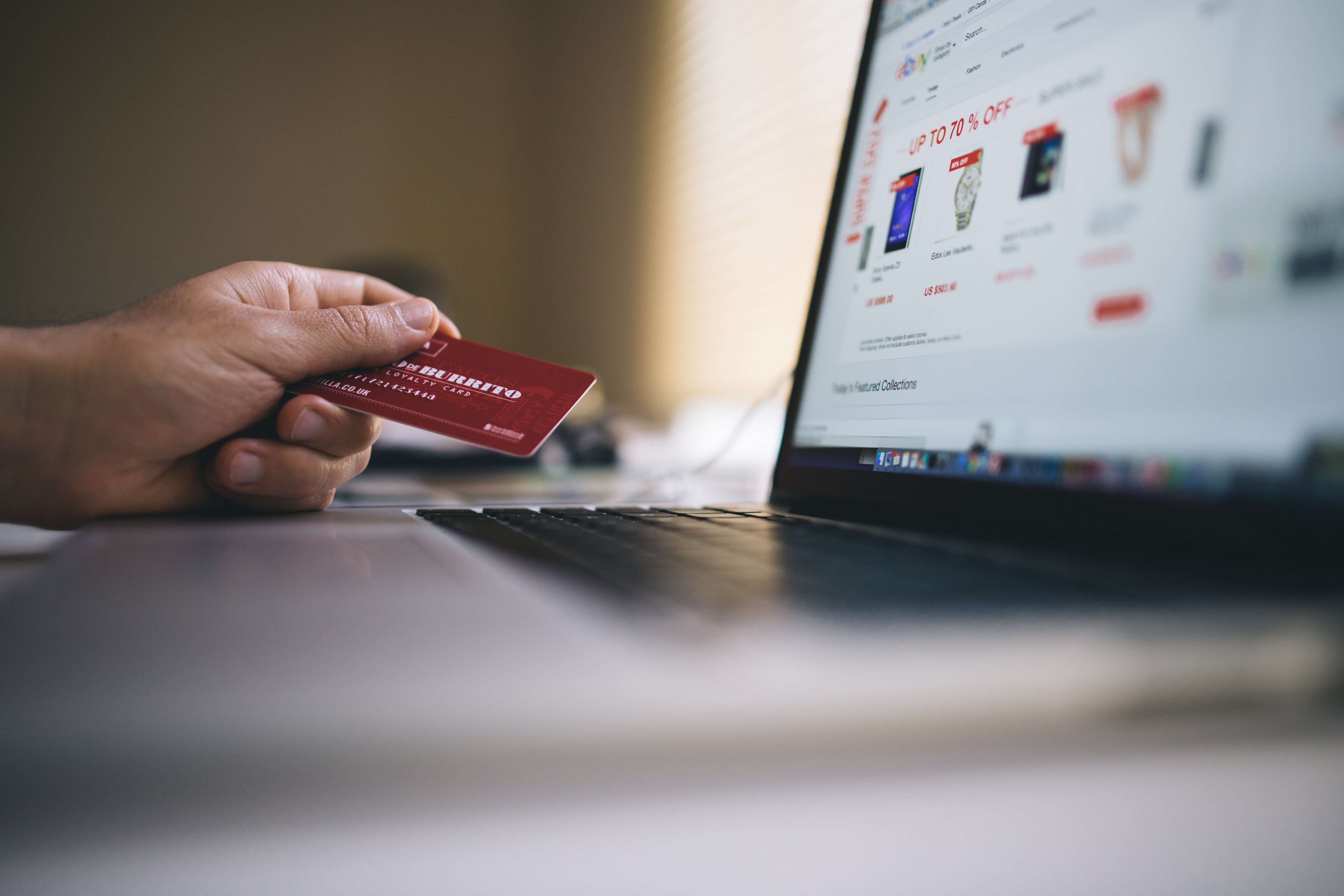
Back-to-school shopping can be expensive enough without accidentally handing your money or personal information to a scammer. As parents and students hunt for deals on everything from school supplies to electronics, scammers are finding plenty of ways to make their fake offers look legitimate.

Fake retail websites, phony social media ads, and suspicious links shared in parent groups can be difficult to spot at a glance especially when a deal looks too good to pass up. And with more shoppers turning to online marketplaces, there are even more opportunities to encounter a scam.

ConsumerAffairs spoke withProfessor James Juarez, PhD, chair of the Department of Cybersecurity and Technology at National University, who shared what shoppers should watch for and how they can protect themselves while checking items off their back-to-school lists.

Urgency is a tried and true tactic

Back-to-school season is stressful for parents and kids alike, and for parents trying to check everything off their list, its the prime opportunity for scammers to strike.

"Scammers are aware this is one of the biggest shopping moments of the year for families, Dr. Juarez said. They target this stress and sense of urgency by highlighting extremely discounted items and flash sales. If a discount feels too good to be true on a social media ad or a fake website that is mimicking large retailers like Walmart, Target, etc., thats an immediate red flag.

Fake pages often push cant-miss deals, flash sales, or limited time offers to pressure quick purchases. Any parent in a time crunch or needs something last minute before the first day of school, is more vulnerable to falling for these .

Spotting

Many parents are members of community groups or forums, where local parents share deals, sales, etc. However, not everything you see in these spaces is safe even if they seem to be.

When deals are shared in group chats or community forums, the most critical marker to evaluate is the destination URL, Dr. Juarez said. Scammers frequently mask malicious links to mimic well-known retailers like Target, Walmart, or Amazon.

I recommend inspecting the core domain. If an offer claims to be a Target backpack promotion, the root domain must actually be target.com. Look out for deceptive techniques like typo-squatting (targ3t.com or target-deals-online.com) or subdomains intended to mislead (target.com.deals-promo.net).

However, Dr. Juarez says that consumers don't need to panic if they see lengthy strings of tracking tags, promo codes, or UTM parameters following the standard root domain.

The rule of thumb is simple, Dr. Juarez said. Verify that the primary host domain strictly belongs to the legitimate retailer before entering payment details or bypass the shared link altogether and navigate directly to the retailer's official website or app to search for the deal.

Follow good digital hygiene

For parents raising kids in the digital age, cybersecurity is more important than ever. To help ensure the back-to-school season goes as smoothly as possible, Dr. Juarez shared his best cybersecurity tips.

  • Apply the "Too-Good-To-Be-True" Reality Check. If a deal promises a 90% discount on high-demand tech or trending supplies, treat it with immediate skepticism. High-pressure discounts are designed to override critical thinking. Teach students to pause, verify the offer independently on the retailer's primary website, and resist impulse clicking on social ads or unsolicited messages.

  • Inspect Links Before Clicking or Transacting. Make checking the actual URL second nature. Train students to hover over links to inspect the destination address, especially on deals circulating on Discord, TikTok, or group chats. If a link purports to come from major sellers like Amazon, Costco, or Walmart but directs to an unfamiliar domain, close the window immediately.

  • Standardize Safe Payment & Account Protections. Never use debit cards, direct bank transfers, or gift cards for online shopping. Credit cards provide vital federal fraud protections and chargeback mechanisms if a transaction turns out to be fraudulent. Pair this with strong, unique passwords for every shopping account and multi-factor authentication (MFA) to ensure that even if credentials are exposed, student and parent accounts remain secure.


Posted: 2026-08-27 17:09:56

Get Full News Story On Consumer Affairs


More News From This Category
Consumer News: Companies are getting billions in tariff refunds. Here’s who's sharing with consumers.
Mon, 31 Aug 2026 16:07:13 +0000

Some retailers are cutting prices while others are using the money to cover costs

By Mark Huffman of ConsumerAffairs
August 31, 2026
  • FedEx, UPS, and DHL are returning tariff refunds directly to customers who were explicitly charged import duties, while Amazon says it will issue refunds in a limited number of cases.

  • Walmart, Target, Costco, and several other retailers say customers will benefit indirectly through lower prices or better value rather than receiving checks.

  • Other companies are largely keeping the windfall or using it for business expenses and investments, raising questions about who should benefit from billions of dollars in refunded tariffs.


American companies continue to receive billions of dollars in refunds for tariffs they paid last year, but what they are doing with the money continues to evolve. Whether any of that money makes its way back to consumers depends heavily on where they shopped and how the tariff was originally charged.

The refunds stem from the Supreme Court's February decision striking down many of the tariffs President Trump imposed in 2025 under the International Emergency Economic Powers Act. The federal government is expected to refund roughly $166 billion collected under the invalidated tariffs. As of August, about $100 billion had already been returned, according to government court filings.

The catch for consumers is that the government isn't sending the money to them. Tariffs are technically paid by importers, so the refunds go to the companies that made those payments even when businesses passed some or all of the original cost along to shoppers through higher prices. That has left companies to decide what happens next.

The companies giving customers money back

The clearest cases involve package delivery companies. FedEx, UPS, and DHL sometimes acted as customs brokers on packages purchased overseas. When a consumer owed a $50 tariff, for example, the shipping company could pay the government and then collect the $50 directly from the customer.

All three companies have pledged to return refunded tariffs to the customers who actually paid them. FedEx has begun processing refunds after receiving hundreds of millions of dollars from the government, while UPS and DHL have also said they are passing reimbursements along as their claims are processed.

Amazon is taking a somewhat similar approach, but only in limited circumstances. The company received about $600 million in tariff refunds during the second quarter. Amazon CFO Brian Olsavsky said the company has identified cases in which it can trace a specific import charge that was passed directly to a customer. Those customers will be contacted and automatically refunded. In other cases, Amazon says the money will be used to support lower prices.

Walmart is cutting prices instead

Walmart isn't writing refund checks to shoppers. The nation's largest retailer has received about $2.9 billion in tariff refunds and says much of that money is being put into lower prices. Walmart recently said it had rolled back prices on about 11,000 items.

That's an important distinction. A shopper who paid more for an imported product last year won't necessarily get that money back. Instead, today's shoppers may benefit from lower prices on other purchases.

Target is taking a similar approach. The retailer received $994 million in tariff refunds in its second quarter and has indicated the money will help it keep prices down rather than fund direct reimbursements.

Burlington, which received about $55 million, has said it plans to reinvest the money to improve the value of its merchandise. Tractor Supply is using tariff refunds to absorb higher freight and fuel costs, while offering promotions and reducing prices on some products.

Beauty company e.l.f. is going even further. After receiving about $50 million in refunds, the company experimented with price reductions and ultimately made cuts permanent on about 10% of its product lineup after finding that lower prices increased sales on some products.

Costco promises customers will benefit

Costco has taken one of the strongest positions among major retailers, saying it intends to return to members, in some form, tariff costs that were passed along to them. But that doesn't necessarily mean Costco members should expect a check.

CEO Ron Vachris has said the warehouse retailer may return the value through lower prices and better deals. The exact approach will depend on how much Costco ultimately receives, and other factors, including pending litigation over the refunds.

And then there are companies keeping the money

Many companies have made no commitment to directly reimburse customers.

Retailers reporting sizable refunds include Home Depot, which received about $730 million; TJX, parent of T.J. Maxx and Marshalls, with about $331 million; Ross Stores, with about $253 million; and Lowe's, with about $80 million. Some companies have described the refunds primarily as a way to offset higher costs or support their businesses rather than as money to be returned directly to past customers.

Apple represents another approach. The company reportedly received an estimated $2.2 billion tariff benefit and has said the money will support investment in U.S. manufacturing rather than consumer refunds.


Companies are getting billions in tariff refunds. Here’s who's sharing with consumers.

Photo By CNET

Read More ...


Consumer News: AI boom is creating a chip shortage — and making computers more expensive
Mon, 31 Aug 2026 13:07:14 +0000

Memory chips are being diverted toward lucrative AI data centers

By Mark Huffman of ConsumerAffairs
August 31, 2026
  • A shortage of memory chips is pushing up the cost of laptops and desktop computers, with Gartner projecting PC prices will rise about 17% in 2026.

  • The artificial intelligence boom is a major reason: chipmakers are directing more production capacity toward high-performance memory for AI servers and data centers.

  • Consumers shopping for a computer may face higher prices, fewer inexpensive models and less memory and storage for their money.


Consumers who have recently shopped for a new laptop may have noticed that computers aren't getting cheaper the way technology products often do.

One big reason is hiding inside the machines.

A global shortage of memory chips is raising manufacturers' costs, and increasingly those costs are being passed along to consumers. The shortage is being fueled in large part by the enormous appetite for chips needed to build artificial intelligence infrastructure.

Research firm Gartner estimates that the combined price of DRAM memory and solid-state-drive storage will surge about 130% by the end of 2026 compared with 2025. Gartner expects that increase to push average PC prices about 17% higher.

The squeeze is already showing up in manufacturers' results. HP recently reported higher PC revenue despite selling fewer units, with higher prices helping offset rising memory and storage costs. The company also warned that those component costs are expected to increase further.

Why AI is competing with your laptop

This isn't primarily a shortage of the processors made by companies such as Intel and AMD. The biggest problem involves memory particularly DRAM, which computers use as working memory, and NAND flash, which is used in solid-state drives.

AI data centers consume staggering amounts of memory. Chip manufacturers including Samsung, SK Hynix and Micron have consequently devoted more resources to high-bandwidth memory and other products used in servers, where demand and profit margins are strong.

That leaves less manufacturing capacity available for ordinary consumer products.

TrendForce said major DRAM manufacturers are prioritizing server production, squeezing the supply available for consumer and PC memory. It expects conventional DRAM contract prices to rise another 13% to 18% during the third quarter, while NAND flash prices are forecast to increase 10% to 15%.

In other words, consumers buying computers are indirectly competing with companies spending billions of dollars to build AI data centers.

Budget computers could be hit hardest

The impact may be especially noticeable at the inexpensive end of the PC market.

Memory represented about 16% of the cost of producing a PC in 2025, according to Gartner. It expects that share to reach 23% as memory prices increase.

That's a difficult problem for manufacturers of budget laptops because those machines already have thin profit margins. Manufacturers have less room to absorb higher component costs without raising retail prices.

Gartner goes so far as to predict that the sub-$500 PC market could effectively disappear by 2028 if current trends continue.

Manufacturers have another option besides raising prices: reducing specifications.

A laptop that might previously have included more RAM or a larger SSD could instead be sold with less memory or storage at the same price. TrendForce says rising memory costs are already putting pressure on manufacturers to limit specifications and delay upgrades.

Consumers are holding onto computers longer

Higher prices appear likely to affect how often Americans replace their PCs.

Gartner forecasts worldwide PC shipments will fall 10.4% this year and estimates consumers will extend the useful life of their computers by about 20% as prices rise.

That could create an unusual cycle: weak consumer demand normally causes semiconductor prices to fall. But this time, strong AI demand is absorbing much of the available capacity even as consumers pull back.

Gartner has said shortages of DRAM and NAND memory could extend into the second half of 2027. TrendForce also expects AI demand to keep DRAM supplies tight next year, although NAND flash supplies could begin loosening during the second half of 2027 as additional manufacturing capacity comes online.

What computer shoppers can do

Consumers who need a computer now may want to pay closer attention to specifications rather than simply comparing model prices. A discounted laptop isn't necessarily a bargain if it comes with significantly less RAM or storage than similarly priced machines did a year ago.

Machines with 16GB of RAM and at least a 512GB SSD may provide a better useful life than stripped-down models, particularly as software and AI features become more demanding.

Shoppers who don't need the latest model may also find better value in previous-generation computers, refurbished PCs or clearance inventory purchased before the latest component price increases worked their way through the supply chain.

For consumers who can wait, however, the decision is more complicated. Memory prices aren't guaranteed to remain this high indefinitely, but current industry forecasts suggest the computer industry's chip shortage is unlikely to disappear soon.


AI boom is creating a chip shortage — and making computers more expensive

Photo By CNET

Read More ...


Consumer News: FTC says talking about can help prevent the next victim
Mon, 31 Aug 2026 13:07:14 +0000

Heres why law enforcement wants you to report attempted

By Mark Huffman of ConsumerAffairs
August 31, 2026
  • The FTC is urging consumers who encounter to report them rather than simply deleting the message, hanging up the phone or moving on.

  • Fraud reports are added to the Consumer Sentinel Network, a national database available to federal, state and local law enforcement agencies.

  • The FTC also uses consumer reports to identify new and warn the public about them through its Consumer Alerts.

Spotting a scam before losing money may feel like the end of the story. The Federal Trade Commission says it shouldn't be and is asking consumers for help.

In a new consumer alert, the agency is encouraging Americans who encounter fraud to tell someone about it and report it to the government. The reason is simple: information from consumers can help authorities identify emerging fraud schemes and potentially prevent other people from becoming victims.

"Many people experience fraud but never report it," the FTC said in its Aug. 28 alert, adding that scammers benefit when people remain silent.

The agency says even consumers who recognize a scam before losing money can provide useful information.

What happens when you report a scam?

When a consumer files a fraud report with the FTC, the information goes into the Consumer Sentinel Network, a secure national database that can be accessed by federal, state and local law enforcement agencies.

FTC investigators, attorneys and analysts examine those reports for patterns. A large number of complaints involving similar phone calls, text messages, emails, websites or payment methods can help investigators see that what appears to be an isolated incident is actually part of a larger operation.

Those reports can also contribute to investigations and enforcement cases. But enforcement isn't the only purpose.

The FTC says its staff studies consumer reports to identify new that deserve public attention. Those schemes can then become the subject of FTC Consumer Alerts explaining how the scam works and how people can avoid it.

That makes consumer reporting something of an early-warning system.

Tell someone else

The FTC is also encouraging consumers to do something that doesn't involve the government at all: tell another person about the scam.

Sharing what happened with a friend, relative or coworker can make that person more likely to recognize the same scheme when it reaches them.

That's increasingly important because scammers frequently use the same basic tactics against thousands of potential victims. A fraudulent text claiming to be from a toll agency, for example, may be sent to huge numbers of phones. An imposter claiming to represent a bank, government agency or utility company can make the same pitch repeatedly.

Knowing beforehand what the scam looks like can make it much easier to recognize.

The FTC's advice is straightforward: tell at least one person what the scam looked like so that person will be prepared if targeted.

Where to report fraud

Consumers can report suspected fraud through ReportFraud.ftc.gov. The FTC also offers a subscription service for its Consumer Alerts, which provide warnings about emerging and fraud trends.

Consumers who have actually paid a scammer may need to take additional action immediately. Depending on how the money was sent, that could include contacting a bank, credit card issuer, payment app or other financial institution and asking whether the transaction can be reversed.

Consumers who gave away sensitive personal information may also need to take steps to protect their accounts and identity.

But the FTC's latest message goes beyond what consumers should do after losing money. The agency wants people who successfully spot to report those encounters as well.

The message is that avoiding a scam protects one consumer. Reporting it and telling someone else about it may protect many more.


FTC says talking about  can help prevent the next victim

Photo By CNET

Read More ...


Consumer News: Walmart agrees to $50 million settlement over opioid prescriptions
Mon, 31 Aug 2026 13:07:14 +0000

Consumers are unlikely to receive compensation

By Mark Huffman of ConsumerAffairs
August 31, 2026
  • Walmart will pay $50 million to settle federal allegations that its pharmacies illegally filled thousands of prescriptions for opioids and other controlled substances.

  • The Justice Department says Walmart employees sometimes filled prescriptions despite warning signs involving suspected pill mill doctors, unusually high doses and requests for early refills.

  • The settlement also requires Walmart to strengthen pharmacy oversight, including monitoring dispensing patterns and creating a hotline for employees and patients to report suspected illegal activity.


Walmart has agreed to pay $50 million to settle a long-running federal lawsuit accusing the nation's largest retailer of improperly filling prescriptions for opioids and other controlled substances.

The Justice Department and Drug Enforcement Administration announced the agreement, resolving allegations that Walmart pharmacies violated the federal Controlled Substances Act by filling thousands of prescriptions that should have been rejected.

The settlement brings an end to a case dating back nearly six years and adds another chapter to efforts by federal, state and local governments to hold pharmacies, drug manufacturers and distributors responsible for their alleged roles in the nation's opioid epidemic.

Importantly, the settlement does not amount to an admission of wrongdoing. The Justice Department said the claims being resolved are allegations and that there has been no determination of liability. Walmart said it was pleased to put the matter behind it and would continue supporting its pharmacists and their work providing patient care.

What the government alleged

The Justice Department filed its original lawsuit against Walmart in December 2020, alleging that the retailer repeatedly violated the Controlled Substances Act beginning in 2013.

Federal officials alleged Walmart pharmacists filled prescriptions even when there were warning signs suggesting they might not have been issued for a legitimate medical purpose.

Those red flags allegedly included prescriptions from doctors suspected of operating pill mills, dangerous combinations of opioids with other drugs, repeated prescriptions for unusually high doses and requests to refill controlled substances earlier than expected.

The government also alleged that Walmart's own pharmacists sometimes alerted the company's compliance operation about suspicious prescribers by submitting thousands of forms documenting their refusal to fill prescriptions.

According to the Justice Department, Walmart's corporate compliance team knew that some prescribers were suspected of operating pill mills but failed to adequately respond to pharmacists' concerns.

When the lawsuit was originally filed, the government also accused Walmart, which formerly distributed controlled substances to its own pharmacies, of failing to report suspicious drug orders to the DEA. At the time, federal officials said potential civil penalties could have totaled billions of dollars if the company were found liable.

Walmart will have to make changes

The agreement involves more than the $50 million payment.

Walmart has entered into a memorandum of agreement with the DEA requiring additional safeguards governing how its pharmacies dispense controlled substances.

Among other things, Walmart must establish a hotline that employees and patients can use to report suspected illegal dispensing. The retailer must also proactively monitor dispensing patterns at its pharmacies for signs of potentially illegal activity and maintain a process for evaluating doctors and other prescribers suspected of improper prescribing.

This $50 million settlement makes clear that pharmacies have a responsibility to identify and prevent the unlawful dispensing of controlled substances, DEA Assistant Administrator Cheri Oz said in announcing the agreement.

Not Walmart's first opioid settlement

The federal settlement is separate from a much larger agreement Walmart previously reached with states, local governments and Native American tribes.

In 2022, Walmart agreed to a nationwide settlement worth more than $3 billion to resolve thousands of opioid-related claims. Walmart's financial filings show that it ultimately accrued about $3.3 billion for those settlements, including remediation payments, legal fees and other costs.

For consumers, the newest Walmart agreement is unlikely to produce individual payments. The $50 million resolves the federal government's Controlled Substances Act claims rather than establishing a consumer compensation fund.

Its more visible impact may instead be behind the pharmacy counter, where Walmart will face additional requirements designed to identify suspicious prescribing and dispensing before controlled substances reach patients.


Walmart agrees to $50 million settlement over opioid prescriptions

Photo By CNET

Read More ...


Consumer News: Renewed U.S.-Iran fighting sends oil above $90, threatening higher gas prices
Mon, 31 Aug 2026 13:07:13 +0000

The latest exchange of attacks makes the gas price outlook less certain

By Mark Huffman of ConsumerAffairs
August 31, 2026
  • Oil prices jumped more than 2% Monday after U.S. forces struck Iranian rocket launchers and Iran retaliated, renewing fears that the conflict could disrupt oil shipments through the Strait of Hormuz.

  • Brent crude moved back above $90 a barrel, while U.S. West Texas Intermediate crude climbed above $85, reversing some of last weeks decline.

  • American drivers are likely to feel the impact if oil remains elevated: the national average for regular gasoline is already about $4.08 a gallon, and another sustained rise in crude could push pump prices higher in September.


A renewed outbreak of fighting between the United States and Iran has quickly spilled into the energy markets, pushing crude oil prices sharply higher and raising the prospect of another increase in gasoline prices for American motorists.

Oil prices rose more than 2% in early trading Monday after U.S. forces struck two Iranian rocket launchers on Larak Island in the Strait of Hormuz on Sunday. It was the first known U.S. military strike on Iran since late July. Iran responded by attacking two U.S. bases in Jordan, according to Iranian media.

Brent crude, the international oil benchmark, climbed about 2.5% to roughly $90.30 a barrel early Monday, while U.S. West Texas Intermediate crude rose more than 2% to around $85.20. Later trading pushed oil even higher, with Brent topping $91 at one point.

The reaction underscores just how sensitive oil markets remain to developments involving Iran.

The biggest concern isn't necessarily Iran's own oil production. It's the Strait of Hormuz.

Why the Strait matters

The narrow waterway between Iran and Oman has historically carried about one-fifth of the world's oil supplies. Any military action that threatens tankers or further restricts shipping can quickly add a "risk premium" to the price of crude.

Shipping through the strait has already been sharply reduced during the conflict. Reuters reported Monday that the number of visible commodity vessels passing through the waterway over the weekend had fallen to about five a day as shipping companies remained wary of attacks.

The U.S. Energy Information Administration estimated earlier this month that disruptions connected with the Strait of Hormuz resulted in about 5.5 million barrels per day of oil production being shut in during July. EIA expects oil flows to recover gradually, but it warned that normal production and trade patterns may not return until early 2027.

That means even relatively limited military confrontations can move prices.

Analysts told Reuters that oil could remain in roughly an $85-to-$95-a-barrel range without greater clarity about the strait. A sustained disruption to tanker traffic or attacks on major oil infrastructure could send prices significantly higher.

What it means for gasoline prices

For consumers, the renewed oil-price increase comes at an especially bad time.

AAA says the national average price of regular gasoline is about $4.08 a gallon, compared with about $3.21 a year ago. August is on track to be the most expensive August on record for U.S. gasoline prices.

Crude oil is the largest single component of the retail price of gasoline, so a sustained increase in oil prices normally works its way through refineries and wholesale markets before showing up at service stations.

That doesn't mean Monday's jump will immediately produce a corresponding increase at the pump. Oil prices would have to remain elevated for several days or rise further before much of the increase would likely reach consumers.

There is also a seasonal factor working in motorists' favor. Gasoline demand normally begins declining after the summer driving season, and refineries eventually switch to less expensive winter-grade gasoline. Those factors can put downward pressure on prices during the fall.

But the Iran conflict could overwhelm some of that seasonal relief.

Some analysts say that if Brent remains above $90 and moves toward $95, motorists could see gasoline prices begin climbing again rather than falling after Labor Day. A more serious interruption of oil traffic through the Strait of Hormuz would pose a much greater risk and could send U.S. gasoline prices substantially higher.


Renewed U.S.-Iran fighting sends oil above $90, threatening higher gas prices

Photo By CNET

Read More ...


Related Bing News Results
Consumer Reports tests popular baby products for PFAS, lead and other chemicals
Mon, 31 Aug 2026 08:31:00 GMT
Consumer Reports found no detectable PFAS in 19 baby wipes or 10 lotions, while tested baby bottles and pacifiers also passed screenings for several potentially harmful chemicals.

The hands down best blender brand of 2026, per Consumer Reports
Fri, 28 Aug 2026 13:39:00 GMT
A handy blender can be helpful for everything from breakfast to dessert, and if you are in the market for a new one, look no further than this 2026 model.

Consumer Reports urges caution after prenatal vitamin testing
Wed, 26 Aug 2026 14:16:00 GMT
Consumer Reports found some prenatal vitamins don’t match their labels, but none tested raised contaminant safety concerns.

Consumer Reports Says This Store-Bought Bread Brand Is The Best
Wed, 26 Aug 2026 03:39:00 GMT
If you're not a big fan of trial-and-error grocery shopping, Consumer Reports tested dozens of bagged breads and scored them all. This brand won.

This is the best French door refrigerator, per Consumer Reports
Sat, 22 Aug 2026 06:39:00 GMT
French door refrigerators are popular for their aesthetic design, but some models can be prone to problems. Consumer Reports rated this one the highest.


Blow Us A Whistle


RobinsPost Print On Demand Refund Policy With Printify
Printify

Related Product Search/Búsqueda de productos relacionados

Amazon Logo