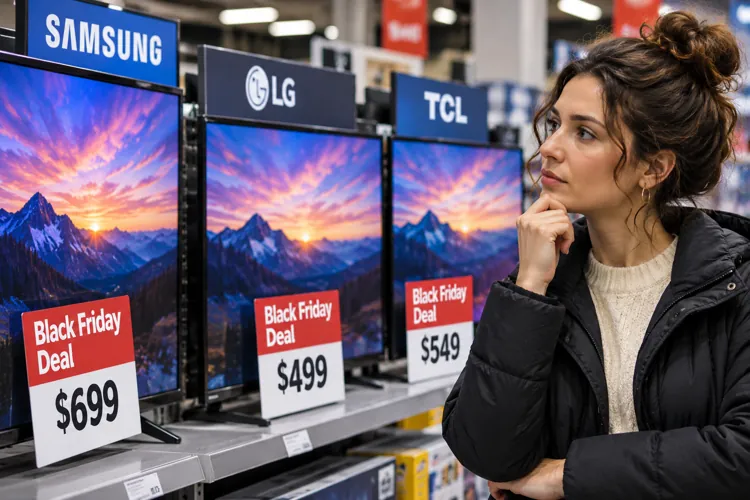
Retailer apps can use your location and shopping history to personalize deals, so shoppers may see different offers
Retail apps are moving beyond digital coupons: They could potentially be using your location inside a store to deliver offers and product recommendations.
Two shoppers could receive different discounts on the same product: Factors such as loyalty status, purchase history, and shopping behavior could all play a role in discounts.
There's a privacy trade-off: Location can make apps more useful, but shoppers should check exactly what permissions they've given retail apps.
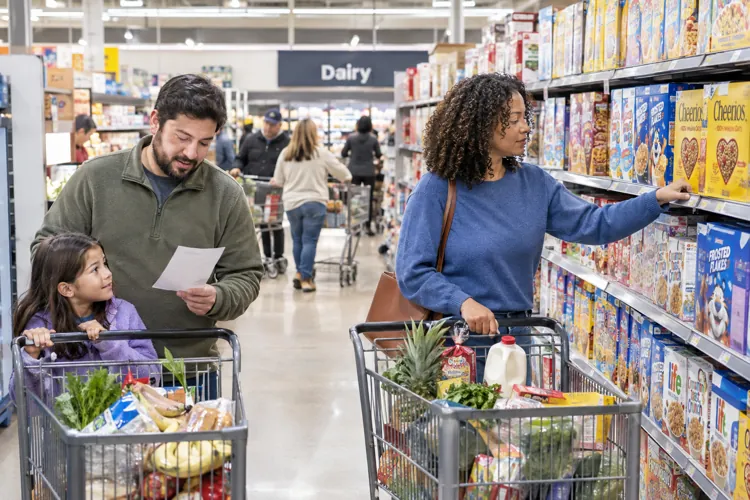
Imagine you're standing in the cereal aisle staring at two boxes trying to decide which one to buy. You pull out your grocery store's app to check on a coupon and magically a discount for one of them pops up.
Coincidence? Maybe not.
Retailers are increasingly looking at their apps as a bridge between your digital shopping habits and what you're doing inside a physical store.
That could eventually mean an app doesn't just know what you've bought before. With the right permissions, it could potentially know where you are in the store and use that information to decide which offers or recommendations to show you.
And the shopper standing next to you might see something completely different.
Your location could trigger an offer
Criteos 2026 CPG Pulse Study, which combines commerce data with a survey of more than 6,300 consumers globally, found 60% of recent grocery buyers purchased exclusively in brick and mortar stores. The same was true for 64% of household-product buyers.
That makes the phone hanging out in your pocket very valuable to retailers trying to connect online advertising with what happens in the aisle.
"Retailer apps are becoming an important bridge between digital discovery and the physical shopping experience," Sherry Smith, president of global enterprise at Criteo, told ConsumerAffairs.
And your location can potentially become part of that equation. "Yes, with the right permissions, location can be another useful signal," Smith said.
For example, she said that if a shopper is in a particular section of a store, an app could display a discount or product recommendation that the shopper might not otherwise notice.
But location doesn't necessarily have to be the only factor working in the background. Smith said it could be combined with past purchases, searches, or even products you've put on a shopping list.
In other words, your shopping app could potentially know you're standing near the coffee, know which coffee you've purchased before, and send you a deal designed to get a particular coffee into your cart.
Pro tip: Want to try a trigger a deal or coupon? Get slightly passive aggressive and search for an item (on the stores app) that you were already planning to buy. If retailers are using searches and past purchases to determine which offers to send your way, deliberately searching for something will sometimes give the app a useful hint and send an offer your way.
You might not get the same deal as another shopper
Here's where things get particularly interesting for bargain hunters. Two people shopping for exactly the same product could potentially get different offers.
"Retailers can already personalize promotions and offers based on factors like loyalty status, purchase history, or shopping behavior, so two shoppers may receive different incentives for the same product," Smith said.
There's an important distinction. That doesn't necessarily mean the store is changing the shelf price depending on who's looking at it.
Smith specifically distinguished personalized promotions from changing the underlying shelf price for individual customers.
Instead, Shopper A might have a $2 coupon in the retailer's app while Shopper B doesn't. Or Shopper B could receive some other incentive that doesnt involve a dollar-off coupon. That makes checking the retailer's app before you head to checkout increasingly important.
Pro tip: If you're shopping with a spouse or friend who also has the store's app, compare your available offers before buying. One account may have a promotion the other doesn't.
The trade-off is your data
There's another side to all this personalization. To personalize an offer, a retailer needs some signals about you.
Those can include purchase history, browsing activity, loyalty-program activity, and products you've added to a shopping list. And, if you've given permission, potentially your location in the store and how you're interacting with the app.
Smith says transparency and consumer choice are important. "Shoppers should understand what information is being collected, how it's being used, and what they're getting in return," she said.
This is also consistent with longstanding Federal Trade Commission guidance.
Check what you've already agreed to
It's easy to tap "Allow" when an app asks for location access and forget about it.
So take 30 seconds and check. Android and iPhone users can both choose whether an app gets location access all the time, only while the app is being used, just once, or not at all.
The important question isn't necessarily whether you should refuse every permission. It's whether the benefit you're receiving is worth the information you're sharing.
Maybe you're perfectly happy letting your supermarket app use your location while you're shopping if it helps you find products and save money.
But you should know you've made that trade.
Pro tip: Go through the retail apps on your phone and check their location permissions. Pay particular attention to apps allowed to access your location all the time. If an app doesn't need your exact location to provide the features you use, consider limiting its access.
AI could make the app even more important
This could go well beyond coupons. Smith expects artificial intelligence to make retailer apps more like shopping assistants that help consumers plan trips, locate merchandise, compare products, and discover relevant deals.
Consumers are already showing some willingness to let AI handle routine purchases.
Criteo's research found that globally, 40% of consumers surveyed said they'd be comfortable allowing an AI assistant to automatically reorder personal care products. That fell to 34% for household cleaning products and 32% for groceries and staple foods.
For retailers, that creates an opportunity to combine AI with the enormous amount of first-party data generated through loyalty programs and apps.
Many of these apps could know what you usually buy, what you've been searching for, what's on your shopping list, and maybe even where you are in the store.
Giving away all of that data might very well save you money in the long-run. Just make sure you know what you're giving the retailer in return.
Posted: 2026-09-25 20:38:24