


Dates: March 2–5, 2026 • Location: Fira Gran Via, Barcelona
Source: Digit
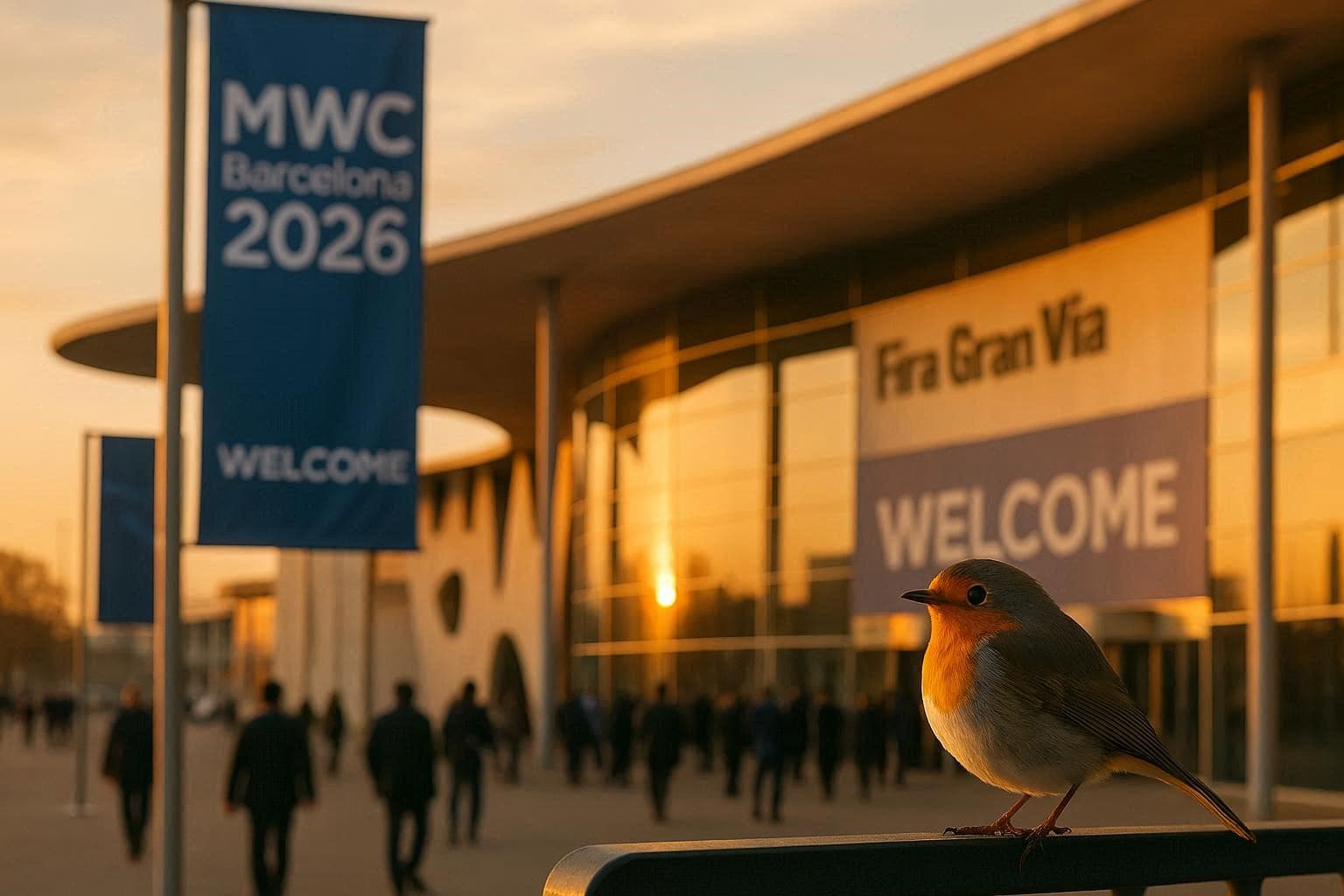
Overview: What Defines MWC 2026?
MWC Barcelona 2026 marks a major turning point for the global tech ecosystem. Hosted by the GSMA, this year’s theme—“The IQ Era”—signals a shift from simply connecting people to orchestrating intelligent, autonomous systems across devices, networks, and industries. With over 1,200 speakers and 23 stages, the event brings together the world’s leading innovators, policymakers, and researchers. MWC Conference Overview
1. The Rise of Agentic AI and Physical AI
The most transformative trend at MWC 2026 is the emergence of Agentic AI—AI systems capable of performing multi-step tasks autonomously, without constant user prompts or cloud dependency. This evolution is reshaping smartphones, robotics, and network infrastructure.
- “Robot Phones” & Adaptive Personalization — Brands like Honor and Xiaomi are showcasing devices with gimbal-stabilized, self-tracking cameras that act as personal videographers. These phones integrate on-device AI for real-time scene understanding and user‑aware motion tracking. CNET Preview
- AI‑Native Infrastructure — Telecom vendors are embedding AI directly into radio hardware to optimize energy use, reduce latency, and dynamically allocate spectrum.
- Physical AI — Robotics, drones, and autonomous vehicles are demonstrating AI that interacts with the physical world, emphasizing measurable ROI in logistics, manufacturing, and public safety.
2. 6G Vision and the Maturity of 5G‑Advanced
While 5G‑Advanced is now commercially mainstream, MWC 2026 shifts the conversation toward early 6G prototyping and AI‑native network design.
- Monetizing 5G‑Advanced — Operators are focusing on network slicing, API‑driven services, and enterprise automation as new revenue engines.
- 6G Prototypes — Early demonstrations of Integrated Sensing and Communication (ISAC) show how future networks will detect objects, map environments, and support spatial computing.
- AI‑RAN — Qualcomm and partners are showcasing AI‑driven Radio Access Networks designed to accelerate 6G development and enable agentic AI at the network edge. RCR Wireless
3. The New Space‑Tech Stack: Hybrid Networks Take Center Stage
Non‑Terrestrial Networks (NTN) are no longer experimental. Satellite‑to‑device connectivity is becoming a core part of global coverage strategies.
- Satellite IoT — Telcos and satellite operators are forming new alliances to deliver seamless IoT connectivity across oceans, deserts, and rural regions.
- Direct‑to‑Device (D2D) Connectivity — Companies like SpaceX are demonstrating consumer‑grade satellite messaging and emergency services integrated directly into smartphones.
- Orbital Edge Computing — Early discussions around space‑based data centers highlight new possibilities for global resilience and ultra‑low‑latency services.
4. Consumer Tech Highlights: Foldables, Wearables & Experimental Devices
Even with enterprise AI dominating the agenda, consumer devices remain a major draw at MWC.
- Foldable & Rollable Phones — Manufacturers are improving the strength of the hinges, reducing the visibility of screen creases, and developing even thinner OLED panels. TCL’s new Super Pixel display technology promises sharper clarity and improved sub‑pixel density. Techaeris
- Modular Concepts — Xiaomi and others are experimenting with detachable camera modules, sensor packs, and AI‑enhanced accessories. ZDNET Preview
- Ruggedized Gear — Industrial‑grade smartphones and wearables are gaining traction for fieldwork, construction, and adventure travel.
- Flagship Launches — vivo is debuting its X300 Ultra globally, emphasizing computational photography and AI‑driven imaging. Cerebral‑Overload
5. The Six Pillars of “The IQ Era”
MWC 2026 is organized around six thematic tracks that define the next decade of digital transformation. DigiFloor Overview
- Intelligent Infrastructure — AI‑optimized networks, cloud‑native architectures, and energy‑efficient systems.
- ConnectAI — The rise of the AI‑Native Telco, where AI manages traffic, security, and orchestration.
- AI 4 Enterprise — Sector‑specific AI for manufacturing, logistics, finance, and healthcare.
- AI Nexus — Governance, sovereign AI stacks, and responsible deployment frameworks.
- Tech4All — Expanding digital inclusion, especially across the Global South.
- Game Changers — Quantum networking, spatial computing, and moon‑shot innovations.
Conclusion: A Strategic Turning Point for Global Technology
MWC 2026 underscores a profound shift: mobile technology is no longer just about faster speeds or sleeker devices; it’s about embedding intelligence everywhere. From agentic AI to 6G prototypes and hybrid space‑terrestrial networks, “The IQ Era” represents a future where devices, infrastructure, and services operate with autonomous, adaptive intelligence.
The event runs through March 5, 2026, with live demos, keynotes, and product launches continuing throughout the week. Event Coverage
Glossary: Key Terms Shaping “The IQ Era”
- Agentic AI
- AI systems that can perform multi‑step tasks on their own, without waiting for constant user commands. These systems plan, act, and adjust in real time.
- Physical AI
- AI that controls machines in the physical world, such as robots, drones, and autonomous vehicles. It focuses on movement, sensing, and real‑world decision‑making.
- On‑Device AI
- AI processing that happens directly on a phone or device, rather than in the cloud. This improves speed, privacy, and offline performance.
- AI‑RAN (AI‑Driven Radio Access Network)
- A new type of mobile network that uses AI to manage radio signals, reduce energy use, and improve performance. It is a major building block for future 6G networks.
- 5G‑Advanced
- The upgraded version of 5G offers lower latency, better efficiency, and support for more connected devices. It is the bridge between today’s networks and 6G.
- 6G
- The next generation of wireless technology is expected to combine communication with sensing, positioning, and AI‑native features. Early prototypes are already being shown at MWC.
- ISAC (Integrated Sensing and Communication)
- A 6G technology that allows networks to sense objects and environments while transmitting data. It supports spatial computing, smart cities, and advanced automation.
- Network Slicing
- A method that lets operators create dedicated “slices” of a network for specific uses—such as gaming, healthcare, or industrial automation—each with its own performance level.
- NTN (Non‑Terrestrial Networks)
- Networks that use satellites, high‑altitude platforms, or space‑based systems to provide coverage where ground networks cannot reach.
- D2D Satellite Connectivity
- Direct‑to‑device satellite service that lets smartphones connect to satellites for messaging, emergency alerts, and basic data without special hardware.
- Orbital Edge Computing
- Data processing that happens in space, closer to global users. This reduces latency and improves resilience for worldwide services.
- AI‑Native Telco
- A telecom model where AI manages traffic, security, optimization, and automation across the entire network.
- Tech4All
- A global initiative focused on digital inclusion, ensuring that underserved regions gain access to modern connectivity and technology.
- Quantum Networking
- A next‑generation communication method that uses quantum physics to enable ultra‑secure data transmission and new computing possibilities.






