Rockin Robin SongFlying The Web For News.
RobinPost Logo Amazon Prime Deals


Global World Topics

The History of St. Patrick

St. Patrick, the patron saint of Ireland, is a figure shrouded in both history and legend. Born in Roman Britain in the late 4th century, Patrick was kidnapped by Irish raiders at the age of 16 and brought to Ireland as a slave. During his six years of captivity, he found solace in his faith and eventually escaped back to Britain. However, a vision called him back to Ireland as a missionary, where he played a crucial role in converting the Irish to Christianity.

Despite popular myths, such as driving all the snakes out of Ireland, St. Patrick's true legacy lies in his dedication to spreading Christianity and his deep connection to the Irish people. His life and work are celebrated every year on March 17th, the date of his death, which has become a day of both religious observance and cultural celebration.
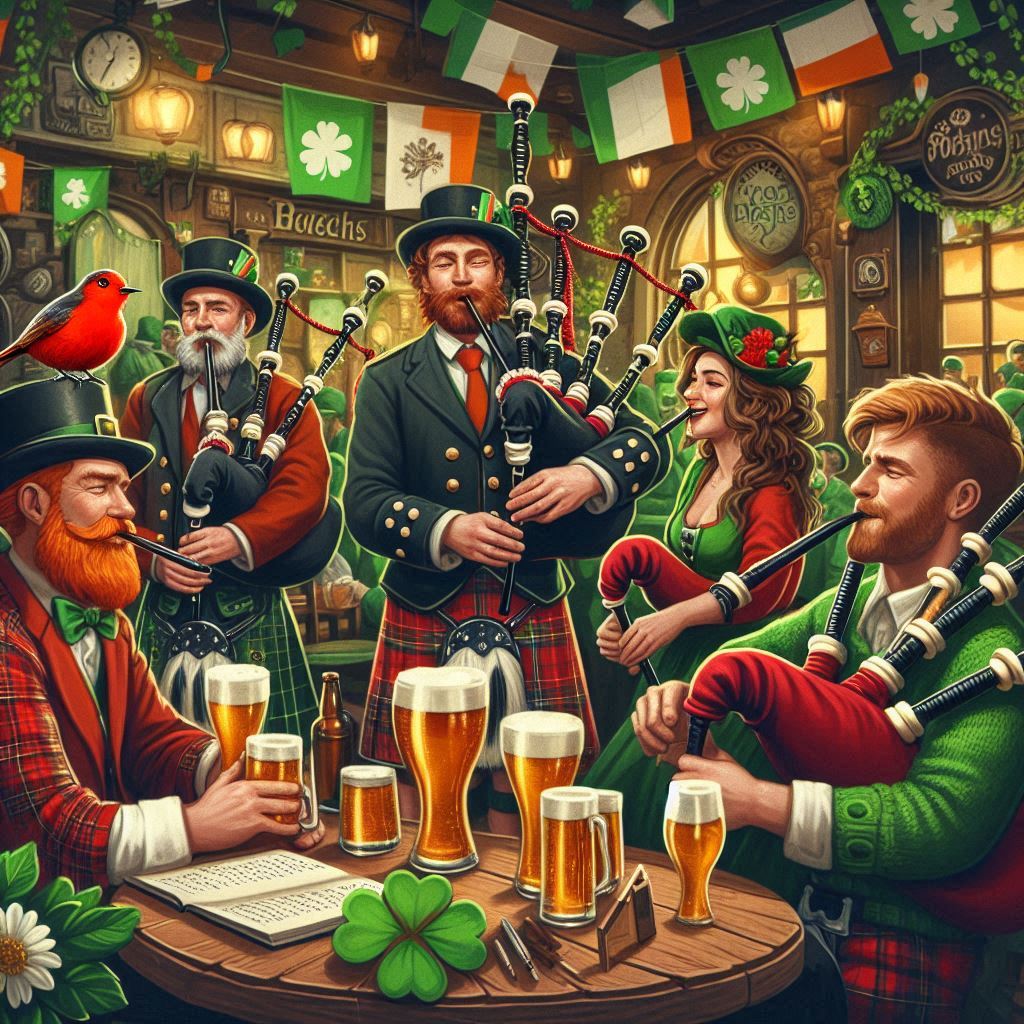

St. Patrick's Day 2025: A Celebration of Irish History, Heritage, Culture, and Joy

Traditions and Events Around the World

St. Patrick's Day has evolved from a solemn religious feast day to a global celebration of Irish culture. On March 17th, cities around the world are awash in green, with parades, music, dancing, and a general sense of merriment. From New York to Sydney, people of all backgrounds come together to celebrate their Irish heritage or simply join in the fun.

In the United States, the New York City St. Patrick's Day Parade is one of the largest and oldest, dating back to 1762. Chicago famously dyes its river green, while Boston, with its significant Irish population, hosts a week-long festival. Across the pond, London and Dublin also put on spectacular parades, with Dublin's festivities stretching over several days and featuring music, theater, and cultural events.

The Significance and Meaning in the Catholic Church

For many, St. Patrick's Day remains a deeply religious occasion. In Ireland, it is both a solemnity and a holy day of obligation in the Catholic Church. Traditionally, Irish families would attend church in the morning and celebrate in the afternoon, with Lenten restrictions on meat and alcohol lifted for the day.

St. Patrick's Day is a time to reflect on the saint's contributions to Christianity and his role in shaping Irish identity. His use of the shamrock to explain the Holy Trinity is one of the most enduring symbols of the day. The day serves as a reminder of faith, resilience, and the power of belief.

Personal Stories from St. Patrick's Day

To give a more personal touch to the celebration, here are some heartwarming stories from people who have experienced the magic of St. Patrick's Day:

Aoife's Dublin Adventure

Aoife, a Dublin native, recalls her favorite St. Patrick's Day memory from her childhood. "I remember the excitement in the air as my family and I headed to the city center for the parade. The streets were filled with laughter, and everyone was dressed in green. The highlight was seeing the floats go by, especially the one with the giant shamrock! After the parade, we would visit my grandmother's house, where she would make the best Irish stew. It's a day I'll never forget."

Liam's First Parade in New York

Liam, originally from Cork, Ireland, moved to New York City for work. He shares his experience of attending his first St. Patrick's Day parade in the Big Apple. "It was incredible! The energy was electric, and the parade was massive. I felt a deep connection to my roots, seeing so many people come together to celebrate Irish culture. The best part was meeting fellow Irish expats and sharing stories over a pint of Guinness at a local pub."/p>

Miyuki's Green River Surprise in Chicago

Miyuki, a Japanese student studying in Chicago, had a memorable St. Patrick's Day experience. "I had heard about the river turning green, but seeing it in person was something else! It was such a vibrant shade of green, and the festivities around it were amazing. I joined some friends for the parade, and we spent the day enjoying traditional Irish music and trying different Irish foods. It was a unique way to learn about another culture."

Irish Music

No St. Patrick's Day celebration would be complete without the enchanting sounds of Irish music. From traditional folk tunes to modern ballads, Irish music captures the spirit and soul of the Emerald Isle. Here are some links to get you in the mood:

Whether it's the lively jigs and reels or the haunting melodies of ballads, Irish music is a way of bringing people together and evoking a sense of nostalgia and pride.

How Dublin, Ireland, Celebrates St. Patrick's Day

Dublin, the heart of Ireland, goes all out for St. Patrick's Day. The city's St. Patrick's Festival has grown from a single-day event to a multi-day extravaganza featuring music, performance, dance, theater, and more. The highlight is the grand parade, which winds through the streets of Dublin, showcasing colorful floats, marching bands, and performers from around the world.

In addition to the parade, Dublin hosts a variety of events, including traditional music sessions, cultural workshops, and family-friendly activities. The Festival Quarter at Collins Barracks is a hub of activity, with live performances, food stalls, and interactive exhibits. For those looking to escape the crowds, Dublin's surrounding countryside offers beautiful hikes and scenic views.

St. Patrick's Day 2025 promises to be a celebration of history, culture, and joy. Whether you're attending a parade, enjoying some traditional music, or reflecting on the saint's legacy, there's something for everyone to enjoy. So, don your green attire, raise a glass, and join in the festivities—Sláinte!




More News From This Category
Commonwealth Games 2026: What to Watch in Glasgow
Sat, 25 Jul 2026 10:11:12 +0000

Glasgow is back in the global sports spotlight, but the commonwealth games 2026 are not a repeat of the city’s celebrated 2014 edition. Running from July 23 through August 2, the event has been redesigned as a shorter, more compact competition after years of uncertainty around hosting costs. For fans, that creates a different kind of Games: fewer sports, concentrated venues, and a busy 11-day schedule where medal moments arrive quickly.

For U.S. viewers, the Commonwealth Games can be an especially useful window into sports that do not always command daily attention in American coverage. Track cycling, lawn bowls, netball, judo, boxing, gymnastics, swimming, and weightlifting all share the schedule with athletics, while athletes from across the Commonwealth bring national rivalries, breakthrough performances, and Olympic-level ambitions to Glasgow.


Commonwealth Games 2026: What to Watch in Glasgow

Why Commonwealth Games 2026 Matters

The Commonwealth Games has always operated differently from the Olympics. It brings together nations and territories connected by the Commonwealth, meaning England, Scotland, Wales, and Northern Ireland compete separately rather than as Great Britain. Australia, Canada, New Zealand, India, Jamaica, South Africa, and many Caribbean and Pacific nations are among the other teams that make the medal table compelling.

That format gives the event its particular energy. A swimmer who shares a British Olympic team with another athlete may be a direct rival in Glasgow. Track and field contests can become a contest among home nations as much as a broader international meeting. For smaller delegations, a Commonwealth medal can also be a career-defining result and a source of national pride.

The 2026 edition matters for another reason: it is a test of a leaner hosting model. Glasgow stepped in after the original host plan in Victoria, Australia, was canceled amid cost concerns. Rather than trying to replicate a large multi-city spectacle, organizers built a focused program using existing facilities. The result is a practical approach to a question major sporting events cannot avoid: can international competition remain exciting without placing an unsustainable burden on host cities?

A Compact Glasgow Games With 10 Sports

The Commonwealth Games 2026 program features 10 sports, considerably fewer than many past editions. Athletics, swimming, artistic gymnastics, boxing, judo, track cycling, weightlifting, lawn bowls, netball, and 3x3 basketball are expected to carry the schedule.

That reduction has trade-offs. Fans of sports outside the program will understandably miss their chance to see them on the Commonwealth stage. A smaller schedule also means fewer athletes, fewer national federations in action, and fewer opportunities for host-city festivals spread across a region.

But the benefits are clear, too. A concentrated program can make it easier for spectators to follow, easier for broadcasters to cover, and easier for a city to stage with less new construction. Glasgow already has a strong sporting infrastructure and experience of welcoming major events. The shorter format should keep travel between events manageable and give each session a stronger sense of focus.

The sports likely to drive the daily headlines

Athletics and swimming will again be central to the medal race. Sprint finals, relays, distance events, diving into the pool schedule, and para-sport competitions create the kind of rapid-fire drama that attracts casual viewers as well as dedicated fans.

Track cycling is another major draw in Glasgow, a city with a proven reputation for velodrome competition. Expect tight margins, tactical racing, and deep competition from countries with established cycling programs, especially Australia, England, Scotland, New Zealand, and Canada.

Netball deserves special attention for U.S. audiences who may not see it regularly. The sport is fast, highly tactical, and has a passionate following across several Commonwealth nations. Australia and New Zealand have long set a demanding standard, but England and Jamaica are capable of changing any tournament’s expected storyline.

Boxing, judo, weightlifting, gymnastics, 3x3 basketball, and lawn bowls offer their own reasons to watch. Some will feature established champions building toward future global events. Others may introduce athletes who have not yet become household names beyond their home countries.

Teams and Storylines Worth Tracking

Australia traditionally arrives as a medal-table powerhouse, with strength across swimming, cycling, athletics, and team sports. England is usually close behind and will have a large, highly visible presence in Glasgow. Scotland, competing on home ground, carries a special kind of pressure and opportunity: every medal can become a local headline, and every close final can feel like a national event.

Canada and New Zealand are consistent contenders across multiple disciplines. Jamaica remains essential viewing in athletics and netball, while India’s prospects in boxing, weightlifting, wrestling in past programs, and other strength-based events have made it a regular medal threat. South Africa and several Caribbean nations can also shape finals well beyond their delegation sizes.

The most interesting storylines are not limited to gold-medal favorites. Watch for athletes returning from injury, young competitors making their senior debut, and established stars choosing the Games as a key part of their build toward future world championships or Olympic cycles. In a compact event, one exceptional day can completely change the narrative around an athlete or team.

Para-sport competition is part of the main story

Commonwealth competition has a strong record of including para-sport events within the broader program. That matters because it puts elite para athletes in the same high-profile environment as other medal contenders rather than separating them into an afterthought.

For viewers, these events offer some of the most competitive and emotionally charged sessions on the schedule. They also provide a clearer view of the depth of national programs, from para swimming and para athletics to cycling, bowls, and powerlifting disciplines where included.

How to Follow the Games Without Missing the Big Moments

The time difference is a practical factor for U.S. audiences. Glasgow operates on British Summer Time during the Games, which is generally five hours ahead of Eastern Time and eight hours ahead of Pacific Time. Morning sessions in Scotland may begin before many American viewers are online, while evening finals can fall in a more convenient afternoon window in the United States.

The best approach is to track the daily competition schedule rather than trying to watch every session. Start by selecting two or three sports you already enjoy, then add medal events that tend to produce major international attention, such as athletics finals, swimming finals, track cycling, and netball knockout rounds.

Results also deserve context. A medal table offers a quick snapshot, but it does not tell the full story. A small delegation earning one historic gold may have had a more significant Games than a larger team adding expected medals in familiar events. Pay attention to national records, personal bests, first-time finalists, and athletes returning to form after setbacks.

For a news-focused viewing routine, follow official schedules and results alongside video highlights, athlete interviews, local Glasgow reporting, and coverage from participating countries. RobinsPost readers who use multiple news streams can benefit from comparing perspectives: a home-nation report may frame a result very differently from coverage in Australia, Canada, Jamaica, or India.

Glasgow’s Bigger Sporting Test

The 2026 event will be judged by more than the medal count. Organizers, civic leaders, sports federations, and future host candidates will be watching whether a streamlined Games can deliver strong attendance, reliable operations, memorable broadcasts, and an enjoyable athlete experience.

There is no single answer for every future host. A major city with existing arenas, pools, tracks, and transport networks may be able to use a compact model effectively. A city that needs to build facilities from scratch faces a very different financial equation. The Glasgow approach is not necessarily a universal blueprint, but it could become a meaningful option for countries that want the prestige of hosting without the scale of a full Olympic-style buildout.

For fans, the simple advantage is concentration. Every day of the Commonwealth Games 2026 has the potential to move quickly from qualifying rounds to headline finals, with rivalries that are both international and intensely personal. Keep an eye on the schedule, leave room for an unexpected result, and let the smaller format show whether focused competition can create some of the summer’s biggest sports moments.

Read More ...


El Nino Forecast 2026 and the Weather to Watch
Fri, 24 Jul 2026 04:11:12 +0000

A single El Nino forecast for 2026 cannot tell a homeowner whether it will rain on a particular weekend, or tell a farmer exactly when a dry spell will end. What it can do is put the odds in context. El Nino is one of the climate signals that can shift seasonal weather patterns across the United States and far beyond it, affecting the backdrop for heat, rainfall, storms, snow, wildfire conditions, and global food markets.

For readers following weather headlines, the key is to separate an ENSO outlook from a daily forecast. ENSO, short for the El Nino-Southern Oscillation, develops and changes over months. Its effects are uneven, seasonal, and influenced by many other factors. That makes 2026 a year to watch through regularly updated outlooks rather than one fixed prediction.


El Nino Forecast 2026 and the Weather to Watch

El Nino Forecast 2026: What It Can Actually Tell Us

El Nino occurs when sea-surface temperatures in a key stretch of the central and eastern tropical Pacific stay warmer than average for a sustained period, alongside changes in atmospheric circulation. Its counterpart, La Nina, is associated with cooler-than-average conditions in that same region. When neither pattern is established, forecasters describe ENSO as neutral.

An El Nino forecast for 2026 is therefore not simply a prediction of warm water. It is a probability assessment: Are Pacific conditions likely to remain neutral, shift toward El Nino, or move toward La Nina during the next overlapping three-month seasons? Official forecasters update those probabilities as ocean temperatures, trade winds, cloud patterns, and subsurface heat change.

The timing matters as much as the label. An El Nino that emerges late in the year may have little influence on the preceding summer. A pattern that weakens before winter can produce a different outcome than a persistent event. The strength of the event also matters, but stronger does not automatically mean every expected regional impact will be stronger.

This is why early-year headlines should be treated carefully. Long-range climate outlooks are useful for recognizing elevated risks and planning conversations. Confidence usually improves as the relevant season gets closer.

Why the Pacific Is Only Part of the 2026 Weather Picture

ENSO can influence the position and strength of the jet stream, which helps guide storms across North America. During many El Nino winters, the southern tier of the United States has better odds of wetter conditions, while parts of the northern tier can lean milder. But those are broad historical tendencies, not guarantees for every city, county, or storm.

A wet seasonal outlook does not mean rain every day. It may mean a few major storm systems account for much of the total. Likewise, a warmer-than-average season can still include sharp cold snaps. Local terrain, ocean temperatures near the coast, soil moisture, tropical systems, and short-lived atmospheric patterns can all override or reshape the expected signal.

For the United States, the most commonly discussed El Nino connections are seasonal, especially during the cooler half of the year. Potential areas of interest include winter precipitation across the South, storm tracks affecting California and the Southwest, and shifts in temperature odds elsewhere. However, each event is different. California, for example, should not assume that an El Nino declaration alone guarantees drought relief or prevents flooding. Water supply depends on where precipitation falls, how much arrives as mountain snow, reservoir conditions, groundwater, and the pace of runoff.

The Atlantic hurricane season also generates intense interest whenever ENSO changes. El Nino conditions can increase upper-level wind shear in parts of the tropical Atlantic, which may make it harder for some storms to organize. That can reduce the seasonal odds of activity, but it does not remove the risk to any coastline. One landfalling hurricane is enough to make a quiet seasonal average irrelevant to the community affected.

The Signals Forecasters Will Watch Through 2026

Weather agencies do not base an ENSO outlook on one measurement. They look for a consistent ocean-atmosphere pattern. Sea-surface temperatures in the tropical Pacific are central, but the water below the surface can offer an early clue about whether warming or cooling may persist.

Trade winds are another major signal. Persistent changes in these easterly winds can help reinforce developing El Nino or La Nina conditions. Forecasters also assess convection, cloud cover, rainfall patterns near the equator, and pressure differences across the Pacific. When the ocean and atmosphere are moving in the same direction, confidence in the outlook typically rises.

Forecast models add another layer, but they do not all agree. Some models may anticipate warming while others favor neutral conditions. This disagreement is not a failure of forecasting. It is a clear measure of uncertainty, especially during transition periods when the Pacific system is changing.

For a reader scanning a forecast update, three details are more useful than a dramatic headline: the probability assigned to El Nino, La Nina, and neutral conditions; the three-month period being discussed; and whether forecaster confidence is rising or falling. Those details tell you how much weight the outlook deserves.

How to Use the Outlook Without Overreacting

The practical value of a seasonal forecast depends on the decision. A utility company, grower, insurer, emergency manager, or commodity buyer may need to prepare months ahead, even when the outlook is uncertain. A family planning a road trip needs a short-range forecast much closer to departure.

For households, an ENSO outlook can be a prompt to review seasonal readiness. In areas with flood exposure, that could mean checking drainage, insurance documentation, and emergency alerts before the wettest months. In regions facing heat or drought risk, it can mean reviewing water use, cooling plans, and local fire restrictions. These are sensible preparations whether a named climate pattern fully develops or not.

For businesses, the right response is usually scenario planning rather than a single bet. A retailer may consider how a warmer winter could change demand for seasonal goods. A construction firm may review weather contingencies. Agricultural operations may combine a national outlook with local soil data, irrigation capacity, crop calendars, and advice from regional extension services.

The trade-off is straightforward: waiting for perfect certainty can leave too little time to act, while acting as though a seasonal probability is a certainty can create unnecessary costs. Good planning uses the outlook to identify exposure, then adjusts as short- and medium-range forecasts become more reliable.

Common Mistakes in El Nino Coverage

The first mistake is treating El Nino as a weather event instead of a climate pattern. It does not cause every storm, flood, heat wave, or cold outbreak that occurs while it is present. Attribution requires more evidence than a calendar overlap.

The second is assuming a national forecast applies identically to a local area. A seasonal map may show increased chances of above-normal precipitation across a broad region, yet one community can still finish the season dry. “Above normal” also refers to comparison with a long-term average, not a promise of constant extreme weather.

The third is overlooking the difference between probability and certainty. If an outlook says there is a higher chance of El Nino, neutral conditions can still occur. Forecast probabilities are designed to support better decisions across many outcomes, not to eliminate uncertainty.

What to Watch Next

The most useful approach in 2026 is to follow the sequence of updates. Start with the broad ENSO outlook for the coming seasons. Then watch regional seasonal guidance for temperature, precipitation, drought, and wildfire potential. As a season approaches, give increasing attention to local forecasts, watches, warnings, and emergency information.

For a broad news audience, El Nino is worth tracking because its effects can reach beyond the weather page. Crop prices, energy demand, travel disruptions, water restrictions, insurance losses, and disaster response can all be affected by the same climate backdrop. But the strongest stories will be the ones that distinguish an evolving Pacific signal from the actual conditions people face where they live.

Keep the long-range outlook on your radar, but make everyday choices with the most local and current forecast available. That is where seasonal climate intelligence becomes genuinely useful.

Read More ...


Molokai to Oahu Foil World Championship: Riding the Channel of Bones
Fri, 24 Jul 2026 03:35:19 +0000

Hundreds of athletes, one legendary Hawaiian channel.

This week, hundreds of athletes from across the world are preparing for the world championship in downwind foiling, a cutting-edge ocean sport that sends riders flying above the water on hydrofoil boards. The race course crosses the legendary Kaʻiwi Channel, a roughly 40-mile / 36–42-mile stretch of open ocean between Molokai and Oahu that has long been known as the “Channel of Bones” for its powerful swells, shifting winds, and unforgiving conditions.

Launching from the rugged west end of Molokai near ʻIlio Point and finishing at Kaimana Beach on Oahu, the downwind foil world championship represents the pinnacle of the sport: a full-channel crossing where athletes must read the ocean in real time, linking open-ocean bumps and trade wind swells to stay airborne and fast.

What Is Downwind Foiling?

Downwind foiling uses hydrofoil boards that lift above the surface, allowing riders to glide on the energy of the ocean rather than relying solely on breaking waves. In Hawaii’s trade wind conditions, athletes pump their boards onto foil and then surf long, rolling swells, connecting one bump to the next for miles at a time.

The Molokai to Oahu race features multiple disciplines, including stand-up paddle (SUP) foil and wing foil, with divisions for men, women, juniors, and both escorted and unescorted riders. It is the final and most prestigious stop of the Downwind Foil World Tour and the Koa Kai Triple Crown, a series that links downwind races across Maui, Molokai, and Oahu.


Molokai to Oahu Foil World Championship: Riding the Channel of Bones

Read More ...


Kelsey Pfendler: The Woman Who Redefined the Pacific
Fri, 24 Jul 2026 00:56:06 +0000

A record-breaking solo row from California to Hawaii.

Kelsey Pfendler didn’t just row from California to Hawaii; she rewrote what human endurance looks like. On July 3, 2026, one day after her 32nd birthday, she landed in Honolulu after 43 days, 17 hours, and 55 minutes alone at sea, becoming the fastest person, the first American woman, and the youngest solo rower ever to complete the 2,400-mile Pacific crossing.

Her boat, a 21-foot ocean rowboat named Lily, carried her through storms, hallucinations, mechanical challenges, and the kind of isolation most people never experience. It also carried her toward a global audience: more than 700,000 people followed her daily video diaries, cheering her through every mile.

A Journey Built on Grit

Pfendler launched from Monterey on May 21, 2026, fighting brutal currents that forced her to sleep barely an hour a day during the first week. She lost her fresh water supply early on and relied entirely on a solar-powered desalinator. She rowed through nights filled with auditory hallucinations, days of blistering heat, and moments of profound loneliness.

Yet she also found beauty: dolphins pacing beside her hull, a seabird she named Oswald keeping watch, and a surprise Coast Guard birthday serenade in the middle of the Pacific.

“Find your own big, hard, scary thing… you’re definitely strong enough to start it.”

Red robin perched on the bow of a rowboat inspired by Lily, crossing the Pacific under bright skies.

Read More ...


Comic Con 2026 Events Worth Tracking Now
Thu, 23 Jul 2026 04:11:07 +0000

The busiest comic con 2026 events are not just places to buy a signed comic or spot a favorite actor. They are large-scale fan gatherings with ticket queues, limited hotel rooms, premiere news, gaming demos, artist showcases, cosplay meetups, and a fast-moving schedule that can change right up to opening day. For attendees, the smart move is to follow the official calendar early, then make plans that leave room for updates.

For readers tracking entertainment news, these conventions can also be major announcement hubs. A panel schedule may reveal a new series, a movie cast, a game release window, or a publishing relaunch before the news travels across the wider web. The biggest events attract global attention, but regional shows can deliver a more affordable and personal experience.


Comic Con 2026 Events Worth Tracking Now

Why comic con 2026 events need early planning

“Comic Con” is often used as a catch-all term, but it can describe very different events. Some are established, multi-day conventions with studio presentations and tens of thousands of visitors. Others are local comic, anime, gaming, horror, or pop-culture shows centered on dealers, creators, cosplay, and family activities. The name alone does not tell you the size, programming focus, or ticket rules.

That difference matters when building a 2026 plan. A major convention can require hotel reservations months ahead, timed ticket sales, badge activation, photo-op purchases, and strict rules for entering headline panels. A smaller show may offer day-of tickets, inexpensive parking, and more time with artists. Neither experience is automatically better. It depends on whether your priority is blockbuster news, collecting, cosplay, meeting creators, or taking younger fans to their first convention.

The first thing to verify is the organizer. Look for the event’s official name, venue, announced dates, ticket seller, refund policy, and age guidance. Social posts can be useful alerts, but they are not a substitute for an official announcement. This is especially important when similar names are used by unrelated events in different cities.

The events and formats to watch

The major U.S. convention calendar usually includes summer flagship shows, East and West Coast pop-culture events, anime-focused gatherings, gaming conventions, and a large number of regional weekend expos. Dates and programming vary from year to year, so treat any early calendar listing as a planning signal rather than a final itinerary.

Flagship pop-culture conventions

Large conventions are where entertainment companies, publishers, streaming services, toy makers, and celebrity guests often concentrate their biggest public moments. Expect packed exhibit floors, ticketed experiences, long lines, and schedules built around high-demand panels. If a specific panel is your reason for going, arrive with a backup plan. Capacity, wristband rules, and entry procedures can change, while some programming is announced late.

For collectors, these shows can offer exclusive merchandise, first access to new releases, and a wide dealer floor. The trade-off is price pressure. Limited items may sell out quickly, and resellers are common. Set a spending limit before entering the hall, particularly if you are traveling with a group or carrying purchases all day.

Regional comic and fan expos

Regional events are often the overlooked value choice. They may feature comics creators, voice actors, wrestling personalities, cult-film guests, tabletop gaming, cosplay contests, and vendor areas without the scale of a national convention. Fans who want commissions, signatures, and longer conversations with artists may find these shows more rewarding than a crowded headline event.

They can also be a practical way to introduce children or first-time attendees to convention culture. One-day admission, easier parking, and shorter travel can reduce both cost and stress. Still, check whether specific activities require an additional pass. A general admission ticket does not always include autographs, professional photo sessions, after-hours events, or tournament entry.

Anime, gaming, and creator-centered shows

A broad comic con is not the only place for fandom news in 2026. Anime conventions often have deeper programming around screenings, music, cosplay craftsmanship, and Japanese pop culture. Gaming events may focus on playable demos, esports, developers, tabletop sessions, and hardware. Creator-centered comic festivals can place small publishers, illustrators, and independent writers at the heart of the experience.

Choosing a specialized event can make more sense than attending the largest possible convention. A fan looking for a rare back issue needs a different floor plan from someone chasing an anime concert or a new game demo. Review prior-year programming and vendor categories for clues, but do not assume the 2026 lineup will match exactly.

Tickets, travel, and the real cost of a convention weekend

The ticket price is only the opening number. A realistic budget includes taxes and service fees, transportation, hotel nights, food, parking or transit, checked baggage for collectibles, and any separately priced experiences. For a major city event, lodging can become the biggest expense well before badges go on sale.

Book refundable travel where possible until your ticket is confirmed. If you are splitting a room, agree in writing on payment dates and cancellation expectations. If you are flying, consider how you will bring posters, figures, or artwork home safely. A small shipping tube or flat portfolio can prevent an expensive purchase from becoming damaged luggage.

Be cautious with unofficial resale offers. Some conventions permit formal badge transfers; others do not. A screenshot of a ticket, a social media profile, or a promise to “send it later” is not proof that entry will be honored. When tickets sell out, check the organizer’s approved waitlist or exchange process before taking a risk on a private seller.

Build a schedule that can survive crowds

The best convention plans have priorities, not minute-by-minute fantasies. Choose one or two must-do moments for each day, then group nearby activities. If a major panel, autograph session, or exclusive release is essential, make that the anchor. Everything else should be flexible.

Use the convention app or official program once it is available, and check it again each morning. Panel rooms shift, guests cancel, and weather or transit issues can affect arrival times. Screenshots are useful when cellular service gets overloaded, but do not rely on an old screenshot for a high-demand event if live updates are available.

For families and groups, select a meeting point outside the loudest crowd zones and set a time to regroup. Carry a portable charger, refillable water bottle where permitted, basic medication, and comfortable shoes. Cosplay adds another layer of planning: test mobility, visibility, temperature, and bathroom practicality before leaving the hotel. A costume that photographs well but cannot handle stairs or a long line can limit the day quickly.

Following 2026 convention news without getting lost

Convention coverage arrives in bursts. Ticket announcements may come months before guest news. A show’s first guest wave may be followed by multiple additions, while detailed panel schedules can appear only close to the event. Tracking every rumor is exhausting and usually unhelpful.

A better approach is to monitor a short list of official event announcements, venue notices, and credible entertainment reporting. Separate confirmed information from speculation. A cast member hinting at a possible appearance is not the same as a published panel listing, and an unverified “leak” is not a travel reason.

RobinsPost readers can use a broader news view to watch the stories that emerge around the convention floor: trailer launches, casting reports, gaming news, creator interviews, consumer trends, and fan reaction videos. The most useful coverage explains what was actually announced, what remains uncertain, and when audiences may see the finished project.

Make room for the parts you cannot schedule

The memorable part of a comic convention is often not the panel you planned around. It may be finding an independent artist whose work stays on your wall for years, seeing a family-built cosplay group, joining a game with strangers, or learning that a favorite creator is signing at a quiet booth on the edge of the hall.

Arrive prepared, protect your budget and your belongings, and keep enough space in the day for discovery. That is how comic con 2026 events become more than a crowded date on the calendar.

Read More ...


Related Bing News Results
Fired '60 Minutes' reporter says CBS bosses asked her to cover news 'that never happened'
Fri, 24 Jul 2026 12:17:51 GMT
Cecilia Vega says she still hasn’t been given a reason for her May dismissal: “It’s not that I just lost a job. There is a lot at stake.” ...


Blow Us A Whistle


Related Product Search/Búsqueda de productos relacionados

Amazon Logo

Visit Our New Print-On-Demand Store On Printify
Printify