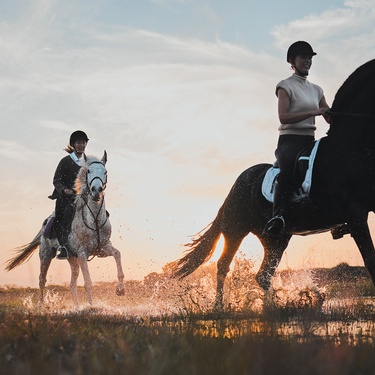
If you're new to horse riding, one aspect you might worry about is safety. This activity involves being on an elevated mount, moving at high speeds, and navigating unpredictable terrain, all things that could lead to injuries if you don't take precautions.
But as long as you wear the right gear, follow basic guidelines, and ride attentively, horse riding is typically quite safe. Here are some tips for staying secure while riding your horse across the trails, so you can enjoy your adventure without worry at the back of your mind.
Wear a Helmet Every Time
Your helmet is your most valuable piece of safety equipment. A properly fitted, ASTM/SEI-certified equestrian helmet can protect your head from serious injury in a fall. It's a piece of gear you should wear for every single ride. Your helmet should fit snugly and stay level on your head without tilting forward or backward.
Pick the Right Footwear
Did you know most types of shoes aren't safe for horse riding? This includes sneakers, hiking boots, and any shoe with a large tread or no heel. The only types of shoes that are safe for riding have a heel of about 1 to 1.5 inches and a low tread, like a paddock boot or a cowboy boot. These types of boots allow your foot to slip out of the stirrup in the event of a fall, so you don't get dragged behind your horse.
Don't just buy any paddock or cowboy boots, though. You need a pair that fits right on you. Even if a boot has the appropriate heel and tread, if it doesn't hug your foot, it could still pose a safety risk.
Dress for Success (and Safety)
Your clothing should allow for freedom of movement without being so loose that it could get caught on your equipment. Long pants, like breeches or jeans, protect your legs from chafing against the saddle. You'll also want to wear gloves, which help you grip the reins better and protect your hands.
Match with a Suitable Horse
If you're a new rider, you'll want your equine partner to be calm, well-trained, and gentle. A horse that's easily spooked, unpredictable, or difficult to handle will be hard for you to manage with your lack of expertise. Your instructor or guide can help select a horse that matches your skill level and confidence.
Learn How to Fall
Learning how to fall correctly can minimize injury. The goal is to roll away from the horse's hooves as you fall. Tuck your arms and chin to your chest to help protect your head and neck. Practice can make this reaction more instinctual.
Stay Safe!
Before you giddy up, gear up! Horse riding is very safe as long as you're not being reckless. You should always wear the appropriate clothing to your ride, use a certified helmet, and choose the correct boots to minimize the risk of falls or other mishaps. Following these suggestions will help you feel more confident and secure.
Bio: Casey is a passionate copyeditor highly motivated to provide compelling SEO content in the digital marketing space. Her expertise includes a vast range of industries from highly technical, consumer, and lifestyle-based, with an emphasis on attention to detail and readability.