A busy news cycle can make American politics feel less like a sequence of events and more like a constant scroll. A useful usa political news roundup is not just a list of headlines - it helps readers sort signal from noise across Washington, the courts, campaigns, and state governments that often shape daily life faster than federal debate.
For many readers, the real challenge is not access to news. It is overload. Political stories now break through press conferences, televised hearings, campaign videos, court filings, agency announcements, and statehouse legislation all at once. If you are trying to keep up efficiently, it helps to organize the field into a few major lanes: what the White House is doing, what Congress can or cannot move, what the courts are changing, and what voters are reacting to on the ground.
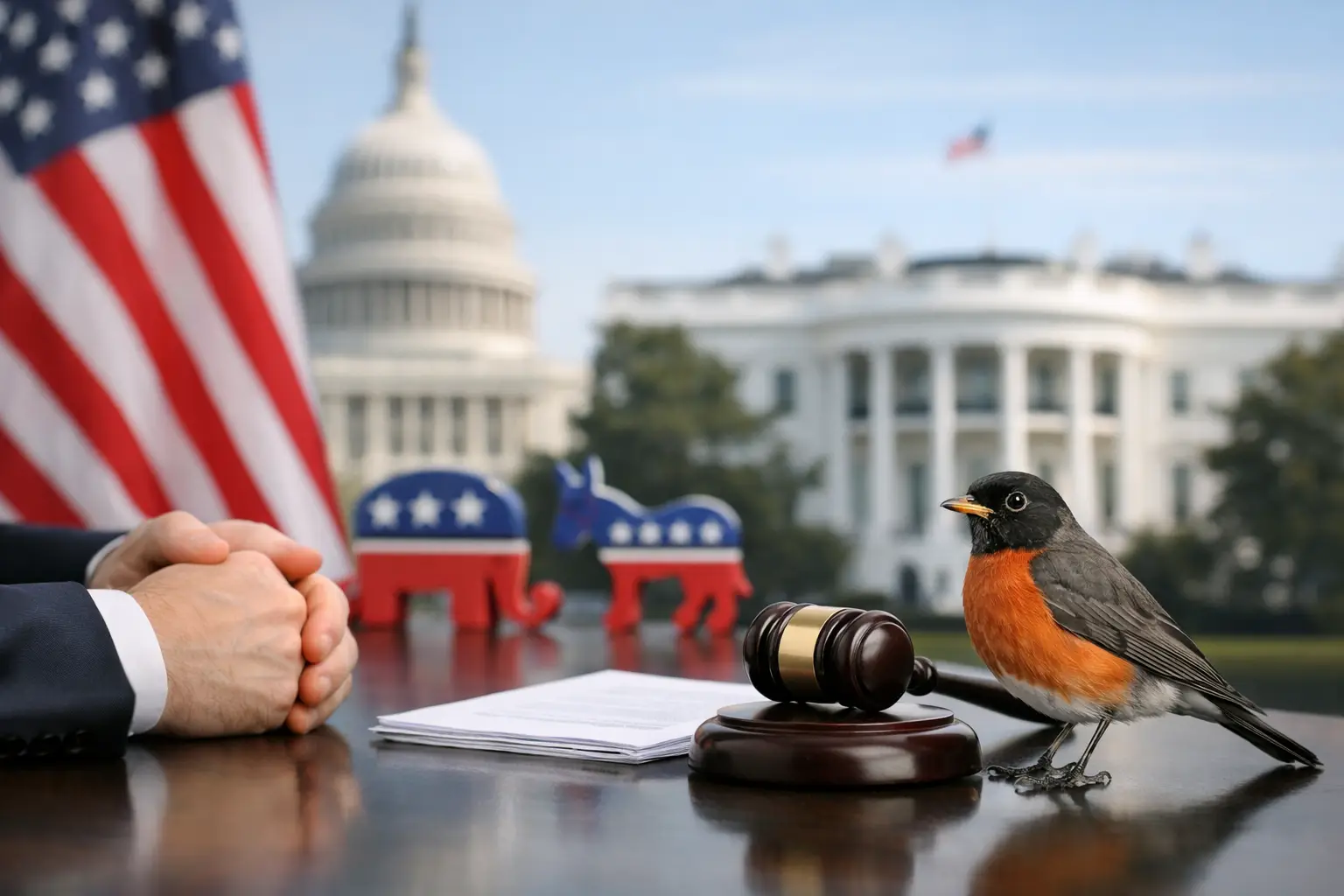
USA political news roundup: the main arenas to watch
The center of gravity in U.S. politics still runs through Washington, but the pace of change differs by institution. The White House can set the national message quickly through executive actions, appointments, foreign policy statements, and agency direction. Congress moves slower, but when it acts on spending, aid packages, taxes, border measures, or oversight, the effects can last much longer. The courts can appear less noisy than either branch, yet a single ruling may reset policy nationwide.
That is why a strong usa political news roundup has to track all three at once. Focusing only on campaign rhetoric misses the policymaking side. Focusing only on legislation misses how legal challenges can halt or reshape that legislation. And focusing only on Washington misses how governors, attorneys general, and ballot measures often turn national arguments into local law.
The White House and executive power
Much of the daily political agenda starts with executive action because it is faster than passing legislation. Presidents use agencies, regulatory priorities, enforcement decisions, and public messaging to shape issues from immigration and energy to student debt, labor rules, and international trade. That speed is politically useful, but it comes with limits. Executive action can be challenged in court, slowed by agency procedure, or reversed by the next administration.
For readers, the practical question is not only what has been announced, but what is actually in force. A proposed rule, a directive to an agency, and a finalized policy are not the same thing. Political coverage often compresses these stages into one dramatic headline. A better read of the news keeps them separate.
Congress and the reality of divided incentives
Congress remains the most visible battleground for budget fights, oversight hearings, and partisan messaging. It is also where expectations often outrun reality. Lawmakers can spend weeks generating momentum around a proposal that never reaches final passage. In election years especially, the political value of a bill may come from forcing a vote, shaping campaign ads, or defining party differences rather than becoming law.
That does not make congressional coverage less important. It means readers should watch the mechanics. Is leadership backing the measure? Does it have Senate viability? Is it tied to must-pass spending legislation? Those details matter more than the loudest floor speech.
Spending deadlines are especially important because they can turn routine governance into top-tier political news. Shutdown threats, stopgap funding bills, and negotiations over federal priorities often reveal where party coalitions are strongest and where they are fragile. The headlines may emphasize conflict, but the deeper story is usually leverage.
Campaign season changes the news mix
As campaign season intensifies, political coverage shifts from governing to positioning. Candidates talk less like administrators and more like messengers. Every court appearance, fundraising report, endorsement, debate exchange, and polling swing becomes part of a larger story about momentum.
That can be useful, but it can also distort the picture. Polls are snapshots, not verdicts. A fundraising surge can show enthusiasm, but it does not guarantee turnout. A viral clip may dominate social media for a day and then disappear without changing votes. Campaign coverage matters most when it connects those moments to organizational strength, issue salience, and state-by-state electoral math.
Presidential elections get the most attention, but the broader campaign map deserves equal weight. Senate races can determine whether a president has legislative room to operate. House contests shape spending, investigations, and committee leadership. Governor and state legislative races can redefine abortion policy, education rules, labor law, election administration, and public health priorities within months.
Why state politics now carries national weight
One of the biggest shifts in recent years is how much national conflict has moved to the states. Questions about reproductive rights, voting access, school curriculum, environmental standards, criminal justice, and public-sector authority are often decided at the state level first. That means readers who only follow Washington are missing a major share of political change.
State attorneys general and state supreme courts are increasingly central players. They can block federal actions, defend state laws, and launch legal fights that quickly become national stories. Governors, meanwhile, are not just local executives. They are often party validators, policy testers, and future presidential prospects.
For a general reader, this changes how a roundup should be read. A state story is not automatically smaller than a federal one. In some cases, it is the clearest sign of where the national argument is headed next.
Courts, cases, and the pace of legal politics
Court coverage tends to move in bursts. There are long periods of filings, procedural arguments, and lower-court rulings, followed by moments when a major decision lands and instantly changes the conversation. That rhythm can make legal news feel technical until it suddenly becomes unavoidable.
The key is to watch both the immediate impact and the operational delay. A judge may issue a ruling that looks sweeping, but appeals can pause implementation. A Supreme Court decision may settle one question while opening several new ones for lower courts to fight over. Legal outcomes rarely end political conflict. More often, they relocate it.
This is especially true in cases involving elections, executive authority, regulatory agencies, and hot-button social policy. A ruling can alter ballot access, redraw the limits of federal power, or force lawmakers back to the table. Readers do not need a law degree to follow that. They just need coverage that explains what changed today, what is still unresolved, and who acts next.
What makes a political roundup actually useful
A useful roundup does not treat every headline as equal. It sorts stories by consequence. That means distinguishing between narrative-setting news and decision-making news. A sharp comment from a candidate may dominate attention, but a rule change by an agency, a budget deadline in Congress, or a court timetable may have more lasting effect.
It also helps to track the source of urgency. Some stories are urgent because they involve immediate policy effects, such as disaster funding, military action, or changes in border processing. Others are urgent because they affect the electoral environment, such as ballot rulings, primary outcomes, or major endorsements. Still others are urgent only in a media sense - loud now, irrelevant later.
For readers using a multi-category news hub such as RobinsPost, the advantage is breadth. Politics does not sit in isolation. Economic data, global conflicts, labor disputes, health policy, technology regulation, and consumer costs all feed back into political coverage. A roundup works best when it lets readers see those connections instead of boxing politics into its own silo.
Reading beyond the headline cycle
There is a trade-off in fast political coverage. Speed helps readers stay current, but speed can flatten complexity. A developing story may be framed one way in the morning and look different by evening once documents, vote counts, or legal reasoning become clear. That is why the most reliable habit is to treat early coverage as provisional.
It also helps to ask a few simple questions. Is this a statement or an action? Is this a proposal or a final decision? Does this affect national policy, one state, or only campaign optics? Who has the authority to follow through? Those questions cut through a surprising amount of political clutter.
USA political news roundup for everyday readers
For most people, following politics is not a full-time job. They want a dependable read on what matters, what can wait, and what may affect taxes, schools, healthcare, travel, jobs, or public safety. That makes clarity more valuable than drama.
The best approach is to follow politics as a set of moving systems, not a never-ending argument. Watch the White House for direction, Congress for leverage, courts for boundaries, campaigns for voter signals, and states for real-world policy tests. Taken together, that gives a far more useful picture than any single headline can offer.
Tomorrow's political conversation will bring a fresh set of claims, clashes, and competing narratives. The smart move is not to chase all of them. It is to keep returning to the stories where power is actually being used, rules are actually being written, and public life is actually being shaped.