Rockin Robin SongFlying The Web For News.
RobinPost Logo Amazon Prime Deals


Global World Topics

A stroller recall, a contaminated food warning, a battery fire notice, a mislabeled medication advisory - consumer safety news moves fast, and the gap between seeing an alert and acting on it can matter. This guide to consumer safety alerts is built for everyday readers who want a clear, reliable way to spot real warnings, understand the risk, and decide what to do next.

What consumer safety alerts actually cover

Consumer safety alerts are public notices about products, services, or hazards that may put people at risk. They can come from government agencies, manufacturers, retailers, health authorities, or transportation regulators. Some alerts are urgent and tied to immediate injury risks. Others are precautionary, such as labeling errors, contamination concerns, or defects that only become dangerous under certain conditions.

A Practical Guide to Consumer Safety Alerts

That range matters. Not every alert means panic, and not every alert means a full recall. A safety alert may be an advisory, a warning, a market withdrawal, or a formal recall. The language changes depending on the source and the level of risk.

For readers following broad news coverage, this is where context helps. A headline may focus on the most alarming detail, while the full notice explains whether the product should be stopped immediately, returned, repaired, discarded, or simply monitored.

A guide to consumer safety alerts and who issues them

In the US, many alerts come from federal agencies that oversee specific categories. Food issues often come through food and drug regulators. Vehicle problems may come through transportation safety channels. Household product hazards may be announced through consumer product safety authorities. State agencies, local health departments, and private companies also issue notices.

This can feel fragmented because it is fragmented. Consumer safety is spread across many categories, and each category has its own reporting chain, terminology, and response timeline. A blender defect, a child toy choking hazard, and a produce contamination notice may all follow different systems.

That does not mean the information is unreliable. It means readers should pay attention to the source of the alert and the product category involved. A notice from a regulator usually includes model numbers, dates, locations, and specific remedy instructions. A manufacturer statement may appear first, with agency confirmation coming later.

If you use a news hub that tracks fast-moving updates across categories, the advantage is speed and breadth. The trade-off is that you still need to read beyond the headline and verify the details in the body of the report.

How to read an alert without missing the key detail

Most people look for the product name and stop there. That is a mistake. The most useful part of a safety notice is usually the identifying information that follows.

Start with the exact product description. Then check the model number, batch code, UPC, serial range, production date, packaging size, or color variation. Many alerts apply only to a narrow slice of a product line. Two items may look nearly identical, but only one is affected.

Next, look at the hazard description. Is the issue a fire risk, contamination risk, laceration risk, electric shock hazard, choking concern, or hidden ingredient problem? The response depends on the type of harm and the likelihood of exposure. A cosmetic defect is not the same as a defect that can injure a child or trigger a severe allergic reaction.

Then check the remedy. Some alerts tell you to stop using the item immediately. Others ask consumers to request a repair kit, schedule a replacement, seek a refund, or dispose of the product in a specific way. That part is practical, and it is where many readers skip ahead too fast.

Finally, check the geography and timing. Some alerts are nationwide. Others are limited to certain stores, shipment windows, online orders, or states. If the alert involves food, the sell-by date or lot code can be the deciding factor.

Why some recalls get huge coverage and others do not

Not every consumer safety issue becomes a major national story. Coverage often depends on scale, severity, and public interest. A defect tied to children, vehicles, medications, or widely sold food products is more likely to get broad pickup. A niche appliance sold in limited numbers may receive less attention even if the risk is serious.

This creates a real gap for consumers. People tend to hear about dramatic recalls, but they may miss the quieter notices that still affect their households. That is one reason category-based monitoring matters. If you regularly buy baby gear, supplements, electronics, or imported foods, paying attention to those sections can be more useful than waiting for a general headline to surface.

There is also a timing issue. Early reports may be incomplete. Injury counts, affected units, and remedy instructions sometimes change as investigations develop. A first alert tells you what is known at that moment, not necessarily the final picture.

Common mistakes people make with safety alerts

One common mistake is assuming a product is safe because it was bought from a trusted retailer. Retail reputation helps, but recalls still happen across major chains, online marketplaces, and brand-name manufacturers.

Another mistake is relying on memory instead of checking the item. Many products are recalled months or years after purchase. That coffee maker in the garage, the backup power bank in a drawer, or the unopened snack in the pantry can still be relevant.

A third mistake is treating social media posts as complete alerts. Social platforms are useful for early awareness, but they often leave out the exact identifiers that determine whether your product is affected.

The last mistake is waiting too long because the notice sounds vague. If the remedy is to stop using the item, do that first and sort out the details second. With fire, poisoning, contamination, and injury risks, delay adds unnecessary exposure.

What to do right after you see a warning

First, confirm whether you actually own or use the affected item. Check labels, packaging, receipts, order history, or photos on your phone. If the product is for a child, older adult, or someone with a medical condition, move a little faster because the risk can be higher.

Second, separate the product from regular use. Put it aside, take it out of circulation, or mark it clearly so nobody in the home uses it by accident. If the item is food or medicine, do not leave it where someone else may consume it.

Third, follow the official remedy instructions as closely as possible. That may mean requesting a refund, a repair, replacement parts, or safe disposal guidance. It depends on the category. Throwing away the item immediately is not always the right move if reimbursement requires proof of ownership.

Fourth, think beyond your own purchase. If you gave the item as a gift, donated it, resold it, or passed it to a relative, let that person know. Secondary use is a big blind spot in consumer safety.

Building a smarter routine around alerts

A practical guide to consumer safety alerts should do more than explain recalls after the fact. It should help readers build habits that make future alerts easier to handle.

Keep digital receipts when possible. Register products that carry meaningful safety risk, especially appliances, electronics, baby products, and vehicles. Save packaging for a short period if lot codes matter, particularly for food, supplements, and medical items. These small habits reduce friction when an alert appears.

It also helps to follow news by category instead of only by headline. A broad news and updates hub can make this easier because product warnings often overlap with health, business, travel, family, and technology coverage. The issue is not just what was recalled. It is where it was sold, who used it, and whether the problem points to a wider trend.

There is a balance here. You want awareness, not alarm fatigue. If every warning feels equally urgent, people tune out. The better approach is to scan regularly, read carefully, and act decisively when the alert matches something in your home, car, kitchen, or medicine cabinet.

When an alert is serious enough to act on immediately

Some categories leave little room for wait-and-see thinking. Products with fire hazards, electrical faults, carbon monoxide risks, contamination, undeclared allergens, or defects involving children deserve immediate attention. The same goes for anything tied to a reported injury pattern.

Other alerts allow a bit more time. A packaging misprint that does not change actual product contents is not equal to a product that can overheat during normal use. That distinction matters because risk communication works best when it is proportionate.

Still, if you are unsure, treat uncertainty as a reason to verify quickly, not as a reason to ignore the notice. Consumer alerts are most useful when they lead to simple action: identify the product, understand the hazard, follow the remedy, and keep the information moving to anyone else who may be affected.

The best habit is not memorizing every agency or every recall type. It is learning to pause when a warning appears and ask one useful question: Is this in my life, or someone else’s, right now? If the answer might be yes, a few careful minutes can prevent a much bigger problem later.
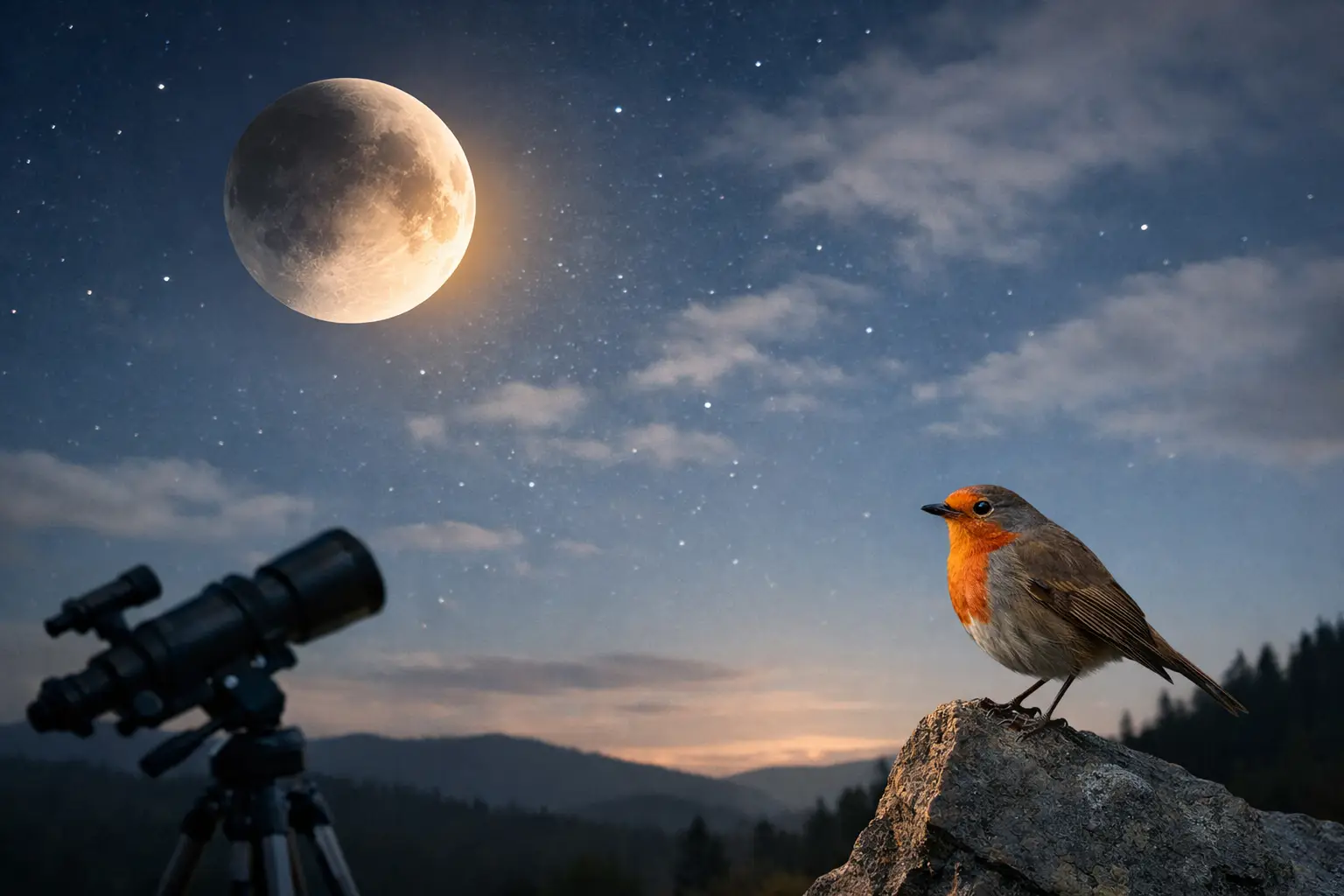




More News From This Category
Partial Lunar Eclipse August 27–28, 2026 Viewing Guide
Tue, 25 Aug 2026 04:11:35 +0000

The partial lunar eclipse August 27–28, 2026, will give much of the United States a late-summer sky event that is easy to watch without expensive equipment. On the West Coast, the Moon’s darkening begins during the evening of Thursday, August 27. Farther east, the eclipse reaches its deepest point shortly after midnight on Friday, August 28. It is a useful date to save now, especially for anyone planning a backyard gathering, night photography, or a quick family science activity.

Unlike a solar eclipse, this event does not require special eclipse glasses. The main challenge is simpler: clear skies and an unobstructed view of the Moon.


Partial Lunar Eclipse August 27–28, 2026 Viewing Guide

What happens during a partial lunar eclipse?

A lunar eclipse occurs when the Sun, Earth, and full Moon line up closely enough for Earth’s shadow to fall across the lunar surface. During a total lunar eclipse, the entire Moon enters the darkest central part of that shadow, called the umbra. During a partial eclipse, only part of the Moon crosses into the umbra.

That distinction matters for viewers. The August 2026 event should look like a large, gradually advancing dark curve taking a bite from the bright full Moon. Near the maximum, a substantial portion of the lunar disk will be inside Earth’s umbra. The shaded area may appear charcoal gray, brownish, or rusty red, depending on atmospheric conditions around Earth at the time.

The reddish color is not a trick of the eye. Sunlight passing through Earth’s atmosphere is filtered and bent into the planet’s shadow. Blue light scatters more readily, while longer red and orange wavelengths reach the Moon. The same basic process helps create red sunsets.

Partial lunar eclipse August 27–28, 2026: key times

Astronomical event schedules are typically listed in Coordinated Universal Time, or UTC. For this eclipse, the penumbral phase is expected to begin at about 1:23 a.m. UTC on August 28. The more noticeable partial phase begins around 2:33 a.m. UTC, with greatest eclipse near 4:12 a.m. UTC. The partial phase ends at approximately 5:51 a.m. UTC, and the faint penumbral shading finishes near 7:01 a.m. UTC.

For U.S. viewers, that timing places the main event across two calendar dates. In Eastern Daylight Time, the partial eclipse begins at about 10:33 p.m. on August 27 and peaks around 12:12 a.m. on August 28. In Pacific Daylight Time, it begins near 7:33 p.m. on August 27 and reaches its maximum at about 9:12 p.m.

The first and final penumbral stages can be difficult to see. In that outer shadow, the Moon may look only slightly dimmer on one side. The most rewarding period begins once the umbra reaches the Moon. If time is limited, aim to watch from the start of the partial phase through at least the maximum.

Where the eclipse should be visible

The eclipse is positioned well for viewers across North and South America. Much of the United States should have the Moon above the horizon during the key stages, making this a particularly accessible event for evening and overnight observers. Parts of Europe, Africa, and areas near the Atlantic may also see at least some of the eclipse, depending on local moonrise, moonset, and daylight conditions.

Visibility is never only about a regional map. A viewer in an open rural area may see the entire event, while someone in a city can lose the Moon behind a building, tree line, or nearby hill. Before eclipse night, check where the Moon will be from your home, park, rooftop, or other planned viewing spot. A clear view toward the eastern and southern sky can be useful, but the Moon’s exact position will vary by location and time.

Weather is the other variable. Clouds can turn an otherwise excellent eclipse into a missed opportunity, so it is smart to identify a second viewing location within driving distance. Local astronomy clubs, museums, planetariums, and community parks may also schedule public observation sessions if conditions cooperate.

What you will see, stage by stage

The event starts subtly. As the Moon enters Earth’s penumbra, one edge can appear duller than usual, although many people will not notice the change right away. This is the phase most likely to be overlooked by casual skywatchers.

Once the partial eclipse begins, the scene becomes much clearer. Earth’s umbra creates a distinct curved boundary across the Moon. Over the next hour and a half, the dark section expands, changing the familiar full-Moon shape into something that looks unexpectedly three-dimensional.

At maximum eclipse, the Moon will not disappear. A bright section remains outside the umbra, while the eclipsed portion can take on deeper colors. The result is less dramatic than the fully red Moon of a total lunar eclipse, but it offers a sharp, easy-to-follow demonstration of Earth’s round shadow.

After the peak, the sequence reverses. The dark edge retreats, the Moon brightens, and the final penumbral phase fades quietly. There is no single instant when the eclipse ends for the eye, which is why the partial phase is the best window for first-time viewers.

How to prepare for a better view

A lunar eclipse is one of the most convenient astronomical events on the calendar. You can watch it directly with your eyes, and binoculars or a small telescope will reveal more detail along the shadow line. Unlike solar viewing, there is no risk of eye damage from looking at the eclipsed Moon.

Comfort makes a difference during a multi-hour event. Bring a chair, light jacket, water, and a phone or watch set to local eclipse times. Give your eyes a few minutes away from bright indoor lighting before you start watching. If you use a phone, lower the screen brightness so you do not spoil your night vision.

For photos, a tripod is more valuable than a costly camera body. A phone can capture a pleasing wide scene with the Moon above a recognizable landmark, but it may not show much lunar detail. Cameras with optical zoom or interchangeable lenses can record the changing shadow more clearly. Take test shots before the partial phase begins, then adjust exposure as the Moon grows dimmer. The best result may be a series of images showing the eclipse’s progression rather than one close-up frame.

Why this eclipse is worth watching

The August 2026 eclipse arrives in a news cycle that will be full of faster, louder events. Its appeal is the opposite. The Moon changes slowly enough to watch with friends, children, neighbors, or anyone who normally does not follow astronomy. It also happens on a reliable schedule, with no need to travel to a narrow path of totality as viewers must for a solar eclipse.

There is a practical lesson in the sight as well. The curved edge moving over the Moon is Earth’s shadow projected across space, visible from a backyard or city sidewalk. It connects a familiar object in the night sky to the scale and motion of the solar system without requiring a lecture or a telescope.

Mark the local peak time, check the forecast a day or two ahead, and leave yourself enough time to watch the shadow advance. Even a short look during the partial phase can turn an ordinary late-August night into a shared reason to look up.

Read More ...


How Reliable Metrology Equipment Helps Prevent Errors
Mon, 24 Aug 2026 12:05:18 +0000

A large metal manufacturing floor with overhead cranes, blue machinery, yellow columns, work areas, and marked lanes.

Precision can separate a successful production run from an expensive problem. In industries where tiny dimensional differences affect quality, dependable measurement equipment gives teams the confidence to make informed decisions.

Read More ...


Ukraine Independence Day 2026 Meaning Explained
Mon, 24 Aug 2026 10:11:34 +0000

On August 24, Ukrainians mark a national holiday rooted in a decision that changed Europe’s political map. The Ukraine Independence Day 2026 meaning reaches beyond a date on the calendar: it recognizes the country’s declaration of independence from the Soviet Union in 1991, the public vote that affirmed that choice, and the continuing right of Ukrainians to determine their own future.

For readers following global affairs, the day also provides a useful lens for understanding Ukraine’s history, its place in Europe, and why questions of sovereignty remain so personal for millions of people in Ukraine and across its worldwide diaspora. In 2026, the holiday carries added weight as the 35th anniversary of independence.


Ukraine Independence Day 2026 Meaning Explained

What Ukraine Independence Day 2026 Means

Ukraine Independence Day is observed every year on August 24. It commemorates the day in 1991 when the Verkhovna Rada, Ukraine’s parliament, adopted the Act of Declaration of Independence. The move came during the final, unstable months of the Soviet Union, after an attempted hard-line coup in Moscow raised fears that political freedoms could be reversed.

The declaration was not simply a procedural change. It stated that Ukraine would be an independent, democratic state and that its territory was indivisible and inviolable. For a nation with a long, complex history of foreign rule, imperial pressure, and interrupted efforts at self-government, that language carried lasting force.

Independence was then put directly to voters. On December 1, 1991, more than 90 percent of participating voters supported independence in a nationwide referendum. Every region recorded a majority in favor. That vote matters because it shows that Ukrainian statehood was not imposed by a small political group or created only after the Soviet collapse. It received a clear democratic mandate from the public.

The 2026 observance marks 35 years since the declaration. Anniversaries can invite ceremony, but this one is also a reminder that independence is not a finished historical event. It requires institutions, civic participation, cultural confidence, and the ability to defend a country’s borders and political choices.

Why August 24 Has Deep Historical Weight

Ukraine’s modern independence began in 1991, but the national story did not begin there. Ukrainian identity developed through language, local traditions, religious life, literature, and efforts to preserve self-rule under changing powers. Different parts of present-day Ukraine spent periods under the Russian Empire, the Austro-Hungarian Empire, Poland, the Soviet Union, and other authorities.

There was also an earlier twentieth-century struggle for statehood. Following the collapse of the Russian Empire, the Ukrainian People’s Republic declared independence in 1918. That effort was short-lived amid war, revolution, and competing military forces. Ukraine was later incorporated into the Soviet Union, where Ukrainian culture and political life faced severe restrictions at different times.

For that reason, August 24 is often understood as both a restoration and a new beginning. It restored an aspiration for statehood that had survived previous defeats. At the same time, it began the demanding work of building a contemporary country with its own constitution, elected government, economy, armed forces, diplomatic relationships, and public institutions.

The distinction is useful when reading coverage of the holiday. Independence Day is not the same as Constitution Day, which Ukraine observes on June 28, nor is it solely a military commemoration. It is a civic holiday. Its central idea is that the people of Ukraine have the right to decide how their country is governed and where it belongs politically and culturally.

The role of the 1991 referendum

The December referendum remains one of the most significant parts of the independence story. Ukrainians voted months after the August declaration, giving the new state democratic legitimacy at a pivotal moment. Soon afterward, the Soviet Union formally dissolved.

That sequence helps explain why references to Ukraine’s sovereignty are more than diplomatic language. The country’s independence was affirmed through a national public vote and recognized internationally. For many Ukrainians, defending sovereignty means defending a choice their families and communities made in 1991.

Independence, Identity, and Resilience

Public observances of Independence Day often include official speeches, flag displays, concerts, cultural programs, memorial events, and community gatherings. The exact format can change depending on security conditions, local decisions, and the national mood. In wartime, large public celebrations may be limited or adapted, while remembrance and support for service members and civilians can take a more prominent role.

Blue and yellow, the colors of Ukraine’s national flag, are highly visible around the holiday. They are commonly understood to represent blue skies over golden wheat fields, though their official history is more layered than a single interpretation. The colors have become a widely recognized sign of national unity and support for Ukraine.

Language and culture are central to the day as well. Ukrainian music, poetry, food, embroidery, and local customs are not side details to the national story. They are among the ways people have maintained continuity through periods when Ukrainian identity was pressured, restricted, or dismissed. Independence Day can therefore be celebratory, reflective, and defiant at the same time.

For families displaced by war or living abroad, August 24 may be marked through community events, church services, vigils, fundraisers, and educational programs. These gatherings connect people to home while helping younger generations understand why the holiday has such significance. The experience differs from city to city and family to family, but the underlying message remains consistent: Ukraine is a sovereign nation with its own people, culture, and political will.

How to Read Ukraine Independence Day Coverage in 2026

News coverage around August 24 can move quickly between history, diplomacy, security, culture, and public events. A useful approach is to separate the lasting meaning of the holiday from the specific headlines of a given year.

First, watch for references to the 1991 declaration and referendum. These facts provide the core historical context. Second, consider how Ukrainian leaders, local communities, and international partners frame sovereignty. Their messages may differ in emphasis, but Independence Day statements commonly address self-determination, democratic institutions, national unity, and security.

Third, pay attention to cultural coverage, not only official ceremonies. A concert, museum program, school event, or diaspora gathering may reveal how ordinary people relate to the holiday. National identity is expressed in public policy, but it is also lived through family memory, language, art, and community traditions.

It is equally worth avoiding a common oversimplification: treating Ukraine solely as a country defined by conflict. War has shaped the meaning of recent Independence Days, and it cannot be ignored. Yet Ukraine’s independence story also includes democratic participation, cultural renewal, economic change, volunteer networks, local civic life, and decades of state-building since 1991.

For a broad news audience, that fuller view is essential. Headlines may focus on leaders and military developments, while the holiday itself points to a wider national question: who gets to decide a country’s future?

A 35th Anniversary With a Forward Focus

The 35th anniversary gives Ukraine Independence Day 2026 a natural historical milestone. Still, the strongest meaning of August 24 is forward-looking. It asks what independence requires after a declaration is signed and a referendum is won.

For Ukraine, the answer has included protecting territorial integrity, strengthening democratic accountability, preserving cultural life, and maintaining ties among communities at home and abroad. Progress in any of these areas can be difficult and uneven. Independence does not remove political disagreements or economic challenges. Instead, it establishes the public’s right to address those challenges within its own state.

That is why August 24 resonates far beyond Ukraine. It speaks to a principle recognized across the world: national borders, identity, and government should not be dictated by outside force. As 2026 coverage and commemorations unfold, the most helpful way to view the day is not as a distant anniversary, but as an ongoing expression of public choice, memory, and resolve.

Read More ...


Is Horseback Riding the Right Hobby for You?
Sun, 23 Aug 2026 12:03:40 +0000

Two people riding horses on a dirt path between trees with orange and yellow leaves on both sides.

When I first wondered whether horseback riding was the right hobby for me, I had to take a hard look at my schedule, budget, and comfort level. I liked the idea of spending more time outdoors without planning a full vacation, but I wasn’t sure what the experience would actually demand.

Read More ...


Virgo Zodiac Sign Traits, Dates, and Daily Life
Sun, 23 Aug 2026 04:10:32 +0000

A calendar full of reminders, a carefully worded text message, and a talent for spotting the one detail everyone else missed: these are familiar images associated with the Virgo zodiac sign. But Virgo is more than the stereotype of a person who likes everything tidy. In astrology, it is a mutable earth sign connected with observation, service, discernment, and the daily systems that keep life moving.

For readers checking a birth chart, comparing signs with friends, or simply curious about astrology’s most organized reputation, Virgo offers a useful lens on how people approach work, relationships, health routines, and personal standards. As with every sun sign, the full picture depends on the entire birth chart, lived experience, and individual temperament.


Virgo Zodiac Sign Traits, Dates, and Daily Life

Virgo Zodiac Sign Dates and Basics

Virgo season typically runs from August 23 through September 22, though dates can shift slightly by year and time zone. Anyone born close to the beginning or end of that range may want to check their exact birth date and year before assuming their sun sign.

Virgo is the sixth sign of the zodiac. It is ruled by Mercury, the planet traditionally associated with communication, information, learning, and analysis. Mercury also rules Gemini, but the two signs apply that influence differently. Gemini often gathers ideas quickly and widely, while Virgo is more likely to sort, test, edit, and make those ideas useful.

As an earth sign, Virgo is often linked with practical thinking and tangible results. As a mutable sign, it can adapt, refine, and respond to changing needs. That combination helps explain why many Virgo descriptions focus on improving a process rather than simply preserving it. A Virgo may ask: What is working? What is missing? What can be made clearer, safer, faster, or more helpful?

The traditional symbol for Virgo is the Maiden. Modern readings do not treat that image as a literal description of personality or gender. Instead, it is often interpreted as representing discernment, independence, attention to quality, and a wish to keep something valuable intact.

Core Virgo Traits: Precision With a Purpose

Virgo’s reputation for detail is not always about perfection for its own sake. Often, it comes from a strong awareness of consequences. A missed appointment, unclear instruction, incorrect number, or overlooked ingredient can create problems later. Virgo energy is frequently focused on reducing that friction before it grows.

This can make Virgo people dependable in group settings. They may be the colleague who notices the deadline conflict, the friend who remembers an allergy, or the family member who brings the extra charger, map, or backup plan. Their care may show up through practical action more readily than grand displays of emotion.

Virgo is also commonly associated with modesty. Many people with a Virgo sun sign prefer competence over attention and may feel uncomfortable claiming credit before a job is truly finished. They can have high standards for themselves, which can lead to excellent work but may also make it difficult to recognize progress.

The less comfortable side of these traits is overthinking. A useful instinct for editing can turn inward, becoming self-criticism or worry. When Virgo energy is under pressure, a person may focus so closely on what needs fixing that they lose sight of what is already good. They may also come across as overly critical when they mean to be helpful.

The key distinction is intent and delivery. Honest feedback can be valuable, especially when it identifies a real solution. Feedback offered without warmth, timing, or context can feel like a judgment. Virgo’s analytical strength is at its best when paired with patience.

Common strengths associated with Virgo

Virgo is often described as observant, practical, loyal, thoughtful, resourceful, and hardworking. These labels are broad, but they point to a recognizable pattern: Virgo tends to value usefulness. An idea becomes more compelling when it can solve a problem. A promise carries more weight when it is followed by action.

This sign can also be highly curious. Virgo’s questions are usually specific, aimed at understanding how something operates rather than just collecting trivia. That makes the sign a natural fit for research, editing, healthcare support, data work, training, planning, craft-based pursuits, and any role where accuracy matters.

Challenges Virgo may face

High standards can create unnecessary pressure. Virgo individuals may delay sharing a project because it does not feel ready, take on too much because they do not trust others to handle details, or mistake rest for a lack of productivity. None of these habits are inevitable, but they are common themes in astrology discussions of the sign.

A more balanced approach is to ask whether a task needs excellence, speed, or simply completion. Not every message requires five rewrites. Not every household task needs to be done immediately. Learning to set a realistic standard can protect Virgo’s energy without lowering its values.

Virgo in Love, Friendship, and Family Life

In close relationships, Virgo is often caring in concrete ways. Rather than relying only on dramatic declarations, a Virgo partner or friend may show affection by checking in after a difficult day, helping with a practical problem, remembering a preference, or making time when it matters.

Trust is usually central. Virgo may take time to open up because they are paying attention to consistency. They often appreciate clear communication and may struggle with mixed signals, evasive answers, or repeated broken commitments. Once secure, they can be deeply loyal and attentive.

There is a trade-off. A Virgo’s desire to help can slip into trying to manage another person’s life. In a healthy relationship, support means asking what someone needs rather than assuming that a solution is always welcome. Partners and friends can also help by recognizing Virgo’s efforts, including the small ones that are easy to overlook.

Astrological compatibility is never a fixed rule. Earth signs such as Taurus and Capricorn are often said to understand Virgo’s practical nature, while water signs like Cancer and Scorpio may connect with its thoughtful, caring side. Air and fire sign pairings can work well too, especially when both people respect different communication styles and priorities. A complete chart comparison provides more context than sun signs alone.

Work, Money, and Everyday Routines

The Virgo zodiac sign is frequently associated with work habits because it relates to routines, skills, and service. Virgo people may do well in environments where they can organize information, improve standards, support a team, or build expertise over time. They often prefer clarity about expectations and can become frustrated by avoidable confusion.

That does not mean every Virgo wants a color-coded desk or a highly structured career. Some thrive in creative fields, entrepreneurship, caregiving, food, technology, or public service. The common thread is usually a desire to make something function better, whether that means refining a design, helping a customer, diagnosing an issue, or turning a complicated task into a repeatable process.

Money decisions may also reflect Virgo’s cautious side. Many are inclined to research purchases, compare options, and look for value rather than status. Still, every person handles money differently. A birth chart can suggest tendencies, but budgeting skills, income, family responsibilities, and personal goals matter far more than a zodiac sign.

For daily well-being, Virgo symbolism often emphasizes routines that are supportive rather than punishing. A simple meal plan, a realistic to-do list, a walk, regular sleep, or a scheduled break from screens can be more effective than an ambitious reset that lasts three days. The goal is not control over every moment. It is creating enough order to leave room for life.

How to Read Virgo Astrology With Perspective

Astrology works best for many readers as a tool for reflection, language, and conversation. It can offer a prompt to consider habits, motivations, and patterns, but it should not replace professional guidance on health, finances, legal matters, or relationships. Nor should it be used to reduce someone to a label.

A Virgo sun sign describes the position of the sun at birth, not the entire chart. The moon sign, rising sign, Mercury placement, Venus placement, and house system can all add different layers. Two people born under Virgo can therefore seem very different: one may be quietly methodical, another highly expressive, and another more spontaneous than the stereotype suggests.

If a Virgo description feels accurate, use it as a practical question rather than a fixed verdict: Where does attention to detail help me, and where does it create stress? If it does not fit, that is useful information too. Good self-knowledge leaves room for complexity.

For anyone drawn to the Virgo zodiac sign, the most helpful takeaway is simple: care for details, but do not let details erase the larger picture. A well-made plan is valuable, and so is knowing when the plan can wait.

Read More ...


Related Bing News Results
World News Live Updates: Trump threatens to bomb Oman ‘if it gets in way’ of US-Iran deal
Mon, 17 Aug 2026 09:45:00 GMT
The development comes as Iran said on Monday that it is working to finalise a joint statement with Oman on a plan to manage the transit of vessels through the Strait of Hormuz.

'The Malvinas are Argentine’: A World Cup banner makes the Falkland Islands a cultural obsession
Fri, 31 Jul 2026 00:18:12 GMT
BUENOS AIRES, Argentina (AP) — It took a World Cup to transform a remote cluster of islands that’s home to more sheep than people into a cultural juggernaut. A decision by Argentina’s players to ...


Blow Us A Whistle


RobinsPost Print On Demand Refund Policy With Printify
Printify

Related Product Search/Búsqueda de productos relacionados

Amazon Logo