A single match in Austria will put two of Europe’s biggest club champions on the same field. The 2026 UEFA Super Cup is scheduled to be played in Salzburg, offering an early-season showdown between the winners of the 2025-26 UEFA Champions League and UEFA Europa League.
For fans in the United States, it is a compact but high-interest date on the international soccer calendar: one game, a trophy, and a first look at elite clubs after a short summer turnaround. The teams will not be known until the European finals are complete, but the format, host city, and likely timing already make this a match worth tracking.
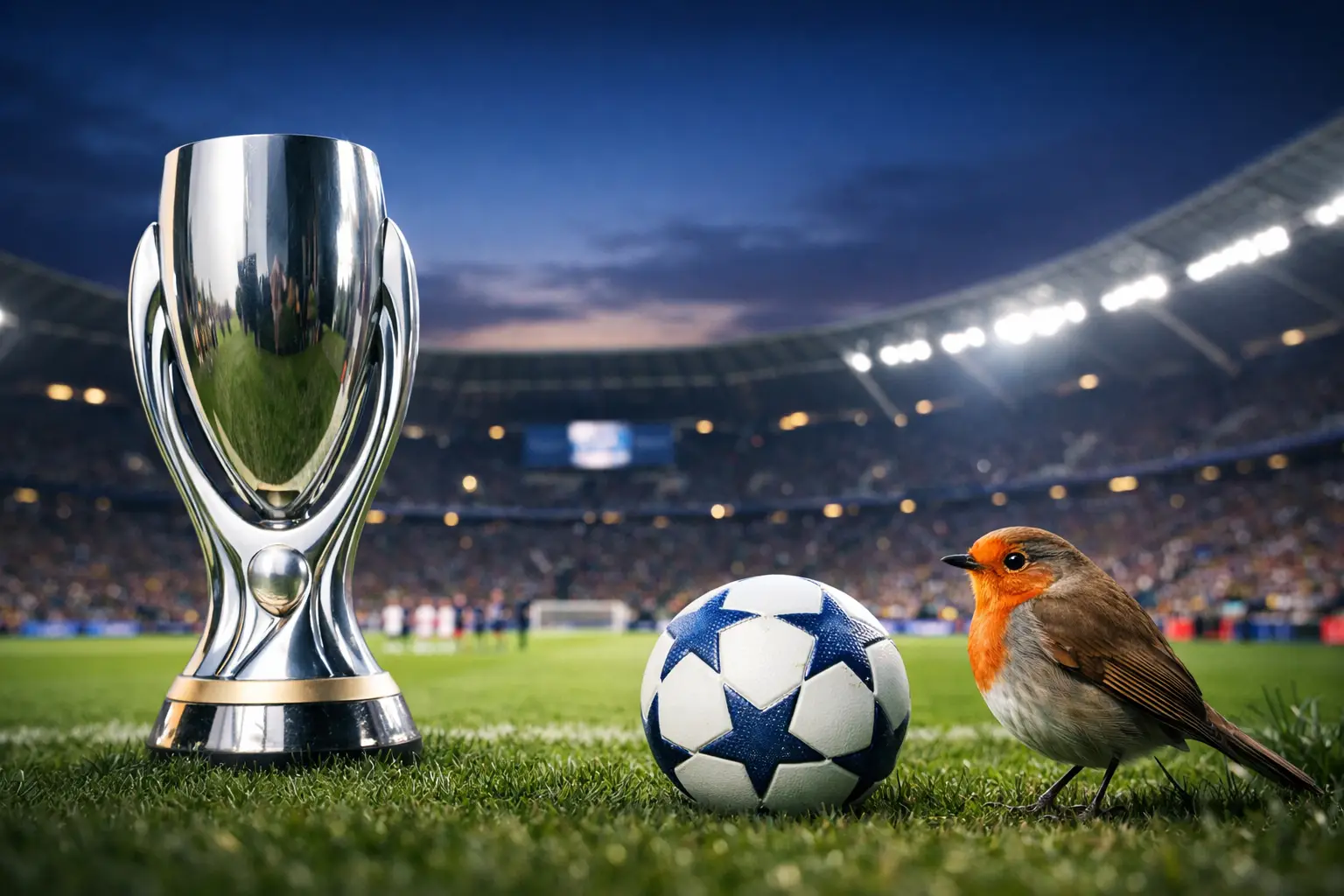
What is the 2026 UEFA Super Cup?
The UEFA Super Cup is an annual one-off final between the reigning champions of UEFA’s two leading men’s club competitions. The Champions League winner arrives as Europe’s top club champion. The Europa League winner earns its place by lifting the continent’s second-tier tournament.
There is no two-leg series, group stage, or replay. If the score is tied after 90 minutes, the match goes directly to a penalty shootout. That makes the Super Cup different from many domestic cup finals and gives it a fast, high-pressure feel. A team can dominate stretches of the match, make one defensive error, and see the trophy decided from the spot.
The event traditionally takes place in August, shortly before Europe’s major domestic leagues settle into their new seasons. For supporters, that timing creates an unusual balance. The finalists are competitive enough to contest a European trophy, yet still working through new signings, returning players, tactical changes, and fitness management.
2026 UEFA Super Cup venue: Salzburg
The 2026 final is set for Red Bull Arena in Salzburg, Austria. The stadium is home to FC Red Bull Salzburg, one of Austria’s most consistent European participants, and it provides a more intimate setting than the huge venues often used for Champions League finals.
Salzburg is a fitting host for a match that is both prestigious and accessible. The city has a strong football culture, a compact central area, and international travel connections that should make it attractive for traveling supporters. It also gives the Super Cup a distinct identity rather than placing the game in the same small group of major European capitals.
Venue size matters to the atmosphere. A smaller stadium can make a single-match final feel louder and more immediate, but it also means demand for tickets may greatly exceed supply if two global fan bases qualify. Neutral fans planning a trip should expect official ticket allocations to be limited and should avoid making nonrefundable travel commitments until UEFA publishes confirmed sale details.
When will the match be played?
UEFA has scheduled the event for August 2026, with the exact kickoff information to be confirmed through the competition’s official match announcements. Super Cups are commonly played in mid-August, which places the match close to the opening weeks of domestic league campaigns.
That timing can affect lineups. A Champions League winner that has changed coaches or sold a key player may use the occasion to test its new direction under intense pressure. A Europa League winner may view the match as an opportunity to prove it belongs among the continent’s very best.
U.S. viewers should watch for the final kickoff time once it is released. Salzburg is six hours ahead of Eastern Time during much of August, so an evening local start could translate to an afternoon broadcast in the Eastern and Central time zones. West Coast viewers may see a late-morning or early-afternoon kickoff. Broadcast rights and streaming access can vary by market, so checking local listings close to the event remains the most practical approach.
Which teams can qualify?
Only two clubs can reach the 2026 UEFA Super Cup:
- The winner of the 2025-26 UEFA Champions League
- The winner of the 2025-26 UEFA Europa League
That simple qualification rule produces a wide range of possible matchups. It could feature two established powers with deep European pedigrees, or it could bring together a Champions League heavyweight and a Europa League winner enjoying a breakthrough season.
The Champions League final is scheduled for Budapest, Hungary, while the Europa League final is scheduled for Istanbul, Turkey. Those finals will determine the Super Cup field. Until then, any prediction is necessarily provisional. League position, injuries, winter transfer activity, and the draw path through the knockout rounds can change the picture quickly.
One useful point for casual viewers: the Super Cup is not based on the previous summer’s Club World Cup, domestic league title, or a combined ranking. Winning one of UEFA’s two specified competitions is the only route in.
Why the 2026 edition will draw attention
The 2026 match arrives after a period of major change in European club soccer. UEFA’s league-phase competition format has reshaped how teams reach the knockout rounds, while expanded global schedules have put more pressure on players and clubs. The Super Cup will sit at the intersection of those changes.
For the Champions League winner, the fixture is a chance to start the new campaign with another trophy and reinforce its status. For the Europa League winner, it is a rare opportunity to beat the continent’s top champion on a global stage. The underdog narrative is often strongest here because the game is decided in a single night rather than over 180 minutes.
There is also a practical sporting trade-off. Managers want to win silverware, but they must protect players at the beginning of a demanding season. Some will rotate more than fans expect. Others will use their strongest available lineup to build momentum. That uncertainty is part of the appeal: the Super Cup has the stakes of a final without the predictability of a fully settled season.
What to watch on match day
The tactical contest may hinge on readiness rather than reputation. Look at how many preseason matches each team has played, whether major summer arrivals are eligible and integrated, and whether international players have had adequate rest. A club with more continuity may hold an advantage even against a roster with bigger names.
Set pieces are another factor. In a one-game final, a corner kick, free kick, or penalty can be decisive, especially if both teams are still developing their attacking rhythm. Goalkeeper selection can also become a major storyline if a team has a new signing or a young player competing for the starting role.
For viewers following the broader soccer news cycle, the event also creates a concentrated stream of team news, supporter travel coverage, post-match reaction, and highlights. RobinsPost readers can use that window to follow updates across sports news and video coverage without needing to track every European league separately.
A useful event for new and longtime fans
The Super Cup is an approachable entry point for people who do not follow every round of European competition. The stakes are easy to understand, the format is simple, and the match features two teams that earned their places by winning major tournaments.
Longtime supporters will see a different layer: a preview of squad depth, new tactical ideas, and a club’s appetite for another season of trophies. That is why the 2026 UEFA Super Cup matters beyond one evening in Salzburg. Keep an eye on the spring finals, then mark the August date when UEFA confirms the final match details.