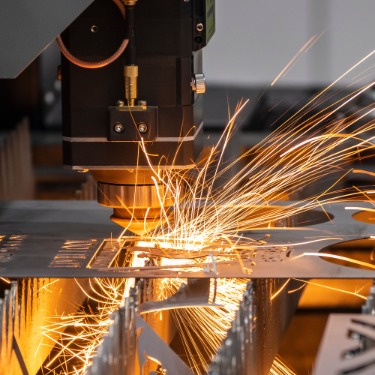
Metal fabrication is an industry where small inefficiencies can have surprisingly large financial consequences. A few extra minutes spent setting up equipment, slightly higher-than-necessary material waste, or an unexpected machine shutdown may not seem significant on its own. Repeated across hundreds of jobs and thousands of production hours, however, these problems can steadily erode a company's margins.
This is what makes the hidden costs of inefficient metal fabrication processes particularly difficult to manage. The most damaging expenses are not always obvious line items on a financial statement. They are often buried in labor hours, scrap rates, missed deadlines, equipment wear, quality problems, and lost production capacity.
Understanding where these costs originate gives fabrication businesses an opportunity to improve profitability without necessarily increasing sales or making sweeping changes to their operations.
Material Waste Adds Up Quickly
Raw materials represent a significant portion of the cost of many fabrication projects. Inefficient cutting, inaccurate measurements, poor nesting strategies, and inconsistent processes can all increase the amount of material that ends up as scrap.
A small amount of waste may be unavoidable, but the difference between an optimized process and an inefficient one becomes substantial at scale. If a shop regularly works with steel, aluminum, or other costly materials, even a modest improvement in material utilization can translate into meaningful savings over the course of a year.
Waste also creates costs beyond the original purchase price. Scrap must be collected, moved, stored, and eventually recycled or disposed of. Employees spend time handling material that never contributes to a finished product. Reducing scrap therefore improves both material efficiency and labor productivity.
Labor Costs Extend Beyond Hourly Wages
Labor efficiency is another area where hidden expenses accumulate. Fabrication businesses understandably focus on wages when calculating labor costs, but the true cost of an inefficient process is broader.
Consider an operator who repeatedly has to reposition material, manually perform a repetitive task, correct inaccurate work, or wait for another production stage to finish. The employee is still being paid, but those hours are not producing the maximum possible value.
The problem becomes more pronounced when highly skilled employees spend significant portions of their day completing routine tasks. Experienced fabricators are valuable precisely because of their technical abilities and judgment. Using those workers for activities that could be streamlined leaves less time for jobs that genuinely require their expertise.
Improving processes does not necessarily mean reducing headcount. In many cases, it means allowing the existing workforce to accomplish more with the same number of hours.
Rework Can Quietly Consume Production Capacity
Mistakes are expensive in virtually every manufacturing environment. In fabrication, however, a single error can affect material, labor, equipment time, scheduling, and downstream operations simultaneously.
A component cut incorrectly may need to be remade entirely. Employees must retrieve new material, reset equipment, repeat the operation, inspect the replacement, and adjust the production schedule. If the defective component is not discovered until later in the process, even more work may already have been invested in it.
Rework also occupies machinery that could otherwise be producing another customer order. This means the cost of an error includes not only the replacement part but also the productive capacity lost while correcting the problem.
Consistent procedures, appropriate tooling, employee training, equipment maintenance, and quality checks can all help reduce these expenses.
Equipment Downtime Creates a Chain Reaction
A machine that is not operating cannot generate productive output, yet downtime often has consequences well beyond the affected piece of equipment.
If one cutting operation feeds several downstream processes, an unexpected shutdown can leave multiple employees or machines waiting for components. Production schedules may need to be rearranged, rush work may become necessary, and promised delivery dates can suddenly become difficult to meet.
Preventive maintenance is therefore about more than avoiding repair bills. Maintaining blades, tooling, lubrication systems, motors, controls, and other components helps keep the entire production schedule predictable.
Tracking downtime can also reveal patterns that might otherwise go unnoticed. Frequent short interruptions may collectively cost more production time than an occasional major breakdown.
Poor Workflow Creates Unnecessary Movement
Not every manufacturing inefficiency happens at a machine. The physical organization of a facility can have a major influence on productivity.
If employees constantly transport materials from one side of a facility to another, search for tools, wait for forklifts, or navigate poorly arranged work areas, valuable time disappears without producing anything.
Material flow should ideally follow a logical path from receiving through production and eventually to shipping. While every facility has space limitations, even relatively simple changes to storage practices, workstation organization, and equipment placement can reduce unnecessary movement.
The same principle applies to information. Employees waiting for drawings, job instructions, approvals, or production updates can create another form of downtime. Efficient fabrication requires both materials and information to reach the right place at the right time.
Manual Processes Can Limit Scalability
Manual work remains essential throughout metal fabrication, particularly where craftsmanship, judgment, or customization is required. Problems arise when repetitive manual processes become bottlenecks that prevent a business from increasing production.
As order volume grows, simply adding more employees is not always the most efficient answer. Businesses must consider whether repetitive operations can be standardized, reorganized, or supported by technology.
For example, understanding the advantages of automation in metal fabrication can help manufacturers identify situations where automated processes may improve consistency, productivity, or worker allocation.
Automation is only one option, however. Better tooling, updated machinery, improved scheduling, employee training, and workflow redesign can also eliminate production constraints.
Small Improvements Can Produce Large Returns
One of the challenges of operational improvement is deciding where to begin. Fabricators do not necessarily need to overhaul an entire facility to achieve meaningful results.
Measuring scrap rates, setup times, downtime, rework, production speeds, and delivery performance can reveal where money and time are being lost. Once those areas are visible, managers can prioritize improvements according to their potential impact.
Sometimes the solution may involve new equipment. Elsewhere, changing a workstation layout, adjusting a maintenance schedule, standardizing a procedure, or providing additional employee training may generate a better return.
This is why addressing the hidden costs of inefficient metal fabrication processes starts with understanding the complete production system rather than focusing exclusively on machine speed. Efficiency is the cumulative result of material usage, equipment reliability, employee productivity, quality, workflow, planning, and communication.
A fabrication shop that improves these areas can often increase capacity without dramatically expanding its workforce or facility. More importantly, those improvements can create an operation that is more predictable, profitable, and capable of handling growth without allowing small inefficiencies to become major expenses.
Bio: Casey is a passionate copyeditor highly motivated to provide compelling SEO content. Her expertise spans technical, consumer, and lifestyle industries with an emphasis on readability and detail.