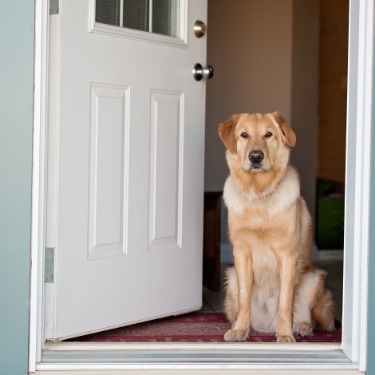
Visitors can turn a relaxed dog into a bundle of excitement within seconds. The doorbell rings, unfamiliar voices enter the home, and your dog may start barking or rushing toward the entrance. Learning how to train your dog to stay calm when visitors arrive can make gatherings more comfortable while helping your pet develop better self-control. With consistent practice and realistic expectations, you can teach your dog that guests do not signal chaos. Instead, arrivals can become predictable events that your dog handles with confidence and calmer behavior.
Understand What Triggers Your Dog
Before changing your dog’s behavior, identify what makes visitor arrivals so exciting. Some dogs react strongly to the doorbell because they associate the sound with someone entering their space. Others become excited when they hear a car in the driveway or footsteps approaching the porch.
Watch your dog during the moments leading up to an arrival. Identifying the earliest signs of excitement lets you begin training before your dog becomes overwhelmed. Once a dog reaches an intensely excited state, following familiar commands often becomes much harder.
Practice Calm Behavior Without Visitors
Successful visitor training starts when your home is quiet. Teach your dog a simple behavior you can request when someone arrives. Sitting on a designated mat or resting in a particular area gives your dog something productive to do instead of running toward the entrance.
Practice this behavior during ordinary parts of the day. Guide your dog to the designated spot and reward calm responses. Gradually increase how long your dog remains there before receiving a release cue.
Make the Doorbell Less Exciting
If the doorbell sends your dog racing through the house, change what the sound means through controlled practice. Ask a family member to ring the bell while you work with your dog away from the entrance. Reward your dog for remaining calm or performing the behavior you practiced.
Begin at a level your dog can handle successfully. You may need to start with a quiet recording instead of the actual doorbell. As your dog improves, gradually increase the volume before practicing with the real sound.
Practice With Cooperative Guests
Once your dog performs well during quiet sessions, introduce a controlled visitor. Choose someone who understands the training process and will follow your directions. Ask the person to approach calmly while you guide your dog through the routine.
Your practice guest may need to enter several times during one session. Repeated entrances make the event less novel and give your dog opportunities to succeed. Keep interactions low-key so your dog does not receive immediate attention for excited behavior.
Reward the Behavior You Want
Dogs often repeat behaviors that produce rewarding outcomes. Use that principle to reinforce calm greetings. Give your dog attention when all four paws remain on the floor, and reward quiet behavior around guests.
This approach can also help you stop unwanted jumping in your dog without turning every greeting into a struggle. Ask visitors to withhold attention when your dog jumps. Once your dog returns to the floor and settles, the guest can offer calm interaction.
Everyone in the household should respond consistently. If one person encourages jumping while another discourages it, your dog receives conflicting information. Clear expectations make appropriate behavior easier to understand.
Manage Arrivals During Training
Training takes time, so do not expect perfect behavior after a few sessions. Management can prevent your dog from repeatedly practicing unwanted habits while new skills develop. Before visitors arrive, prepare the environment so you can maintain control.
A leash can help you guide your dog away from the entrance without chasing your pet through the house. A gate can create comfortable distance between your dog and guests during especially exciting arrivals. Use these tools as support rather than punishment.
Tell guests about your training plan before they arrive. When visitors understand that they should wait before greeting your dog, they can reinforce the behavior you are teaching.
Keep Your Own Behavior Calm
Dogs pay close attention to the people around them. If you become tense whenever the doorbell rings, your dog may notice that change and respond with greater excitement. Move deliberately and use the same cues you practiced during quieter sessions.
Avoid shouting commands repeatedly when your dog struggles to focus. Repeating a cue louder does not necessarily make its meaning clearer. Instead, create more distance from the distraction and request a behavior your dog can successfully perform.
Calm handling creates a predictable training experience. Over time, your dog can learn that visitor arrivals follow the same familiar routine.
Adjust Training to Your Dog’s Progress
Every dog learns at a different pace. A young dog with limited greeting experience may need frequent practice before showing reliable improvement. An older dog with years of excited visitor behavior may need extra time to replace established habits.
Measure progress through small changes instead of expecting immediate perfection. Your dog might recover from excitement faster or remain on a mat slightly longer than before. These improvements show that training is moving in the right direction.
If an exercise repeatedly causes your dog to lose control, make it easier. Increasing difficulty slowly gives your dog more opportunities to practice successful responses and build reliable habits.
Give Your Dog Time To Settle
Some dogs need a few minutes after a visitor enters before they can comfortably interact. You do not need to force an immediate greeting. Allowing your dog to watch from a comfortable distance can reduce pressure and make calm behavior easier.
Once your dog relaxes, allow a controlled greeting when appropriate. Ask the visitor to remain calm rather than immediately encouraging energetic play. Ending the interaction before excitement escalates can help preserve the behavior you want.
Over time, repeated calm experiences make visitors feel less unusual. Your dog begins to understand what happens when someone arrives and which behavior earns access to social interaction.
Build Better Visitor Habits Through Consistency
Learning how to train your dog to stay calm when visitors arrive requires patience and regular practice rather than one perfect training session. Give your dog clear expectations and reinforce manageable successes as new habits develop. When household members and guests follow the same routine, your dog receives a consistent message about appropriate greetings. Continue practicing during low-pressure situations so those skills become easier to use when the doorbell rings. With consistent guidance, your dog can learn to welcome visitors calmly instead of treating every knock or doorbell as an overwhelming event.
Bio: Casey is a passionate copyeditor highly motivated to provide compelling SEO content. Her expertise spans technical, consumer, and lifestyle industries with an emphasis on readability and detail.