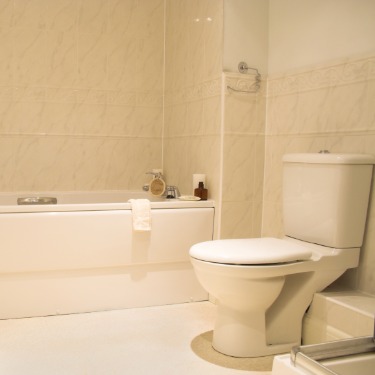
There’s nothing inherently wrong with a builder-grade bathroom. It has a sink. The shower works. The toilet is exactly where you would expect to find it. Functionally, everything may be perfectly fine.
The problem is that these spaces often feel like they could belong to anyone. Standard mirrors, basic lighting, generic hardware, and plain finishes get the job done without giving the room much personality.
Fortunately, making a bathroom feel custom doesn’t necessarily require tearing it down to the studs. Homeowners can make strategic changes that add warmth, character, and visual interest while keeping perfectly usable parts of the room intact. If you’re wondering how to make a bathroom feel less builder-grade, start with the features that attract the most attention.
Give the Vanity More Personality
The vanity occupies a significant amount of visual space in a bathroom, making it a natural place to begin. However, replacing the entire cabinet isn’t always necessary. If the existing vanity is sturdy and in good condition, consider painting or refinishing it. A rich green, a deep blue, a warm neutral, or even black can make a standard cabinet look considerably more intentional. New knobs or pulls can finish the transformation without requiring major construction.
Another option is replacing only the countertop. Swapping a basic laminate surface for quartz, stone, or another upgraded material can change the room’s appearance while allowing you to keep the existing cabinetry.
Replace the Basic Bathroom Mirror
Few things say “builder-grade bathroom” like a large, frameless sheet mirror mounted directly above the vanity. Replacing it with a framed mirror instantly creates a focal point. That could mean one oversized statement mirror, or two smaller mirrors above a double vanity. Wood frames introduce warmth, while metal frames create a cleaner, contemporary look.
Homeowners who don’t want to remove an existing mirror may be able to add a frame around it instead. This approach preserves the functional mirror while giving it a more finished appearance.
Whatever route you choose, pay attention to scale. A tiny decorative mirror floating above a wide vanity can look just as awkward as the original builder-grade option.
Upgrade the Lighting
Lighting affects nearly everything else in the bathroom. Even beautiful tile and expensive finishes can look flat beneath harsh or poorly placed fixtures.
Start by reconsidering the standard vanity light. A fixture with more character can act almost like jewelry for the room. Depending on the design, sconces placed beside a mirror can also provide more balanced illumination around the face than a single overhead fixture.
Don’t forget the color temperature of the bulbs. Extremely cool lighting can make a bathroom feel clinical, but warmer light can soften the space.
If the bathroom is large enough, layered lighting can add even more dimension. Combining vanity lighting with ceiling fixtures and accent lighting gives homeowners greater control over the atmosphere.
Make Hardware Look Intentional
Bathrooms contain a surprising amount of hardware. Faucets, drawer pulls, towel bars, shower fixtures, hooks, and toilet paper holders all contribute to the room’s overall look. When every piece appears to have been selected independently, the room can feel unfinished. Coordinating these details creates a more deliberate design.
That doesn’t mean every metal finish must match perfectly. Mixing finishes can work beautifully when there’s a clear pattern. For example, black cabinet hardware might complement brass lighting if both finishes appear elsewhere in the room. The important factor is repetition. A finish that appears only once may look accidental, but repeat it thoughtfully, and it becomes part of the design.
Rethink Plain Walls
Bathroom walls offer more design potential than many homeowners realize. Paint is the easiest place to begin, particularly if the room currently features a generic beige, gray, or white. A richer wall color can completely change the mood without altering the bathroom layout. Smaller powder rooms are especially good places to experiment because bold colors can make these compact spaces feel dramatic rather than cramped.
Wallpaper is another possibility. Patterns can introduce personality that paint alone can’t achieve. For a more architectural look, consider beadboard, panel molding, or another wall treatment. These additions create dimension and can make a relatively simple bathroom look much more thoughtfully designed.
Upgrade the Shower Without Overcomplicating It
A shower can dominate the room, so outdated doors, fixtures, or surrounds have an outsized effect on the overall design.
Some showers can be refreshed with relatively contained changes, such as replacing the showerhead, updating the hardware, or installing a new door. Larger remodeling projects may involve tile, waterproofing, plumbing, or layout changes. Before turning a cosmetic refresh into a substantial renovation, homeowners should define what they actually want to change. Thinking through the key questions to ask before starting a bathroom project can separate must-have improvements from changes that simply sound appealing in the moment. That planning becomes especially important when plumbing or permanent fixtures are involved. Moving one feature can affect several others, turning a seemingly simple idea into a much larger project.
Add Storage That Looks Like Furniture
Builder-grade storage tends to focus on function rather than appearance. Adding storage with some personality can make the bathroom feel more like a designed room. An open wood shelf above the toilet, for example, can hold folded towels and a few decorative items. A freestanding cabinet can provide concealed storage while adding an architectural element. Even attractive baskets can organize everyday necessities without making the room feel cluttered.
Be selective about open storage, though. Displaying three neatly rolled towels looks intentional. Displaying a six-month supply of toothpaste usually does not. Keep frequently used items accessible while giving less attractive necessities somewhere to hide.
Focus on the Details You Notice Every Day
A successful bathroom refresh isn’t about cramming every current design trend into one room. It’s about removing the features that make the space feel generic and replacing them with choices that look deliberate.
Start with what bothers you most. Maybe it’s the mirror you’ve disliked since move-in day. Perhaps it’s the glaring vanity light, a plain cabinet, or the sea of chrome hardware. Fixing those high-impact details often produces a bigger visual change than an expensive renovation.
Learning how to make a bathroom feel less builder-grade ultimately comes down to creating consistency and character. When the lighting, hardware, storage, color, and accessories all feel connected, even a fairly standard bathroom can begin to look like a space designed specifically for the home—and the people who live there.
Bio: Casey is a passionate copyeditor highly motivated to provide compelling SEO content. Her expertise spans technical, consumer, and lifestyle industries with an emphasis on readability and detail.