A convincing fake website rarely looks like the obvious scam page people imagine. It may use a familiar logo, polished product photos, a copied news layout, and even a web address that appears right at a quick glance. The risk comes in the moment when you enter a password, submit payment details, download a file, or share a breaking story that was never real. Learning how to spot fake websites is less about memorizing one warning sign and more about slowing down long enough to check the signals.
Why fake websites can look so believable
Scammers do not need to build a website from scratch. They can copy the visual design of a bank, retailer, delivery service, government agency, local news outlet, or well-known charity. A fake page may be promoted through a social media ad, a search result, a text alert, an email, or a post that claims to contain urgent news.
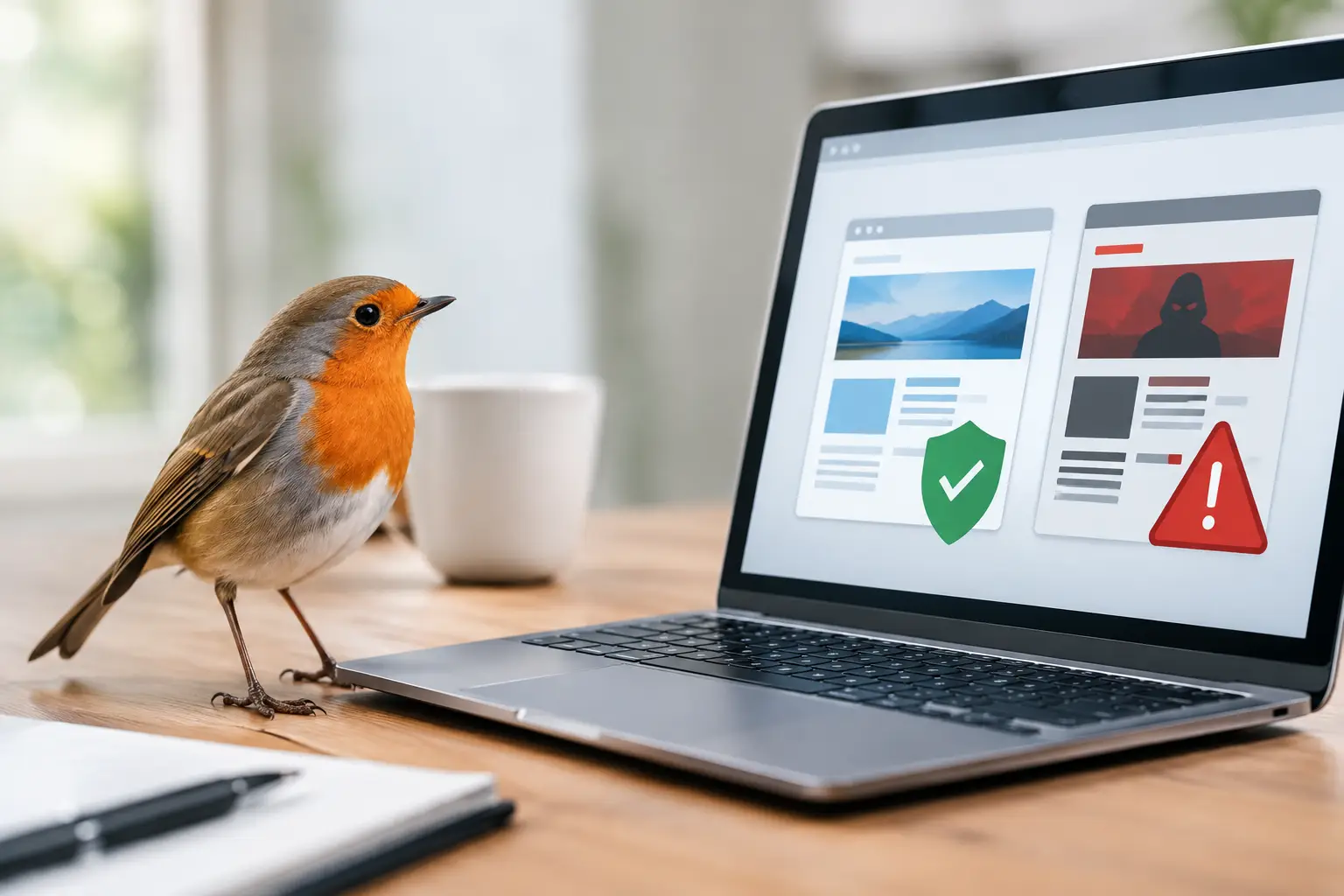
That is why appearance alone is not proof. Real organizations can have dated websites or occasional spelling errors. Fraudulent sites can look professionally designed. The more a page asks of you - a login, money, personal information, a download, or an immediate decision - the more carefully it deserves to be checked.
How to spot fake websites by checking the address
Start with the address bar, not the logo at the top of the page. A website address is one of the quickest ways to find an impersonation attempt, especially when the message that brought you there creates urgency.
Look for small changes in spelling, extra words, unusual punctuation, or a different ending. A fake site might add terms such as “secure,” “support,” “verify,” or “official” around a recognizable brand name. It may swap a letter for a number, use a hyphen where the real company does not, or place the familiar name before a completely unrelated domain.
The part that matters most is the main domain immediately before endings such as .com, .org, .gov, or .net. For example, a page hosted at `brandname.account-check.example.com` belongs to example.com, not brandname.com. Long addresses can hide that fact.
A padlock symbol or “https” connection is worth having, but it is not a seal of legitimacy. It means the connection between your browser and that site is encrypted. Scam sites can use encryption too. Treat it as a basic security feature, not a reason to trust the business behind the page.
Check the claim somewhere else
Fake websites often depend on a claim that makes people act before checking. It could be a flash sale, a package problem, a tax refund, an emergency alert, a celebrity giveaway, a new investment opportunity, or a dramatic news headline.
Do not use the link in the message to investigate the claim. Open a new browser tab and find the organization through a search you type yourself, a saved bookmark, or its known app. If a retailer says your account has been locked, visit the retailer directly. If a news page reports an extraordinary event, look for confirmation from several established news sources and official agencies.
This matters especially during fast-moving events. Misleading pages may imitate the branding of trusted outlets, attach old images to a current crisis, or publish a headline that has no supporting reporting. Check the publication name, the author, the date, the location, and whether other credible outlets are reporting the same core facts. A genuine story can develop quickly, but it should not require you to hand over personal details to read it.
Read beyond the banner and the price
A legitimate business site usually offers more than a prominent deal and a checkout button. Look for a real contact page, customer service options, return policies, privacy information, and terms that match the company name. Then check whether those details make sense.
Be cautious when a site provides only a web form, a generic email address, or a messaging app contact for an expensive purchase. A street address may also be copied, so search it independently rather than assuming it proves the seller is real. A phone number that never connects, a policy full of vague language, or support pages that refer to another company are useful warning signs.
Product reviews need context as well. Five-star ratings with almost identical wording, no verified purchase details, and no critical comments may be manufactured. On the other hand, a new legitimate store may have few reviews. The better question is whether the business leaves a consistent trail across independent sources, customer feedback, social media, and consumer complaint records.
Watch for pressure, payment traps, and impossible offers
Scam pages are designed to remove your time to think. Countdown clocks, messages saying “only two left,” threats that an account will close, or demands to act within minutes are all common pressure tactics. A real offer can be time-limited, but a trustworthy company should still allow you to review the order, understand the terms, and use normal payment methods.
Be especially careful if a seller asks for payment by cryptocurrency, wire transfer, gift card, payment app transfer to an individual, or an unfamiliar method with no buyer protection. Those requests do not automatically prove fraud, but they sharply raise the risk when combined with a new or suspicious website.
Prices that are far below every other seller deserve scrutiny. A discount is plausible. A brand-new laptop, concert ticket, designer item, or hard-to-find product at an unrealistically low price may be bait for payment details. Compare the offer with established retailers before deciding.
Look for technical and content red flags
Some warning signs are subtle individually but meaningful together. Watch for pages with awkward wording, mixed languages, distorted logos, poor image quality, broken menu links, or a footer that still shows a different brand. A fake login page may send you to an unexpected website after you enter your credentials. A fake store may have a catalog full of unrelated items, copied descriptions, and no clear fulfillment information.
Downloads deserve extra caution. A supposed invoice, shipping update, streaming link, or document viewer should not require you to install an unfamiliar browser extension or software package. If the file is unexpected, stop and verify it through the organization’s official channel.
Search results and sponsored listings also need the same scrutiny as email links. Scammers can buy ads, create pages around popular searches, and exploit typos. Ranking near the top of a search page is not an endorsement.
Use a simple trust check before sharing anything
Before you log in, pay, download, or submit a form, pause for four checks:
- Does the exact web address belong to the organization you intended to visit?
- Can you confirm the claim, product, or news report through an independent source?
- Do the contact details, policies, and company identity hold up when checked outside the site?
- Is the page using fear, urgency, or an unusually good deal to push an immediate action?
One odd detail may be a mistake. Several mismatches are a reason to leave. Trust is built through consistency, not through a familiar logo or a reassuring pop-up.
What to do if you used a fake website
If you entered a password, change it immediately on the real service, starting with any account where you reused that password. Turn on multi-factor authentication where available. If you submitted card or bank information, contact the financial institution using the number on the card or its official website, explain what happened, and monitor transactions closely.
If you downloaded a file or installed software, run a security scan and remove suspicious extensions or applications. Save screenshots, emails, order confirmations, and the website address before reporting the incident. Those details can help your bank, payment provider, platform, or consumer protection agency investigate.
The safest habit is not suspicion of every website. It is deliberate verification when a page wants something valuable from you. A few seconds spent checking the address, the claim, and the payment request can keep a useful online search from becoming an expensive mistake.