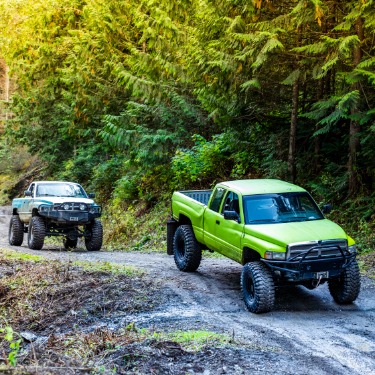
Building a custom diesel truck can quickly become an expensive game of “just one more upgrade.” First, you want bigger tires. Then, you need a lift to fit them. Suddenly, you're shopping for new gears, suspension components, and a turbocharger that could probably wake the neighbors three streets over.
Modifying a diesel truck should make it more enjoyable, capable, and suited to your needs. Unfortunately, some builds end up looking impressive while becoming downright miserable to drive. Avoiding building an impractical diesel truck means knowing when an upgrade will genuinely improve your vehicle and when it might create more problems than it solves.
Decide What Your Truck Actually Needs To Do
Think about how you use your truck. Is it a daily commuter, a weekend adventure vehicle, a dedicated tow rig, or something that occasionally visits the drag strip? Each purpose calls for different modifications. A truck that regularly hauls heavy equipment needs dependable cooling, appropriate gearing, and predictable handling. Meanwhile, a recreational truck might benefit more from suspension improvements and off-road tires. Trying to make one truck excel at absolutely everything usually involves compromises.
Decide on your priorities before shopping for parts. Consider how often you tow, the roads you travel, your typical payload, and how much time you spend behind the wheel. Your build should accommodate your actual lifestyle, not an imaginary version of it where every weekend involves conquering mountains.
Don’t Chase Horsepower Without a Purpose
Few things tempt diesel enthusiasts more than impressive horsepower numbers. Unfortunately, maximum power doesn't automatically translate into a better driving experience. A heavily modified engine might produce incredible numbers on a dynamometer while feeling sluggish, unpredictable, or unnecessarily aggressive during everyday driving.
Horsepower v. Torque
Horsepower and torque contribute differently to how a diesel performs. Torque describes rotational force, while horsepower reflects how quickly work can be performed. Both matter, but their usefulness depends on engine speed, gearing, and the task at hand. Understanding the differences between diesel horsepower and torque explains why a truck with impressive peak horsepower isn't necessarily the most comfortable or capable option for towing.
Prioritize Usable Power
Rather than chasing the highest possible output, focus on smooth, predictable power delivery. A moderate performance upgrade that improves throttle response and maintains manageable temperatures may provide more satisfaction than an extreme setup requiring constant attention. Remember that additional power also places greater demands on the transmission, cooling system, and drivetrain.
Think Twice Before Installing an Enormous Lift
A towering diesel truck certainly attracts attention. However, excessive suspension height can introduce problems that become painfully obvious after the excitement wears off. Getting into the cab becomes an athletic event. Parking garages suddenly seem threatening. Loading equipment into the bed becomes unnecessarily difficult. Lifting a truck also raises its center of gravity, potentially affecting stability during cornering and emergency maneuvers.
If your truck regularly encounters rough terrain, additional ground clearance might be worthwhile. However, a modest lift with properly matched suspension components can often accomplish your goals without sacrificing everyday usability. Consider garage clearance, towing geometry, steering behavior, and passenger accessibility before choosing a suspension setup.
Don't Let Oversize Tires Ruin Your Driving Experience
Large tires can completely transform a truck's appearance, but they affect considerably more than aesthetics. Increasing tire diameter changes effective gearing, which can reduce acceleration and make maintaining highway speeds more demanding. Heavier tire and wheel combinations can also increase the workload on steering and braking components. Aggressive tread patterns may introduce road noise, vibration, and less predictable handling on pavement.
Before purchasing oversize tires, consider:
- Overall diameter: Will the tires interfere with bodywork or suspension components?
- Weight: How much additional rotating mass will the drivetrain have to handle?
- Load rating: Are the tires appropriate for the truck's actual operating loads?
- Tread design: Does the pattern suit your typical driving surfaces?
- Gearing: Will the larger diameter require axle ratio changes?
A tire that looks fantastic in photographs might become irritating during a three-hour highway drive.
Remember That Your Transmission Has Limits
Engine modifications often receive most of the attention while the transmission quietly handles the consequences. Increasing torque can expose weaknesses in an otherwise reliable transmission, particularly when you’re towing or accelerating under heavy loads.
Depending on the vehicle and your performance goals, supporting modifications might include improved cooling, upgraded internal components, or appropriate transmission calibration. However, these changes should match your specific transmission, so pay attention to shifting quality, operating temperatures, and manufacturer recommendations. An impressive engine build means very little when the transmission can’t reliably transfer its power to the wheels.
Don't Sacrifice Reliability for Appearance
Appearance modifications can be fun, but problems can arise when visual appeal becomes more important than mechanical reliability. For example, extremely wide wheels may create additional stress on certain steering and suspension components. Poorly installed accessories can introduce electrical problems, rattles, or water intrusion. Even seemingly harmless cosmetic changes can complicate maintenance access.
Choose reputable components designed for your specific vehicle, and make sure installation quality receives as much attention as appearance. There's nothing wrong with building a head-turning truck—just make sure it can still handle a grocery run without demanding a repair appointment afterward.
Budget for Everything Beyond the Initial Upgrade
One of the easiest ways to create an impractical diesel build is to underestimate the total cost. A modification rarely exists in isolation. Larger tires might require suspension adjustments, gearing changes, and speedometer recalibration. Increased engine output may demand transmission improvements and additional cooling capacity. Installation costs, maintenance requirements, and replacement parts also deserve consideration.
Build a budget that accounts for supporting modifications. Leaving room for unexpected expenses prevents an unfinished project from sitting in the driveway for months.
Build a Diesel Truck You'll Actually Enjoy Driving
The smartest diesel builds balance performance, appearance, comfort, and long-term reliability. Before committing to any major modification, ask whether it solves a real problem, improves a frequently used capability, or simply creates another expense. Learning how to avoid building an impractical diesel truck ultimately comes down to making thoughtful choices instead of following every modification trend.
A well-planned truck doesn't need the tallest lift, largest tires, or most outrageous horsepower figures to stand out. Sometimes, the most impressive diesel is the one that starts every morning, handles its workload confidently, and remains enjoyable long after the excitement of the build has faded.
Bio: Casey is a passionate copyeditor highly motivated to provide compelling SEO content. Her expertise spans technical, consumer, and lifestyle industries with an emphasis on readability and detail.