A row of small oil lamps at a front door can carry a bigger message than its warm glow suggests: welcome, hope, remembrance, and the belief that light can overcome darkness. For families planning Diwali festival of lights 2026 traditions, the holiday is both deeply personal and widely shared - a season of prayer, homecoming, food, gifts, and community celebration.
In 2026, Diwali is expected to fall on Sunday, November 8, although exact observance times can vary by location and religious calendar. That timing matters because many Hindu families plan worship, meals, and the lighting of lamps around an auspicious evening period known as muhurat. For U.S. households, local temple announcements are often the best source for the precise schedule.
What Diwali Celebrates
Diwali, also called Deepavali, comes from a Sanskrit term commonly understood as “a row of lights.” It is observed by millions of people worldwide, primarily Hindus, and also by many Jains, Sikhs, and Buddhists, each with distinct religious meanings and practices.
For many Hindu communities, Diwali commemorates the return of Lord Rama to Ayodhya after exile and victory over Ravana, as told in the Ramayana. Homes were said to have been illuminated to welcome him. In other traditions, the holiday honors Goddess Lakshmi, associated with prosperity and well-being, or marks Lord Krishna’s victory over Narakasura.
Jains may observe Diwali in remembrance of Lord Mahavira’s liberation. For Sikhs, the date coincides with Bandi Chhor Divas, recalling Guru Hargobind’s release from imprisonment and his refusal to leave without other detained rulers. The shared imagery of light does not make these observances identical. A respectful celebration starts by recognizing that Diwali is not one single story.
Diwali Festival of Lights 2026 Traditions at Home
Preparations often begin well before the main night. Cleaning and organizing the home is a familiar custom, especially for households welcoming Lakshmi Puja. The practice is practical, but it is also symbolic: a refreshed home expresses readiness for a new beginning and an invitation for blessings.
Diyas, candles, and decorative lights
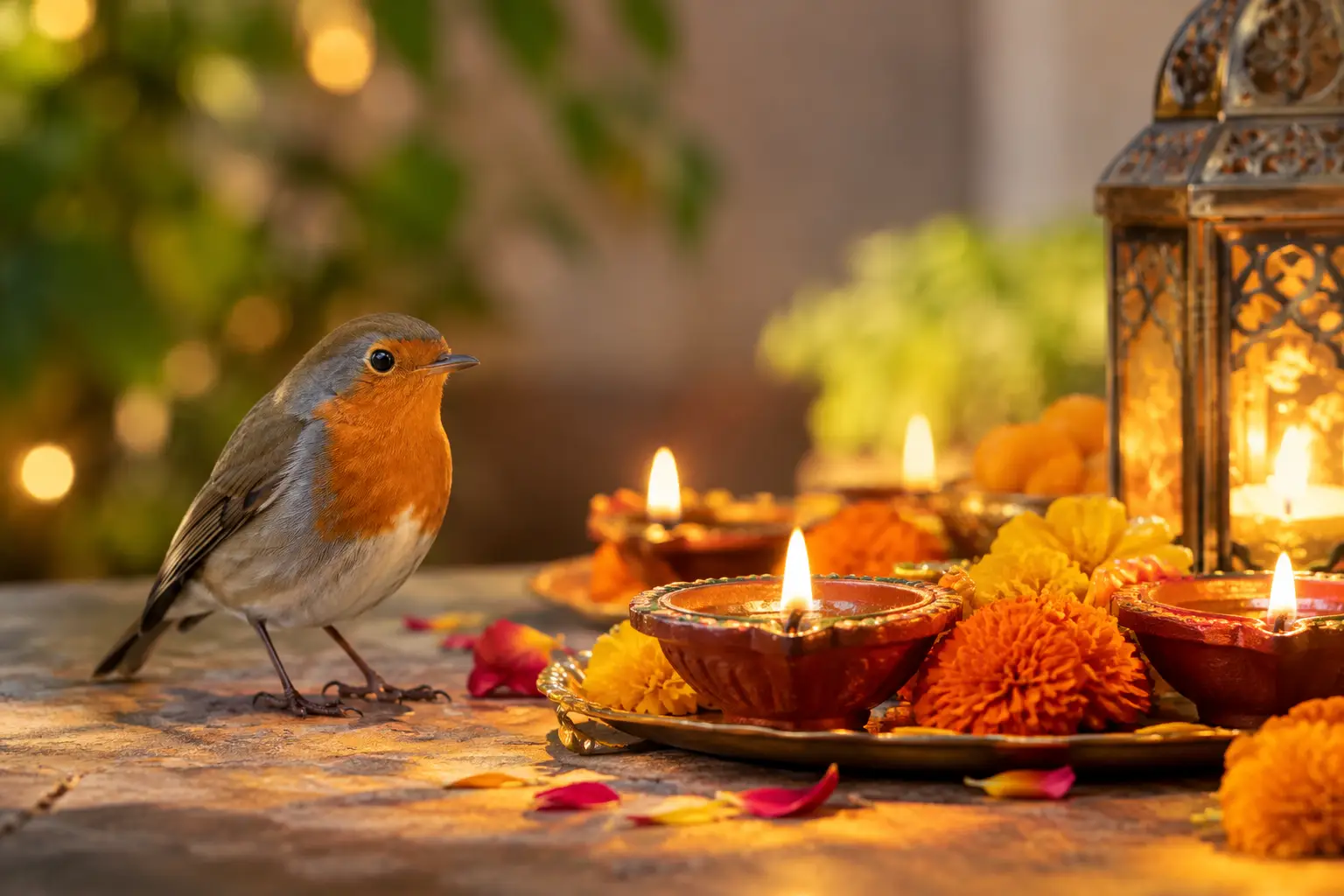
The diya, a small clay lamp traditionally filled with oil and a cotton wick, remains one of Diwali’s most recognizable symbols. Families place diyas along windowsills, balconies, doorsteps, and prayer areas. Electric string lights, lanterns, and LED displays are also common, particularly where open flames are impractical.
For an apartment, a workplace, or a home with children and pets, battery-powered lights can be the safer choice. The meaning is not reduced by choosing a safer option. If using real diyas, place them on stable, heat-safe surfaces and keep them away from curtains, decorations, and walkways.
Rangoli at the entrance
Rangoli is decorative floor art, often created near an entryway using colored powders, rice flour, flower petals, or sand. Designs may be geometric, floral, or feature footprints and symbols associated with welcome and abundance. It is one of the most visible ways that Diwali turns a home into a place of celebration.
There is room for creativity, but some families prefer traditional motifs that reflect their regional or religious background. A simple flower-petal pattern is an accessible option for newcomers who want to participate without treating a sacred custom as a costume or party prop.
Lakshmi Puja and family prayer
On the main night of Diwali, many Hindu families gather for Lakshmi Puja. The prayer may include offerings of flowers, fruit, sweets, incense, coins, and candles or lamps. Some households also honor Lord Ganesha, who is associated with wisdom and the removal of obstacles.
There is no universal home setup. The prayers, foods, language, timing, and level of formality depend on a family’s heritage and personal practice. Some people attend a temple service; others hold a quiet puja at home. If you are invited, ask whether shoes should be removed, whether photographs are welcome, and how you can participate appropriately.
Food, Sweets, and the Joy of Sharing
Diwali tables are built for sharing. Boxes of sweets are exchanged among relatives, neighbors, coworkers, and friends, while larger gatherings may include savory snacks and full meals. Popular treats can include laddoo, barfi, gulab jamun, jalebi, and kaju katli, though each region brings its own specialties.
Food traditions also reflect practical realities. Families may make sweets from scratch over several days, order from a trusted local business, or prepare a smaller menu around busy work and school schedules. Dietary needs matter, too. Many Indian desserts contain dairy, nuts, or ghee, so clear labeling is especially helpful when sharing with guests.
Gifting is another central custom. Sweets, dried fruit, decorative items, clothing, and small tokens for children are common choices. In business settings, a thoughtful card or a modest box of treats can be more appropriate than a lavish gift. The point is goodwill, not pressure to spend.
Fireworks Are Not the Only Celebration
Fireworks are associated with Diwali in many places, but they are not required for a meaningful observance. Public displays, neighborhood rules, weather conditions, noise concerns, and local safety laws all shape what is possible. Fireworks can also be difficult for veterans, pets, young children, people with sensory sensitivities, and communities concerned about air quality.
A community light display, music, dance, a shared meal, or a temple gathering can create the same festive energy without the risks. If fireworks are legal and part of a family tradition, follow local regulations, use approved products, and keep a careful distance from homes, vehicles, and dry vegetation. Never assume that a neighborhood celebration means every resident is comfortable with sudden noise.
Regional Traditions Make Diwali Richer
Diwali is often described as a five-day festival, but the sequence and emphasis can vary. Dhanteras, associated with health, prosperity, and new purchases, may begin the period. Naraka Chaturdashi or Choti Diwali comes next in many communities. The main Diwali night is followed in some traditions by Govardhan Puja, Annakut, or the Hindu New Year, then Bhai Dooj, which celebrates the bond between siblings.
In West Bengal, many families observe Kali Puja on the same night that others hold Lakshmi Puja. In parts of South India, Deepavali may be marked most strongly in the morning, including oil baths, new clothes, and special foods. In Nepal, Tihar includes its own multi-day customs, including days honoring animals and sibling relationships.
These differences are not side notes. They are why a generic “Diwali checklist” only goes so far. When covering the holiday at school, work, or a public event, make space for people to describe the tradition they know rather than presenting one version as the standard.
Celebrating Respectfully in U.S. Communities
For many Americans, Diwali is experienced through school programs, downtown festivals, cultural centers, and invitations from friends or colleagues. That can be a meaningful introduction when curiosity is paired with good manners.
Wear festive clothing if the host says it is welcome, but do not assume every Indian outfit is interchangeable or required. Bring a host gift if you are visiting someone’s home. Ask before joining prayer, handling religious items, or posting images of a family’s altar online. A sincere “Happy Diwali” is usually appreciated, while a quick question about what the holiday means to that person can open a much better conversation than assumptions.
Employers and schools can support observance by avoiding major mandatory events on the main night where possible, acknowledging the holiday accurately, and offering flexibility for families attending services or preparing at home. Recognition works best when it goes beyond decorations and makes room for the people who observe the day.
As November 8 approaches, the most useful way to mark Diwali is simple: make room for light in a form that is safe, generous, and true to the people sharing it. Whether that means a quiet diya in a window, a crowded family meal, or a local festival, the invitation is to celebrate with care.