


The question of farm raised salmon vs wild salmon benefits for health is less about finding one perfect fish and more about knowing what changes from fillet to fillet. Both types can deliver high-quality protein, heart-supporting omega-3 fats, vitamin D, and several key minerals. For most people, eating salmon regularly matters far more than choosing a side in the farmed-versus-wild debate.
Salmon is one of the most practical seafood choices on the market: widely available, quick to cook, and generally low in mercury. Still, the differences in fat content, calorie count, environmental footprint, price, and sourcing can help shoppers make a choice that fits their health goals and budget.
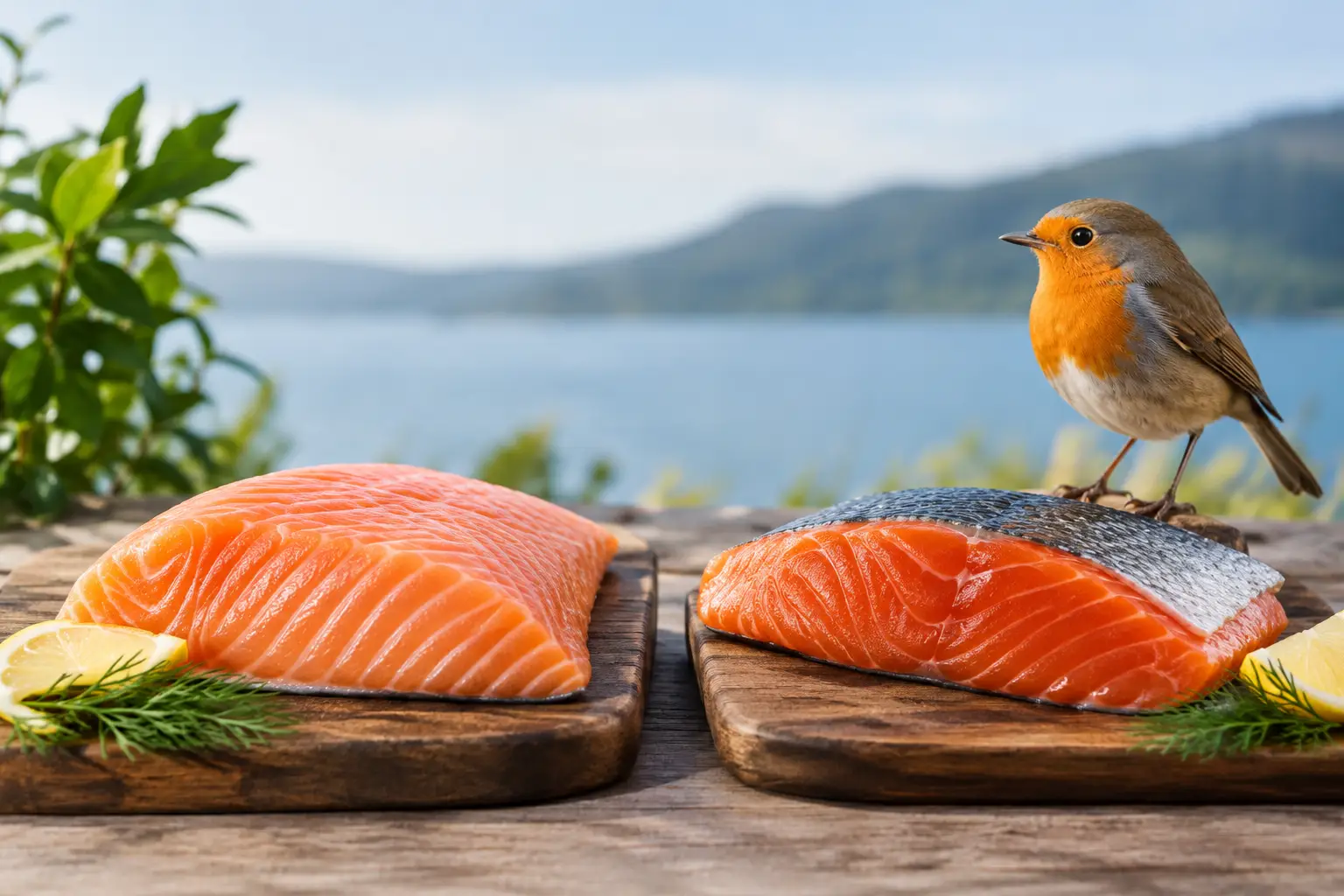
Farm Raised Salmon vs Wild Salmon Benefits for Health
Wild salmon live in natural waters and eat a varied diet that can include plankton, insects, and smaller fish. Most wild salmon sold in the United States comes from Pacific fisheries, particularly Alaska. Its color develops naturally from compounds in the marine food chain.
Farm-raised salmon are raised in controlled aquatic environments, often ocean-based net pens or land-based systems. Atlantic salmon is the species most commonly farmed and most commonly found fresh at supermarkets. Farmers manage feed, water conditions, and growth, creating a product that is available throughout the year at a more predictable price.
Neither label automatically tells the entire nutrition story. A wild sockeye fillet and a farmed Atlantic fillet can differ substantially, but so can two products within the same category depending on season, location, feed, processing, and preparation.
Omega-3 fats: both are strong choices
Salmon earns much of its health reputation from EPA and DHA, two omega-3 fatty acids associated with heart, brain, eye, and pregnancy health. The body can make only limited amounts of these fats on its own, which makes seafood a valuable dietary source.
Farmed salmon is typically fattier than wild salmon. As a result, a similar serving may provide more total omega-3 fat, even though it also contains more calories and more total fat. Wild salmon is leaner, but it remains an excellent omega-3 choice. A person trying to increase omega-3 intake without eating a large serving may appreciate farmed salmon, while someone watching calories may prefer a lean wild fillet.
The practical message is simple: both can help people meet the common recommendation to eat seafood, especially oily fish, about twice weekly. If fresh wild salmon is not accessible or affordable, farmed salmon is still a nutritious alternative rather than a compromise to avoid.
Protein, vitamins, and minerals
Both wild and farmed salmon provide complete protein, meaning they contain all essential amino acids. Protein supports muscle maintenance, immune function, and fullness after meals. A typical portion also supplies vitamin B12, selenium, iodine, phosphorus, and potassium.
Wild salmon often has a modest nutritional edge in protein per calorie because it is less fatty. It may also contain somewhat more vitamin D in some comparisons, although vitamin D levels vary widely by species and season. Farmed salmon can offer more vitamin E because of its feed, while both forms supply selenium, an antioxidant-supporting mineral that many Americans do not get in large amounts from other foods.
The skin and darker flesh near it can contain useful fats and nutrients, provided the fish has been handled and cooked safely. Removing the skin is fine if that is your preference, but it is not necessary for health.
Calories and fat: the trade-off many labels reveal
For weight management or a lower-calorie eating plan, wild salmon can be an easy fit. It is usually leaner and has fewer calories per serving. That does not make farmed salmon unhealthy. The additional fat in farmed salmon is largely unsaturated, including omega-3s, and it can make the fish more filling and forgiving on the grill or in the oven.
Preparation matters at least as much as the source. A lightly seasoned baked farmed fillet can be a better everyday option than wild salmon covered in a sugary glaze, deep-fried breading, or a heavy cream sauce. Smoked salmon offers protein and omega-3s but can be high in sodium, so it is best treated as an occasional choice for people managing blood pressure or fluid retention.
Canned salmon is another useful option. It can be economical, shelf-stable, and nutritionally comparable to fresh fish. When canned with bones, it also supplies calcium. Choose lower-sodium versions when possible.
Mercury and contaminants: what the evidence means for shoppers
Salmon is considered a low-mercury fish, whether wild or farmed. That makes it a generally favorable seafood choice for most adults, including people who are pregnant, breastfeeding, or planning pregnancy. Individual medical needs vary, but salmon is commonly included among the seafood options recommended for these groups.
The more complicated issue is persistent environmental contaminants, including PCBs. Historically, some farmed salmon tested higher than wild salmon because contaminants could accumulate in fish feed. Feed formulas and industry practices have changed over time, and levels vary by producer and country. Wild fish are not contaminant-free either, because they live in natural marine environments where pollution can enter the food chain.
For most consumers, the health benefits of eating salmon in recommended amounts outweigh concerns about contaminants. Variety remains a sensible safeguard. Rotate salmon with other low-mercury seafood such as sardines, trout, herring, pollock, shrimp, and canned light tuna instead of relying on one fish every day.
Antibiotics, color, and labeling questions
Farmed salmon prompts understandable questions about antibiotics and added color. In the United States, antibiotics used in food fish are regulated, and fish cannot legally be sold with unsafe drug residues. Standards and oversight can differ internationally, which is one reason clear sourcing information is useful.
The pink-to-orange color in farmed salmon often comes from astaxanthin added to feed. Astaxanthin is the same type of pigment salmon obtain naturally from their diet in the wild. It is not, by itself, a sign that a fish is unsafe or inferior. Shoppers who want more detail can look for package information about country of origin, farming practices, and third-party certification.
Labels such as “organic,” “responsibly raised,” or “sustainably sourced” can be helpful, but they are not interchangeable guarantees. A label should start a question, not end it. Ask where the salmon was raised or caught, whether it was previously frozen, and how it was handled at the seafood counter.
Sustainability and access belong in the health conversation
A healthy food choice has to be realistic enough to repeat. Wild salmon fisheries can be well managed, especially in regions with strong harvest controls, but wild supply is seasonal and can be affected by changing ocean conditions, habitat loss, and warming waters. Farmed salmon can reduce pressure on wild stocks and provide steady supply, yet farming systems can raise concerns about waste, escapes, disease management, and feed sourcing.
There is no single environmental answer for every salmon product. Location and producer practices matter. Land-based farms, improved feed systems, and carefully managed fisheries are all changing the picture. For households, buying the salmon that is available, affordable, and sourced transparently may support a more durable seafood habit than waiting for the ideal label.
How to choose the right salmon for your plate
Choose wild salmon when you prefer a firmer texture, stronger flavor, and a leaner fish, or when a local seasonal catch fits your budget. Choose farmed salmon when you want a richer fillet, dependable year-round availability, and often more omega-3 fat per serving at a lower price.
At the store, look for salmon with a clean, mild smell and flesh that appears moist rather than dull or dried out. Frozen salmon is often a smart choice because it may be frozen soon after harvest, preserving quality while reducing food waste at home. Thaw it safely in the refrigerator, cook it until it flakes easily and reaches a safe internal temperature, and refrigerate leftovers promptly.
The best salmon is not necessarily the most expensive one or the one with the most persuasive package. It is the salmon you can enjoy regularly, prepare simply, and pair with vegetables, whole grains, beans, or a salad. Make the choice that works for your table, then let consistency do the health work.