First your home burns to the ground, then you remember that the insurance company canceled your policy a few months ago.
That's the situation facing many of the Pacific Palisades homeowners who've lost their homes in the disastrous wildfires that roared through their neighborhood this week.
Many thousands of homeowners in the Los Angeles area were booted off their policies in recent months, especially those who had been covered by State Farm, which abandoned muchof the state. A recent investigation by the San Francisco Chronicle found that the insurer had planned to cancel 69.4% of policies in the Pacific Palisades neighborhood.
Insurance Commissioner Ricardo Lara said in late December that California would allow "reinsurance" costs -- the insurance that insurance companies buy -- to be added into premiums while also requiring insurers to write more policies in high-risk areas. But it's doubtful that action came soon enough to help today's fire victims.
Beyond the Palisades, asimilar situation afflicts many homeowners throughout Southern California. Some have been without insurance for more than a year, basically playing roulette with their largest personal asset.
A growing insurance drought
California isn't alone. A report published in December by the U.S. Senate Budget Committee found that Florida, Louisiana and North Carolina were also suffering from an insurance drought.
Its deadly, deadly serious, said Sen. Sheldon Whitehouse (D-Rhode Island), who commissionedthe report. He called the non-renewals "a sign of market distress."
Nearly 3% of insurance policies in Florida weren'trenewed in 2023, the highest non-renewal rate in the nation for the last year covered by the report, which warned that other states were likely to experience similar insurance crises as climate change accelerates across the country.
"Unless the United States and the world rapidly transition to clean energy, climate-related extreme weather events will become both more frequent and more violent, resulting in ever-scarcer insurance and ever-higher premiums," the Senate report warned.
"This is predicted to cascade into plunging property values in communities where insurance becomes impossible to find or prohibitively expensive -- a collapse in property values with the potential to trigger a full-scale financial crisis similar to waht occurred in 2008," it said.
Photo Credit: Consumer Affairs News Department Images
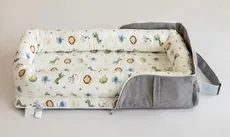
Joyful Journeys baby lounger recall for infant safety risks
Parents should stop using these baby loungers and request a refund due to serious safety violations.
Baby loungers pose entrapment and fall hazards violating infant sleep product standards
About 9,300 units sold in multiple styles from December 2023 to October 2025
Consumers should immediately stop use and request a refund
Joyful Journeys baby loungers are being recalled due to serious risks of entrapment and falls, which violate federal infant sleep product safety standards. The recall affects about 9,300 units sold online in various colors and styles, including green avocado, blue dinosaur and more.
The hazard
The loungers' sides are too low to contain infants and openings at the foot exceed allowed width, posing a risk of entrapment or falls. The loungers also lack a required stand, increasing the risk of falls if used on elevated surfaces. These deficiencies create an unsafe sleeping environment that could lead to serious injury or death.
What to do
Consumers should immediately stop using the recalled baby loungers and contact Joyful Journeys for a refund.
Company contact
Joyful Journeys at email: joyfuljourneysrecalls@myjoyfuljourneys.com or online at https://myjoyfuljourneys.com and click Recall at the bottom of the page for more information.
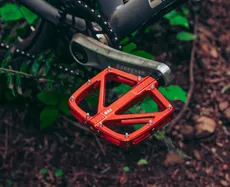
PNW Components recalls 1,200 bike pedals for crash hazard
Cyclists should stop using Loam Pedal Gen 2 due to axle cracking and get free replacements.
Pedal axles can crack and detach, creating a fall risk
1,200 Loam Pedal Gen 2 units affected, sold JuneNovember 2025
Riders should stop using pedals and request free replacements
PNW Components is recalling 1,200 Loam Pedal Gen 2 aluminum alloy bicycle pedals after reports of axle cracking and pedal detachment. The affected pedals have the Tectonic logo and were sold in several colors at bike dealers and online retailers.
The hazard
The pedal axle can crack, causing the pedal to detach from the crank and increasing the risk of a fall and possible injury. Four incidents of axle failure have been reported, but no injuries.
What to do
Consumers should stop using the recalled pedals immediately and contact PNW Components for a free replacement.
Company contact
PNW Components, Inc. at 833-902-3381 from 9 a.m. to 4 p.m. PT Monday through Friday, by email at info@pnwcomponents.com or online at https://www.pnwcomponents.com/pages/voluntary-recall-loam-pedal-gen-2 or www.pnwcomponents.com and click the Recall link in the footer.
Isla Rae charger recall for thousands over fire risk
Shoppers at T.J. Maxx and Marshalls should stop using these wireless chargers and get a refund.
Chargers can explode and cause fire or burn hazards
About 13,200 units affected, sold nationwide June 2024November 2025
Consumers should stop use immediately and request a refund
Isla Rae brand magnetic wireless chargers, sold at Marshalls and T.J. Maxx, are being recalled due to a risk of explosion leading to fire and burn hazards. About 13,200 units in the U.S. and an additional 7,000 in Canada are included in the recall.
The hazard
The chargers can explode while in use, posing significant fire and burn dangers. No injuries have been reported.
What to do
Consumers should immediately stop using these wireless chargers and contact the retailer for a refund.
Company contact
TJX toll-free at 888-256-1564 from 7:30 a.m. to 5 p.m. CT Monday through Friday, by email to powerbank@realtimeresults.net, or online at https://www.recallrtr.com/powerbank for more information. Marshalls: https://m.marshalls.com/us/m/jump/topic/Product-Recalls/2400019 or Marshalls.com ("Product Recalls" link). T.J. Maxx: https://m.tjmaxx.tjx.com/m/jump/topic/product-recalls/2400019 or TJmaxx.com ("Product Recalls" link).
Kori Gey water toy kit recall for deadly battery hazard
Parents should stop using these toy kits due to button cell battery ingestion risk and request a refund.
Battery compartment allows child access, risking serious injury or death
2,240 toy kits sold on Amazon from March to July 2025
Stop use and contact Qaniy for a refund
Qaniy is recalling Kori Gey-branded water elf toy kits due to a deadly risk of battery ingestion. The toys LED light uses a button cell battery that can be easily accessed by children.
The hazard
The battery compartment in the toy violates mandatory standards, allowing children to access and swallow button cell batteries. Ingested batteries can cause severe internal injuries, chemical burns or be fatal.
What to do
Consumers should immediately stop using the recalled toy kits and contact Qaniy for a refund.
Findriver and Weeksome recall pounding toys for magnet hazard
Parents should stop use and request a refund due to dangerous magnets that can detach and be swallowed.
Magnets can detach and pose life-threatening ingestion hazard to children
About 3,500 Lterfear Multifunction Pounding Game units sold JuneSeptember 2025
Immediate stop-use and refund recommended
Shenzhen Haichuan International Travel Service Co., Ltd., dba Findriver and Weeksome, is recalling the Lterfear Multifunction Pounding Game sold on Amazon. Small, high-powered magnets in the toy can detach and be swallowed by children.
The hazard
Detached magnets can cause serious injuries, intestinal blockages, blood poisoning or even death if swallowed, especially if multiple magnets attract inside the digestive tract.
What to do
Consumers should immediately stop using the recalled pounding toys and email for a refund.
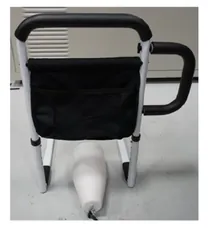
Consumers should stop using these bed rails and contact YOLAAH for a refund due to asphyxiation hazard.
Bed rails can trap users, risking serious injury or death by asphyxiation
About 14,250 YOLAAH BR-01 bed rails sold SeptemberOctober 2025
Stop use immediately and request a refund
Guangzhou Aowei Technology Co., Ltd. is recalling YOLAAH BR-01 bed rails for violating safety standards. Improper design can lead to deadly entrapment and the rails lack required warning labels.
The hazard
When attached to a bed, users can become trapped within the bed rail or between the rail and mattress, risking suffocation. No injuries have been reported.
What to do
Consumers should stop using the bed rails immediately and contact the company for a refund.
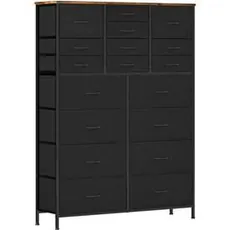
Owners of Vasicar 18-drawer dressers should stop use and request a refund due to tip-over risks.
Dressers can tip over if not anchored, posing serious injury or death risk to children
About 4,155 units sold on Amazon from September to November 2025
Consumers should stop use and contact Vasicar for a refund
Shanghai Jingtin Technology Co., Ltd., dba Vasicar, is recalling 18-drawer dressers that fail to meet safety standards and may tip over if not secured. The recall covers about 4,155 dressers sold online.
The hazard
The dressers are unstable and pose a risk of tip-over and entrapment, which can cause serious injury or death to children. The product does not comply with the STURDY Act requirements.
What to do
Consumers should immediately stop using the dresser and contact Vasicar for a refund.
Sangohe bed rail recall for adult entrapment and asphyxiation risk
Owners should stop using Sangohe bed rails and request a refund due to deadly entrapment danger.
Bed rails can entrap users, posing risk of asphyxiation or death
About 26,200 units sold online from August 2023 to October 2025
Stop use immediately and contact Sangohe for refund instructions
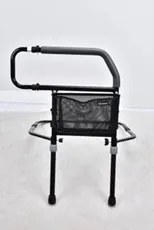
Zhongshan Biankang Medical Equipment Co., Ltd., dba Sangohe, is recalling its adult portable bed rails due to violations of federal safety standards. The rails may entrap users, risking suffocation or death, and lack required warning labels.
The hazard
The recalled bed rails can trap users between the rail and mattress, creating a deadly asphyxiation hazard. No injuries have been reported.
What to do
Consumers should stop using the Sangohe bed rails immediately and contact the company for a refund.
Company contact
Sangohe by email at SGHproductrecall@163.com, or online at https://commodechair.com/ and click Recall at the top of the page for more information.
Rattan dresser recall for tipping and entrapment risk
Stop using Rattan 6-drawer dressers and request a refund due to child safety hazards.
Dressers can tip over if not anchored, risking serious injury or death
About 870 model YD001 dressers sold on Amazon SeptemberNovember 2025
Consumers should stop use and contact Rattan for a refund
Fuzhou Sunrise Creation Corporation Co., Ltd. is recalling Rattan 6-drawer dressers due to a tip-over and entrapment hazard. The products fail to meet the STURDY Acts safety requirements.
The hazard
The recalled dressers are unstable and can tip over if not anchored, posing a serious risk of injury or death to children.
What to do
Consumers should stop using the dresser and contact Rattan for a refund.
Good Bernie bed rails warning for deadly entrapment risk
Consumers must immediately stop using Good Bernie bed rails due to asphyxiation dangers and dispose of the product.
Bed rails violate safety standards and pose life-threatening entrapment hazard
About 5,115 products sold online from November 2023 to November 2025
Stop use immediately, dispose of rails, and do not resell
CPSC is warning consumers about the serious dangers posed by Good Bernie Bed Rails. The portable rails do not meet federal safety standards and can cause deadly entrapment and asphyxiation.
The hazard
If attached to a bed, users can become trapped within the bed rail or between the rail and the mattress. This poses a risk of suffocation or death.
What to do
Consumers should stop using the bed rails immediately, dispose of them, and avoid selling or giving them away.
Company contact
Report any incidents involving injury or product defect to CPSC at www.SaferProducts.gov.
Verify once, save everywhere. A quick signup with a student verification service unlocks discounts across retail, tech, food, travel, and streaming.
Focus on everyday spending. Subscriptions, software, transit, and dining discounts add up faster than one-off purchases.
Never skip the ask. Re-verify yearly, use your .edu email, stack with sales, and always askmany discounts arent advertised.
With most college and high school students returning this week after their Christmas break, it had me thinking about ways to help them save money this semester.
With unending tuition hikes, textbookcosts, and rising food bills, every dollar definitely counts for students. Luckily, hundreds of companies offer student discounts on everything from tech and streaming to fashion, food, travel, and softwareyou just have to know where to look.
Student discount verification services: how they work
Before we dig into the saving thats available, youre going to need to prove youre a student.
Here are the key student verification services that the majority of retailers and companies use that you need to familiarize yourself with:
1. UNiDAYS
UNiDAYS is free service that verifies students online with a university email or student ID. Sometimes theyll ask for a transcript or letter from the school with official letterhead.
They work with hundreds of brands including fashion, tech, and entertainment.
You just open an account first, then shop with specific discount codes or app-based offers for students only.
2. Student Beans
Similar to UNiDAYS, Student Beans focuses on aggregating student deals.
Available both online and as an app.
Requires .edu or other valid student info.
3. ID.me
ID.me is a broader identity verification platform used by Amazon, Lenovo, Verizon, and more.
You typically sign in, verify via school email, then unlock the deals.
4. SheerID
Another verification provider is SheerID and it has student deals for select brands like Spotify, Amazon, and Groupon.
Like all the other, it requires proof of enrollment.
5. Your .edu Email & School ID
Many retailers accept a valid .edu email address or on-campus ID as proof of student status.
Even places that dont advertise discounts may apply savings if you politely ask in person. So, get in the frugal habit of ALWAYS asking about a possible student discount.
Its also worth noting that there are international options available such as the International Student Identity Card (ISIC), which unlocks global travel and cultural discounts for students abroad.
Pro tip: Be sure to always verify before checkout. Many websites will give discounted pricing only after student status is confirmed.
Top student discounts to use this semester
Here are the best deals for students in 2026, organized by category:
Sams Club College students can get a new Club membership for 60% off -OR- $50 off a Plus membership.
Target Every year in July, Target offers a 20% discount to students that lasts a couple months. The discount can only be used once during that time period and you have to re-verify every year.
YouTube Premium StudentGet the service for just $7.99/month after a 1-month free trial. Cancel anytime.
Food & Dining
Chipotle Via Chipotle U, students can earn rewards for free food and free add-ons.
McDonalds Some locations have a student discount, be sure to ask.
Buffalo Wild Wings Student often get a 10% discount, varies by location.
Dunkin Occasionally student deals near campuses.
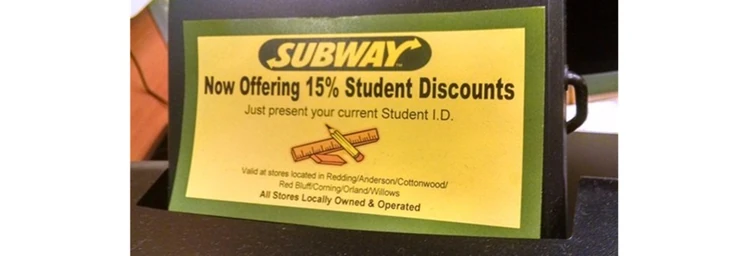
Subway Many local franchises offer students a 1015% discount. Always ask.
Travel & Transportation
Amtrak Student Fare Students between the ages of 17-24 score a 15% discount on all train fares.
Zipcar Student Membership Lower monthly fees and reduced rates.
Local Transit Discounts Must bus and subway services offers savings if you present your college ID.
Movies
AMC Theaters They offer everyday special student pricing. Just bring your student ID to the box office and save.
Cinemark They also offer student discounts, check this page and enter your zip code to find discounts in your area.
Regal Theaters Check their student discounts page to find offers at theaters in your area.
Tips to maximize your student discounts
Verify annually. Most student discount platforms require yearly re-verification.
Use your school email. If you have a valid .edu address youll unlock more deals.
Stack deals where possible. Combine student discounts with sales and cashback offers to double dip your savings.
Ask locally. Many small businesses near campuses offer unadvertised savings if you show your ID. Again, be sure to politely ask.
Keep in mind that this is just a partial list of all the student discounts that are currently available. I wanted to give you a taste of each category that offered discounts and show you how toverify your eligibility.
If youre a student, I urge you to do a Google search of STORE NAME student discount before you make any significant purchases. Youll be surprised how often youll find a 10-20% discount to help offset your costs.
A centralized deletion system took effect January 1 under one of the nations strictest privacy laws
Californians can now submit a single request forcing more than 500 brokers to delete and stop collecting their data
Privacy advocates say the law could become a model for other states
Californians gained a powerful new tool this month to curb the collection and sale of their personal data, as one of the strictest privacy laws in the country officially took effect.
The law allows residents to submit a single request requiring hundreds of data brokers to delete personal information they have collected and to stop collecting it in the future, significantly lowering the barrier that previously kept most people from exercising their privacy rights.
Data brokers quietly amass vast personal profiles
According to the California Privacy Protection Agency, more than 500 data brokers actively collect personal information from a wide range of sources and package it for sale to marketers, private investigators, and other customers.
The nonprofit Consumer Watchdog has warned that these companies scrape data from automakers, technology firms, restaurants, device manufacturers, and other businesses to build detailed profiles that can include financial information, purchases, family situations, diet and exercise habits, travel patterns, and entertainment preferences.
Earlier law saw limited use due to high burden
Californias Delete Act first took effect two years ago, requiring data brokers to provide residents with access to their data and the ability to request its deletion.
But Consumer Watchdog found that only about 1 percent of Californians used those rights during the laws first year. The main obstacle was scale: residents had to submit separate deletion requests to each broker, an impractical task given the hundreds of companies involved.
New platform centralizes deletion requests
That problem is now addressed by a new law known as DROP short for Delete Request and Opt-out Platform which took effect January 1.
DROP allows California residents to submit a single deletion and opt-out request. The California Privacy Protection Agency then distributes the request to all registered data brokers on the individuals behalf.
Beginning in August, brokers will have 45 days after receiving a request to report whether they found matching records and whether the data has been deleted. If a match is found, brokers must delete all associated data, including inferred information, unless a specific legal exemption applies.
Residents must verify identity and residency
To use the system, individuals must first prove they are California residents. The platform then asks for identifying details such as names, email addresses, vehicle identification numbers, and advertising IDs tied to phones, televisions, and other devices.
While the process can take time largely due to gathering information stored across multiple devices and accounts the privacy agency says the information is used solely to locate and delete existing data held by brokers.
Privacy advocates see national implications
Supporters say the law reflects the growing risks posed by large-scale data collection, particularly as broker databases are frequently hacked or sold.
Although the law applies only to California, privacy advocates say it could influence legislation elsewhere as concerns grow over the scope and security of personal data collected by brokers.
As data breaches and data sales continue to expose sensitive personal information, Californias new system may offer a blueprint for how other states could rein in the largely opaque data-broker industry.
Researchers found weight returns far faster after stopping GLP-1 drugs than after diet or exercise programmes
On average, patients regained weight at a rate of nearly half a kilogram per month
Health experts say the findings underscore obesity as a chronic condition, not a short-term problem
Nothing lasts forever, including the pounds shed in a GLP-1 program. A major study published this week finds that people who stop taking weight-loss injections regain all the weight they originally lost in less than two years and at a significantly faster pace than those using other weight-loss methods.
The drugs were initially developed to treat type 2 diabetes and they work by mimicking the glucagon-like peptide-1 hormone, which helps regulate appetite and increase feelings of fullness.
Study tracks weight regain after stopping medication
The new study, led by researchers at the University of Oxford and published inThe BMJ, reviewed 37 existing clinical trials involving 9,341 participants who had taken weight-loss medications. Across the studies, the average duration of treatment was 39 weeks, followed by an average follow-up period of 32 weeks after participants stopped taking the drugs.
Researchers found that people who discontinued weight-loss medication regained weight at an average rate of 0.4 kilograms per month. At that pace, participants returned to their original weight within about 1.7 years after stopping treatment.
Weight returns faster than with diet or exercise plans
On average, participants lost 18 poundswhile taking the medication but regained 10 pounds within the first year after stopping.
The rate of weight regain was nearly four times faster than that seen in behavioral weight-loss programs, such as structured diet or physical activity plans, regardless of how much weight people initially lost.
Dr. Sam West, at the University of Oxford, said the findings should not be interpreted as a failure of the medications themselves.
These medicines are transforming obesity treatment and can achieve important weight loss, West said. However, our research shows that people tend to regain weight rapidly after stopping faster than we see with behavioral programs.
Obesity described as a chronic, relapsing condition
West said the rapid rebound reflects the underlying nature of obesity rather than a flaw in the drugs.
This isnt a failing of the medicines it reflects the nature of obesity as a chronic, relapsing condition, he said. It sounds a cautionary note for short-term use without a more comprehensive approach to long-term weight management.
The study also found that improvements in cardio-metabolic health markers, such as blood pressure and cholesterol, faded after treatment ended. Those benefits returned to baseline levels within about 1.4 years of stopping the medication.
Previous research had suggested people typically regain lost weight within a year of stopping weight-loss drugs, but this is the first analysis to calculate the rate of regain and estimate how long it takes for weight and metabolic health to fully reverse.
Experts stress drugs are not a quick fix
Dr Faye Riley, research communications lead at Diabetes UK, said the findings reinforce the need for long-term support.
Weight-loss drugs can be effective tools for managing weight and reducing type 2 diabetes risk but this research reinforces that they are not a quick fix, Riley said. They need to be prescribed appropriately, with tailored wraparound support, to help people maintain weight loss when they stop taking the medication.
The IRS officially kicks off the 2026 tax filing season on January 26.
New tax law provisions and updated forms could affect deductions, credits, and refunds.
A suite of online tools and resources is available to help taxpayers file accurately.
Its that time of year again the Internal Revenue Service (IRS) has officially opened the 2026 tax filing season.
Starting January 26, 2026, taxpayers across the country can begin submitting their federal tax returns for the 2025 tax year. Whether youre a seasoned filer or tackling taxes for the first time in a while, knowing whats happening this year can make the process smoother and less stressful.
The Internal Revenue Service is ready to help taxpayers meet their tax filing and payment obligations during the 2026 filing season, IRS Chief Executive Officer Frank Bisignano said in a news release.
As always, the IRS workforce remains vigilant and dedicated to their mission to serve the American taxpaying public. At the same time, IRS information systems have been updated to incorporate the new tax laws and are ready to efficiently and effectively process taxpayer returns during the filing season.
Whats different this year
The IRS anticipates receiving about 164 million individual tax returns during this filing season, with most people filing electronically. The deadline to file and pay any taxes owed remains April 15, 2026.
One of the big talking points for this year is a group of new tax provisions that took effect under recent tax law changes often referred to in IRS communications as the One, Big, Beautiful Bill.
These changes affect how certain income and deductions are handled, including updated rules for things like tips, overtime, and car loan interest. Because of this, the IRS has rolled out new or revised forms (like Schedule 1-A) that you may need to use when preparing your return.
To help taxpayers navigate these updates, the IRS is promoting a variety of online tools and resources on IRS.gov. Through your personal IRS Online Account, you can check your tax records, view payment history, access important forms (like W-2s and 1099s), and track your refund status once your return is submitted.
Takeaway tips: How to make filing easier
Here are some practical tips to help you get through tax season with confidence:
Start early and stay organized. Gather your W-2s, 1099s, and any other income documents now so youre not scrambling as the deadline approaches.
Use IRS online tools. Setting up or accessing your IRS Online Account gives you a snapshot of your prior tax details and helps you navigate filings and payments more efficiently.
Choose e-file with direct deposit. Electronic filing combined with direct deposit is usually faster and more secure most refunds show up a few weeks after filing.
Watch out for . The IRS will never contact you first by email or text asking for personal financial information be cautious and verify anything that seems suspicious.
Tax season doesnt have to be overwhelming. With a little preparation and the right resources, you can breeze through your return and make the most of the benefits available to you in 2026.
Related Bing News Results Consumer Spending Update: Economic Confidence Steady in January Thu, 08 Jan 2026 09:32:00 GMT Economic confidence increased slightly to 109.2 in this month’s Rasmussen Reports Economic Index, a fraction higher than December. The index hit a four-year high of 115.9 in July. Consumer Reports: What to buy in January Wed, 07 Jan 2026 19:27:00 GMT Retailers also know January is when those New Year's resolutions kick in. So, you're going to see discounts on fitness tools, trackers and equipment. If you need a new treadmill for your home gym or ... Appliances, mattresses: What Consumer Reports suggests you buy in January Wed, 07 Jan 2026 07:41:00 GMT MLK weekend is the biggest sales event of the month and it’s especially good for shoppers looking to replace large appliances. You're going to see lots of sales on mostly every large appliance there ... 5 car batteries Consumer Reports says to avoid Tue, 06 Jan 2026 12:50:00 GMT Choosing the wrong replacement battery can turn a reliable daily driver into a car that struggles to start, especially in extreme temperatures. Consumer Reports has highlighted several car battery ... Consumer Reports: Clean and healthy humidifier Mon, 05 Jan 2026 19:44:00 GMT Humidifiers can help your skin, sleep and overall health, but if they are not cleaned properly, that can lead to the spread of bacteria.