The U.S. Consumer Product Safety Commission (CPSC) is announcing that Fitbit LLC, of San Francisco, California, has agreed to pay a $12.25 million civil penalty.
Thesettlement, which has been provisionally accepted by CPSC, resolves CPSCs charges that Fitbit knowingly failed to immediately report to CPSC, as required by law, that its Ionic smartwatches contained a defect that could create a substantial product hazard and created an unreasonable risk of serious injury or death to consumers.
During 2018 and 2019 and continuing into 2020, Fitbit received numerous reports of the Ionic smartwatches overheating while being worn by consumers, causing some consumers to sustain burns including second-degree and third-degree burns on their arms or wrists.
Issued a firmware update
In early 2020, Fitbit initiated a firmware update to lessenthe potential for battery overheating; however, Fitbit continued to receive reports of consumers suffering burns due to the product overheating.
Despite possessing information that reasonably supported the conclusion that the smartwatches contained a defect that could create a substantial product hazard or created an unreasonable risk of serious injury, Fitbit did not immediately report the problem to the commission as required.
The commission and Fitbit jointly announced arecall of the Ionic smartwatches on March 2, 2022. The recall stated that the firm had received at least 115 reports in the United States of the battery in the smartwatch overheating, with 78 reports of burn injuries in the United States including two reports of third-degree burns and four reports of second-degree burns.
In addition to the $12.25 million civil penalty, the settlement agreement requires Fitbit to maintain internal controls and procedures designed to ensure compliance with the Consumer Product Safety Act (CPSA), including enhancements made to its compliance program.
Fitbit has also agreed to submit an annual report regarding its compliance program, internal controls, and internal audit of the effectiveness of compliance policies, procedures, systems and training.
About Fitbit
Acquired by Google in 2021 for about $2 billion, Fitbit is a well-known brand of wearable technology devices that track health and fitness data.
What they are:
Activity trackers and smartwatches: Most Fitbits are wrist-worn devices that look like watches or bands.
Health and fitness focus: They use sensors to track various metrics like steps taken, distance traveled, calories burned, heart rate, sleep patterns, and more.
Data syncing: Fitbits connect to smartphones or computers via Bluetooth to sync data to the Fitbit app, where users can view detailed information and track progress over time.
Variety of models: Fitbit offers a range of devices with different features, styles, and price points to cater to various needs and preferences.
Photo Credit: Consumer Affairs News Department Images
Kia Sorento Hybrid shines for value and hybrid efficiency in the small three-row segment.
Hyundai Palisade Hybrid earns top honors among midsize family SUVs with its balanced performance and tech features.
Ford Expedition stands out as the best large SUV for families needing the most space and capability.
As families continue to favor SUVs over traditional minivans, automotive experts at Edmunds have released their 2026 picks for the best three-row SUVs vehicles that balance space, performance, comfort and technology for busy households.
After extensive testing and reviewing, three models stood out across different size categories: the Kia Sorento Hybrid, Hyundai Palisade Hybrid, and Ford Expedition each earning top marks for reasons ranging from value to overall excellence.
The Kia Sorento Hybrid tops the small three-row SUV class thanks to its outstanding value proposition, strong feature content, and standard hybrid powertrain that delivers better fuel efficiency than its gas-only peers.
While its third-row seating is best suited to occasional use especially for adults the Sorentos robust warranty and abundant technology features make it an excellent choice for families on a budget.
Best midsize three-row SUV: Hyundai Palisade Hybrid
Edmunds selected the Hyundai Palisade Hybrid as the best midsize three-row SUV of the year. A full redesign for 2026 paired with an efficient hybrid powertrain helped it leap ahead in the rankings, offering strong performance, refined comfort, and excellent interior tech.
The Palisade Hybrids well-rounded capabilities from roomy seating to high comfort levels make it a standout choice for growing families seeking practicality without compromise.
Best large three-row SUV: Ford Expedition
For those needing maximum space and capability, the Ford Expedition emerged as the best large three-row SUV. The redesigned Expedition blends spacious interiors, advanced technology, and solid towing performance, making it ideal for families that regularly haul passengers, gear or both. Its generous tech suite and cabin comfort help soften the fuel economy tradeoffs typical of full-size SUVs.
These picks reflect Edmunds evaluation across performance, interior versatility, technology, and real-world usability taking into account how these vehicles function as daily family haulers, not just on paper but on the road.
Now, lets talk about prices. Heres how the 2026 Edmunds top three-row SUVs compare on pricing (MSRP ranges for new vehicles), based on the latest available data:
2026 Kia Sorento Hybrid (Small Three-Row SUV)
Starting MSRP: ~$38,890 for the base EX trim.
Higher trims: AWD and premium versions can reach into the mid-$40,000s.
Estimated typical dealer pricing: ~around $40 k$48 k depending on options.
Summary: Among the most budget-friendly three-row SUVs, making it a strong value pick in the small class.
Starting MSRP: Around $44,160 for the base Hybrid SEL.
Higher trims: Hybrid Limited and Hybrid Premium trims climb toward $51,000+; fully loaded Hybrid Calligraphy can exceed $56,000.
Summary: Midrange price that sits above the Sorento but below premium large SUVs typical for its class and size.
2026 Ford Expedition (Large Three-Row SUV)
Price range: Roughly $57,400$87,000 MSRP across trims according to multiple pricing sources.
Base trims: Around $62,400$64,995 (varies by trim and options).
Higher trims: King Ranch and MAX versions can approach $87,000+ MSRP.
Summary: Significantly more expensive than the Sorento and Palisade consistent with its full-size and high-capability positioning.
Takeaway
The Sorento Hybrid is the most affordable of the three, especially appealing to budget-conscious families who still want hybrid efficiency and three-row seating.
The Palisade Hybrid slots in the middle, offering more space and features than the small class at a moderate-premium price.
The Expedition represents the premium end of the three-row SUV market, with full-size capability and a correspondingly higher price tag.
U.S. GDP remains strong, with nowcasts pointing to an exceptionally high fourth-quarter growth rate
Consumer spending and business investment are leading sectors, while housing and some investments lag
Mixed signals in labor markets and delayed official data leave uncertainties ahead
Preliminary indicators show the U.S. economy continued to expand at a robust pace at the end of 2025, with gross domestic product (GDP) signaling one of the strongest quarterly growth readings in recent memory.
According to the Federal Reserve Bank of Atlantas GDPNow model, which synthesizes recent economic data ahead of official release figures, real GDP growth in the fourth quarter of 2025 is currently estimated at about 5.4% annualized. Thats a dramatic upward revision from earlier forecasts and well above trend levels.
Official GDP estimates for Q4 have been delayed due to data availability issues, but analysts and markets are closely watching these nowcasts as a proxy until the Bureau of Economic Analysis (BEA) releases formal numbers later this year.
Strongest performers in the economy
U.S. consumer demand which accounts for roughly two-thirds of GDP continues to be a major engine of growth. Recent estimates suggest persistent strength in household consumption, particularly in services and discretionary spending categories, helping underpin broad economic resilience.
Business investment, especially in technology and capital equipment (including artificial intelligence-related spending), has also been a sizable contributor to GDP growth. Private investment was one of the components that pulled the GDPNow estimate higher through recent data releases.
In spite of tariffs, improvements in the trade picture including a decline in the trade deficit as exports gained ground and imports softened also added to GDP growth projections for Q4.
Areas facing pressure
While overall business investment is strong, some subcategories tell a different story. Recent revisions to the Q4 nowcast reflect weakness in housing investment, with residential construction and related sectors posting sharp downturns that undercut potential GDP gains.
Despite the strong growth signals, the broader job market has not shown a proportionate acceleration. Employment gains in late 2025 were modest, leaving unemployment stubbornly above pre-COVID averages and limiting wage growth a dynamic some economists describe as a jobless boom.
Some analysts warn that parts of the technology investment boomwhile currently lifting GDP measuresmay have outsized import content or could moderate if global demand softens. That raises questions about the durability of this growth in future quarters.
Looking ahead
Official BEA data for the fourth quarter of 2025 and the full years GDP are expected later in 2026, filling in detailed sector contributions and revisions once source data are complete. Meanwhile, the strong nowcast if it holds suggests the U.S. economy entered 2026 on solid footing with some of the fastest growth in years.
However, economists emphasize caution: high interest rates, housing weakness, and labor market nuances could temper expansion later in the year. The full picture will emerge as official data catch up with model forecasts.
Dont be afraid to ask. At Lowes, damaged items, floor models, and canceled special orders can unlock 1060%+ off just by asking the right employee.
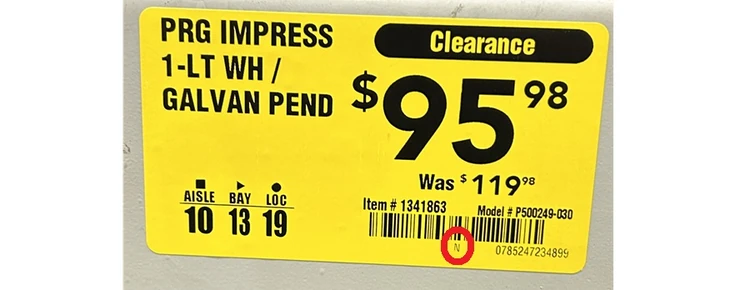
Decode the price tags. Yellow clearance labels, price endings, and back-aisle items reveal when prices are truly bottomed out and when waiting can pay off.
Shop the dead zones. The best deals show up after demand drops, not during holidays plus easy wins like mis-tint paint and hidden clearance sections.
Lowes has a great selection of home improvement products, and their pricing is pretty darn competitive. However, there exist some clever ways to save even more moneyif you know what youre doing.
From knowing when to ask for a discount, to how to read their price tags, to where in the store you canfind the best deals, these seven tips will hopefully change the way you shop at Lowes forever.
1. Ask for a discount on damaged items
Lowes employees are encouraged to mark stuff down forshoppers if there's damage, as those items are hard to sell at full-price.
The damage can be as simple as dented packaging, cosmetic flaws, sun fading, missing manuals, or even shelf wear.
Look for this most often on these items:
Ceiling fans and lighting fixtures (fragile boxes).
Grills and patio sets (warehouse handling damage).
Power tools with beat-up packaging.
Vanities, toilets, and sinks with damaged boxes from shipping.
The markdown depends on how badly Lowes wants the item gone. But Ill often start by asking for a 20% discount and settle for 10-15% off.
Also, keep in mind that bigger items = more flexibility, as Lowes hates storing bulky merchandise, especially at the end of the season when theyre trying to clear out merchandise to make room for new stuff.
Pro tip: Point out the flaw in a polite, conversational way. Dont exaggerate the damage. Ask an employee in that specific department for a discount. Dont wait until checkout as cashiers have limited authority.
2. The Lowes price tag decoder
Heres how to decode Lowes pricing signals like an insider and know when to buy and when to wait for a better deal.
Yellow Tags = Clearance (but not all clearance is equal)
While yellow price tags are the universal signal that an item is on clearance, there are a couple secrets to tell how good the deal is and if it might get better.
Take a close look at those yellow price stickers:
N below the Barcode I was told by an employee that this means the item is discontinued and its up to the manager to lower the price further. The price is probably not the lowest its going to get, so if theres a lot of inventory, wait until the price goes down to buy it.
No N below the Barcode This means the item is priced to sell and its at a rock-bottom price. The best advice is to buy it before its gone.
.02 Liquidation The product has been liquidated and the vendor has typically already paid Lowes for it. If you find one of these on the sales floor by accident, you can try and buy it, but you probably wont be able to.
3. Always negotiate a deal on floor model appliances
Floor model appliances at Lowes are some of the better deals you can find on refrigerators, ovens, dishwashers, and washing machines.
Whether theyre a return or simply a display model that they need to sell, you can often get a better deal by doing the following:
Hunt for flaws
Dents, scratches, chipped paint, torn boxes, missing manuallook for any visible imperfection as it gives you a legitimate reason to ask for another 10% off.
Bundle to boost leverage
Negotiation works best when youre buying multiple items. Pair big purchases like a washer and dryer, or a refrigerator and microwave and ask an employee if a discount is available if you buy both now.
Pro tip: Lowes typically marks down already-reduced appliances every 710 days, especially floor models, damaged items, or repaired returns. So be sure to flip over the Reduced price tag and youll see the following information:
The date the item first went on clearance.
How many times its been marked down.
If youre near the seven-day mark, waiting another day or two can mean an extra 2025% off, assuming the item doesnt sell first.
4. Buy paint the frugal way and save big
Mis-tint and abandoned custom paint is one of the easiest wins in the store. This is especially true if youre simply looking for a neutral color and not super picky about brand.
Lowes is always mixing paint that customers either dont pick-up or reject. This happens literally every day. Those cans get marked down quickly because they cant be returned to normal inventory.
These paints are:
Brand new
Fully usable
Often premium brands
You can find the oops paint rack right next to the paint mixing station. Just ask if you cant locate it.
Employees usually put a sample of the color on the lid so you know exactly what youre getting.
You can typically find gallons of premium paint for just $5-$10, and quarts for only $1-2.
Pro tip: These mis-tint paints are ideal for garages, basements, closets, fences, rentals, or accent walls. Contractors use mis-tints constantly for special projects and many homeowners just havent caught on yet.
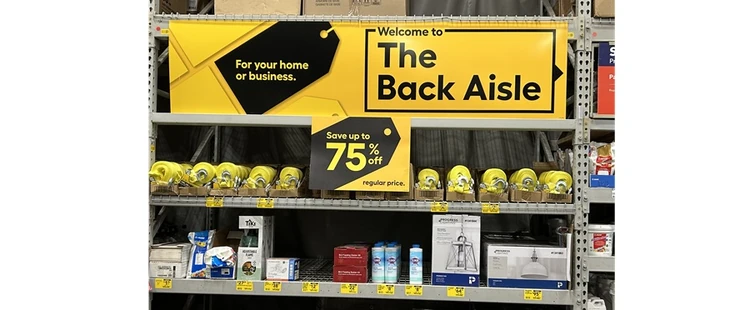
5. Make The Back Aisle your first stop
At Lowes, one of the easiest ways to score deals is to head straight to the back of the store to the clearance section called The Back Aisle.
At most locations, this clearance section exists along the middle of the back wall.
This is where each department dumps its deep-discount leftovers, often marked down 5075% off.
You wont find big-ticket items here, but you will find lots of useful stuff for super cheap:
Paint brushes and rollers
Batteries and flashlights
Garden tools and planters
Cleaning supplies
Lawn and seasonal items
None of it is glamorous, but its the kind of everyday stuff that adds up fast if you buy it at full price.
A quick walk through the back aisle can easily knock $20$40 off your total without changing what you planned to buy.
6. Shop seasonal dead zones, not holidays
Holiday sales at Lowes are designed to move lots of stuff quickly, while clearance deals are designed to eliminate all the leftovers.
This means that Lowes starts to discount seasonal items when customers interest drops, not necessarily when the season officially ends.
Here are the best seasonal dead zones to target:
Patio furniture: Late AugustSeptember When back-to-school season rolls around it kills the demand, and Lowes wants the floor space back.
Lawn equipment: October The grass stops growing and interest drops fast.
Space heaters: February - Cold fatigue sets in even though winter isnt over.
Snow blowers: March - One warm week and stores often start toclear them out.
These markdowns often happen fairly quietly, without any banners or ads.
So, if youre in the market for any of these items, visit regularly and snatch the deal when it inevitably pops up.
7. Special order cancellations are gold mines
When shopping for appliances, doors, windows, or flooring, always ask if there are any canceled or returned special orders.
These are often instant write-offs for the store, which means managers are far more flexible on price. If youre renovating and not picky about exact styles or brands, this can save you some serious money.
Theyll often sell them at a big discount, typically 30-60% off the retail price, to get rid of them quickly.
This includes:
Custom doors and windows
Vanities and cabinets
Flooring and tile
Countertops and fixtures
Ask an employee about any abandoned special-orders and they can point you in the right direction. Its important to ask, as many never hit the main sales floor so you wouldnt know otherwise.
Pro tip: Dont be afraid to also ask at the Pro Desk or customer service directly. If youre flexible on size, color, and finish, you can score some great deals on other peoples cancellations.
Stricter return policies mean more shoppers are stuck with items they dont want, making return-less purchases increasingly common.
Unwanted items dont have to be a total loss reselling, gifting, or donating can help consumers recoup value or reduce clutter.
Reading return policies before you buy can save time, money, and frustration, especially as fees and shorter windows become the norm.
Returning something you dont want used to be simple: print a label, drop it off, get your money back. But lately, that process feels anything but easy.
Between new return fees, shorter deadlines, and confusing fine print, many shoppers are finding that sending items back just isnt worth the hassle anymore especially for lower-priced purchases.
So what are consumers supposed to do with items they never planned to keep?
ConsumerAffairs spoke with Beth Klongpayabal, Business Analytics Manager at Savings.com, to learn about the impact of stricter return policies, and how they are quietly changing how shoppers behave and how much money they leave on the table.
How do you recoup the value of return-less items?
If youre stuck with gifts after the holidays that you have no real use for, it can be hard to know what the next steps are. Klongpayabal shared her best advice for things that you cant return.
When a retailer lets you keep the item and refunds you without a return, it can feel like youre holding something you never wanted, she said.
First, Id consider reselling the item through platforms that match the category. Facebook Marketplace and eBay give you access to a wide audience, while niche sites like Poshmark (for fashion) or Decluttr (for electronics) attract buyers who are specifically looking for what youre selling. Online garage sale groups are also surprisingly effective for larger or bulky items. People in my area love a good unboxed or new-with-tags deal and they go fast.
Plan before you buy
If you often find yourself stuck with things that you cant return, Klongpayabal says that planning out your purchases can help eliminate some clutter.
Take a moment to read the return policy before checkout, paying attention to deadlines, restocking fees, and whether they issue store credit instead of cash, she said.
If youre unsure about fit or quality, look for retailers with generous standard return windows or buy from stores where you can return in person. Some shoppers order items in two sizes or versions with the intention of returning one, but that only works if the policy supports easy returns. Being proactive saves time, money, and clutter down the road.
Different marketplaces for different things
Klongpayabal explained that shoppers can utilize different resale marketplaces depending on what it is theyre trying to get rid of.
Here are her recommendations:
For general goods: eBay remains a go-to for me because I can usually find buyers quickly and Im not limited by local interest, she said.
For clothing and accessories: Poshmark, ThredUp, and Depop are great choices and being new-with-tags can help your items stand out. Also, there are consignment or resale shops in most areas that are looking for inventory, and you get quick cash in return.
For electronics and gadgets: List in local garage sale groups. Dont hassle with the risk of shipping.
For furniture and bulky items: Facebook Marketplace or even Craigslist eliminate shipping even though the buyers on these platforms can be hit or miss.
Another piece of advice: If an item doesnt move on one of these sites, theres always the option of having a garage sale when the weather warms up.
Donations always help
When all else fails, donating is always a generous option that also helps you get rid of items that may be cluttering your home. Local charities, shelters, or community centers can always use items in good quality even if you dont have a use for them.
Gift items to friends or family who might use them, Klongpayabal suggested.
I sometimes have good intentions of donating to a charity, but procrastination leaves me with clutter. To avoid that, I post items for free in a Buy Nothing group online. They have groups like this all over the country. It lets the item find a home, and I like it because its helping someone in my own community.
Scammers are using AI and celebrity deepfakes to sell fake GLP-1 weight-loss pills, creating ads that look and sound legitimate but lead to fraudulent or unsafe products.
Many scam sites skip basic medical safeguards, such as prescriptions, health screenings, and clear disclosures putting consumers at risk of financial loss and serious health harm.
Verifying pharmacies through trusted tools is the best defense, especially as online weight-loss grow more sophisticated and harder to spot on social media.
If youve been scrolling online lately, chances are youve seen the ads: a familiar celebrity face, a convincing doctors endorsement, and a promise of fast, effortless weight loss all without needles, prescriptions, or high prices. With GLP-1 medications dominating weight-loss conversations, scammers are betting consumers wont look twice before clicking buy now.
As demand for GLP-1 treatments grows especially with new pill options entering the market so does the opportunity for fraud. Investigators have uncovered a surge of fake weight-loss pill using AI-generated deepfake videos, fabricated reviews, and misleading free trial offers. Some feature well-known figures like Oprah Winfrey or Kelly Clarkson, while others impersonate real doctors to create a false sense of medical legitimacy.
The result? Consumers charged hundreds of dollars for products that either never arrive or arent real medications at all.
To understand how these work and how to avoid them ConsumerAffairs spoke with Brian Long, CEO and co-founder of Adaptive Security; Leyla Bilge, Global Head of Scam Research at Avast; and Dr. Ross Phan, Director of Pharmacy Verification & Information at PharmacyChecker. They break down why GLP-1 hype has become a magnet for fraud, the red flags most shoppers miss, and what consumers should know before trusting any weight-loss pill they see online.
How AI is making weight-loss harder to spot
According to Long, todays look nothing like the obvious spam ads of the past. Generative AI allows scammers to create polished videos featuring fake doctors, testimonials, and spokespersons at a fraction of the cost and then push them out at massive scale through social media and search ads.
To build trust, scammers also manufacture context. Fake news layouts, copied media logos, clinical-sounding language, and professional visuals all serve as trust cues that many consumers mistake for verification. AI makes it easy to test endless versions of these ads and keep only the ones that convert, helping evolve faster than consumer awareness or regulation.
Leyla Bilge, Global Head of Scam Research at Avast, says some of the most convincing use AI-generated videos impersonating Oprah Winfrey.
These deepfakes closely mimic her voice, expressions, and tone, making it feel like a real endorsement. The videos are then paired with paid ads or social posts that link to fake pharmacy websites designed to exploit urgency, trust, and celebrity familiarity.
Red flags consumers often miss
Celebrity deepfakes may grab attention, but experts say the most dangerous warning signs are often more subtle.
The purchase process skips basic medical safeguards. Legitimate GLP-1 providers require a prescription, medical intake, screening for contraindications, medication interaction checks, and follow-up monitoring. often bypass all of that.
Unclear disclosure about whats actually being sold. Some sites blur the line between FDA-approved GLP-1 medications and compounded drugs, which are custom-mixed by pharmacies and not individually FDA-approved.
Promises of guaranteed or dramatic results. While five-star reviews may look reassuring, theyre easy to fake at scale.
Dont let a wall of five-star reviews do the thinking for you, Long said. Reviews and testimonials are easy to fake at scale, and the FTCs Consumer Reviews and Testimonials Rule targets deceptive review and testimonial practices.
Rogue pharmacies can appear more legitimate than ever, using misleading visuals and claims to gain consumer trust, Dr. Phan said. This makes it increasingly difficult for people to distinguish between safe, accredited pharmacies from dangerous or unlicensed websites.
How to protect yourself before you buy
Experts agree consumers dont need medical training to stay safe just a short checklist:
Verify independently. Use tools like FDA BeSafeRx, NABPs Safe.Pharmacy, or PharmacyCheckers verification resources instead of trusting website badges or logos.
Watch the prescription rules. GLP-1 medications require a prescription. No prescription needed is a hard stop.
Be skeptical of ads and free trials. Celebrities rarely promote prescription drugs, and legitimate pharmacies dont offer free trials of prescription medications.
Pause before paying. Once you share your money or personal health information, youre playing defense.
Related Bing News Results Suffering from a cold? Consumer Reports shares what remedies work and what to skip Thu, 22 Jan 2026 19:11:00 GMT A runny nose, scratchy throat, and deep cough can make even simple daily tasks feel miserable. While there’s no instant cure for the common cold, Consumer Reports says there are several effective ways ... Consumer Reports tested 5 chocolate protein powders. Here’s what it found Fri, 16 Jan 2026 08:33:00 GMT Consumer Reports tested five reader-requested chocolate protein powders: Clean Simple Eats, Equate from Walmart, Premier Protein, Ritual, and Truvani. This time, the results were notably different. Consumer Reports’ Rich, 90-Year History Comes to Life at Duke University Thu, 15 Jan 2026 08:30:00 GMT The Consumer Reports Archives,” a new exhibit at Duke University’s David M. Rubenstein Rare Book & Manuscript Library, celebrates the nine-decade influence of Consumer Reports through its research, ... Consumer Reports investigation: Testing protein powders Wed, 14 Jan 2026 20:41:18 GMT Consumer Reports tested five reader-requested chocolate protein powders: Clean Simple Eats, Equate from Walmart, Premier Protein, Ritual, and Truvani. Consumer Reports experts test protein powders for lead levels Wed, 14 Jan 2026 08:15:00 GMT Last year, a Consumer Reports investigation found concerning levels of lead in some popular protein powders—raising big questions for the millions of people who use them every day.



 of ConsumerAffairs