Idaho Smokehouse Partners is recalling approximately 29,541 pounds of ready-to-eat beef stick products that may be contaminated with foreign material, specifically metal. The U.S. Department of Agricultures Food Safety and Inspection Service has designated the recall as Class I, the most severe classification.
The ready-to-eat beef stick item was produced from January 13 to January 15, 2025. The product subject to recall are 1.15-oz vacuum-sealed packages of CHOMPS ORIGINAL BEEF STICK MILD, with an expiration date of 02-10-2026, and lot code 25016 printed on the label.
The product subject to recall bears establishment number 6220A ink-jetted on the package. These items were shipped to retail locations in California and Illinois.
The problem was discovered after the firm notified FSIS that it received two consumer complaints reporting that pieces of metal were found in the product.
There have been no confirmed reports of injury due to consumption of these products. Anyone concerned about an injury should contact a healthcare provider.
FSIS is concerned that some products may be in consumers pantries. Consumers who have purchased these products are urged not to consume them. These products should be thrown away or returned to the place of purchase.
FSIS routinely conducts recall effectiveness checks to verify recalling firms notify their customers of the recall and that steps are taken to make certain that the product is no longer available to consumers. When available, the retail distribution list(s) will be posted on the FSIS website at www.fsis.usda.gov/recalls.
What to do
Consumers with questions about the recall can contact Idaho Smokehouse Partners at 208-227-5282. Members of the media with questions about the recall can contact Idaho Smokehouse Partners at 208-227-5282 or This email address is being protected from spambots. You need JavaScript enabled to view it..
Consumers with food safety questions can call the toll-free USDA Meat and Poultry Hotline at 888-MPHotline (888-674-6854) or send a question via email to This email address is being protected from spambots. You need JavaScript enabled to view it.. For consumers that need to report a problem with a meat, poultry, or egg product, the online Electronic Consumer Complaint Monitoring System can be accessed 24 hours a day at https://foodcomplaint.fsis.usda.gov/eCCF/.
Sign up below for The Daily Consumer, our newsletter on the latest consumer news, including recalls, scams, lawsuits and more.
A federal judge has dismissed a lawsuit alleging that Buffalo Wild Wings falsely advertised its boneless wings.
The court ruled that reasonable consumers understand boneless wings to be a style of preparation, not a literal claim about deboned chicken wings.
The decision reinforces prior rulings that common food terms are judged by everyday understanding, not strict literal interpretation.
A federal judge has dismissed a proposed class-action lawsuit accusing Buffalo Wild Wings of false advertising over its popular boneless wings, ruling that the menu items name would not mislead a reasonable consumer.
In a decision issued this week, U.S. District Judge John Tharp concluded that the term boneless wings describes a cooking style rather than a guarantee that the product is derived from a deboned chicken wing. The plaintiff had argued that the menu item made from breaded, sauced chunks of chicken breast meat was misleading because it does not consist of actual chicken wings with bones removed.
No reasonable consumer would believe that boneless wings are wings that have simply had their bones extracted, the judge wrote in the opinion. Instead, the court said, the phrase has become widely understood in American dining culture to refer to bite-sized pieces of white meat chicken prepared in the style of traditional wings.
The complaint
The lawsuit, filed in 2025, claimed that Buffalo Wild Wings marketing and menu descriptions deceived customers into thinking they were ordering deboned wings rather than what the complaint characterized as chicken nuggets. The plaintiff sought damages and injunctive relief on behalf of similarly situated customers nationwide.
Attorneys for Buffalo Wild Wings countered that the term boneless wings has been used for decades across the restaurant industry and is commonly understood to distinguish the product from traditional bone-in wings. They argued that the claim relied on an overly literal reading of the menu.
The court agreed with the restaurant chain, comparing the naming dispute to other food items whose names do not strictly describe their ingredients or form. The opinion referenced examples such as chicken fingers and hamburgers, noting that consumers do not expect those products to contain fingers or ham.
Reasonable consumer standard
Legal analysts say the ruling fits within a broader trend of courts dismissing consumer protection lawsuits that hinge on hyper-literal interpretations of food labeling.
Some legal analysts have noted that judges generally apply a reasonable consumer standard in these types of lawsuits. They pose the question of whether an ordinary consumer would actually be misled, not whether a term could be dissected into a technically inaccurate meaning.
Buffalo Wild Wings, headquartered in Atlanta and owned by Inspire Brands, welcomed the decision. In a statement, the company said it was pleased the court recognized that its menu descriptions are clear and consistent with industry norms.
Our guests understand that boneless wings are made from premium white meat chicken and prepared in the flavor styles they love, the statement said.
A new federal tax deduction will allow eligible taxpayers to deduct interest paid on new car loans beginning this tax year.
Lawmakers say the measure is designed to ease the burden of high auto prices and elevated interest rates.
Its a top-line deduction, so taxpayers dont have to itemize to benefit.
No tax on tips and no tax on overtime got the most attention when Congress passed The One, Big Beautiful Bill, but theres another deduction in the legislation that could benefit consumers who purchased and financed a new car in 2025.
In a move aimed at easing the financial strain of buying a vehicle, the bill contained a new income tax deduction allowing eligible taxpayers to deduct interest paid on new car loans.
The deduction, which takes effect this tax year, comes as Americans continue to grapple with high vehicle prices and interest rates that have significantly increased monthly car payments.
Supporters say the measure could provide meaningful relief for middle-class households, while skeptics question how broadly the benefit will apply.
How the deduction works
Under the new provision, taxpayers can deduct interest paid on qualified auto loans used to purchase new personal vehicles. The deduction applies only to loans originated after the laws effective date Dec. 31, 2024 and is subject to income limits. The maximum deduction is $10,000.
According to congressional summaries, individuals earning up to a specified income threshold expected to phase out for higher earners will be eligible to deduct up to a capped amount of auto loan interest annually. The deduction can be claimed whether the taxpayer itemizes or takes the standard deduction, a feature lawmakers included to broaden access.
Why lawmakers acted now
The average price of a new vehicle remains significantly higher than it was before the pandemic, and interest rates on auto loans have climbed as the Federal Reserve has worked to combat inflation. Many buyers are now financing vehicles at rates that add thousands of dollars in interest over the life of a loan.
Consumer advocates have pointed out that transportation costs are one of the largest household expenses, particularly in areas without reliable public transit. Higher borrowing costs have pushed monthly payments to record levels for many consumers.
By allowing borrowers to deduct interest paid on their loans, lawmakers hope to soften the blow of elevated rates and make vehicle ownership more affordable.
Who benefits most?
Tax experts say the value of the deduction will vary depending on a taxpayers income, loan size, and interest rate.
For example, a borrower who pays $1,500 in auto loan interest during the year and falls within the eligible income bracket could reduce their taxable income by that amount. The actual tax savings would depend on their marginal tax rate.
Middle-income households are expected to see the greatest benefit. However, analysts caution that lower-income families who may owe little or no federal income tax could see limited gains.
Impact on the auto industry
Auto industry groups have welcomed the change, arguing it could help stimulate demand, particularly as consumers grow cautious about taking on large loans.
Dealers say the deduction could make financing more attractive compared with paying cash, especially if interest rates remain elevated. Some economists believe the measure could modestly boost vehicle sales, though they do not expect it to dramatically alter market conditions.
Check price history before you buy. Use CamelCamelCamel or Keepa to see if the deal is legit or just a marked-up fake discount.
Stack discounts in the right order. Activate cashback, apply the best promo code you can find, then pay with a rewards credit card.
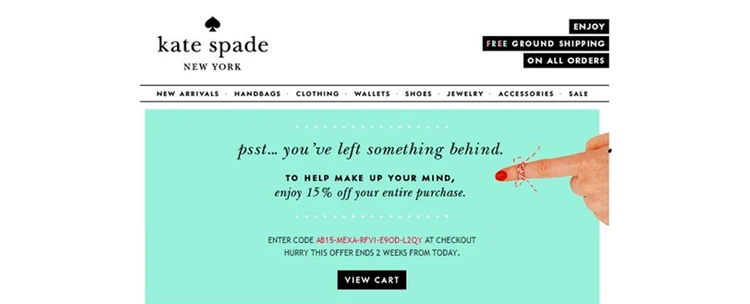
Slow down and test the cart trick. Leave items in your cart and wait 2448 hours many retailers will email a 1015% coupon to close the sale.
Online shopping is definitely convenient, but if youre not careful, its also very easy to overpay.
Retailers smartly use things like countdown timers, auto-applied coupons that arent actually the best deal, and only threeleft! warnings to push you into a quick purchase.
But the good news is that once you understand how the system works, you can flip it in your favor.
Heres your practical online shopping playbook to save at practically any retailer.
Step 1: Start with a price history check
Before you even think about looking for a coupon code to bring your total price down, ask yourself one simple question first:
Is this actually a good price?
For Amazon purchases, the best way to figure out what kind of a deal you're getting is to use one of these tools:
These tools show the price history of any product Amazon sells, making it easy to see if the deal is real or just a temporary markup followed by a fake discount.
For other retailers, not named Amazon, Google search the following to see if the price is a deal or not:
Product name + price history
Or you can also check if the brand sells direct to shoppers. Often time brands will discount their own products more aggressively than online marketplaces do.
Pro tip: Heres a good rule-of-thumb, if the current price is within 5%10% of the lowest historical price, its usually safe to buy and a solid deal.
Step 2: Run the coupon stack (in the right order)
Never assume the promo code on the retailers homepage is the best one available.
Before you checkout, do the following:
Check the retailers promo page as they often hide the best promo codes.
Then Google: Store name + promo code + February 2026
Then install one of these browser extensions that will automatically find coupon codes for you while you shop:
Then once you have a browser extension installed, you can start stacking the discounts.
Heres the savings stack that I always aim for:
Sitewide promo code
Email signup discount
Cashback portal
Credit card rewards
Even if you only shave off 8%12%, that compounds across a year of online purchases and it turns into significant money.
Step 3: Always activate cashback first
If youre not familiar with online cashback portals, they exist to offer you cashback when shopping at individual websites like Macys, Best Buy, IKEA, and Walmart.
Some of the bigger players include the following companies:
Rakuten
TopCashback
BeFrugal
RetailMeNot
You simply sign-up and start your online shopping on one of these cashback sites, and you can expect these types of returns:
1%7% on everyday purchases.
8%15% during promo events.
Higher bonuses around Black Friday, back-to-school, and holiday sales.
I realize it doesnt sound like much, but if you spend about $500 a month shopping online, getting 5% back is $300 you werent getting before.
Step 4: Use the abandon cart trick (yes, it still works)
This is by far my most passive aggressive way to save money when shopping online, and yes, it still works in 2026.
You simply add items to your online cart, then leave without finalizing your purchase.
This will automatically trigger many online retailers to email you one of the following:
10%15% come back codes
Free shipping offers
Limited-time discounts
Of course it doesnt work everywhere, but it works often enough to make it worth trying, especially on significant purchases like electronics, laptops, and expensive clothing.
Step 5: Compare shipping thresholds vs filler items
Free shipping thresholds like spend $50, get free shipping are specifically designed to get you to spend more.
Heres the classic example:
Your cart: $42
Free shipping at: $50
Shipping cost: $6.99
So, if you spend the $8 more, and buy a filler item you dont need, youve essentially spent $8 to save $6.99.
Heres a good rule-of-thumb, only add a filler item in these scenarios:
Its something you were already going to buy.
It costs less than the actual shipping fee.
It wont cause you to overspend later.
I know it hurts, but sometimes the smartest move is to just pay the dang shipping fee.
Step 6: Time your purchases strategically
Online deals and sales events follow some very predictable patterns every year.
By knowing when stuff tends to get cheaper, you can time your purchases and maximize your savings when shopping online.
Here are the general timing trends you should consider:
Heres the real takeaway from this: If its not an urgent need, waiting a couple weeks to 30 days can make a real difference and easily save you 20-50%.
Step 7: Dont fall for the fake urgency
Online stores absolutely love to use tricks to make you think youre about to miss out on your only chance to save money.
Here are the tricks to we tend to always see:
Countdown timers
Only two left
30 people are viewing this
Deal expires in 05:00
Im here to tell you that these are all ploys to create fake urgency in your brain which always transfers down to your wallet.
Dont believe me? The next time you see wording like Only twoleft, do your own experiment and come back the next day and see what the site says. Often it will be reset to Only 10 left, or the wording will be completely gone.
Pro tip: If the dealhappens to disappear, just check a competing website for the same product and youll often find it even cheaper.
Always remember that scarcity isjust a marketing tool never a smart shoppers reality.
Flu vaccination rates among U.S. adults have fallen 24% since 2020, putting this season on track for a seven-year low.
Many Americans say they skip the shot not out of fear, but because they dont think they need it or cant find the time.
Health experts say even when its not a perfect match, the flu vaccine significantly reduces the risk of severe illness and hospitalization.
Flu cases are climbing again, hospitalizations are up, and whats typically considered flu season seems to be stretching longer than usual. But while the virus is making a comeback, the flu shot isnt.
New research from Tebra suggests that flu vaccination rates among U.S. adults have dropped 24% since 2020 and this season is on track to hit a seven-year low. The study analyzed CDC FluVaxView data going back to 2018 and surveyed more than 1,000 Americans about their vaccine habits and attitudes.
The results paint a complicated picture: more than half of adults have received two or fewer flu shots over the past five years, and one in three havent gotten a single shot during that time.
So whats going on? Is it lingering vaccine fatigue from the pandemic? Concerns about safety? Or just the hassle of fitting one more appointment into a packed schedule?
ConsumerAffairs spoke with Kevin Marasco, Chief Growth Officer at Tebra, who broke down whats driving the drop and whether there are signs that Americans might start rolling up their sleeves again.
Fewer flu shots
Tebras research found that the overall rate of flu vaccines across the country have dropped 24% over the last six years. Marasco explained that there are several factors influencing consumers decision to get or not get the flu shot.
The 24% drop in flu vaccination reflects a combination of pandemic fatigue, shifting risk perception, and the politicization of public health, he said. For instance, during the COVID pandemic, awareness around infectious disease was at its peak, and viruses were top of mind for most people.
Were also seeing more young people believe theyre low-risk, so theres even less motivation to get vaccinated. Our survey also found that more than four in 10 Americans skip the flu shot because they dont think they need it, or didnt make the time to get one.
What are the barriers?
Marasco believes that the biggest barriers to getting the flu shot arent fear theyre tension and complacency.
Many people say they dont think they need it or simply didnt find the time. Inconvenient scheduling, underestimating flu severity, and assuming if youre in good health, youre low risk are key factors. Whats interesting is we found a majority of Americans say the flu shot is safe and effective, so its less about distrust and more about perceived necessity.
Marasco also explained that while social media definitely plays a role, its often overstated.
Based on our research, only 14% of Americans cite social media as their top source of vaccine information, compared to 64% who rely on their doctor, he said. With that being said, social media does push emotional narratives and misinformation at scale. While its not a primary source, it does shape perception, especially among younger generations; it reinforces doubts or normalizes vaccine avoidance and skepticism.
Risk reduction
For those who may be skeptical or opposed to a flu shot, Marasco offers a different perspective.
If someone is opposed to the flu shot, try encouraging them to focus on credible information and speak directly with a health care provider instead of relying on secondhand narratives, he suggested.
The flu vaccine isnt about perfection; its about risk reduction. Even in years where its not a perfect match, it significantly lowers the risk of severe illness, hospitalization, and complications. Its a small step that protects not just you, but the vulnerable people around you.
Issue: Rollaway Risk from Inadequate Parking Brake Force
Make
Model
Model Years
VOLVO
VNL (4)
20242027
Check your vehicle for recalls
To find out whether your specific vehicle is included in a recall, you can check by VIN or license plate on NHTSA's recall lookup page: NHTSA.gov/recalls.
If your vehicle has an un-repaired recall, contact your local dealership to schedule a repair recall remedies are provided at no cost.



 of ConsumerAffairs