"Let them hunt spuds," might be today's version of Marie Antoinette's fabled curt dismissal of her subjects' complaints that there was no cake. With eggs still hovering around $10 per carton, the Easter Potato is becoming a widespread, if not wildly popular, substitute.
(Queen Antoinette paid dearly at the guillotine for her uncaring dismissal but such penalties are no longer freely dished out and should not be a concern today.)
I heard families talking about Easter spudsin an airport the other day but thought they were joking. However, research in no less august a source than The New York Times finds that, sure enough, people are dyeing potatoes and hiding them for their children to track down.
Whether the kids are being told the taters come from bunnieswe're not sure. But for those who want to get in on the spud rolling derby, hereare some tipswe found recently on The Pioneer Woman website.
All you need isbabywhite potatoes, some food coloring and a couple of artists' paint brushes. Unlike eggs, potatoes are quite porous, so you just apply a dab of coloring, either solid or a mixture and the dye will spread rapidly throughout.
Bake the potatoes as normal. Unlike eggs, there's no risk an underdone spud will spill its yolk all over the counter.
After being dyed, the spuds will dry in about ten minutes and that's really all there is to it.
You could eat the dyed potatoes but remember that many food dyes are banned as carcinogenicso it might be better to stick with chocolate bunnies for refreshments.
Sign up below for The Daily Consumer, our newsletter on the latest consumer news, including recalls, scams, lawsuits and more.
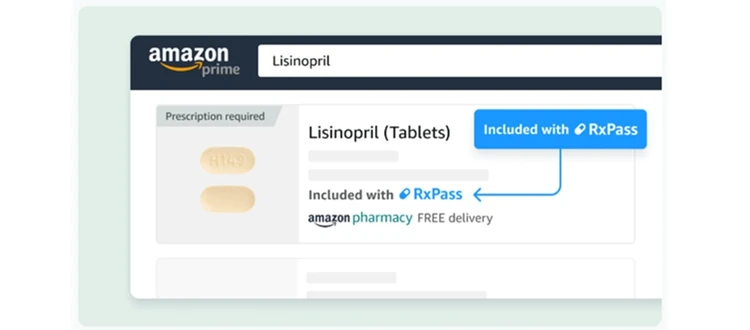
Amazon Pharmacy lets you order prescriptions online, compare prices upfront, and get medications delivered. There's no Prime membershiprequired, but Prime members get extra savings and perks.
The biggest savings come from generic drugs and programs like RxPass, where pricing can often beat traditional pharmacies if you know where to look.
It makes the most sense for ongoing medications and convenience but for urgent needs or complex care, your local pharmacy may still be the better option.
Amazon didnt just dip a toe into health care to test the waters. They built a full-service pharmacy that can realistically replace your regular stop at CVS or Walgreens.
But like most things that promise easy savings, the real value isnt automatic or guaranteed. It comes from understanding when it makes sense to use it, when it doesnt, and how to maximize your savings in the process.
Lets break it down in a practical, real-world way so you can decide if its actually worth adding to your routine.
What Amazon Pharmacy actually is (and isnt)
At its core, Amazon Pharmacy is an online prescription service that allows you to order your medications the same way you would order anything else on Amazon. Most recently, this also includes the GLP-1 drug Foundayo, with options for same-day delivery and even in-person pickup at Amazon Pharmacy kiosks.
You do not need to be a Prime member to use it, but if you are a member, youll get access to discounted generic drugs via the RxPass program, as well as free Prime shipping (more on this below).
But what really separates it from your local pharmacy is the level of transparency and control you get before you ever spend a dollar.
Instead of walking up to a counter and being told your price, you can:
See your insurance price ahead of time.
Compare it to the discounted cash price.
Decide which option makes more sense before committing.
And then, instead of making a trip, waiting in line, and potentially dealing with delays, your medication simply shows up at your doorstep.
That convenience matters more than most people realize, as pharmacy trips often turn into extra spending, not to mention the extra gas used. You grab a drink, a snack, maybe a random household item you dont necessarily need, and suddenly a simple Rx pickup turns into an extra $10$20.
What its not: Its important to realize right off the bat that Amazon Pharmacy isnt always the cheapest option across the board.
Its also not built for those urgent, same-day Rx needs, and it doesnt fully replace the value of in-person pharmacist interactions for more complex situations.
How Amazon Pharmacy works (step-by-step)
Step 1: Transfer or send your prescription
You can have your doctor send your prescription directly to Amazon, or you can transfer it from your current pharmacy, which is usually a simple process, but it can take a day or two depending on how responsive your current pharmacy is.
Because of that delay, this system works best for ongoing medications that you take regularly, rather than anything you need immediately.
Step 2: Compare pricing (this is where you win)
This is where Amazon really separates itself from traditional pharmacies.
Youll typically see:
Your insurance copay.
The discounted cash price.
Any savings already applied automatically.
At most pharmacies, you dont get this level of side-by-side comparison. Youre often just told what you owe and are expected to accept it.
Here, you can pause, compare, and choose the better deal before spending anything.
Step 3: Choose how to pay
You can pay using insurance, out-of-pocket pricing, or even FSA/HSA funds, which gives you flexibility depending on your situation.
Youd be surprised how often the cash price is actually cheaper than your insurance copay, especially with generic medications.
Step 4: Delivery (where it really pays off)
Once you place your order, Amazon handles everything:
Free two-day delivery for Prime members.
Faster delivery options in some areas.
Discreet packaging.
Auto-refill options to keep things consistent.
Pro tip: Be sure to turn on auto-refill. Not only does it help you avoid running out of medication, but it also removes one more thing you have to think about every month.
Where the real savings actually comes from
Generics (this is the sweet spot)
Amazon Pharmacy is strongest when it comes to generic medications, which include treatments for things like blood pressure, cholesterol, and other common conditions.
Because these medications are more common and theres a lot of competition, Amazon can often offer significantly lower pricing than your traditional pharmacies.
For a flat $5 monthly fee, Prime members get access to a range of common generic medications. Doesnt matter how many generics you need, you only pay $5/month with free delivery included.
Heres the full list of RxPass medications so you can see if yours is included.
Even if youre only taking one medication, it can still be super helpful. But if youre taking two or more, the value becomes very obvious quite quickly.
Pro tip: Always use Amazon as your price baseline. Even if you end up not buying from Amazon, it gives you a reference point so you know if your local pharmacy is priced competitively.
When Amazon Pharmacy makes the most sense
Amazon Pharmacy works best when you:
Take regular, ongoing medications.
Dont need immediate, same-day access to something like antibiotics.
Prefer delivery over running errands.
You want predictable pricing and fewer surprises.
Its especially useful for people managing chronic conditions, busy families trying to simplify their routines, or anyone who wants to reduce the number of weekly errands they have to deal with.
Pro tip: If you take multiple medications, or are caring for an elderly family member, be sure to sign-up for the free service, PillPack. Amazon Pharmacy will sort your meds by date and time, and put them in handy individual packets. It will greatly simplify your routine, and more importantly, it will reduce mistakes.
When it doesnt make sense
There are still situations where a local pharmacy like Costcoor CVS is the better option.
If you need medication immediately, want in-person guidance from a pharmacist, or have insurance that offers better local pricing, it makes more sense to stick with what youre already doing.
The key here is to not to assume Amazon is always better, but be ready to use it when it makes sense and when it can save you money.
Walmart is expanding access to popular GLP-1 weight-loss drugs through a new digital health platform.
The company is bundling prescriptions with nutrition, fitness, and coaching support.
Some services may be more affordable but costs and subscriptions still apply.
Weight-loss medications like GLP-1s think Ozempic, Wegovy, and Zepbound have surged in popularity, but actually getting and managing them hasnt always been simple. Thats where Walmart is stepping in.
The retail giant is expanding its digital health platform, called Better Care Services, to make it easier for consumers to explore and access these medications. Instead of navigating prescriptions, doctor visits, and lifestyle changes separately, Walmart is aiming to bring everything together in one place.
This move taps into a massive and growing market more than 40% of U.S. adults live with obesity, and interest in GLP-1 drugs continues to climb.
Access to medication is only one part of the equation, weight management today is often difficult to navigate, with patients managing multiple steps across care, medication and lifestyle changes, Kevin Host, Senior Vice President of Pharmacy, Walmart U.S., said in a news release.
By bringing together pharmacist support, virtual care and nutrition resources, and leveraging the scale and convenience of our pharmacy network, were making it easier for customers to access care and support in a way that fits their lives.
What Walmart is actually offering
At its core, Walmarts expansion is about convenience and support not just prescriptions. Through Better Care Services, customers can connect with third-party providers for telehealth visits, get prescriptions for GLP-1 medications, and fill them through Walmarts pharmacy network.
But the bigger shift is everything wrapped around the medication. The platform now includes:
Nutrition counseling and access to registered dietitians
Fitness programs and personalized coaching
AI-powered health tools and virtual care options
Ongoing monitoring and support for people already taking GLP-1s
Programs are offered through partners like Aaptiv, Berry Street, Curai Health, and others.
Walmart is also experimenting with pricing and access. For example, some users can try certain virtual care services for free through July, after which subscriptions may start around $29 per month.
Meanwhile, medication costs vary, but some options may start at a few hundred dollars per month potentially lower than typical list prices.
What consumers should know before signing up
While Walmarts approach could make weight-loss drugs more accessible, its not a free-for-all and its not just about the medication.
First, most programs still require a prescription, and youll likely pay for both the drug and any subscription-based services. Insurance coverage can vary widely, so checking benefits ahead of time is key.
Second, this model reflects a growing understanding that GLP-1 drugs work best when paired with lifestyle changes. Walmart is clearly betting that combining medication with coaching, nutrition, and ongoing support will help people stick with treatment longer and see better results.
Bottom line: Walmarts expansion could make it easier and potentially cheaper for consumers to access weight-loss drugs. But the real value may come from the added support that helps people turn short-term results into lasting change.
Nearly half of Gen Z and millennials are using tax refunds to pay bills or debt not spend marking a major mindset shift.
Most refunds are going toward financial catch-up, not fun money, as fewer than 4% spend on travel or entertainment.
If you want your refund to actually move you forward, focus on debt, staying current on bills, and building a small safety cushion.
Tax refunds used to feel like a bonus. A trip, a splurge, something fun. But new data shows that for a lot of younger Americans, that mindset is gone.
According to Beyond Finance and Operation HOPE, nearly half of Gen Z and Millennials are using their refunds to pay bills or reduce debt. They are not looking at it like extra cash. Instead theyre using it as a financial reset.
Where the money is going (and why it matters)
Around 45% are using refunds for bills or debt.
Less than 4% are spending it on travel or entertainment.
77% rely on tools like Buy Now, Pay Later, indicating that refunds will be used to pay those down.
Overall, Gen Z and Millennials arent getting ahead financially.Theyre just trying to stay afloat, and using their refund to help.
Heres how touse your refund so it makes a difference beyond this month.
Knock out high-interest debt first
This is the highest-impact move you can make.
Credit cards and Buy Now, Pay Later balances often carry high interest or hidden fees. If youre only making minimum payments, a big chunk of your money is going toward interest, not the balance.
Using your refund to pay down (or wipe out) even one account can:
Lower your monthly payments.
Reduce total interest paid over time.
Free up cash in your budget immediately.
Pro tip: Its smart to start with the highest interest rate firstnot necessarily the account with the smallest balance. Thats where your money is leaking the fastest every month.
Catch up on overdue or behind bills
Depending on the size of your refund, ifyoure behind on rent, utilities, or subscriptions, this is a chance to reset everything back to zero.
By getting current, it does the following:
Stops penalties from stacking.
Gives you a clean slate going into the next month.
Makes your budget more predictable again.
Its smart to start with anything that impacts your daily life (housing, utilities, insurance).
Build a small emergency buffer
This is the step people skip, and it is often why they end up back in debt.
If you use your entire refund to catch up, the next unexpected expense (car repair, medical bill, school cost) goes right back on a credit card.
Depending on the size of your refund, even setting aside $300$500 can give you breathing room for small emergencies and help break the paycheck-to-paycheck cycle.
Put this money in a separate savings account so youre not tempted to spend it.
Plan your spending before you touch the money
The fastest way to waste your refund is to treat it like a bonus and figure it out later.
Without a plan, the money usually disappears into:
Small impulse purchases.
Upgraded versions of things you didnt need.
Random expenses that dont move you forward.
Instead, decide ahead of time:
X% goes to debt
X% goes to bills
X% (if any) is for fun
If you want to spend some of your refund as a reward,be sure to cap it. Even blowing $50$100 on something fun can scratch that itch without undoing your progress.
U.S. households now spend nearly $25,000 annually on essential bills, with costs varying widely by location.
The most expensive states exceed the national median by up to 38%, while the least expensive fall as much as 47% below it.
North Carolina and New Hampshire recorded the largest year-over-year increases in household bill costs.
A new report from bill payment platform doxo underscores a growing divide in the cost of living across the United States, as essential household expenses continue to climb and vary sharply by region.
The companys 2026 Cost of Bills Index(COBI) Report finds that Americans are facing record-high bill expenses, with the typical household now spending about $2,083 per month, or nearly $25,000 annually, on core obligations such as housing, utilities, and insurance. Overall, the national bill pay market has reached an estimated $5.03 trillion.
The report also highlights stark geographic disparities. Residents in the most expensive states including California, Hawaii, and Massachusetts pay between 28% and 38% more than the national median for essential bills. By contrast, households in states such as West Virginia, Mississippi, and Arkansas spend significantly less, with costs running as much as 47% below the median.
Access to clear, localized data is critical to helping consumers better understand and manage their financial obligations, said Steve Shivers, co-founder and CEO of doxo. He said the index is designed to give consumers a standardized way to compare costs and make more informed financial decisions.
Among the most expensive states, California tops the list with a Cost of Bills Index score of 138, followed by Hawaii (131), and Massachusetts (128). New Jersey and Maryland round out the top five.
Bills are a lot less in West Virginia
At the other end of the spectrum, West Virginia stands out as the most affordable state, with a COBI score of 53 nearly half the national median. Mississippi (74), Arkansas (76), and both Oklahoma and Alabama (77) also rank among the least expensive.
The divide is even more pronounced at the city level. San Jose, California, ranks as the most expensive major city, with costs 76% above the national median. New York City, San Francisco, San Diego, and Boston also rank among the priciest urban areas.
Meanwhile, cities such as Pittsburgh, Dayton, Detroit, Cleveland, and El Paso offer comparatively lower costs, with household bills running 16% to 21% below the median.
The report arrives as rising costs continue to strain household budgets nationwide. Year-over-year increases were led by North Carolina, where household bills rose 7%, followed by New Hampshire at 5.4%.
Childhood obesity is linked to lower chances of earning more than ones parents in adulthood.
Researchers used long-term data and genetic analysis to isolate obesitys specific impact.
The study found a measurable mobility penalty, with effects tied to education, health, and job outcomes.
When people talk about climbing the economic ladder, the focus is usually on education, family background, or where someone grows up. But new research from Rutgers University suggests another factor may play a role: childhood health.
Specifically, the study found that children who experience obesity may face added challenges when it comes to improving their financial standing as adults. Researchers describe this as more than a health issue it may also influence long-term economic opportunity.
The concept at the center of the research is intergenerational mobility, or whether children go on to earn more than their parents. According to the findings, childhood obesity could quietly shape that trajectory in ways that arent always obvious early on.
Childhood obesity isnt just a health crisis, researcher Yanhong Jin said in a news release. It is an economic mobility crisis.
How the study was conducted
To explore this link, researchers analyzed data from the National Longitudinal Study of Adolescent to Adult Health, a large, ongoing project that has followed more than 20,000 Americans from their teenage years into adulthood.
This dataset is particularly valuable because it tracks participants over decades, collecting detailed information on their health, education, income, and even genetic factors. The most recent data includes follow-ups extending into the mid-2020s.
One key feature of the study is its use of genetic information related to body mass index (BMI). Researchers created a genetic tool to help separate the effects of obesity itself from other influences like family income, environment, or cognitive ability.
By doing this, they aimed to isolate whether obesity independently affects economic outcomes, rather than simply reflecting other disadvantages someone may face growing up.
What the researchers found
The results point to a consistent pattern: individuals who were obese as children experienced lower upward economic mobility compared to their peers. On average, their income ranking in adulthood was about 20 percentile points lower relative to their parents.
The study also found differences in where people ended up living. Those who experienced obesity in childhood were less likely to live in higher-income neighborhoods or areas with lower poverty rates later in life.
Researchers identified several factors that may help explain this gap. Childhood obesity was associated with lower educational attainment, ongoing health challenges, and differences in the types of jobs people held as adults.
The effects were not uniform across all groups. The economic impact appeared stronger for girls, children from lower-income families, and those who grew up in certain regions of the U.S.
Overall, the findings suggest that early health may be one piece of a much larger puzzle when it comes to economic mobility highlighting how experiences in childhood can carry into adulthood in complex ways.
Interventions that reduce childhood obesity can deliver benefits well beyond lowering medical spending, coauthor Man Zhang. They can support higher educational attainment, improve job prospects, and increase upward economic mobility for the next generation.