

Rockin Robin SongFlying The Web For News.
RobinPost Logo Amazon Prime Deals


Consumer Daily Reports

Find real savings hiding in plain sight

By Kyle James of ConsumerAffairs
January 22, 2026
  • Dont be afraid to ask. At Lowes, damaged items, floor models, and canceled special orders can unlock 1060%+ off just by asking the right employee.

  • Decode the price tags. Yellow clearance labels, price endings, and back-aisle items reveal when prices are truly bottomed out and when waiting can pay off.

  • Shop the dead zones. The best deals show up after demand drops, not during holidays plus easy wins like mis-tint paint and hidden clearance sections.


Lowes has a great selection of home improvement products, and their pricing is pretty darn competitive. However, there exist some clever ways to save even more moneyif you know what youre doing.

From knowing when to ask for a discount, to how to read their price tags, to where in the store you canfind the best deals, these seven tips will hopefully change the way you shop at Lowes forever.

1. Ask for a discount on damaged items

Lowes employees are encouraged to mark stuff down forshoppers if there's damage, as those items are hard to sell at full-price.

The damage can be as simple as dented packaging, cosmetic flaws, sun fading, missing manuals, or even shelf wear.

Look for this most often on these items:

  • Ceiling fans and lighting fixtures (fragile boxes).
  • Grills and patio sets (warehouse handling damage).
  • Power tools with beat-up packaging.
  • Vanities, toilets, and sinks with damaged boxes from shipping.

The markdown depends on how badly Lowes wants the item gone. But Ill often start by asking for a 20% discount and settle for 10-15% off.

Also, keep in mind that bigger items = more flexibility, as Lowes hates storing bulky merchandise, especially at the end of the season when theyre trying to clear out merchandise to make room for new stuff.

Pro tip: Point out the flaw in a polite, conversational way. Dont exaggerate the damage. Ask an employee in that specific department for a discount. Dont wait until checkout as cashiers have limited authority.

2. The Lowes price tag decoder
Photo

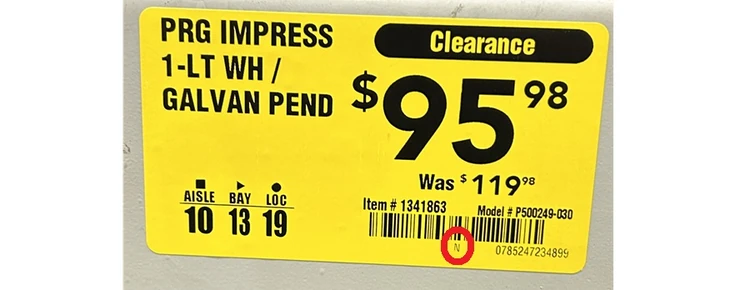
Heres how to decode Lowes pricing signals like an insider and know when to buy and when to wait for a better deal.

Yellow Tags = Clearance (but not all clearance is equal)

While yellow price tags are the universal signal that an item is on clearance, there are a couple secrets to tell how good the deal is and if it might get better.

Take a close look at those yellow price stickers:

  • N below the Barcode I was told by an employee that this means the item is discontinued and its up to the manager to lower the price further. The price is probably not the lowest its going to get, so if theres a lot of inventory, wait until the price goes down to buy it.
  • No N below the Barcode This means the item is priced to sell and its at a rock-bottom price. The best advice is to buy it before its gone.
  • .02 Liquidation The product has been liquidated and the vendor has typically already paid Lowes for it. If you find one of these on the sales floor by accident, you can try and buy it, but you probably wont be able to.

3. Always negotiate a deal on floor model appliances

Floor model appliances at Lowes are some of the better deals you can find on refrigerators, ovens, dishwashers, and washing machines.

Whether theyre a return or simply a display model that they need to sell, you can often get a better deal by doing the following:

Hunt for flaws

Dents, scratches, chipped paint, torn boxes, missing manuallook for any visible imperfection as it gives you a legitimate reason to ask for another 10% off.

Bundle to boost leverage

Negotiation works best when youre buying multiple items. Pair big purchases like a washer and dryer, or a refrigerator and microwave and ask an employee if a discount is available if you buy both now.

Pro tip: Lowes typically marks down already-reduced appliances every 710 days, especially floor models, damaged items, or repaired returns. So be sure to flip over the Reduced price tag and youll see the following information:

  • The date the item first went on clearance.
  • How many times its been marked down.

If youre near the seven-day mark, waiting another day or two can mean an extra 2025% off, assuming the item doesnt sell first.

4. Buy paint the frugal way and save big

Mis-tint and abandoned custom paint is one of the easiest wins in the store. This is especially true if youre simply looking for a neutral color and not super picky about brand.

Lowes is always mixing paint that customers either dont pick-up or reject. This happens literally every day. Those cans get marked down quickly because they cant be returned to normal inventory.

These paints are:

  • Brand new
  • Fully usable
  • Often premium brands

You can find the oops paint rack right next to the paint mixing station. Just ask if you cant locate it.

Employees usually put a sample of the color on the lid so you know exactly what youre getting.

You can typically find gallons of premium paint for just $5-$10, and quarts for only $1-2.

Pro tip: These mis-tint paints are ideal for garages, basements, closets, fences, rentals, or accent walls. Contractors use mis-tints constantly for special projects and many homeowners just havent caught on yet.

5. Make The Back Aisle your first stop
Photo

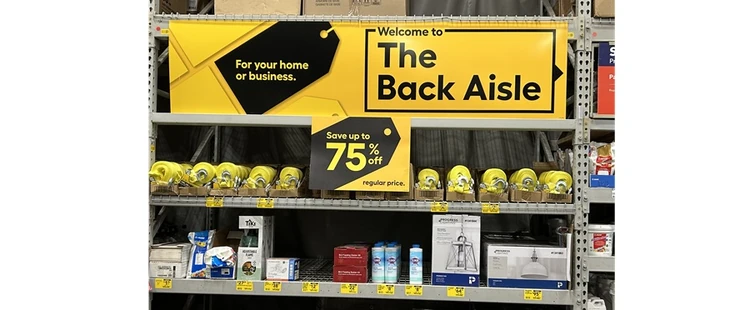
At Lowes, one of the easiest ways to score deals is to head straight to the back of the store to the clearance section called The Back Aisle.

At most locations, this clearance section exists along the middle of the back wall.

This is where each department dumps its deep-discount leftovers, often marked down 5075% off.

You wont find big-ticket items here, but you will find lots of useful stuff for super cheap:

  • Paint brushes and rollers
  • Batteries and flashlights
  • Garden tools and planters
  • Cleaning supplies
  • Lawn and seasonal items

None of it is glamorous, but its the kind of everyday stuff that adds up fast if you buy it at full price.

A quick walk through the back aisle can easily knock $20$40 off your total without changing what you planned to buy.

6. Shop seasonal dead zones, not holidays

Holiday sales at Lowes are designed to move lots of stuff quickly, while clearance deals are designed to eliminate all the leftovers.

This means that Lowes starts to discount seasonal items when customers interest drops, not necessarily when the season officially ends.

Here are the best seasonal dead zones to target:

  • Patio furniture: Late AugustSeptember When back-to-school season rolls around it kills the demand, and Lowes wants the floor space back.
  • Lawn equipment: October The grass stops growing and interest drops fast.
  • Space heaters: February - Cold fatigue sets in even though winter isnt over.
  • Snow blowers: March - One warm week and stores often start toclear them out.

These markdowns often happen fairly quietly, without any banners or ads.

So, if youre in the market for any of these items, visit regularly and snatch the deal when it inevitably pops up.

7. Special order cancellations are gold mines

When shopping for appliances, doors, windows, or flooring, always ask if there are any canceled or returned special orders.

These are often instant write-offs for the store, which means managers are far more flexible on price. If youre renovating and not picky about exact styles or brands, this can save you some serious money.

Theyll often sell them at a big discount, typically 30-60% off the retail price, to get rid of them quickly.

This includes:

  • Custom doors and windows
  • Vanities and cabinets
  • Flooring and tile
  • Countertops and fixtures

Ask an employee about any abandoned special-orders and they can point you in the right direction. Its important to ask, as many never hit the main sales floor so you wouldnt know otherwise.

Pro tip: Dont be afraid to also ask at the Pro Desk or customer service directly. If youre flexible on size, color, and finish, you can score some great deals on other peoples cancellations.


Posted: 2026-01-22 22:23:36

Get Full News Story On Consumer Affairs


Listen to this article. Speaker link opens in a new window.
Text To Speech BETA Test Version.


More News From This Category
Consumer News: Thinking about adopting a pet? A vet reveals the costs families don't always see coming
Tue, 25 Aug 2026 01:07:12 +0000

The adoption fee may be $0, but the pet definitely isn't

By Kyle James of ConsumerAffairs
August 24, 2026
  • A $0 adoption fee doesnt mean a free pet: We interview a veterinarian who recommends budgeting at least $500 to get started, plus ongoing food, vet care, and supplies.

  • Plan for surprise expenses before adopting: Emergency savings or pet insurance can keep an unexpected vet bill from turning into household debt.

  • Make sure the pet actually fits your life: Ask about health, temperament, and what's included with adoption and consider fostering first as a real-world test drive.


Animal shelters around the country are struggling with overcrowding, prompting many to reduce or completely waive adoption fees to get more dogs and cats into permanent homes.

Free adoption can be a pretty compelling offer and plenty of Americans appear interested as Google logged nearly 630,000 searches for pet adoption over the past month.

With August being Clear the Shelters month, it could be tempting to see a cute dog or cat, notice the waived adoption fee, and bring home a new family member. But remember that even if the adoption fee disappears, the cost of owning the animal doesn't.

Dr. Callie Harris, a Purina veterinarian, told ConsumerAffairs that prospective pet owners need to think beyond adoption day and consider whether a pet fits their budget, schedule, home, and lifestyle.

As a veterinarian, I always say there are no free or cheap pets, Dr. Callie said.

Here are some things she says need to be considered before saying yes.

Start with at least $500 and expect to spend more

Dr. Callie recommends planning for a minimum of $500 just to get started, although the actual amount can vary considerably.

Costs depend on the size and type of animal, where you live, and what the shelter has already provided. Some animals may already be vaccinated or received certain medications or supplies before going home.

Others may need more from you immediately.

Potential first-month expenses include a veterinary exam, vaccinations, diagnostic testing, parasite screening, flea and tick prevention, and heartworm medication.

Then there's all the stuff waiting for you at the pet store. A new dog might need a crate, bed, leash, collar, bowls, toys, and training supplies. A cat could require a carrier, litter box, scratching posts, and other supplies.

And that's before you get to the recurring cost of actually feeding the animal.

Pro tip: Before adopting, make a first 30 days shopping list and price everything out. If that total makes you uncomfortable, a waived adoption fee isn't going to make pet ownership affordable.

Have a plan for the vet bill you didn't expect

The routine expenses you can predict are only part of the equation.

Dogs swallow things they shouldn't. Cats get sick. Pets get injured. And those expenses don't politely wait until your next paycheck.

Dr. Callie recommends having money set aside for unexpected situations and says prospective owners should also consider pet insurance.

The important thing is having some kind of emergency plan before the emergency happens. That could be pet insurance, dedicated emergency savings, or a combination of the two.

Don't assume you'll simply put an unexpected veterinary bill on a credit card and figure it out later. That's how a pet emergency can quickly become a household debt problem.

Pro tip: When considering pet insurance, get quotes based on the actual animal you're considering adopting. Premiums can vary quite a bit based on factors such as the animal's age, breed, and location, so a generic estimate may not tell you much.

Don't choose a pet based entirely on that adorable face

It's incredibly easy to walk through a shelter and fall in love with a dog staring at you through the kennel door.

But your heart shouldn't make the entire decision. Dr. Callie recommends learning as much as possible about the animal's behavior and environmental needs.

Ask shelter workers what they know about the pet's breed or breed mix, temperament, and history.

  • How does the animal handle change?

  • Has it lived with children?

  • How does it react to strangers?

  • Does it get along with other dogs or cats?

  • Does it appear comfortable being left alone?

Shelter personnel may not know every answer, particularly when an animal's history is limited. But as Dr. Callie points out, It doesn't hurt to ask.

Think about your own lifestyle just as critically. A high-energy dog may be wonderful, but not necessarily for someone who works 10-hour days and wants to spend evenings on the couch.

Likewise, a pet that struggles with other animals may not be the best choice for a household that already has two dogs.

Check out the AKCs Dog Breed Quiz which is a free resource that attempts to pair you with the right dog based on your lifestyle. It asks you a series of questions via their breed quiz and it gives you some excellent recommendations. Also, check out this dog cost estimator which gives you an estimated monthly cost depending on the breed.

Pro tip: Before adopting, its a great idea to call your preferred veterinarian and ask how soon they can see a new patient. Some practices may have limited availability, and you don't want to discover that after bringing home a pet that needs any follow-up care.

Ask what you're actually getting with the adoption

A waived adoption fee can potentially be an excellent deal because shelters may have already taken care of some expenses you'd otherwise have to pay yourself.

Before adopting, ask exactly what's included:

  • Has the animal been vaccinated?

  • Spayed or neutered?

  • Microchipped?

  • Tested for parasites or infectious diseases?

  • Has it received flea, tick, or heartworm prevention?

  • Is the shelter sending home food, medication, or supplies?

Those answers can help you determine what you'll need to pay for immediately after bringing the animal home.

It can also help you avoid unnecessarily repeating services the shelter has already provided. Be sure to ask for copies of all available medical and vaccination records before leaving and bring them to your first veterinary appointment.

Pro tip: Also, ask the shelter what food the pet is currently eating and take home enough for several days if possible. Suddenly switching foods while the animal is already adjusting to a new home can cause digestive problems. If you want to change brands, transition gradually.

Consider fostering before adopting

Not sure whether a dog or cat will work in your household?

There's another option that Dr. Callie particularly likes: Foster first.

I really love the opportunity for folks to foster first, she said. This is the ultimate test drive.

Fostering can give you a much better idea of what living with an animal is actually like, as opposed to spending 30 minutes together at a shelter.

You can see how the animal behaves in your home, whether its energy level matches yours, how it interacts with family members and existing pets, and whether you're realistically prepared for the daily responsibility.

And sometimes that temporary arrangement becomes permanent. Dr. Callie jokingly calls that a foster failure, which is when the foster family falls in love and adopts the animal, which she considers a win for everyone.

Read More ...


Consumer News: FDA clears new blood test that could make Alzheimer’s testing easier
Mon, 24 Aug 2026 19:07:14 +0000

The decision gives doctors another way to check for Alzheimers-related changes

By Kristen Dalli of ConsumerAffairs
August 24, 2026
  • Roches new blood test can help doctors assess whether amyloid pathology linked to Alzheimers disease is likely present.

  • The test is intended for people 55 and older who have signs, symptoms, or concerns about cognitive decline.

  • Because it can be used in both primary and specialty care, the test could make the evaluation process more accessible for some patients.


Getting answers about changes in memory or thinking can involve a number of steps, particularly when doctors are trying to determine whether Alzheimers disease may be involved.

Now, the U.S. Food and Drug Administration (FDA) has cleared a new blood test from Roche that could give doctors another tool for that process.

The Elecsys pTau217 blood test is designed to help assess amyloid pathology associated with Alzheimers disease. Roche says it is the first and only FDA-cleared single-biomarker blood test that can support both ruling in and ruling out amyloid pathology in primary and specialty care settings.

"FDA clearance of Elecsys pTau217 marks an important milestone in Alzheimer's disease diagnosis and underscores Roche's continued leadership in advancing innovative solutions that can help patients get answers sooner," Dan Malarek, President and CEO of Roche Diagnostics North America, said in a news release.

"As the first and only FDA-cleared, single-biomarker blood test supporting both rule-in and rule-out assessment of amyloid pathology, Elecsys pTau217 has the potential to transform how Alzheimer's is assessed across primary and specialty care. This kind of innovation can help bring diagnostic evaluation closer to patients and give clinicians greater confidence in determining the right step in their care.

How the test works

The test measures phosphorylated tau 217, or pTau217, in a blood sample. Rather than producing a simple yes-or-no diagnosis, the test provides positive, intermediate, or negative results indicating the likelihood of amyloid pathology.

Those results aren't meant to stand alone. Doctors are expected to consider them alongside a patient's clinical information and other relevant findings when determining the next steps in an Alzheimer's evaluation.

The test is intended for people aged 55 and older who have signs, symptoms, or complaints of cognitive decline. It can be run using Roche's existing cobas laboratory instruments, with more than 4,500 of those instruments already in use across the U.S., according to the company.

What this means for consumers

For patients experiencing cognitive changes, one potential advantage is that the test offers a minimally invasive option that can be incorporated into existing medical and laboratory workflows.

Roche notes that traditional methods of assessing amyloid pathology, including PET imaging and cerebrospinal fluid testing, can be costly, invasive, and difficult to access outside specialty centers. The new blood test may help doctors determine which patients should receive additional testing or be considered for a specialist referral.

That doesn't mean a blood test will replace every other part of an Alzheimer's evaluation. Instead, it gives doctors another way to gather information and potentially helps some patients move through the diagnostic process with fewer barriers.

"For decades, clinicians have faced significant challenges in accurately diagnosing Alzheimer's disease in its early stages," Jared R. Brosch, M.D., Neurologist, Indiana University Health, said in the release.

"Advances in blood-based biomarkers have the potential to transform the diagnostic pathway by expanding access to evaluation for Alzheimer's across a variety of care settings. As these tools become available, clinicians may be able to evaluate more patients earlier in the disease course, improving diagnostic confidence and helping patients and their families make more informed decisions at a critical time."

Read More ...


Consumer News: Walmart is finally getting Apple Pay — here’s when you can actually use it
Mon, 24 Aug 2026 19:07:14 +0000

The retailer is ending one of the longest-running checkout annoyances for mobile-wallet users

By Kyle James of ConsumerAffairs
August 24, 2026
  • Walmart and Sams Club are finally adding tap-to-pay, including Apple Pay, Google Pay, and contactless cards.

  • The rollout starts August 24 at select locations, with all U.S. stores expected to have it by the end of 2026.

  • Not every store will be upgraded immediately, and fuel stations wont be fully covered until mid-2027.


If you've ever walked into Walmart with your phone but without your wallet, you probably discovered an oddity: One of the biggest retailers in America still didn't accept Apple Pay or Google Pay.

That's finally changing.

Walmart recently announced that it's bringing tap-to-pay to Walmart and Sam's Club stores in the U.S., meaning shoppers will be able to pay with a contactless card, smartphone, or smartwatch. That includes popular digital wallets such as Apple Pay and Google Pay.

But don't leave your physical wallet at home quite yet.

The rollout starts August 24 but not everywhere

Walmart says tap-to-pay will begin appearing at select Walmart and Sam's Club locations on Monday, August 24th.

The company plans to have the technology available at all U.S. Walmart stores and Sam's Club locations by the end of 2026. Walmart and Sam's Club fuel stations will take a little longer, with the company targeting mid-2027 for that rollout.

Walmart hasn't stated yet which stores will be among the first to get the upgrade.

So, if you walk into Walmart this week with your iPhone, and you dont see the tap to pay icon, just ask the cashier if they know when the store is going to get upgraded.

Theres a good chance management has given them a rough idea of when the upgrade might happen.

Why did this take so long?

That's what makes the announcement interesting.

Walmart has been one of the most conspicuous holdouts in the move toward NFC contactless payments.

Walmart instead pushed shoppers to use Walmart Pay, which is their own QR code-based system. It forced shoppers to open the Walmart app and scan a QR code instead of just tapping their phone on the payment terminal.

But its safe to say that Walmart's resistance goes back even further. The retailer was part of a group of merchants that backed CurrentC, which was an attempted mobile-payment alternative to services such as Apple Pay. CurrentC ultimately went nowhere, while Apple Pay and other tap-to-pay options became the norm.

Rest assured, Walmart Pay isn't disappearing. The retailer says customers will still be able to pay with cash, credit cards, and Walmart Pay, while Sam's Club members can continue using Scan & Go.

In other words, Walmart isn't replacing its payment system. It's finally giving shoppers another choice.

What you'll be able to tap

Once your store is upgraded, you won't necessarily need Apple Pay or Google Pay.

Walmart says its terminals will accept eligible contactless credit or debit cards, phones, and smartwatches. Customers will also be able to put eligible Walmart, Sam's Club, and OnePay cards into their digital wallets and use them contactlessly.

That means the little contactless symbol on your physical credit card should become useful at Walmart, too.

One reason you may want to use Apple Pay anyway

Convenience isn't the only advantage.

Digital wallets such as Apple Pay and Google Pay can add another layer between the merchant and your actual payment-card information.

Instead of handing over your physical card details in the traditional way, the payment is generally completed using tokenized credentials.

It's not a reason to stop paying attention to your accounts, but it can be another useful security tool. This is particularly true for consumers who already keep most of their cards in a digital wallet.

You can also still earn the normal rewards associated with the card you put in your digital wallet, assuming the purchase otherwise qualifies under your card's rewards program.

Before you try it

A few things that are worth knowing during the rollout:

  • Look for the contactless symbol. Once your Walmart terminal has been upgraded, that's your clue that tapping should work.

  • Keep another payment method handy for now. The August 24th launch covers only select locations initially.

  • Don't assume the gas pump is ready. Walmart says fuel stations aren't scheduled for a complete rollout until mid-2027.

Pro tip: Check the card before you tap. Apple Pay and Google Pay make checkout so quick that it's easy to pay with whatever card happens to be your default. Before holding your phone to the terminal, take two seconds to verify you're using the card that gives you the best rewards for that purchase.

Read More ...


Consumer News: The best and worst states to save for a home down payment
Mon, 24 Aug 2026 19:07:13 +0000

A new study finds a roughly $30,000 difference in the amount buyers may need to save, depending on where they live

By Kristen Dalli of ConsumerAffairs
August 24, 2026
  • Where you live can make a big difference: The amount needed for a 5% down payment ranges from about $10,400 in Iowa to roughly $42,000 in Hawaii.

  • Higher incomes don't always mean easier homebuying: High housing costs, taxes and limited inventory can offset the benefits of earning more.

  • You may not need 20% down: First-time homebuyer programs and private mortgage insurance can help make homeownership more attainable with a smaller down payment.


Saving for a home can feel like a moving target, especially when housing costs, taxes and everyday expenses are all competing for a spot in your budget. And where you live may make a bigger difference than you realize.

A new study from BadCredit.org ranks all 50 states and Washington, D.C., based on how easily residents can save for a down payment, taking factors such as income, housing costs, taxes and the job market into account.

ConsumerAffairs spoke with Erica Sandberg, a consumer finance expert at BadCredit.org, who explained what these rankings can tell prospective homebuyers and why a higher income doesn't necessarily make it easier to save for a down payment.

The biggest findings

The study found that the states where residents have the easiest time saving for a down payment tend to strike a balance between higher incomes and more manageable housing costs. Maryland ranked No. 1 overall, followed by South Dakota, Virginia, New Hampshire and Iowa.

The gap becomes especially clear when looking at the amount needed for a 5% down payment. In Iowa, where the median home value is $208,000, that would come to about $10,400. In Hawaii, where the median home value is $839,100, the same 5% down payment would be roughly $42,000 a difference of more than $30,000. The study also found that the home price-to-income ratio ranges from 2.77 in Iowa to 8.36 in Hawaii.

At the other end of the rankings, New York, California, and Hawaii were among the least affordable states for aspiring homeowners. While residents in these states can earn relatively high incomes, those earnings can be eaten up by high home prices, taxes, and overall living costs, making it harder to put money aside for a down payment.

What contributes to higher costs?

Sandberg explained that there are several factors that come into play when it comes to affording a down payment.

That Maryland garnered the top spot in our study shows the importance of economic balance, she said. The concept of home purchase affordability goes beyond price. The cost needs to fit neatly with income, which is where this state comes out ahead.

When average residents earn salaries that make it easy to save for a down payment and then meet the monthly mortgage payment, theyre in a great position to purchase.

However, on the opposite end of the spectrum, in states like New York, California, and Hawaii, housing inventory plays a big role.

Intense demand pushes prices upward, Sandberg said.

State specific tax and policy issues can magnify the problem. For example, there is a battle over Proposition 13 in California, which discourages people from selling their property because it resets the assessed value to the most current purchase price. Whether this is positive or negative is up for debate, but it almost certainly affected inventory.

Is homeownership attainable?

For consumers living in states with high price-to-income ratios, homeownership may not feel attainable. Sandberg offered her best advice for consumers in these states.

Not everybody blooms where planted, she said. For some, their community is extremely important, so they are willing to stick it out despite the extreme expense. In that case, recognize the trade-offs. Instead of a spacious home with a big yard in South Dakota, you may be happier in a small condo in Maui for now.

Sandberg also recommends that consumers start planning today, and pursue federal and local assistance programs that can help you purchase.

Every state in the U.S. has a first time homebuyer program that allows you to buy without a big down payment, she said. If your income fits the threshold, you may have the opportunity to buy a home for below market rate. Even if you don't qualify for such programs, you can still purchase a home without having to put 20% down by getting private mortgage insurance to make up the difference.

More advice: Build and maintain your credit rating.

The higher your credit scores are, the less expensive your home loan will be, Sandberg said. Commit now to making all of your payments on time, and pay off your credit card balances in full every month. Not only will this strategy improve your credit, youll avoid paying interest, leaving you more money to save for the down payment.

Read More ...


Consumer News: Supporting family could be putting Americans’ retirement at risk
Mon, 24 Aug 2026 19:07:13 +0000

Helping family members make ends meet can come at a cost to Americans own savings and retirement plans

By Kristen Dalli of ConsumerAffairs
August 24, 2026
  • 80% of Americans provided financial support to a loved one in the past year, with groceries, housing, and utilities among the most common expenses.

  • Nearly 1 in 4 Americans have reduced or stopped retirement contributions because of family financial responsibilities.

  • Experts say helping loved ones is sometimes necessary, but consumers should avoid putting their own long-term financial security at risk whenever possible.


Supporting a loved one financially can be an important way to help family members through a tough time. But for many Americans, that support is becoming a regular part of the household budget and it may be forcing them to put their own financial goals on the back burner.

A new study from My Guide to Retirement found that 80% of Americans provided financial support to a loved one over the past year, with groceries, housing, and utilities among the most common expenses.

For those helping both children and parents, the financial strain can be even greater. Nearly one in four Americans say theyve reduced or stopped contributing to retirement because of family responsibilities, while others have dipped into emergency savings or taken on debt to keep up with expenses.

ConsumerAffairs spoke with Ashley Korpi, Executive Director at My Guide to Retirement, to learn more about the long-term impacts this can have on consumers finances.

The sandwich generation is taking a financial hit

The sandwich generation refers to those who are simultaneously caring for young children and aging relatives. Korpi explained that this group is most impacted financially when caring for extended family members as well as their own families.

One of the biggest obstacles for the sandwich generation is that helping your family can quickly spiral from a temporary expense into an ongoing one, she said.

If cutting back your retirement contributions becomes routine, and those folks depend on it for groceries, housing, or healthcare, youre not only losing the money you saved, but also the time and potential growth of those savings.

Your own savings matter, too

In the name of supporting family, 25% of respondents have skipped contributing to their own savings or retirement accounts. However, Korpi encourages consumers to prioritize their own savings both short- and long-term.

Theres certainly situations where helping a loved one has to take priority at the moment, Korpi said. Maybe theyre dealing with a health emergency, or at risk of losing their housing, like in that sort of situation, most people are going to want to step in and help if they have the means.

The problem is when that behavior is normalized, and you frequently sideline your own financial security to help someone else. Whenever possible, its best to try and keep your emergency savings intact, and contribute enough to your 401(k) so that you can take advantage of employer matching if thats on the table.

Her best piece of advice: Aim for is family support that can be pulled from money youre okay with disappearing, not the money you need for your own financial security.

Think about your retirement

Some of Korpis biggest advice is about saving for retirement, as these decisions can affect more than just your own finances.

For a lot of people, theres a good chance youll end up responsible for helping aging parents, adult children, or other relatives at some point, she said.

If you think thats in the cards for you in the future, its worth having those talks before theres an emergency and decisions have to be made at that moment. Even having a basic idea of what youre able to provide and help with will make those situations easier to handle.

Another tip: Have a portion of retirement income that's guaranteed and predictable, rather than everything depending on how a portfolio performs in a given year.

There are financial tools that can provide guaranteed income to help replace a paycheck in retirement and cover essentials like housing and healthcare, which takes some of the pressure off if you also find yourself needing to help family along the way, Korpi said. It's not the right fit for everyone, but for people juggling their own retirement with supporting others, having that predictable baseline can be one less variable to worry about.

Start retirement planning today

If youre worried about your retirement planning, Korpi encourages consumers to start planning today. Its ultimately never too late to improve your financial wellbeing and retirement outlook.

If you get a late start, you might have to save more aggressively, work more, or redefine what your retirement is going to look like, but doing something is still better than doing nothing, she said.

What I want to hammer home is that you should focus on what you can control moving forward versus what you cant. Theres no retirement time machine available, but the decisions you make now can have lasting impact on the days ahead.

Read More ...


Related Bing News Results
Consumer Reports car safety alert: Preventing hot car fatalities
Mon, 24 Aug 2026 14:29:00 GMT
It’s a frightening number: On average, 37 children die every year after being left behind or becoming trapped in a car. Those numbers come from a national group that tracks pediatric heatstroke deaths ...

Consumer Reports finds label inaccuracies in prenatal vitamins
Mon, 24 Aug 2026 14:23:00 GMT
Consumer Reports tested 17 prenatal vitamins, uncovering label inaccuracies in most products but no safety concerns related to contaminants.

Consumer Reports just ranked Rivian the least reliable car brand of 2026
Thu, 20 Aug 2026 05:30:00 GMT
Rivian has landed at the bottom of one of the auto industry’s most closely watched quality scorecards, even as its owners remain among the happiest on the road. The electric-vehicle maker finished ...

Consumer Reports Labels Explained: Recommended, Top Pick, Best Brand, Best of, and Smart Buy
Tue, 10 Feb 2026 03:30:00 GMT
Consumer Reports (CR) uses several designations to help shoppers quickly identify products and services that rate well in our independent evaluations. When data is available, these designations also ...

Consumer Reports' 2026 top 10 cars all have one important feature
Sun, 08 Feb 2026 04:55:00 GMT
The above button links to Coinbase. Yahoo Finance is not a broker-dealer or investment adviser and does not offer securities or cryptocurrencies for sale or facilitate trading. Coinbase pays us for ...


Blow Us A Whistle


RobinsPost Print On Demand Refund Policy With Printify
Printify

Related Product Search/Búsqueda de productos relacionados

Amazon Logo













