Rockin Robin SongFlying The Web For News.

Article Tools/Herramientas de artículos

Consumer Daily Reports

A new survey finds many employees are making career decisions around staying remote even if it means giving up money or opportunities

By Kristen Dalli of ConsumerAffairs
August 28, 2026
  • Nearly 60% of remote workers say they would accept lower pay to keep working from home.

  • More than half have used digital workarounds to avoid direct interactions, raising concerns about communication skills.

  • With more than 42% of job-seekers filtering out roles with office requirements, competition for fully remote jobs is getting tougher.


For many workers, the ability to work from home has become more than just a perk its something theyre willing to make real career sacrifices to keep.

A new survey of 1,000 U.S. remote workers found that nearly 60% would accept lower pay in exchange for maintaining their remote flexibility, while others have turned down career opportunities specifically to avoid working in person.

ConsumerAffairs spoke with Enhancv co-founder Volen Vulkov about what the findings reveal about the changing relationship between workers and the workplace.

Taking a pay cut for remote work

So, what is prompting workers to take a pay cut to work from home? Vulkov breaks it down.

Flexibility is the easiest way to explain this, and it's definitely a part of it, he said. But nobody gives up a fifth of their income just for a shorter commute, and 12.4% of our respondents told us they would. That comes from something much deeper than convenience.

I think the office stopped being just about the place, and it became a whole performance. Walking into a room of strangers, holding a hallway conversation, reading the mood in a meeting, etc. All those are skills, and skills you haven't used in years get rusty. Half the people we surveyed said they don't feel socially or emotionally ready to go back. Paying to stay remote is the cheapest way to never find out how rusty you've gotten.

Vulkov says that workers may actually end up paying for this twice: Once in salary, then again in the promotions and the roles you quietly stop reaching for.

The second bill arrives later, and it's the bigger one, he said.

Communication is lacking

Another major finding from the survey is that half of remote workers feel socially or emotionally unprepared for a mandatory return to the office. The biggest concern here: a lack of communication.

The pattern I'd watch out for isn't people communicating less, Vulkov said. It's people actively trying to avoid the situations where communication is hardest and most valuable.

We found that 57.3% used at least one workaround in the past year to dodge a direct interaction, and the most common one was simply choosing text when a call was obviously the right tool. That's 28.4% of workers.

On its own, it looks like a preference. Repeated for years, it means the difficult conversation gets deferred, the ambiguous message gets misread, and the disagreement that should take four minutes on a call takes a fortnight in a thread.

Competing for fully-remote roles

The survey also found that over 42% of active job-seekers apply a hard filter against any office presence. Ultimately, this can lead to a great deal of competition for a small number of open remote jobs.

The math here is brutal, and most job seekers haven't run it, Vulkov said. Fully remote roles are roughly 12% of new US postings. Yet 42.4% of the active job seekers we surveyed filter out anything with meaningful office presence. So you have a large share of candidates crowding into a small corner of the market and competing mostly against each other.

This way, employers who offer genuine remote work get a huge applicant pool and can be ruthless about it. This means salaries in that field face downward pressure rather than up. And the candidate filtering hardest gets the longest search, the most rejection, and the least leverage in the one negotiation they eventually reach.

The solution? Vulkov says it may be unpopular, but he encourages job searches to separate the filter from the fear, and dont give in to that fear.

If you're screening out in-office roles because remote genuinely fits your lifestyle or you live in a remote area with no better opportunities, that's a real preference, and you should price it honestly during the interview, he said. If you're screening them out because the interview would be in a room, then you're letting a two-hour discomfort decide a five-year career question.


Posted: 2026-08-28 16:35:56

Get Full News Story On Consumer Affairs


More News From This Category
Consumer News: Black Friday 2026: Mark your calendar for these major retailer sales
Fri, 13 Nov 2026 23:07:09 +0000
Black Friday 2026: Mark your calendar for these major retailer sales

Black Friday isn't just one day anymore. For many of America's biggest retailers, it's become a weeks-long shopping event, with early discounts appearing well before Thanksgiving. And that creates a problem for shoppers: How do you know when to buy, especially when Amazon, Walmart, Target, and other major retailers are all running promotions on different schedules? This year, Black Friday falls on...


Consumer News: Apple's $2,000 folding iPhone comes with a potentially expensive catch
Fri, 13 Nov 2026 20:07:12 +0000
Apple's $2,000 folding iPhone comes with a potentially expensive catch

Apple's new iPhone Duo starts at $1,999: However, repairing its folding screen without coverage could cost another $999. Early durability tests offer mixed results: The hinge survived thousands of folds, but the crease down the middle of the screen became more noticeable. AppleCare+ can reduce repair bills considerably: But shoppers need to factor in the cost of coverage and understand what's cove...


Consumer News: More green space may help kids focus and learn
Fri, 13 Nov 2026 17:07:11 +0000
More green space may help kids focus and learn

Children living in greener neighborhoods performed better on attention and achievement assessments. Researchers analyzed data from nearly 12,000 children across the United States. Better air quality may help explain why access to green spaces is associated with stronger cognitive performance. Between schoolwork, screen time, and everyday distractions, children have plenty of things competing for t...


Consumer News: Late-night snacking could come with an unexpected health risk
Fri, 13 Nov 2026 17:07:11 +0000
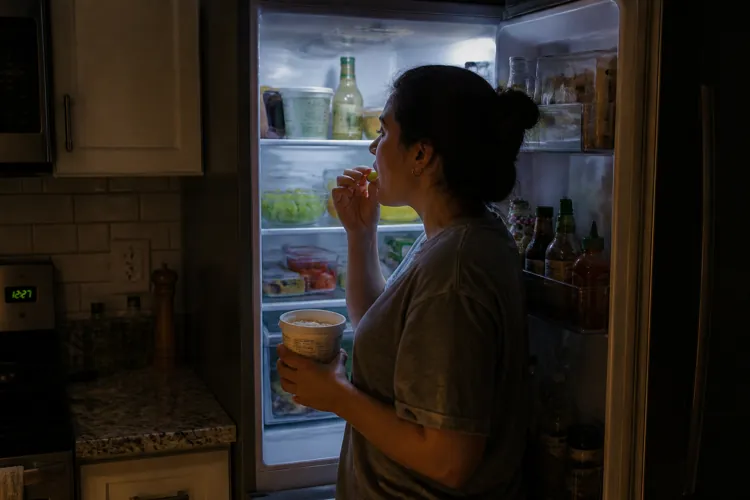
Late-night snacking could come with an unexpected health risk

Researchers found that people who reported eating late at night had a 20% to 30% higher rate of liver disease. The study examined health and lifestyle information from nearly 200,000 participants across three long-running research projects. Researchers say finishing meals several hours before bedtime may support liver health, although more research is needed to confirm the connection. Late-night s...


Consumer News: Are all ultra-processed foods bad for you? A major study offers a surprising answer
Fri, 13 Nov 2026 17:07:11 +0000
Are all ultra-processed foods bad for you? A major study offers a surprising answer

Researchers found no overall association between eating more ultra-processed foods and developing colorectal cancer. Ultra-processed whole grains and dairy products were associated with lower cancer rates, while processed meats were associated with higher rates. The findings suggest that a food's nutritional content may matter more than its level of processing when considering colorectal cancer ri...


Related Bing News Results
Consumer Reports tests kids vitamins for heavy metals, label accuracy
Sat, 14 Nov 2026 07:02:22 GMT
Approximately 1 in 3 kids under age 19 regularly take a dietary supplement, according to the Centers for Disease Control and Prevention. But do kids’ vitamins actually contain what they say on the ...
Consumer Reports investigation: Do kids' vitamins contain what they say on the label?
Thu, 12 Nov 2026 08:04:00 GMT
Here’s what parents need to know before giving their child a daily vitamin.
Consumer Reports finds some kids’ vitamins contain up to 5 times the nutrients listed on labels
Wed, 11 Nov 2026 01:31:00 GMT
Consumer Reports tested 21 children’s vitamins and found each had at least one nutrient level that differed from its label—sometimes by as much as 500%. All products were considered safe, with heavy ...
Consumer Reports Labels, Explained: Recommended, Top Pick, Best Brand, Best of, Smart Buy, and #1 in Brand Reliability
Thu, 15 Oct 2026 03:00:00 GMT
Consumer Reports (CR) uses several designations to help shoppers quickly identify products and services that perform well in our independent evaluations. When data is available, these designations ...
Consumer Reports retests protein powders, finds safer options
Wed, 18 Feb 2026 17:22:00 GMT
Last year, Consumer Reports tested dozens of popular protein powders and ready-to-drink shakes and found more than two-thirds contained concerning levels of lead. The investigation raised questions ...

Blow Us A Whistle


RobinsPost Print On Demand Refund Policy With Printify
Printify

Related Product Search/Búsqueda de productos relacionados

Amazon Logo