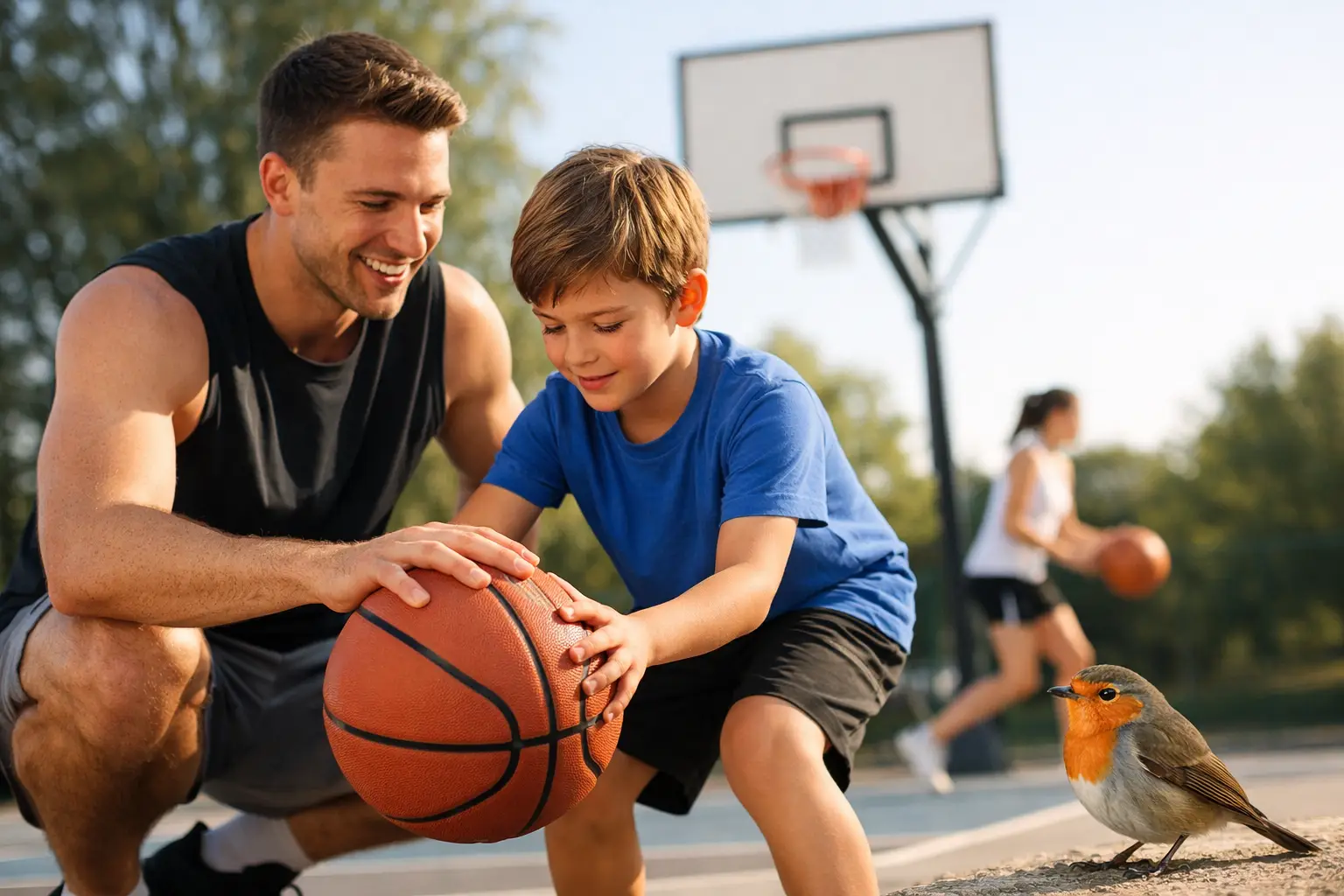
A packed gym, a blacktop court at the park, a hoop in a driveway - basketball meets you where you are. If you want to learn how to play basketball, the good news is that you do not need a complex playbook to get started. You need a clear sense of the rules, a few core skills, and enough repetition to make the game feel natural.
Basketball is fast, simple at its core, and easy to start casually. At the same time, it has layers. A beginner can enjoy a pickup game in a week, while a dedicated player can spend years improving footwork, decision-making, and shooting consistency. That is part of the appeal.
How to play basketball: the basic objective
The goal is straightforward. Two teams try to score by putting the ball through the other team’s hoop while preventing the other side from doing the same. The team with more points at the end wins.
Most made shots inside the three-point arc are worth two points. Shots made from beyond the arc are worth three. Free throws, usually awarded after certain fouls, are worth one point each.
A standard team has five players on the court at one time, though many beginners first learn in smaller formats such as one-on-one, three-on-three, or informal pickup games. Those smaller games are useful because they force you to handle the ball, move, and defend more often.
The court and the main positions
A basketball court has a hoop at each end, a three-point line, a free-throw line, and boundary lines. You do not need to memorize every marking right away, but you should know what changes scoring and what counts as out of bounds.
Traditional positions include point guard, shooting guard, small forward, power forward, and center. In modern basketball, those lines blur, but the basic job descriptions still help beginners.
The point guard usually brings the ball up and starts the offense. The shooting guard often looks to score from the perimeter. The small forward does a bit of everything. The power forward usually plays closer to the basket and rebounds. The center protects the rim, rebounds, and scores inside.
If you are just starting, do not get too attached to labels. At the beginner level, learning how to dribble, pass, defend, and move without the ball matters more than having a fixed position.
Rules every beginner should know
If you are learning how to play basketball for the first time, start with the violations and game actions you will see most often.
Dribbling means bouncing the ball with one hand while moving. If you stop dribbling and then start again, that is a double dribble. If you move your pivot foot illegally while holding the ball, that is traveling. If the ball hits your leg or you dribble with both hands at the same time, you can also lose possession.
The ball is out of bounds when it touches a boundary line or a player who is standing on or beyond that line. After a made basket in many casual games, the other team gets the ball. In organized play, teams also have time limits to move the ball up the court and attempt a shot, though pickup games may ignore some of those rules.
Fouls involve illegal contact such as hitting, pushing, or blocking a player in a way that disrupts the play. Basketball is physical, but not every collision is a foul. That is one reason beginners sometimes get confused. Clean defense is about positioning your body, moving your feet, and contesting without hacking at the ball.
The skills that matter most
The fastest way to improve is to focus on four basics: dribbling, passing, shooting, and defense. Rebounding and movement off the ball also matter, but those first four shape nearly every possession.
Dribbling
Keep your knees bent and your head up as much as possible. Beginners often stare at the ball, which makes it harder to see teammates, defenders, and open space. Use your fingertips more than your palm, and keep the dribble controlled rather than high and loose.
Start with your strong hand, then force yourself to use your weak hand. That second part is what separates a player who can survive in a game from one who struggles under pressure. A defender will quickly push you toward the side you trust least.
Passing
Good passing speeds up the game and creates better shots. The chest pass is direct and useful in space. The bounce pass works well when defenders have their hands up. Overhead passes can help move the ball across the court, but they are easier to read if telegraphed.
A common beginner mistake is waiting too long. Pass early enough that your teammate can do something with the ball. A pass that arrives late may still be catchable, but it often kills the advantage.
Shooting
A reliable shot starts with balance. Set your feet, keep your eyes on the rim, and shoot with a smooth upward motion. Your guide hand should steady the ball, while your shooting hand provides control and follow-through.
Many new players want to launch three-pointers immediately. That is understandable, but starting close to the basket usually builds better habits. Practice layups and short-range shots first. If your form holds up there, it has a better chance of holding up farther out.
Defense
Defense is not glamorous to every beginner, but it earns playing time fast. Stay low, keep your arms active, and slide your feet instead of crossing them too often. Try to stay between your player and the basket.
There is a trade-off here. If you pressure too tightly without balance, a quick player will go right by you. If you back off too far, you give up open shots. The right distance depends on who you are guarding and where they are on the court.
How a typical possession works
One of the easiest ways to understand basketball is to watch the flow of a single possession. A team brings the ball up the court, sets up its offense, passes and cuts to create space, then tries to get a good shot. If the shot misses, both teams fight for the rebound. Then the other team goes the other way.
That rhythm explains why basketball can feel nonstop. A great pass, a missed box out, or a lazy transition back on defense can change a play in seconds.
For beginners, spacing is a major concept. If everyone crowds the ball, driving lanes disappear and passing becomes harder. If players spread out and move with purpose, even a basic offense starts to work better.
Simple ways to start playing better
The best beginner approach is not complicated. Practice in short, repeatable sessions and play real games as often as you can. Skill work teaches mechanics. Games teach timing, pressure, and decision-making.
Spend one session on layups, another on ball handling, and another on passing against a wall or with a partner. Then test those skills in pickup games. You will notice very quickly what breaks down once a defender is involved.
It also helps to watch basketball with a purpose. Instead of tracking only the scorer, watch what happens away from the ball. Notice how players cut, rotate on defense, and recover after mistakes. That kind of pattern recognition speeds up learning.
Gear and setup
You do not need much to begin. A basketball, supportive shoes, and access to a hoop are enough. Indoor and outdoor balls feel different, so if you mostly play at the park, choose a ball built for outdoor use.
Shoes matter because basketball includes stopping, jumping, and changing direction quickly. Expensive does not always mean better, especially for beginners, but a stable fit and decent traction do matter.
If you are joining a casual league or regular pickup group, ask about the rules they use. Some games are make-it-take-it after scoring. Some call every foul tightly, while others allow more contact. Knowing the local style can save frustration.
Common mistakes beginners make
Most new players rush. They dribble too fast without control, force difficult passes, and shoot before they are balanced. Slowing down often leads to better basketball.
Another mistake is standing still after passing. Good players pass, then cut, screen, or relocate. Even if you are not getting the ball back, your movement can create an opening for someone else.
On defense, ball watching is another classic problem. It feels natural to stare at the player with the ball, but that is how backdoor cuts happen. Learn to see both your player and the ball.
Finally, do not confuse flashy moves with effective play. A simple crossover that creates space is more valuable than a fancy dribble sequence that goes nowhere.
What makes basketball fun to keep learning
Basketball gives quick feedback. You know when a pass was on target, when a shot had the right arc, and when a defensive stance helped stop a drive. That makes improvement addictive.
It also rewards different types of players. You do not have to be the tallest, fastest, or best shooter to help a team. Hustle, communication, positioning, and consistency all show up on the court. That is one reason the game stays accessible across age groups and skill levels.
If you are starting now, keep it simple. Learn the rules that come up most, build your dribble and layup game first, and play often enough that the court stops feeling crowded. Once that happens, basketball gets a lot more enjoyable - and a lot more interesting every time you step on the floor.