Rockin Robin SongFlying The Web For News.
RobinPost Logo Amazon Prime Deals


Global World Topics

Halloween: A Global Celebration of Spooky Delights

As the leaves turn golden and the air chills, the excitement for Halloween builds up around the world. This ancient festival, with its roots in the Celtic tradition of Samhain, has evolved into a global celebration of the spooky, the scary, and sweet.

Fast forward through time, and Halloween has absorbed elements from various cultures, including Roman and Christian traditions. It's fascinating to see how a pagan festival morphed into a night of trick-or-treating, carving jack-o'-lanterns, and donning creative costumes.
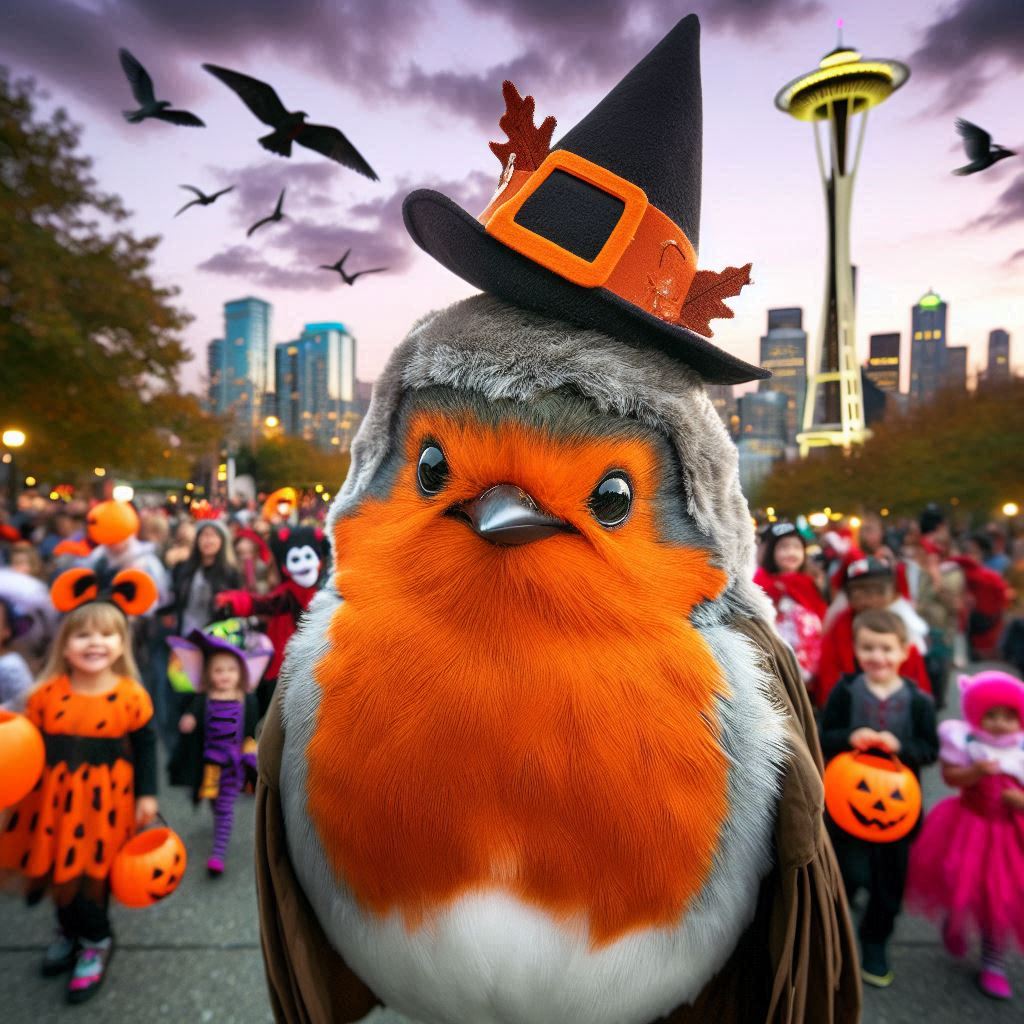
Global Halloween Celebrations of Spooky Delights, Safety Tips, Treats, and Origins

Safety First: Trick-or-Treating Tips

With the fun of Halloween comes the need for safety, especially for the little ghouls and goblins eager to collect their candy. Parents can ensure a safe trick-or-treating experience by choosing costumes that are visible at night, using face paint instead of masks for better visibility, and ensuring that any costume props are flexible and safe. Accompanying children under 12, teaching them to cross streets at corners, and inspecting all treats before consumption is also crucial steps to a safe Halloween.

Favorite Halloween Treats

No Halloween is complete without the mention of treats. From the classic caramel apples to the inventive 'witches' brew', the holiday is a perfect excuse to indulge in some themed culinary delights. Recipes like 'monster munchies' and 'crescent roll witch hats' add a dash of creativity to the Halloween table, making the celebration a feast for the senses.

Exploring the Unique Origins and Evolution of Halloween Traditions Around the World

The history of Halloween is as rich as it is eerie. Originating from the Celtic festival of Samhain, it marked the end of the harvest season and the onset of winter—a time associated with death. The Celts believed that on October 31st, the boundary between the living and the dead dissolved, and the ghosts of the deceased returned to earth. To ward off these spirits, people would light bonfires and wear costumes.

The spirit of Halloween is celebrated across the globe, each country adding its unique twist to the festivities. In Mexico and other Latin American countries, Día de los Muertos honors the deceased with vibrant altars and family gatherings. Across the ocean, Ireland and Scotland hold bonfires and games, staying true to their Samhain roots. Even in the far reaches of Japan, costumed parades fill the streets of Kawasaki, showcasing the universal appeal of Halloween.

Halloween, a time of celebration and superstition, is not just about trick-or-treating and pumpkin carving. It's a holiday rich with traditions that vary wildly from country to country, each adding its cultural spin to this spooky season. Let's embark on a global tour to discover some of the most unique Halloween traditions that make this holiday an international tapestry of the macabre and the joyous with these nine countries.

1. Ireland and Scotland: The Birthplace of Halloween

In Ireland, where Halloween originated as the ancient Celtic festival of Samhain, the night is still celebrated with bonfires and games. One traditional game is 'barmbrack', an Irish fruitcake with various objects baked into it, predicting the future of the person who finds them.

2. Mexico: Día de los Muertos

In Mexico, the tradition of Día de los Muertos, or Day of the Dead, coincides with Halloween. It's a vibrant celebration where families honor their deceased loved ones with colorful altars and offerings, believing that the spirits return to Earth to join the festivities.

3. Romania: Day of Dracula

In Romania, the legend of Dracula is a significant part of Halloween. People from all over the world gather at Bran Castle in Transylvania, known as Dracula's castle, to celebrate with themed parties and tours.

4. Japan: Kawasaki Halloween Parade

Japan hosts the Kawasaki Halloween Parade, the biggest of its kind in the country. Participants must apply and pay a fee to join this spectacular procession of costumes and creativity.

5. The Philippines: Pangangaluluwa

Pangangaluluwa is a Filipino tradition where children go door to door, often in costumes, singing and asking for prayers for those in purgatory. This tradition is similar to trick-or-treating but has a more spiritual significance.

6. China: The Hungry Ghost Festival

Though not on Halloween itself, the Hungry Ghost Festival shares similarities with the holiday. It's a time when the Chinese believe that the spirits of the dead roam the Earth, and they offer food and burn joss paper to appease these wandering ghosts.

7. Italy: Ognissanti

Italians celebrate Ognissanti, or All Saints' Day, starting around Halloween. It's a time when it's believed that deceased souls visit their living relatives and people prepare by leaving flowers on the graves of the departed.

8. Guatemala: Barriletes Gigantes

In Guatemala, the giant kite festival known as Barriletes Gigantes is a sight to behold. These kites are flown to honor the dead and are believed to help connect the living with those in the afterlife.

9. Haiti: Fet Gede

Fet Gede, the Haitian Day of the Dead, is a blend of Vodou beliefs and Catholic traditions. Celebrants dress up as the Gede, spirits of the dead, and visit cemeteries to honor their ancestors.

These traditions show us that Halloween is more than just a night of frights and fun; it's a reflection of the world's diverse cultures and their relationship with the spiritual realm. From the bonfires of Ireland to the colorful kites of Guatemala, each tradition adds a unique flavor to the Halloween we know and love. So, as you don your costume and indulge in the Halloween festivities, remember the rich global heritage that this holiday represents. Happy haunting!

In conclusion, Halloween is more than just a day on the calendar; it's a tapestry of history, culture, and community. It's a time when the world embraces the playful side of fear and the joy of transformation. Whether you're lighting a bonfire, crafting the perfect costume, or baking a batch of 'martian marshmallows', Halloween is a celebration that brings us together in the most enchantingly mysterious ways. Happy Halloween to all, and all a spooky night!



More News From This Category
How Small Land Improvements Support Bigger Farming Goals
Mon, 15 Jun 2026 10:44:49 +0000

A person standing beside a white utility truck in a dry grassy field with trees and low hills in the background.

Farming goals often get framed around major investments. Bigger acreage, better equipment, or new buildings can seem like the clearest signs of progress, especially when an operation is trying to grow. But not every meaningful improvement starts with a large project or a dramatic change to the property.

Read More ...


How to Play Soccer and Build Real Skills
Mon, 15 Jun 2026 04:08:27 +0000

A first soccer game can feel busy fast - players moving in every direction, coaches calling instructions, and the ball rarely staying still for long. If you want to know how to play soccer, the good news is that the basics are easier to learn than the full speed of the match makes them look. Once you understand the objective, the core rules, and a few essential skills, the sport starts to make sense.

Soccer is simple at its core. Two teams try to score by moving the ball into the other team’s goal, mostly without using their hands or arms. The team with more goals at the end wins. That sounds basic, but the game becomes more interesting because it combines fitness, positioning, timing, teamwork, and decision-making under pressure.


How to Play Soccer and Build Real Skills

How to play soccer: start with the objective

Each team usually has 11 players on the field in full-sided outdoor matches, including one goalkeeper. Youth games, pickup games, and indoor formats often use fewer players, so don’t assume every version looks the same. The field size, number of players, and game length can all change depending on age and setting.

The main objective is to advance the ball through passing, dribbling, or shooting until you create a chance to score. Players use their feet most of the time, but they can also use their thighs, chest, and head. The goalkeeper is the only player allowed to handle the ball, and only within the penalty area.

That means soccer is not just about chasing the ball. Good teams create space, support the player in possession, and stay organized when they lose the ball. Beginners often focus only on the ball itself. That is normal, but learning where to stand is just as important as learning what to do when the ball reaches you.

The basic rules beginners need first

If you are learning how to play soccer for the first time, start with the rules that come up most often in real games.

A match begins with a kickoff at the center of the field. After a team scores, play restarts with another kickoff. If the ball crosses the sideline, it comes back into play with a throw-in by the team that did not touch it last. If it crosses the end line, the restart depends on who touched it last. The attacking team gets a corner kick if a defender touched it last. The defending team gets a goal kick if an attacker touched it last.

Fouls happen when a player trips, pushes, holds, kicks, or charges an opponent unfairly. When that happens, the other team usually gets a free kick. More serious or repeated fouls can lead to yellow cards or red cards. A yellow card is a warning. A red card means the player is sent off and cannot continue.

Then there is offside, the rule that confuses almost everyone at first. A player is offside if they are closer to the opponent’s goal than both the ball and the second-to-last defender when the pass is played to them, and they are actively involved in the play. It is not illegal to stand in an advanced position by itself. The offense happens when the timing and involvement line up. In practice, beginners do not need to memorize every detail on day one. They just need to know this: do not camp near the goal waiting for an easy pass.

Positions on the field and what they do

Soccer positions matter because the game works best when players share the field with purpose.

Goalkeepers protect the goal, catch or deflect shots, and often start attacks with throws or kicks. Defenders play closest to their own goal and focus on stopping attacks, marking opponents, and clearing danger. Midfielders connect defense and attack. They often run the most, help keep possession, and support both sides of the game. Forwards play higher up the field and are usually most involved in creating and finishing scoring chances.

Within those broad groups, roles vary. A wide defender may overlap into attack. A defensive midfielder may sit deeper and protect the back line. A forward may drop into space instead of staying high. That flexibility is one reason soccer appeals to so many players. Different body types and strengths can fit the sport. Speed helps, but so do vision, calmness, endurance, balance, and timing.

The basic skills that matter most

New players sometimes think flashy dribbling is the key to soccer. It can be useful, but beginners improve faster when they focus on the basics first.

Passing is the foundation. Most passes should be simple and accurate, using the inside of the foot for control. A good pass is not just hard or fast. It arrives at the right angle and speed so a teammate can use it immediately.

First touch is what you do when the ball reaches you. A poor touch can send the ball away and invite pressure. A good touch sets up your next action, whether that is a pass, a dribble, or a shot. This is one of the biggest separators between beginners and improving players.

Dribbling means moving with the ball under control. At first, that means short touches and your head coming up often to scan the field. Many beginners keep the ball too far away or look down constantly. That slows decision-making and makes it easier to lose possession.

Shooting requires balance more than brute force. Plant your non-kicking foot beside the ball, keep your body steady, and strike through the ball with purpose. Power is useful, but placement is often better. A calm shot into the corner beats a wild blast over the crossbar.

Defending starts with staying goal-side, bending your knees, and being patient. New defenders often stab at the ball and get beaten. Strong defending is about delay, angle, and timing. You want to force the attacker into a less dangerous option.

How to practice soccer without overcomplicating it

The fastest way to improve is consistent repetition with a ball. You do not need a full team session every day.

Start with passing against a wall. This helps touch, control, and reaction time. Work on both feet, even if one feels awkward. That weaker foot matters more than most beginners expect because soccer rarely gives you perfect body position.

Then practice dribbling through cones, shoes, or any markers you can set up. Focus on close control rather than speed at first. Once that feels natural, add turns, stops, and changes of direction.

Juggling can help with coordination, though it is not the only measure of skill. Some strong game players are not elite jugglers. Still, learning to keep the ball in the air improves touch and comfort.

Small-sided games are one of the best learning tools because they give you more touches and more decisions in less time. A 3-on-3 or 5-on-5 game often teaches more for a beginner than standing on the wing in a full 11-on-11 match with limited involvement.

What beginners usually get wrong

Most mistakes come from rushing.

Players hold the ball too long, force difficult dribbles, or try low-percentage shots when a simple pass is available. Others panic as soon as they receive the ball and give it away without looking. The right balance takes time. You want to play quickly, but not blindly.

Another common mistake is poor spacing. Inexperienced players crowd the ball, which makes passing lanes disappear. If your teammate has the ball, your job is often to move into open space, not run directly toward them.

Fitness is another factor. Soccer asks for repeated bursts of running, changing direction, and recovery. If you are tired, your touch and choices usually get worse. That is why stamina matters, but game awareness can reduce wasted energy too.

What equipment you actually need

For a beginner, the essentials are straightforward. You need a ball, comfortable athletic clothing, shin guards, and shoes that suit the surface. Cleats help on grass, while turf shoes or indoor shoes are better on harder surfaces.

Do not overbuy at the start. Expensive gear does not replace repetition. A properly sized ball, safe footwear, and enough room to practice will do more for development than premium equipment.

How to get better once you know the basics

Improvement comes from combining technical work with real game experience. Practice touches on your own, but also play with others as often as possible. Soccer is a team sport, and many lessons only appear in live situations.

Watch how experienced players move when they do not have the ball. This part is often overlooked. The best players are usually scanning, adjusting their angle, and preparing early. They make the next play easier before the ball even arrives.

It also helps to accept that progress is uneven. One week your passing feels sharp and your confidence rises. The next week your touch may feel off. That is normal in any skill-based sport. The players who improve are usually the ones who stay consistent through that variation.

If you are learning as an adult, do not assume you are too late. You may not develop the same way as someone who started at age six, but you can still become a capable and confident player. For many readers finding practical sports guidance through broad hubs like RobinsPost, that accessible path matters more than elite-level ambition.

Soccer rewards patience because the game opens up little by little. Keep the ball close, pass simply, move into space, and stay involved even when you are not the one touching the ball. That is where the sport starts to feel less chaotic and a lot more fun.

Read More ...


Tips for Preventing Machine Breakdowns in Your Operations
Sun, 14 Jun 2026 10:42:56 +0000

Two technicians look at a laptop while standing between machines in a plant. They wear dark blue jackets and jumpsuits.

Industrial equipment plays a major role in product quality and day-to-day business performance. However, when a machine fails without warning, it can become harder to meet customer expectations or follow production schedules.

Read More ...


USA Flag Day: What It Honors on June 14
Sun, 14 Jun 2026 04:08:33 +0000

Every June 14, the American flag gets a rare moment of focused national attention. USA Flag Day is not one of the biggest dates on the federal holiday calendar, but it carries a distinct place in the country’s civic life. It asks a simple question that still matters: what does the flag represent, and how should that symbol be treated in public and private life?

For readers tracking public events, national observances, and civic traditions, Flag Day sits at the intersection of history, patriotism, education, and current debate. It is part remembrance, part ceremony, and part reflection. That mix is exactly why it continues to show up in school programs, veterans’ events, local parades, government proclamations, and news coverage each year.


USA Flag Day: What It Honors on June 14

What is USA Flag Day?

USA Flag Day is observed annually on June 14 to commemorate the adoption of the national flag of the United States in 1777. On that date, the Second Continental Congress approved a resolution stating that the flag would feature 13 stripes, alternating red and white, with 13 white stars on a blue field. That early design represented the original states.

The day is not the same as Independence Day. July 4 celebrates the nation’s declaration of independence. Flag Day focuses specifically on the flag as a national emblem. That distinction may sound narrow, but symbols carry weight. The flag appears at schools, courthouses, military bases, sports events, memorials, protests, and homes. A dedicated observance gives that symbol context.

Unlike major federal holidays, Flag Day does not usually shut down offices or trigger a national day off. Pennsylvania is the exception, recognizing it as a state holiday. Elsewhere, observance tends to be local and voluntary, which is part of its character. It is less about time off and more about civic recognition.

Why June 14 matters

June 14 ties directly to the 1777 flag resolution, but the road to official recognition was much longer. Flag Day did not become established overnight. During the 19th century, several educators, civic groups, and patriotic organizations promoted a special day for flag exercises and public observance.

One frequently cited milestone came in 1885, when Wisconsin schoolteacher Bernard Cigrand encouraged students to celebrate June 14 as the flag’s birthday. Other advocates followed, and by the late 1800s and early 1900s, the idea had gained wider support in schools and civic ceremonies.

President Woodrow Wilson issued a proclamation in 1916 establishing June 14 as Flag Day. Congress later made the date permanent in 1949 when President Harry Truman signed legislation recognizing National Flag Day. That path matters because it shows how many U.S. observances start - not from one dramatic event, but from years of local practice that gradually become national custom.

The history behind the Stars and Stripes

The U.S. flag has changed over time, even if its core look remains instantly recognizable. The 13 stripes have stayed constant to honor the original colonies. The stars changed as new states entered the Union.

Today’s flag has 50 stars, reflecting all 50 states. The current version became official in 1960 after Hawaii joined the United States. That means the flag most Americans know is relatively modern, even though its roots are from the Revolutionary era.

There is also a difference between history and myth. Many Americans grew up hearing that Betsy Ross designed the first flag. The story is deeply familiar, but historians continue to debate how much of it is supported by evidence. Francis Hopkinson, a signer of the Declaration of Independence, is often credited by researchers as a likely contributor to the early design.

That does not lessen the power of the symbol. If anything, it highlights a recurring feature of American history: the line between folklore and documented fact is not always clean. Flag Day often brings both into the same conversation.

What the flag represents today

For some Americans, the flag is primarily a patriotic emblem tied to service, sacrifice, and national identity. For others, it represents constitutional freedoms, including the freedom to criticize the government. Those two views can overlap, but they can also create tension.

That tension is part of why Flag Day still matters in news and public life. The flag is not a neutral object. It shows up in celebrations, military funerals, citizenship ceremonies, political rallies, disaster response, and moments of national grief. It can unify, but it can also become contested when people disagree over who gets to define patriotism.

In practical terms, the flag remains one of the country’s most visible symbols because it works across settings. It is official enough for government use and familiar enough for a front porch. It belongs to institutions, but it also belongs to ordinary households. That wide reach helps explain why even a relatively low-key observance like Flag Day continues to attract attention.

How USA Flag Day is observed

There is no single national script for USA Flag Day. Observance varies by community, school district, veterans’ organization, and local government. Some places hold parades and public ceremonies. Others run educational programs focused on flag history, etiquette, and the meaning of the colors and stars.

Schools have long played a major role. Students may recite the Pledge of Allegiance, study the history of the flag, or take part in assemblies. Veterans’ groups and civic organizations often host retirement ceremonies for worn flags, a practice that reflects the idea that the flag should be treated with respect throughout its use.

At the household level, many Americans mark the day simply by displaying the flag at home. Businesses, municipal buildings, and public institutions may also fly it more prominently. News coverage often includes archival features, historical explainers, local event listings, and updates from official proclamations.

The observance can be modest or ceremonial. That flexibility is one reason it has lasted. It does not demand one kind of participation.

Flag etiquette and common questions

Flag Day often renews interest in U.S. flag etiquette. The U.S. Flag Code provides guidance on display and treatment, though many parts are customary rather than criminally enforced. Readers often want the practical basics.

The flag should generally be displayed from sunrise to sunset, though night display is acceptable if it is properly illuminated. It should not touch the ground. When flown with other flags, the U.S. flag should hold the place of honor according to accepted display rules. A worn or damaged flag should be retired respectfully, often by burning in a dignified ceremony conducted by an appropriate organization.

That said, real-world use is not always neat. Printed flags appear on clothing, paper goods, advertising, and seasonal merchandise. Some people see that as patriotic visibility. Others see it as casual misuse of a national symbol. The gap between formal etiquette and commercial culture is wide, and Flag Day tends to bring that contrast into sharper focus.

Why Flag Day still shows up in modern coverage

Some observances fade into the background because they no longer connect with current life. Flag Day has avoided that, even without the scale of a major holiday. It remains relevant because it touches several ongoing stories at once: education, military service, public protest, national identity, and civic ritual.

It also fits the way people consume information now. Readers may come to the topic through a local parade listing, a school event, a history feature, a White House proclamation, a veterans’ ceremony, or a social media debate about patriotism and free speech. For a broad news and features audience, that range matters. A date like June 14 is not just a history note. It is a live content moment with cultural, political, and community angles.

That is why media platforms continue to surface related videos, event coverage, public reactions, and historical background around the date. It serves both readers looking for quick facts and those tracking the broader meaning behind public symbols.

A national symbol with different meanings

The strongest case for taking Flag Day seriously is not that everyone sees the flag the same way. It is that they do not. For veterans, it may mean duty and remembrance. For immigrants, it may signal belonging and a hard-won new chapter. For critics and activists, it can represent ideals the country has not fully met.

That range is not a weakness. It is part of the reason the flag endures. National symbols stay relevant when people keep returning to them, arguing over them, and reinterpreting them across generations.

On June 14, the point is not only to display the flag. It is to pause long enough to ask what the country asks that symbol to carry - and whether public life is living up to it.

Read More ...


Why Tailoring Can Transform an Event Outfit
Sat, 13 Jun 2026 10:36:42 +0000

Woman in a clothing store examines a bright red sequined dress hanging among black garments on a rack.

Event clothing carries pressure because it needs to look polished, feel comfortable, and hold up through hours of movement. That is why tailoring can transform an event outfit for someone dressing for a wedding, gala, prom, awards night, milestone dinner, or formal work event. A strong garment may already have beautiful fabric or a memorable shape, yet fit decides how well it works on the body.

Read More ...


Related Bing News Results
Why Fiserv Plunged Today
Mon, 15 Jun 2026 12:32:00 GMT
Shares of Fiserv (FISV 10.95%) plunged on Monday, falling 11.3% as of 3:26 p.m. The decline was all the more notable since the broader markets were up in the wake of the past week ...

SpaceX Soars 16%, Rocket Lab Gains 7%, Virgin Galactic Drops 4%: Why Space Stocks Are Diverging Today
Mon, 15 Jun 2026 11:34:00 GMT
Shares of SpaceX (NASDAQ:SPCX) are up 16% in Monday afternoon trading, climbing to about $187 as buyers extend the post-IPO surge that began last Friday. The newly minted NASDAQ listing priced at $135 ...

Today’s AI market hits all 5 warning signs that preceded 2000 Nasdaq crash.
Mon, 15 Jun 2026 04:04:00 GMT
Although Wall Street has spent the better part of two years cheering an artificial intelligence buildout that has dragged the Nasdaq 100 up roughly 30% over the past year, the technology-packed Nasdaq ...

World Cup game schedule today: Previewing the matchups on June 14
Sun, 14 Jun 2026 03:05:00 GMT
Day four of the 2026 FIFA World Cup features another wall-to-wall, four-match slate including some heavy-hitters and potential dark horses. Groups E and F take the stage today with four-time champion ...

UFC White House updates: Fight time, weather and UFC Freedom 250 news today
Sat, 13 Jun 2026 16:37:00 GMT
UFC Freedom 250 is set to take over the White House. Here is the latest on weigh-ins, weather and Sunday's fights.


Blow Us A Whistle


Related Product Search/Búsqueda de productos relacionados

Amazon Logo

Visit Our New Print-On-Demand Stores On Printify and Zazzle
Printify Zazzle