A cooler packed for a long pool day can turn into a familiar mess: melted chocolate, crushed chips, warm drinks, and children asking for another snack before lunch. Healthy summer snacks do not need to be fussy, expensive, or limited to plain carrot sticks. The best choices bring a mix of protein, fiber, and fluids, while holding up well during a commute, a beach visit, or an afternoon outside.
Summer eating also comes with a practical challenge: heat changes food safety rules. A snack that works perfectly on a kitchen counter may not be a good option after two hours in a hot car. Planning around temperature, travel time, and who will be eating makes it easier to choose food that is satisfying and safe.
What Makes a Summer Snack More Satisfying?
A snack does not have to be large to prevent the late-afternoon hunger that can lead to grabbing whatever is closest. Fruit provides water and natural sweetness, but pairing it with protein or fat usually helps it last longer. Think apple slices with peanut butter, berries with yogurt, or whole-grain crackers with cheese.
Fiber is another useful factor. It supports fullness and can help steady energy compared with snacks made mostly of refined starch or added sugar. This does not mean every summer treat must meet a nutrition checklist. An ice cream cone at a family outing can fit into a normal eating pattern. The more useful goal is to make everyday snacks dependable enough that treats stay enjoyable rather than becoming the only convenient option.
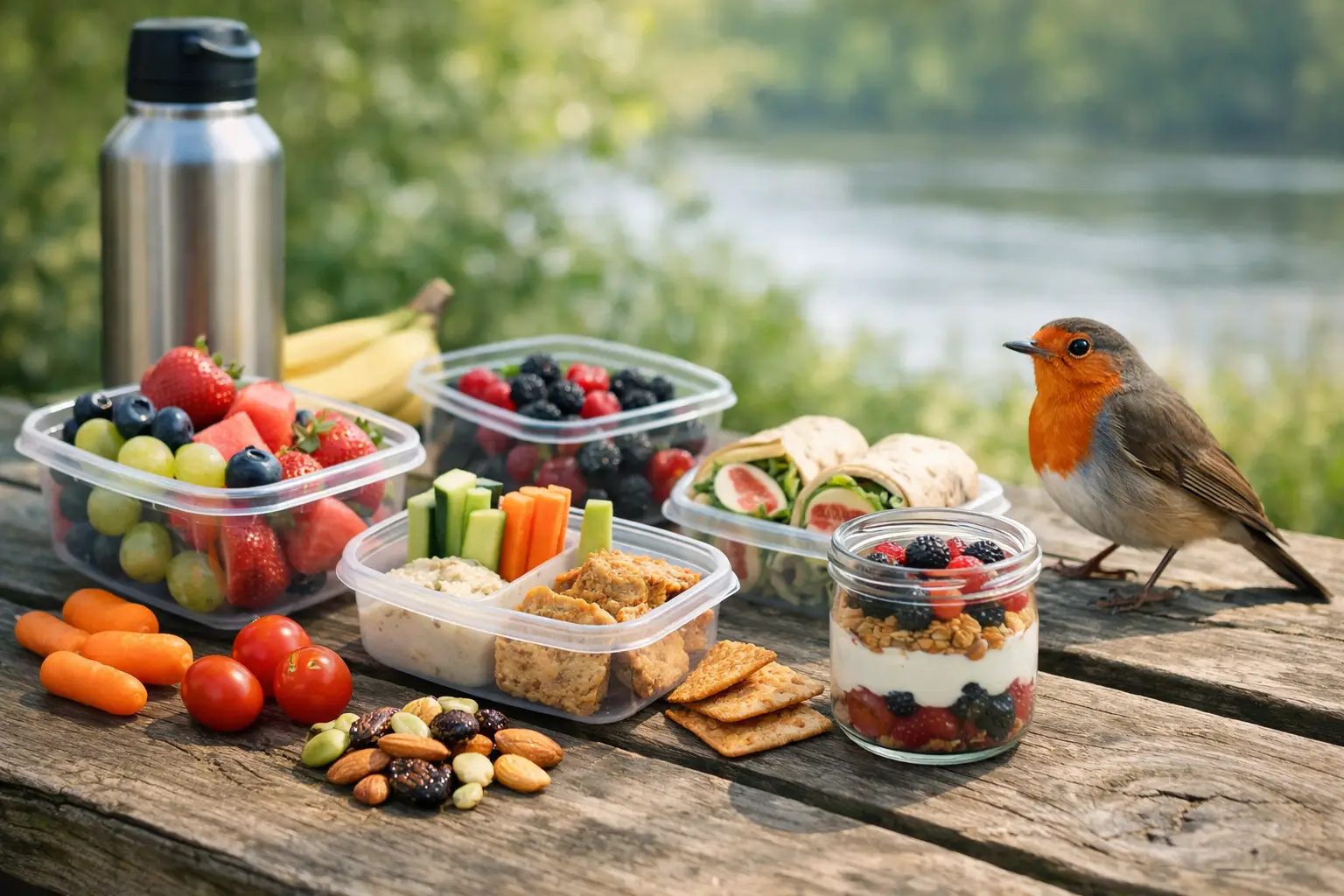
Portability matters too. For an air-conditioned office or a short neighborhood walk, shelf-stable options are easy. For a sports tournament, picnic, or long drive, a small insulated bag with ice packs opens up better choices, including yogurt, cheese, eggs, and cut produce.
Healthy Summer Snacks for Days on the Go
1. Watermelon with a salty, protein-rich side
Cold watermelon is a summer staple because it is refreshing and high in water. On its own, though, it may not carry someone through a busy afternoon. Pair a container of watermelon cubes with a cheese stick, a handful of roasted edamame, or a small portion of nuts. The combination offers sweetness, crunch, and more staying power without feeling heavy in hot weather.
2. Greek yogurt and frozen berries
Plain or lightly sweetened Greek yogurt provides protein, while berries add flavor and fiber. Pack the yogurt in a chilled container and bring frozen blueberries, raspberries, or cherries separately. By snack time, the fruit will have softened enough to eat and can help keep the yogurt cold. For children, check for added sugar in flavored yogurts rather than assuming every fruit variety is the same.
3. Hummus with crisp vegetables and pita
Hummus is a practical base for a snack box because it pairs with more than one texture. Add sliced cucumbers, bell peppers, snap peas, and a few whole-grain pita wedges. The vegetables add hydration and crunch, while chickpeas contribute fiber and plant-based protein. Keep hummus cold, especially when packing it for the park or beach.
4. Peanut butter banana roll-ups
Spread peanut butter, sunflower seed butter, or another preferred spread over a whole-wheat tortilla. Add a banana, roll it tightly, and cut it into pieces. This is an easy choice for a road trip or a day when lunch will be later than usual. If nut allergies are a concern at camp, school programs, or shared events, seed butter is often the more practical choice.
5. Hard-boiled eggs with grapes
Hard-boiled eggs are compact, filling, and easy to prepare ahead. Grapes offer a cool, sweet contrast, and both fit neatly into a reusable container. Slice grapes lengthwise for young children to reduce choking risk. Eggs should stay in a cooler with ice packs and should not sit outdoors for extended periods.
6. Cottage cheese with peaches or tomatoes
Cottage cheese works well with ripe summer produce. Try it with sliced peaches and cinnamon for a sweet option, or cherry tomatoes, black pepper, and herbs for a savory one. It is not the best snack for carrying without refrigeration, but it is a strong choice for home, the office fridge, or a short outing with a cooler.
7. DIY trail mix without the candy overload
Store-bought trail mix can be convenient, but many varieties contain more candy-coated chocolate and sweetened fruit than nuts or seeds. Make a version with almonds, pistachios, pumpkin seeds, unsweetened coconut flakes, and a modest amount of dried fruit. It travels well and does not require refrigeration. Portion it into small containers, since nuts and dried fruit are nutritious but easy to overeat by the handful.
8. Chilled pasta salad cups
A small pasta salad can be a snack, not just a side dish. Use whole-grain or legume-based pasta with diced cucumber, tomatoes, beans, olive oil, and a little cheese. The beans help make it more substantial than a bowl of plain noodles. This option is especially useful for active teens, hikers, and anyone who needs more than a light bite between meals.
9. Popcorn with fruit
Air-popped or lightly salted popcorn provides a whole-grain crunch that is easy to carry. Pair it with an orange, a peach, or a small apple for a simple snack with fiber and volume. Avoid bringing popcorn for very young children, as it can be a choking hazard. For adults and older children, it is a useful alternative when the usual snack is a bag of chips.
10. Frozen yogurt bark
Spread Greek yogurt on a lined tray, top with berries, chopped fruit, and seeds, then freeze and break into pieces. It feels like a dessert but can offer more protein and less added sugar than many frozen novelties. It melts quickly, so it is best for eating at home or serving directly from a cooler on a very hot day.
11. Avocado crackers with lime
Mash avocado with lime juice and a pinch of salt, then spread it over whole-grain crackers just before eating. The lime helps with flavor, but it will not keep avocado bright indefinitely. For travel, bring the avocado mixture in a tightly sealed container and assemble the crackers at the destination to avoid sogginess.
12. Smoothie freezer packs
For hectic mornings, prepare freezer bags with fruit, spinach, and a spoonful of oats or chia seeds. Blend with milk, soy milk, or yogurt when ready. A smoothie can be a smart summer snack after exercise or while running errands, but it is more satisfying when it contains protein rather than fruit juice alone.
Pack Healthy Summer Snacks With the Weather in Mind
Hot weather is where good intentions often fall apart. Pack cold foods in an insulated lunch bag with at least two frozen gel packs, especially if they will be outside for more than a short period. Keep the cooler out of direct sun and open it only when needed. A full cooler stays colder longer than one with a lot of empty space, so add a frozen water bottle if necessary.
For longer trips, divide foods into two groups. Keep shelf-stable choices, such as fruit, popcorn, nut butter packets, and roasted chickpeas, in a tote or backpack. Reserve the cooler for foods that need it, including dairy, eggs, cut melon, cooked pasta, and dips. This simple separation prevents frequent cooler opening and makes it easier to find snacks quickly.
Water deserves a place in the plan. Thirst can feel like hunger, particularly after swimming, walking, or playing outside. Bring refillable bottles and consider adding lemon, cucumber, or frozen fruit for flavor. Sports drinks may be useful during prolonged, intense activity in high heat, but for most casual summer outings, water and a regular snack are enough.
A Few Smart Trade-Offs
The healthiest option is not always the most realistic one. Fresh produce is excellent, but washing, cutting, and chilling it takes time. A low-sugar granola bar or a packet of roasted chickpeas may be a better choice than skipping food altogether when travel runs late. Convenience foods can support a balanced routine when you read labels and choose options with recognizable ingredients, some protein or fiber, and moderate added sugar.
Dietary needs also change the equation. Dairy-free families may favor bean dips, soy yogurt, or seed butter. People managing diabetes may find that pairing fruit with protein helps reduce sharp swings in hunger. Anyone with a medical condition, food allergy, or a prescribed eating plan should use advice tailored to their needs rather than relying on general snack ideas.
A good summer snack should make the day easier, not create another task to manage. Keep a few shelf-stable options ready, use the cooler when the outing calls for it, and let ripe seasonal fruit do some of the work. When the temperature rises, a little planning can keep everyone fueled, hydrated, and ready to enjoy the day.