Rockin Robin SongFlying The Web For News.
RobinPost Logo Amazon Prime Deals


Global World Topics

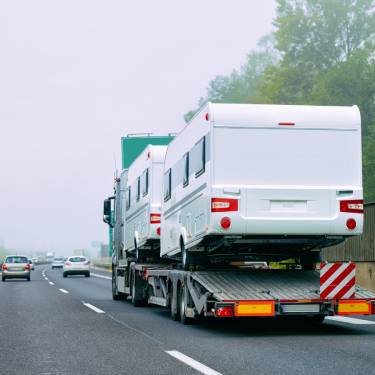
4 Reasons To Hire an RV Transport Service

Owning an RV is all about freedom—exploring the open road, discovering new places, and making unforgettable memories. However, when it comes to transporting your RV, whether across states or even countries, the logistics can quickly become overwhelming. This is where professional RV transport services come to the rescue. By relying on skilled professionals, you can unlock several advantages that make your travel experience smoother and stress-free. Check out the top reasons to hire an RV transport service.

Expertise in Handling and Transporting RVs

RV transport services have the expertise to handle these large and often cumbersome vehicles with precision. With training in maneuvering and maintaining RVs during transport, these teams ensure a successful move from start to finish. Whether it’s loading your RV onto a specialized truck or driving it cross-country, these experts know how to minimize wear and tear on your vehicle. For RV owners who may not be confident in maneuvering their large rigs or navigating busy highways, this expertise offers peace of mind.

Time and Cost Savings for RV Owners

Transporting an RV yourself can be time-consuming and expensive. Between planning the route, calculating fuel costs, and organizing accommodations en route, the process can stretch into days or even weeks. A transport service eliminates these hassles entirely. Instead of taking time off work and sacrificing precious vacation days, you can tell the RV transport service the important information about your vehicle and leave the logistics to the professionals. Additionally, considering the high fuel consumption of most RVs, transport services often prove more economical when long distances are involved. This is especially true when you factor in the wear-and-tear costs of driving the vehicle yourself.

Safety and Security of the RV During Transport

Safety is a top priority for anyone transporting an RV, and professional services have the tools and know-how to protect your vehicle along the way. From using the correct equipment for securing your motorhome to ensuring compliance with transportation laws, these companies go the extra mile to safeguard your investment. By hiring a transport service, you can avoid risks like vehicle damage, accidents, or breakdowns that might occur if you attempt the trip on your own.

Access to Nationwide and International RV Transport Services

Whether you’re relocating across the country or dreaming of a road trip abroad, RV transport services have you covered. Many providers offer both nationwide and international options, ensuring that your RV reaches its destination safely no matter the distance. This flexibility allows you to focus on planning your next adventure knowing your vehicle is in capable hands. For those with ambitious travel plans, the ability to transport an RV anywhere significantly expands the possibilities.

Hiring a professional RV transport service simplifies logistics, protects your investment, and saves you valuable time. Whether you’re gearing up for a big move or simply looking to avoid the hassle of long-distance driving, there are so many important reasons to hire an RV transport service. Make your next adventure stress-free by working with professionals who will help keep your journey seamless and enjoyable.


Bio: Casey is a passionate copyeditor highly motivated to provide compelling SEO content in the digital marketing space. Her expertise includes a vast range of industries from highly technical, consumer, and lifestyle-based, with an emphasis on attention to detail and readability.


More News From This Category
What US Midterm Election Results Really Show
Fri, 08 May 2026 07:08:32 +0000

Election night rarely ends when the maps stop flashing. The real story in us midterm election results usually appears in the gaps between expectations and outcomes - where turnout changed, where suburban districts swung back, where independent voters broke late, and where control of Congress came down to a handful of races instead of a single national wave.

For readers tracking politics across multiple updates, video coverage, and breaking alerts, that matters more than any one dramatic headline. Midterms are often framed as a verdict on a sitting president, but they are also a test of local candidates, economic anxiety, redistricting, abortion rights, voter enthusiasm, and the difference between national polling and district-level reality. That is why the same election can produce one broad narrative on cable news and a more complicated one in the actual vote count.


What US Midterm Election Results Really Show

Why us midterm election results matter beyond one night

Midterm elections decide every seat in the House of Representatives, about one-third of the Senate, and a wide range of governor, secretary of state, attorney general, and state legislative races. In practical terms, that means us midterm election results shape whether a president can move legislation, whether Congress becomes a brake on the White House, and how states manage election rules, abortion policy, education fights, crime policy, and voting access.

For most voters, the immediate question is simple: who won control? That is important, but it is only the first layer. A narrow House majority works differently from a commanding one. A Senate majority with a slim margin can still struggle if members of the same party disagree on spending, judicial nominees, border policy, or foreign aid. Results at the state level can also have long tails, especially when they affect ballot access, election certification, and redistricting ahead of the next presidential cycle.

This is where broad election coverage can mislead casual readers. A party can underperform in marquee governor races but still gain enough House seats to control the chamber. Another can lose the House but post stronger-than-expected Senate results because candidate quality mattered more in statewide contests. The map is one event, but it contains several different elections happening at once.

The biggest patterns behind recent US midterm election results

One of the clearest patterns in modern midterms is split behavior. Voters do not always cast a straight-ticket ballot with the same intensity they once did, but they also do not split their votes randomly. They may punish the president's party on inflation while backing a Senate candidate from that same party because they distrust the alternative. They may vote for a Republican governor and a Democratic House member in the same state if local issues pull them in different directions.

Turnout is another major factor. Midterms historically draw fewer voters than presidential years, which means coalition strength matters as much as broad popularity. A party with highly motivated voters in key suburbs or rural counties can outperform national polls. Younger voters can change the shape of a race, but only if they actually show up in strong enough numbers. Older voters remain highly reliable, which gives them outsized influence in many battlegrounds.

Candidate quality keeps showing up as a deciding force. In some cycles, parties have recruited disciplined, locally credible candidates who fit their states or districts well. In others, they have backed nominees with weak campaign skills, controversy baggage, or messages that worked in primaries but collapsed in general elections. That is one reason election analysts look beyond party labels and ask whether a Senate candidate can survive in a purple state or whether a House contender can match the district's education and income profile.

Then there is the issue mix. Economic frustration has often driven the midterm mood, but it does not operate alone. Abortion rights, crime, immigration, threats to democracy, foreign policy, and school debates can all rise quickly depending on court rulings, local conditions, and campaign messaging. It depends on what voters see as most urgent in the closing weeks.

Reading House and Senate results the right way

The House is usually where national mood shows up fastest. Every district is on the ballot, and a relatively small shift in suburban and exurban voting can flip dozens of seats. When us midterm election results produce a narrow House majority, it often signals a frustrated electorate without a full rejection of the president's party. When the majority is large, that usually points to a broader wave with more uniform movement across regions.

The Senate tells a different story because each race is statewide and the map changes every cycle. A party can win the national House vote and still struggle in the Senate if it is defending difficult seats in competitive states. The reverse can also happen. Senate results often reveal where message discipline, incumbency, and candidate image carried more weight than the national environment.

This is why analysts who focus only on one chamber can miss the larger picture. If the House shifts but the Senate resists, voters may be asking for divided government rather than one-party rule. If both chambers move in the same direction, the result carries more force as a national signal.

What close races really tell us

Close races are not noise. They are often the clearest evidence of where the electorate is unsettled. A district decided by one or two points may point to a demographic transition, redistricting effects, or a local backlash that could intensify in the next cycle. In a country this polarized, small movement matters.

That is especially true in suburbs around major metro areas. These regions have become central to modern election math because they can swing between parties based on education levels, cultural issues, and economic confidence. When suburban counties move, House control usually follows.

Why expectations matter so much on election night

Midterm coverage is shaped as much by expectations as by raw results. If forecasts suggest a major opposition wave and it never arrives, the president's party may still lose seats but be treated as having survived. If expectations are low and one party posts narrow gains, those gains can look bigger than they really are.

This matters for public perception, donor energy, and the next campaign cycle. Narrative can affect whether party leaders keep the same strategy, whether presidential hopefuls enter the race, and whether activists feel encouraged or demoralized. Election results are numbers first, but politics digests them through storylines.

A useful way to read the returns is to ask three questions. Did one party beat the structural pattern for midterms? Did key battleground voters reject candidates seen as too extreme? And were the winning coalitions broad or just barely enough? Those answers usually tell you more than the first big map graphic.

State races often shape the next national contest

Governors and secretaries of state do not always get the same attention as Senate races, but they can be just as important. Governors influence abortion access, education policy, emergency powers, infrastructure spending, and state budgeting. Secretaries of state can shape election administration, certification processes, and public trust in how votes are counted.

State legislative races matter too, especially after redistricting fights and legal battles over voting rules. A party that falls short nationally may still build long-term power by winning statehouses, while a party that dominates headlines in Washington can lose ground where future electoral maps are drawn.

For a platform built around fast discovery and broad news access, this is the part readers should not skip. The headline battle for Congress draws the clicks, but the deeper policy impact often sits in the state results just below it.

What to watch after the results are in

The election is not over when the winners give speeches. The next phase is about governing. If control is narrow, expect leadership fights, committee battles, spending showdowns, and more pressure on moderates from both parties. If one party controls less than expected, internal blame usually starts quickly - messaging, money, candidate recruitment, abortion, inflation, turnout strategy, all of it.

Watch where each party claims a mandate and where it avoids one. That difference tells you what legislation is realistic. It also reveals which voter groups leaders believe delivered the win: suburban women, working-class voters, younger voters, independents, or rural conservatives.

The other smart thing to watch is whether results confirm a durable shift or a temporary correction. Some midterms mark the start of a new alignment. Others are more like a warning shot tied to a single moment of public frustration. The distinction only becomes clear when parties respond.

For anyone following the nonstop stream of election coverage, the best reading of us midterm election results is usually the least dramatic one at first glance. Look past the map colors, check where margins tightened or widened, and pay attention to the state-level picture. That is where the next chapter usually starts.

Read More ...


Electric vs Gas Cars: Which Makes Sense?
Thu, 07 May 2026 07:08:26 +0000

The real question in electric vs gas cars is not which one wins on paper. It is which one fits the way you actually drive, pay for fuel, handle maintenance, and plan around daily life. A commuter with home charging, a rideshare driver logging long highway miles, and a family in an apartment building may all land on different answers for perfectly practical reasons.

That is why the debate keeps shifting. Gas cars still dominate the road, filling stations are everywhere, and buyers know what ownership looks like. Electric vehicles, meanwhile, are moving from early-adopter territory into the mainstream, pushed by lower running costs, new model choices, improving charging networks, and tougher emissions goals. For many drivers, the decision is no longer about curiosity. It is about timing, budget, and convenience.


Electric vs Gas Cars: Which Makes Sense?

Electric vs gas cars starts with your routine

If you leave home every morning, drive 25 to 40 miles, and return to a place where you can charge overnight, an electric car can feel easy very quickly. That daily rhythm removes the biggest concern most shoppers have, which is charging. You are not hunting for a public charger every few days. You are topping up at home and starting each morning with a near-full battery.

Gas cars still hold the advantage for people whose schedules are less predictable. If you cover large distances without much warning, drive into rural areas often, or cannot reliably charge where you live, gasoline remains simpler. Five minutes at the pump is still hard to beat when flexibility matters more than efficiency.

This is where buyers can get tripped up by broad claims. A vehicle can be cheaper to operate, cleaner in city driving, and quieter on the road, yet still be the wrong fit if your housing setup makes charging a hassle. The most useful comparison is not abstract. It is based on your zip code, your mileage, and your parking situation.

Cost is more complicated than the window sticker

One of the biggest points in electric vs gas cars is purchase price. In many segments, EVs still cost more upfront than comparable gas models. That gap can shrink with incentives, lease deals, and falling battery costs, but shoppers still notice the sticker first.

The next layer is operating cost. Electricity is often cheaper than gasoline on a per-mile basis, especially if you charge at home and local utility rates are reasonable. EVs also have fewer moving parts, no oil changes, and generally less routine maintenance. Over time, that can offset part of the higher purchase price.

But savings are not automatic. Insurance can be higher on some electric models. Public fast charging can cost far more than home charging. Tire wear may increase because EVs are heavier and deliver instant torque. If battery replacement is ever needed outside warranty coverage, that can become a major expense, though for many owners this remains a long-term concern rather than an immediate one.

Gas cars bring a more familiar ownership model. Repairs are widely understood, mechanics are easy to find, and used inventory remains broad across price points. For budget-minded shoppers, especially in the used market, gas often still offers more choices with lower entry costs.

Range matters, but charging matters more

Range grabs headlines because it is easy to compare numbers. One EV might offer 250 miles, another 320, while a gas car can often travel 400 miles or more before refueling. Those figures matter, but in practice the bigger issue is how fast and how easily you can refill.

For daily drivers, EV range anxiety can fade once charging becomes routine. A car with 250 miles of range is more than enough for many households. Problems show up on road trips, in cold weather, or when charging stations are busy, broken, or poorly placed.

Gasoline remains the more resilient system for long-distance travel. Stations are common, fueling is quick, and route planning is minimal. Electric road trips are improving, but they still ask more from the driver. You may need to plan stops around charger availability, battery preconditioning, weather, and wait times.

That does not mean EV travel is impractical. It means convenience varies sharply by region. In some metro corridors, charging is easy and getting easier. In other areas, it can still feel patchy. That gap matters more than advertised range alone.

Performance and driving feel are different by design

Many first-time EV drivers notice the same thing within minutes: electric cars feel quick. Instant torque gives strong acceleration from a stop, and the cabin is usually quieter than a gas vehicle. Around town, that makes an EV feel smooth, calm, and modern.

Gas cars still offer a driving experience many people prefer, especially enthusiasts or buyers who value engine sound, lighter vehicle weight, and familiar refueling patterns. They also tend to perform more consistently in settings where charging access is uncertain or towing demands are heavy.

Weather can affect both types, but electric models are more sensitive to temperature extremes. Cold weather can reduce range, and very hot conditions can influence battery management. Gas cars are not immune to seasonal issues, yet their range and refueling patterns tend to change less dramatically.

Maintenance, repairs, and long-term ownership

Electric vehicles generally win the maintenance conversation in routine use. No oil changes, no spark plugs, fewer fluids, and less brake wear thanks to regenerative braking all help reduce service visits. For people who want fewer moving parts and less scheduled maintenance, that is a real benefit.

Long-term repair questions are where the picture gets less tidy. Battery durability has improved, and most automakers offer substantial battery warranties, but replacement costs remain a concern in the public mind. Repair networks for EV-specific issues are growing, though they are still less mature than the infrastructure around gas vehicles.

Gas cars ask for more regular maintenance, but the system around them is deeply established. Independent repair shops are everywhere. Parts are widely available. Used buyers and second owners often feel more confident because the technology is familiar and easier to price.

For drivers who keep a car for a very long time, both paths involve trade-offs. An EV may save money along the way but raise uncertainty around battery aging and resale. A gas car may cost more in fuel and service over the years but remain easier to repair almost anywhere.

Environmental impact is real, but not identical in every state

A lot of the public conversation around electric vs gas cars centers on emissions, and for good reason. EVs produce no tailpipe emissions, which is especially valuable in dense urban areas with air-quality concerns. They are also generally cleaner to operate over time, even when accounting for electricity generation and battery production.

Still, the climate benefit is not identical everywhere. An EV charged on a cleaner power grid has a stronger emissions advantage than one charged in a region still heavily dependent on fossil fuels. Battery manufacturing also carries a significant environmental footprint upfront.

Gas cars are straightforward in this respect. They burn fuel and emit carbon directly every time they are driven. Efficiency gains help, and hybrids improve the picture, but gasoline ownership remains tied to ongoing tailpipe emissions.

For many buyers, the environmental question is not all or nothing. It is one factor among many. Some will prioritize lower emissions even if charging takes planning. Others will choose the vehicle that best matches their current housing or budget and revisit the issue later.

Who should seriously consider each option

Electric vehicles make the most sense for drivers with predictable daily mileage, access to home charging, and a plan to keep fuel and maintenance costs low over time. They also fit buyers who want a quieter driving experience and are comfortable with route planning on longer trips.

Gas cars still make strong sense for people who rent, park on the street, travel long distances often, drive in areas with limited charging infrastructure, or need the lowest upfront cost in the used market. They also remain practical for households that want one vehicle to handle every possible scenario without charging logistics.

There is also a middle lane worth mentioning: hybrids and plug-in hybrids. For some shoppers, they answer the biggest pain points on both sides. A hybrid reduces fuel use without changing daily habits. A plug-in hybrid offers short electric commuting with gasoline backup for longer drives. Neither is a perfect substitute for a full EV, but both can be smart transition choices.

The most useful way to think about this market is not as a culture-war choice or a technology loyalty test. It is a transportation decision shaped by infrastructure, pricing, and routine. The right answer today may change in three years as charging expands, battery prices shift, and more used EVs enter the market.

If you are shopping now, ignore the loudest claims and start with your actual week: where you drive, where you park, what you spend on fuel, and how often you need flexibility on short notice. That is usually where the right car reveals itself.

Read More ...


US Election Resuts Today: What to Watch
Wed, 06 May 2026 07:08:26 +0000

Election nights rarely move in a straight line. The first wave of numbers can look decisive, then narrow fast as urban counties report later, mail ballots are added, and state-specific counting rules reshape the picture. If you are checking us election resuts today, the most useful approach is not to chase every flashing update. It is to know which numbers matter, which ones mislead, and why some states look slow even when the process is working as designed.

For readers following politics alongside business, world news, video coverage, and live updates, this is one of those moments when context matters as much as speed. Early returns create headlines. Complete returns create outcomes. The gap between those two things is where a lot of confusion starts.


US Election Resuts Today: What to Watch

How to read us election resuts today without getting fooled

The biggest mistake on election night is treating raw vote totals like a finished scoreboard. In many states, the order of counting is not the same as the order ballots were cast. Some report in-person Election Day votes first. Others add early voting and absentee ballots quickly. Others take longer because signatures, provisional ballots, or local reporting workflows slow the process.

That means a candidate can appear comfortably ahead at 9 p.m. and lose ground by midnight, or trail early and recover once large counties finish uploading batches. This is not automatically evidence of a problem. More often, it reflects geography, turnout method, and state law.

Margin matters more than drama. A lead of 8 points with 20 percent of expected vote left to report may be more stable than a lead of 1 point with half the state still outstanding. The key question is simple: where are the missing votes coming from? If the remaining ballots are concentrated in counties that strongly favor one party, the headline number on screen may tell only part of the story.

The states and races most likely to shape the night

National elections are decided through a patchwork of state rules and local reporting systems, so not every race carries the same weight at the same time. Presidential years draw the most attention, but Senate, House, governor, and ballot measure results can also shift the story of the night.

Battleground states tend to dominate because their margins are thinner and their electoral stakes are larger. A fast call in one state can reset expectations everywhere else, while a delayed count in another can keep the entire map unsettled into the next day. The same is true in closely divided Senate contests, where a single seat can change committee power, confirmations, and the legislative outlook.

House races are more fragmented and often less dramatic in national coverage, but they can be just as important. Control of the House can turn on suburban districts, redrawn maps, and turnout patterns that do not always match the presidential result. If you are tracking control of Congress, a broad pattern across dozens of districts usually matters more than any single standout race.

Why some vote counts move fast and others stall

There is no single national method for counting ballots. Every state operates under its own legal timetable, processing rules, and certification schedule. That is why viewers often see one state nearly complete while another remains stuck with a large share unreported.

Pre-processing is a major factor. In some states, election officials can begin verifying and preparing mail ballots before Election Day. In others, they cannot start meaningful processing until the polls open or even until they close. The result is predictable: states with early preparation often release fuller numbers sooner, while states with stricter timing laws can look delayed even when officials are moving as quickly as possible.

County size also changes the tempo. A small rural county may post nearly complete results early because it handles fewer ballots. A major metro county may report in stages simply because it has far more votes to process and more complex ballot mix to review. Slow does not always mean suspect. Sometimes it just means large.

What early returns can actually tell you

Early returns are best used for identifying patterns, not proving final outcomes. They can show whether turnout is unusually high, whether a candidate is overperforming in key suburbs, or whether independent-heavy areas are breaking one way. But they cannot always settle a race on their own.

One useful signal is whether a candidate is running ahead or behind past benchmarks in the same counties. If a party needed strong suburban gains to win and those gains do not appear in early reporting, that may be meaningful. If a rural base turns out heavily but not beyond prior peaks, that may matter too. The trade-off is that benchmark comparisons can become shaky when district boundaries change, turnout is historically unusual, or voting method shifts from one cycle to the next.

Another clue comes from vote type. If mostly Election Day votes are in, you are not seeing the full electorate. If early vote totals dominate first, the later in-person batch may alter the margin. Smart coverage treats each data drop as one piece of a larger chain, not a final verdict.

Recounts, legal fights, and delayed calls

Close races do not end when television graphics say they are close. They end when ballots are counted under state law, canvassed by local officials, and certified. If the margin is tiny, recount rules can come into play automatically in some states or by request in others.

A recount is usually less dramatic than it sounds. Most recounts adjust totals modestly rather than producing a reversal, although exceptions exist. The closer the margin, the more every challenged ballot, machine read issue, and county-level paperwork question draws attention.

Legal disputes often focus on process rather than broad accusations. Deadlines, ballot curing, signature issues, overseas ballots, and provisional ballot standards can all become flashpoints. For readers following us election resuts today, this is where patience becomes part of responsible news consumption. A race can be unresolved without being chaotic.

How maps and percentages can mislead viewers

Election maps are useful, but they can create false confidence. A large block of geographic red or blue does not necessarily equal a large vote advantage. Population is uneven. A candidate can win many counties and still lose the state if the opponent runs up margins in major population centers.

Percent reported can be misleading too. Some outlets use estimated vote counts, and those estimates can change as turnout assumptions are revised. A state listed at 75 percent reported may still have a substantial number of high-impact ballots left, especially if they are concentrated in one metro area.

The cleaner way to read the map is to pair it with county-level context. Which places are still out? Are they urban, suburban, rural, military-heavy, college-heavy, or mail-vote heavy? Once you know that, the statewide margin starts to make more sense.

What matters beyond the headline winner

Even after the top race is called, the broader election story may still be unfolding. Down-ballot wins can affect tax policy, energy rules, education funding, abortion access, infrastructure priorities, and how aggressively state governments work with or against Washington. Ballot measures can be just as consequential for daily life as candidate races.

There is also the turnout story. Who showed up, who stayed home, and where margins shifted will shape strategy well past tonight. Parties, campaigns, advocacy groups, and markets all read those signals differently. A narrow win built on temporary conditions can mean something very different from a broad coalition that holds across regions.

For a news-discovery audience, this is where wide coverage helps. The immediate result matters, but so do the adjacent stories - local races, policy fallout, court timelines, market reaction, and the public mood reflected across states and communities.

The best way to follow US election resuts today

The fastest update is not always the best update. Reliable tracking means watching for verified county reporting, understanding whether ballots outstanding favor one side, and separating projections from certified totals. It also means accepting that a race can be leaning clearly before it is officially settled, or remain uncertain long after social media insists it is over.

On heavy news nights, the most practical habit is to use a steady source, compare multiple race indicators, and pay attention to what has not yet been counted. That sounds less exciting than reacting to every sudden swing, but it is far closer to how election outcomes are actually understood.

If tonight's numbers feel fragmented, that does not mean the picture is broken. It usually means the full picture is still arriving, one county, one batch, and one verified update at a time.

Read More ...


Building Faster: A Shift in Construction Design
Tue, 05 May 2026 09:21:07 +0000

A pair of construction engineers at the desk, reviewing blueprints and design plans on the computer monitor.

Construction no longer moves at the slow, drawn-out pace many people expect. Builders across the world now rethink how they design, plan, and complete projects. Speed has become a major priority, especially as demand for housing and infrastructure continues to grow. This shift is pushing the industry toward smarter and more efficient solutions. We’re exploring the shift in construction design and how crews achieve building faster without sacrificing quality.

Read More ...


Cinco de Mayo: What It Means Today
Tue, 05 May 2026 07:08:24 +0000

A packed restaurant, red-white-and-green decor, music in the street, and a flood of promotions can make Cinco de Mayo look simple on the surface. It is not. The day carries a real historical meaning in Mexico, a distinct cultural life in the United States, and a modern commercial presence that often blurs the line between celebration and stereotype.

For readers tracking holidays, cultural events, public celebrations, and the stories behind widely recognized dates, Cinco de Mayo is one of those topics that benefits from a closer look. It appears every year across news coverage, local event listings, school calendars, retail campaigns, and community festivals, yet many people still confuse it with Mexico's Independence Day or treat it as a generic party holiday. The reality is more specific, and more interesting.


Cinco de Mayo: What It Means Today

What Cinco de Mayo actually commemorates

Cinco de Mayo marks the Mexican army's victory over French forces at the Battle of Puebla on May 5, 1862. That battle took place during a period of foreign intervention in Mexico, when France sought to expand its influence after Mexico suspended debt payments to several European powers.

The Mexican victory at Puebla was not the end of the conflict, and it did not permanently stop French occupation. That matters, because the holiday is sometimes described in overly broad terms that flatten the history. The battle was symbolically powerful because a smaller, less-equipped Mexican force defeated a better-armed French army that was widely considered formidable at the time.

That win became a source of national pride. It represented resistance, resilience, and the ability to stand against outside pressure even under difficult conditions. In Mexico, the day has its strongest traditional significance in the state of Puebla, where battle reenactments, parades, and civic observances continue to anchor the event in its original history.

Cinco de Mayo is not Mexico's Independence Day

This is the point that still needs repeating every year. Cinco de Mayo is not Mexico's Independence Day. Mexico's Independence Day is celebrated on September 16 and commemorates the start of the independence movement against Spanish rule in 1810.

The confusion persists because Cinco de Mayo has much higher visibility in the United States than in many parts of Mexico. For many Americans, it is the Mexican holiday they see most often in restaurants, stores, entertainment coverage, and local event calendars. That visibility creates familiarity, but not always accuracy.

If you want the clean version, it is this: September 16 marks the beginning of Mexico's fight for independence from Spain. May 5 marks the Battle of Puebla, a later military victory against French forces. Different periods, different conflicts, different meaning.

Why Cinco de Mayo became so prominent in the United States

The American profile of Cinco de Mayo developed for several reasons, and it depends on which period you are looking at. Mexican American communities, especially in the western United States, played an early role in keeping the date visible. For some communities, the day carried themes of cultural pride, resistance, and solidarity.

Over time, public celebrations expanded. Civic groups, schools, local governments, and cultural organizations used the holiday as a platform to recognize Mexican heritage and Mexican American contributions. That community dimension still matters, especially in cities with deep Mexican American histories.

Then the commercial layer grew. Food and beverage brands, hospitality businesses, retailers, and event promoters saw the date as an easy fixture on the calendar. That broadened awareness, but it also changed the tone. In some places, Cinco de Mayo is presented as a cultural festival with music, dance, family programming, food vendors, and history displays. In others, it gets reduced to drink specials and surface-level imagery.

That split is part of why the holiday keeps generating fresh discussion. It is both a real historic observance and a heavily marketed American celebration. Those two versions overlap, but they are not identical.

How Cinco de Mayo is observed today

In Mexico, observance varies by region. Puebla remains the central focal point, with formal commemorations tied closely to the battle itself. Elsewhere, the date may be acknowledged without carrying the same scale or emotional weight that Americans often assume.

In the United States, the picture is much broader. Cities may host parades, street fairs, concerts, museum events, restaurant promotions, and school-based cultural programs. News and event coverage often includes dance performances, mariachi music, regional cuisine, artisan markets, and educational programming on Mexican history.

That wide mix reflects the way the holiday functions in American public life. It can be an educational date, a heritage celebration, a local tourism event, a nightlife promotion, or all four at once. There is no single national script.

For readers browsing a general-interest news and features platform, that makes Cinco de Mayo a useful example of how cultural events move through different channels at the same time. It is a history topic, a lifestyle topic, a local events topic, a consumer topic, and sometimes a debate about representation.

The difference between celebration and commercialization

This is where the conversation gets more nuanced. Commercial attention is not automatically a problem. Restaurants, musicians, event organizers, and local businesses are part of how public celebrations become visible and accessible. A city festival needs sponsors, vendors, promotion, and foot traffic.

The issue is whether the holiday is being presented with any cultural respect or historical context. A neighborhood event with food, music, local performers, and educational material can feel lively and welcoming without turning people into clichés. By contrast, campaigns built entirely around costume-party aesthetics or exaggerated symbols tend to flatten Mexican culture into a marketing backdrop.

It depends on intent, but it also depends on execution. Businesses and media outlets do better when they treat Cinco de Mayo as a real cultural and historical occasion rather than a one-day excuse for themed sales. Even small choices matter, from the language used in promotions to the type of imagery selected.

How to mark Cinco de Mayo more thoughtfully

For many people, the easiest upgrade is simple: learn the history before joining the celebration. Knowing that the date honors the Battle of Puebla changes the way the holiday lands. It stops being a vague "Mexican party day" and starts becoming a specific commemoration with a broader cultural afterlife.

Another good step is to support events and businesses that reflect actual community participation. Local festivals, cultural centers, museums, family events, and Mexican-owned restaurants often bring more depth than generic promotions. The experience tends to be better too, because it feels rooted in place rather than copied from a seasonal marketing kit.

Food is naturally part of the day for many Americans, but even there, a little care goes a long way. Regional dishes, local chefs, and community storytelling add more value than treating the cuisine as decoration. The same goes for music, dance, and art. When these are presented as living traditions instead of props, the holiday becomes richer for everyone involved.

Why the history still resonates

The Battle of Puebla matters beyond the battlefield itself because people often hold onto symbolic victories. Not every important historical moment changes the map overnight. Some endure because they show what a community or nation was able to do under pressure.

That helps explain why Cinco de Mayo continues to resonate across borders and generations. In one setting, it may signal Mexican resistance and national pride. In another, it may serve as a point of cultural visibility for Mexican American communities. In commercial spaces, it may be filtered through dining, entertainment, and retail. Those layers do not always sit comfortably together, but they explain the holiday's staying power.

For a platform built around broad discovery, constant updates, and accessible information, Cinco de Mayo fits naturally into the mix of history, current coverage, local events, cultural calendars, and lifestyle reporting that readers search for each spring. The topic reaches across news, education, community life, and consumer culture in a way few holiday observances do.

As this year's coverage, events, and promotions roll in, the most useful approach is also the simplest: enjoy the celebrations, but know what you are celebrating. That one shift makes the day more accurate, more respectful, and more worth showing up for.

Read More ...


Related Bing News Results
US Stock Market Today | Dow Jones | Nasdaq Live: US stocks rise after robust payrolls report, chip rebound
Fri, 08 May 2026 07:33:00 GMT
The gains helped offset broader market concerns after U.S. and Iranian forces clashed in the Gulf, undermining hopes for a quick resolution to the Middle East conflict and a gradual reopening of the ...

Jobs Report Today: Hiring Jumps by 115K. Why That Number Isn't as Good as It Looks.
Fri, 08 May 2026 06:21:00 GMT
Follow live news and analysis of the April jobs report, which the Bureau of Labor Statistics released at 8:30 a.m. Eastern time today.

What is Trump's approval rating today? May 2026 polls for Illinois, US
Fri, 08 May 2026 01:21:00 GMT
Trump isn't very popular in Illinois. But how low has his approval rating sunk amid the ongoing Iran war and skyrocketing gas prices?

Stock Market Today (LIVE): DDOG Surpasses $1 Billion and Is Accelerating; Will Iran Talks Save the Market?
Thu, 07 May 2026 15:56:00 GMT
Top insights from the latest market news from Thursday, May 7, from The Motley Fool analysts on Team Rule Breakers and Team Hidden Gems.

Stock Market Today, May 7: Nokia Drops by 6% as Momentum Stalls
Thu, 07 May 2026 15:37:00 GMT
On May 7, 2026, possible profit-taking, a loss of momentum in European stocks, and broader AI valuation concerns weighed on this telecom heavyweight.


Blow Us A Whistle


Related Product Search/Búsqueda de productos relacionados

Amazon Logo

Visit Our New Print-On-Demand Stores On Printify and Zazzle
Printify Zazzle