Heavy machinery operators face a constant challenge: adapting their equipment to perform efficiently across diverse landscapes. From rocky construction sites to muddy agricultural fields, terrain impacts heavy equipment performance. It determines project success, operational costs, and equipment longevity.
Terrain conditions directly influence machine stability, fuel consumption, and component wear rates. Rocky surfaces create vibrations that stress hydraulic systems, while soft soils reduce traction and increase fuel usage. Steep slopes challenge engine power and braking systems, requiring operators to modify their approach based on ground conditions.
Ground Conditions Affect Machine Stability and Traction
Soil composition plays a crucial role in heavy equipment operation. For example, clay soil becomes slippery when wet, reducing grip and increasing the risk of equipment sliding or getting stuck. Sandy terrain, on the other hand, offers better drainage but can cause machines to sink if the sand lacks compaction.
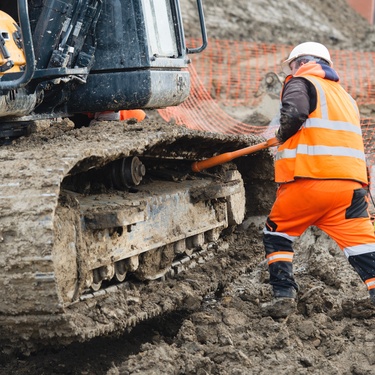
Rocky surfaces provide excellent stability but create harsh operating conditions. The constant impact from rocks damages undercarriage components and increases maintenance requirements. Rubber track tread designs vary significantly depending on these ground conditions, with deeper treads needed for soft terrain and reinforced designs required for rocky surfaces.
Equipment operators must assess ground bearing capacity before beginning work. Soft or saturated soils may require specialized tracks or flotation tires to distribute weight more effectively.
Slope and Grade Challenges Equipment Power Systems
Steep inclines demand maximum engine performance and place additional stress on transmission systems. Heavy equipment working on slopes faces several challenges:
reduced engine efficiency due to gravity effects
increased fuel consumption from working against gravity
higher risk of rollover on unstable surfaces
greater brake wear during descents
potential hydraulic fluid issues on extreme angles
Operators working on grades exceeding 15 degrees typically need specialized equipment configurations or alternative approaches to maintain safety and productivity.
Weather and Seasonal Changes Create Operational Variables
Weather conditions transform terrain characteristics and equipment performance. Rain turns stable soil into challenging mud, while freezing temperatures make the ground rock-hard and reduce hydraulic fluid efficiency.
Summer heat affects engine cooling systems and tire pressure, while winter conditions may require heated cabs and antifreeze solutions. Seasonal changes also impact ground conditions—spring thaws create muddy conditions that persist for weeks, while autumn leaves can create slippery surfaces on slopes.
Smart operators monitor weather forecasts and adjust their equipment setup accordingly. This includes changing track configurations, adjusting tire pressure, or scheduling work during optimal conditions.
Maximizing Equipment Performance Across Terrain Types
Operators must match machine capabilities to terrain demands for successful heavy equipment performance. Equipment selection and regular maintenance schedules need to account for terrain-related wear patterns.
Proper conditions assessment, equipment configuration, and operational planning ensure maximum productivity while minimizing costly repairs and downtime. The most successful operators view terrain not as an obstacle, but as a factor that shapes their strategic approach to each project.
Bio: Casey is a passionate copyeditor highly motivated to provide compelling SEO content in the digital marketing space. Her expertise includes a vast range of industries from highly technical, consumer, and lifestyle-based, with an emphasis on attention to detail and readability.
A recall notice can turn an ordinary prescription refill into an urgent question: why are medicines recalled, and does the warning apply to the bottle in your medicine cabinet? The answer is not always that a drug is dangerous for every person. Recalls can involve one production lot, a labeling mistake, a packaging flaw, or a problem that may affect a medicine's safety, strength, quality, or effec...
Opening a restaurant offers an opportunity to turn your passion for food into a thriving business. However, enthusiasm alone cannot guarantee a successful launch. Understanding the mistakes to avoid when opening a restaurant helps you make decisions before expenses accumulate. From developing a realistic budget to building a dependable team, every early choice influences your operations. Careful...
King Kalakaua celebrations 2026 will bring renewed attention to one of Hawaii's most influential monarchs, but visitors should not treat the occasion as a single guaranteed festival with a fixed annual format. Programs honoring King David Kalakaua can include cultural performances, historical presentations, music, hula, ceremonial observances, and community gatherings in Honolulu. Exact dates, ven...
A phone tap at a coffee shop can take less than a second, but the money behind that tap still has to come from somewhere. That is where the choice between online banking versus digital wallets becomes more practical than it first appears. One helps you manage the full picture of your finances. The other is designed to make certain payments faster, easier, and often more private at the point of sal...
Seasonal demand creates valuable opportunities for businesses, but it also presents challenges that can disrupt daily operations. Holiday shopping, summer tourism, back-to-school sales, and promotional events lead to sudden increases in customer demand, making it difficult to maintain appropriate inventory levels. Without proper preparation, businesses may experience stock shortages, overcrowded...