Ramadan 2026 is expected to begin on the evening of February 17, 2026. The first day of fasting will likely fall on February 18. The month will end around March 19, 2026, depending on local moon sightings. These dates may be changed, depending on the country.
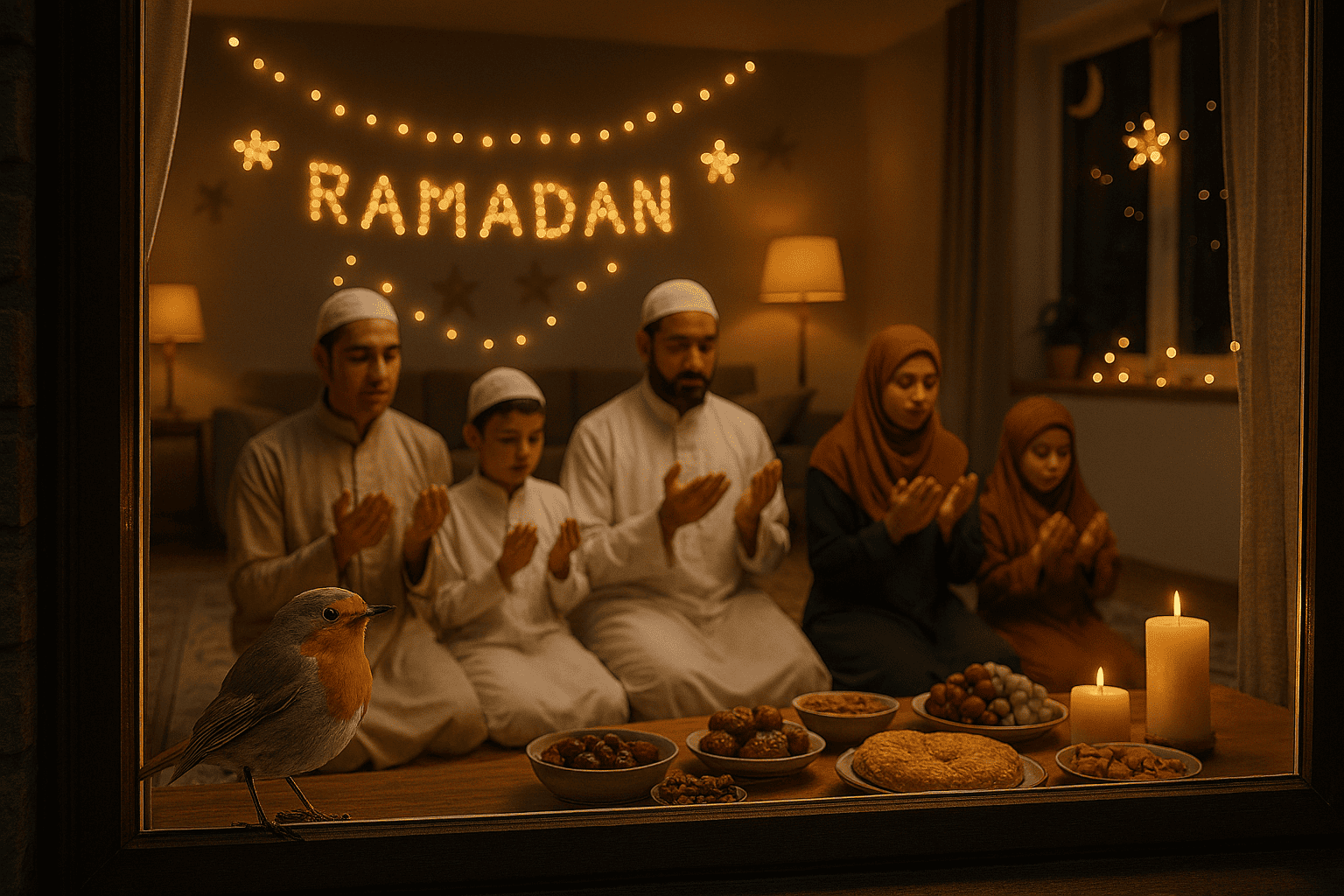
A red robin watches a Ramadan family prayer with warmth and wonder.
What Ramadan Means
Ramadan is the ninth month of the Islamic lunar calendar. Muslims believe this month marks the first revelation of the Qur’an to the Prophet Muhammad. Because of this, the month holds deep spiritual meaning. Muslims use this time to strengthen their faith, improve their character, and reconnect with their communities.
Why Muslims Fast
Fasting is one of the Five Pillars of Islam. Muslims fast from dawn to sunset each day. They avoid food, drink, smoking, and harmful behavior. The fast teaches patience, gratitude, and empathy. It also encourages Muslims to focus on prayer, charity, and self‑discipline.
People who are sick, pregnant, nursing, elderly, or traveling do not need to fast. Islam places health and safety first.
The Daily Rhythm of Ramadan
Each day follows a simple and meaningful pattern:
- Suhoor: A pre‑dawn meal that gives strength for the day.
- Fajr: The dawn prayer that begins the fast.
- Fasting hours: A time for work, study, reflection, and patience.
- Iftar: The sunset meal that breaks the fast, often starting with dates and water.
- Taraweeh: Special nightly prayers held in mosques or at home.
This rhythm creates a steady balance between spiritual focus and daily life.
Key Spiritual Practices
Muslims increase their worship during Ramadan. Many read the Qur’an each day. Others attend nightly prayers or spend extra time in reflection. The last ten nights are especially important. During this period, Muslims seek Laylat al‑Qadr, the “Night of Power,” which is believed to be a night of immense blessing.
Charity and Community Support
Charity plays a major role in Ramadan. Muslims give to those in need through two main forms of giving:
- Zakat: A required donation based on one’s savings.
- Sadaqah: Voluntary acts of kindness or financial help.
At the end of the month, Muslims give Zakat al‑Fitr. This donation ensures that everyone can celebrate Eid with dignity.
How Ramadan Is Celebrated Around the World
Muslims share the same core practices, yet each region adds its own traditions. These cultural touches make Ramadan feel both global and local.
Middle East and North Africa
Families gather for large iftar meals. Streets glow with lanterns and lights. Many cities adjust work hours to support fasting. Mosques stay active late into the night.
South Asia
Markets fill with special foods and sweets. Drummers may walk through neighborhoods to wake families for suhoor. Communities often share meals with neighbors and those in need.
Sub‑Saharan Africa
Communal iftars bring people together. Traditional dishes vary by region, but hospitality remains a shared value. Many communities break the fast outdoors or in large gathering spaces.
Europe and North America
Muslims balance fasting with work and school. Mosques host open iftars to welcome people of all backgrounds. These events help build understanding and friendship across cultures.
Southeast Asia
Indonesia, Malaysia, and Brunei observe Ramadan at a national level. Night markets offer special foods. Families gather for prayer and community events throughout the month.
Eid al‑Fitr: The Celebration After Ramadan
Ramadan ends with Eid al‑Fitr, a joyful holiday. Muslims begin the day with a special prayer. They wear new clothes, visit loved ones, and share festive meals. Children often receive gifts or money. The day celebrates gratitude, renewal, and community.
How Non‑Muslims Can Show Respect
People who do not observe Ramadan can still support friends, coworkers, and neighbors. Here are simple ways to show understanding:
- Use warm greetings such as “Ramadan Mubarak” or “Ramadan Kareem.”
- Offer schedule flexibility near sunset when possible.
- Accept an iftar invitation if you receive one. It is a sign of trust and friendship.
- Be mindful that fasting people may feel tired late in the day.
These small gestures help build respect and connection.
References
- Encyclopedia Britannica – Ramadan Overview
- Al Jazeera – Ramadan Coverage
- Time and Date – Ramadan Start Dates
- IslamicFinder – Prayer Times and Moon Sightings
Women and Ramadan: Faith, Worship, and Community
Women participate fully in Ramadan through fasting, prayer, charity, and reflection. Their worship often takes place in different spaces or rhythms, shaped by tradition, modesty, and personal preference.
Why Women Pray Separately
In most mosques, men and women pray in separate areas. This practice supports modesty and focus during worship. Women may pray behind the men, in a side room, or on a different floor. The goal is privacy and concentration, not exclusion.
Many women also choose to pray at home. Islam encourages this option, and many find it peaceful and spiritually grounding. Home prayer also supports women who manage family responsibilities during the month.
Spiritual Practices During Ramadan
Women engage deeply in Ramadan through:
- Fasting: Women fast from dawn to sunset unless exempt due to health, pregnancy, or menstruation.
- Prayer: Women pray at home or in designated mosque areas. Some attend nightly Taraweeh prayers.
- Qur’an reading: Many set personal goals to read or listen to the Qur’an throughout the month.
- Charity: Women lead food drives, donate to causes, and prepare meals for families and neighbors.
- Hospitality: Women often host iftar gatherings, creating warm and welcoming spaces for loved ones.
Menstruation and Worship
During menstruation, women are exempt from fasting and prayer. This exemption is a form of spiritual mercy, not a punishment. Women can still engage in reflection, charity, and listening to Qur’an recitation. Missed fasts are made up later.
Praying Together at Home
Men and women may pray together in private settings. Families often pray side by side at home, especially during Taraweeh or Eid. These moments strengthen family bonds and create shared spiritual experiences.
Respecting Women's Worship
Women’s worship may be less visible in public media, but it remains central to Ramadan. Their spiritual contributions shape homes, communities, and the overall experience of the month.
References
Ramadan Glossary: Simple Terms and Meanings
This short glossary explains common Ramadan words. It helps new readers follow the traditions and practices in the month.
- Ramadan
- The ninth month of the Islamic lunar calendar. Muslims fast, pray, and focus on spiritual growth during this time.
- Sawm
- The daily fast from dawn to sunset. It includes avoiding food, drink, and harmful behavior.
- Suhoor
- The early morning meal eaten before the fast begins.
- Iftar
- The meal that breaks the fast at sunset. Many families start with dates and water.
- Fajr
- The dawn prayer that marks the start of the fast.
- Maghrib
- The sunset prayer is performed right after breaking the fast.
- Taraweeh
- Special evening prayers held during Ramadan. They include longer recitations from the Qur’an.
- Laylat al‑Qadr
- The “Night of Power.” Muslims believe it is a night of great blessing in the last ten days of Ramadan.
- Zakat
- A required form of charity based on one’s savings. It supports people in need.
- Sadaqah
- Voluntary charity given at any time. It can be money, food, or acts of kindness.
- Zakat al‑Fitr
- A small donation given before Eid al‑Fitr. It helps everyone take part in the celebration.
- Eid al‑Fitr
- The holiday that ends Ramadan. Families gather for prayer, food, and celebration.
- Hijri Calendar
- The Islamic lunar calendar. It is shorter than the Gregorian calendar used in most countries.
- Halal
- Food and actions that follow Islamic guidelines.
- Hijab
- A headscarf worn by many Muslim women as a sign of modesty and faith.
- Masjid
- The Arabic word for mosque, a place where Muslims pray.
- Dua
- A personal prayer or request made to God.
Ramadan invites people everywhere to reflect, reconnect, and practice compassion. Its message reaches far beyond the Muslim community and offers lessons that anyone can appreciate.