A spike in oil prices, a warning from a regional militia, a military strike caught on video, and suddenly the phrase iran war moves from background analysis to urgent headline territory. For readers tracking world news in real time, the real question is not just whether fighting happens, but how a regional crisis could expand, who gets pulled in, and what signals matter before events move faster than the news cycle can explain.
Why the phrase iran war keeps returning
The phrase itself can be misleading because it compresses several different scenarios into two words. It might refer to direct conflict between Iran and another state, a proxy conflict involving armed groups aligned with Tehran, a maritime confrontation in the Persian Gulf, or a broader regional war that touches Iraq, Syria, Lebanon, Israel, Yemen, and beyond. Those are not the same event, and the risks are not equal.
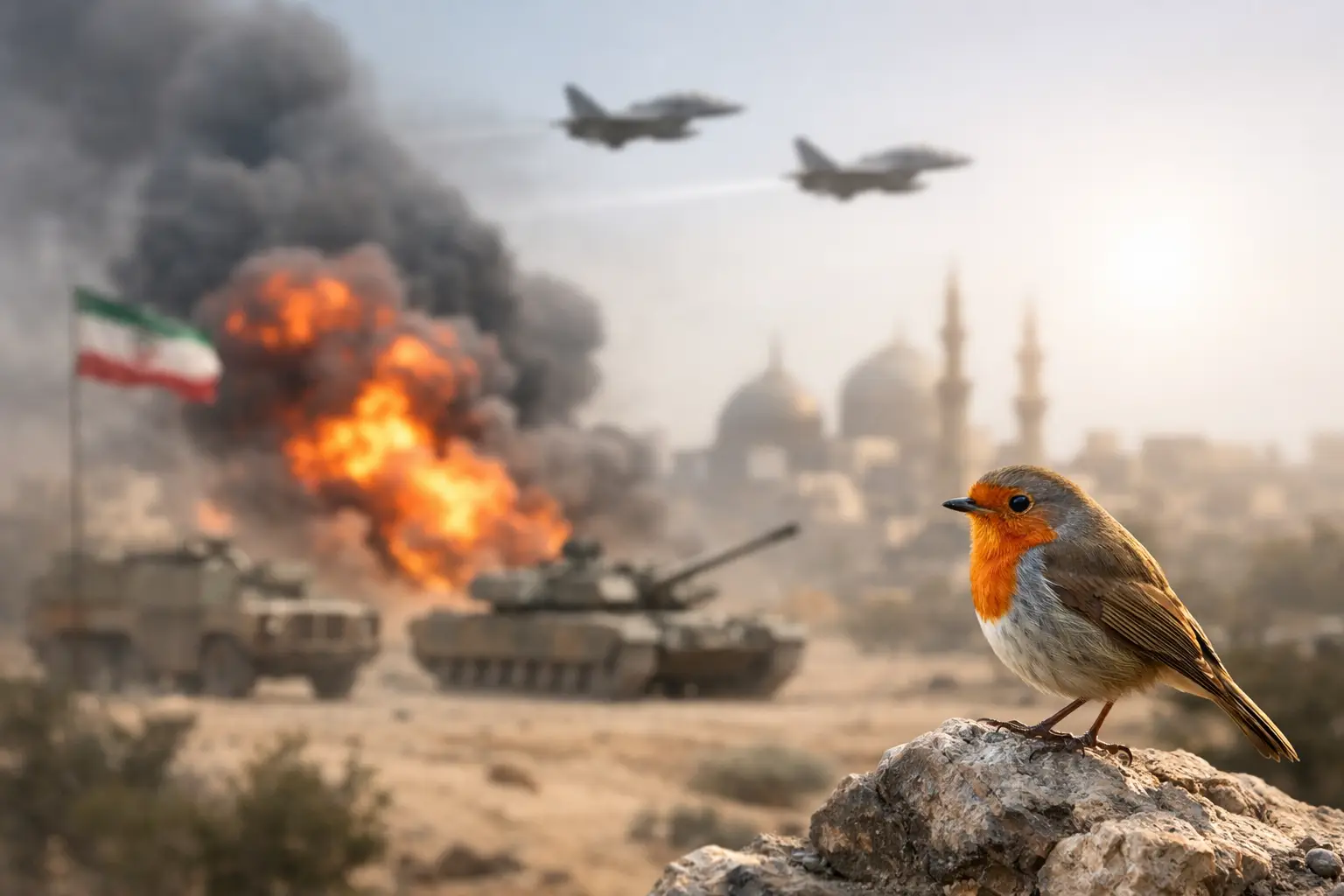
That distinction matters because headlines often flatten complexity. A strike on a weapons site, an attack on shipping lanes, or retaliation between Iran and Israel can all feed speculation about a larger war. But escalation is not automatic. States often try to calibrate force, send signals, and preserve room for deterrence without crossing into full-scale conflict.
For a general audience, the useful approach is simple: watch the chain, not just the flashpoint. A single explosion may be dramatic. The bigger issue is whether it triggers repeated retaliation, draws in outside militaries, or disrupts critical trade routes and energy markets.
The main paths to an Iran war
An Iran war could develop through several channels, and each has its own pace and consequences. The most obvious is direct state-to-state conflict. That would involve open military action between Iran and a major regional or global rival, with visible airstrikes, missile exchanges, cyber operations, and pressure on military infrastructure.
A second path is proxy escalation. Iran has long been tied by its rivals and many analysts to networks of partner militias and armed movements across the region. If one of those groups launches a major attack and the response targets Iran directly, the line between proxy war and direct war can disappear quickly.
A third path runs through shipping and energy. The Strait of Hormuz remains one of the world’s most sensitive maritime chokepoints. Any sustained disruption there would not just be a military story. It would hit oil prices, insurance costs, shipping confidence, and consumer markets far beyond the Middle East.
Then there is the nuclear dimension. Concerns over Iran’s nuclear program have shaped regional security calculations for years. If diplomatic channels fail completely and military planners decide they must act before Iran crosses a perceived threshold, that could trigger a conflict with consequences far beyond the original target set.
Who would be affected first
The first countries affected by an Iran war would almost certainly be in the Middle East, but the shock would not stay there. Israel, Gulf states, Iraq, Syria, Lebanon, and Yemen could all feel immediate security pressure, whether through missile threats, militia attacks, air defense activation, or economic disruption.
The United States would also be central. American forces, bases, naval assets, and diplomatic positions across the region make Washington both a deterrent actor and a potential target in any broader escalation. Even if the US did not seek a larger war, its personnel and infrastructure could be drawn in quickly if attacks spread.
Europe would feel the economic side fast. Energy costs, shipping delays, refugee pressures, and market uncertainty would all become part of the picture. Asian economies would be watching just as closely because major importers depend heavily on stable energy flows from the Gulf.
For ordinary consumers, this is where the story becomes more tangible. Conflict in or around Iran can show up in gas prices, airline routes, cargo delays, inflation concerns, and investment volatility. A faraway military event can become a household cost issue within days.
Why escalation is hard to predict
One reason Iran-related crises are difficult to read is that all sides are sending mixed messages at once. Public statements may sound absolute, while back-channel diplomacy is still active. A government may promise retaliation for domestic political reasons while privately looking for a controlled response. Military movements may be intended as deterrence rather than preparation for immediate attack.
There is also a history of brinkmanship. The region has seen repeated episodes where strikes, assassinations, cyberattacks, and proxy clashes raised fears of full war, only for decision-makers to step back at the last moment. That history can create false confidence. Just because previous crises stopped short does not mean the next one will.
At the same time, not every dramatic headline signals imminent catastrophe. Some incidents are tactical. Others are symbolic. The challenge for readers is avoiding both extremes - panic on one side and complacency on the other.
What to watch in iran war coverage
If you are following iran war coverage across live updates, video reports, and breaking alerts, a few signals are more meaningful than the loudest rhetoric. The first is whether attacks remain limited or become sustained. A one-off exchange is serious, but a pattern of repeated strikes usually signals a different phase.
The second is target selection. Hits on remote facilities, militia positions, or equipment depots carry one level of risk. Direct attacks on senior commanders, major cities, energy terminals, or US assets raise the stakes far more.
The third is whether diplomacy disappears. As long as third-party mediators, emergency talks, and military hotlines are active, escalation can still be managed. When those channels go quiet, miscalculation becomes more likely.
The fourth is market behavior. Energy traders, shipping insurers, and airlines often react before political language catches up. Sudden rerouting, price jumps, and insurance spikes can be early signs that institutions expect a more dangerous environment.
The media challenge: speed versus clarity
This is one of those stories where the information environment can make the crisis feel even more chaotic. Video clips spread quickly. Claims from state media, military spokespeople, and social platforms often arrive before independent confirmation. In fast-moving conflict coverage, the first version of events is often incomplete or wrong.
That does not mean readers should tune out. It means the most useful coverage separates verified developments from speculation and gives space to what is still unknown. A broad-access news platform such as RobinsPost can be especially useful here because audiences are not just looking for one article. They want live updates, related video, regional context, and the ability to compare how different outlets are framing the same event.
This is also a story where wording matters. Terms such as retaliation, deterrence, preemptive strike, proxy response, and red line are not interchangeable. Each suggests a different level of intent and a different possible next step.
Why a wider war is still not inevitable
Even when tensions are severe, every major player has reasons to avoid a prolonged regional war. Iran faces economic strain and internal pressure. Israel must weigh military goals against the risk of opening multiple fronts. Gulf states want stability for trade and investment. The US has strategic interests in deterrence, but also strong reasons to avoid another open-ended regional conflict.
That does not remove danger. It just means restraint and escalation often coexist. Governments may believe they can use force carefully enough to restore deterrence without triggering a larger breakdown. Sometimes that works. Sometimes the other side reads the signal differently, and the situation worsens.
That is the central trade-off in any Iran crisis. Limited force may be seen as necessary to show resolve, but every limited strike creates the chance of an unlimited response. The gap between those two outcomes can close very quickly.
What readers should keep in mind next
When the next breaking alert appears, it helps to ask three basic questions. Was this a single event or part of a sequence? Who is being targeted directly? And are political leaders leaving themselves a path to pause? Those questions will usually tell you more than the most dramatic clip or the sharpest statement.
The phrase iran war will keep surfacing because the region sits at the intersection of security, energy, diplomacy, and global markets. The smarter way to follow it is not to treat every incident as the start of World War III, or every pause as proof the danger has passed. Watch the pattern, watch the players, and watch whether the routes to de-escalation are still open.
In a story this volatile, the most useful habit is steady attention rather than constant alarm.