Every June 14, the American flag gets a rare moment of focused national attention. USA Flag Day is not one of the biggest dates on the federal holiday calendar, but it carries a distinct place in the country’s civic life. It asks a simple question that still matters: what does the flag represent, and how should that symbol be treated in public and private life?
For readers tracking public events, national observances, and civic traditions, Flag Day sits at the intersection of history, patriotism, education, and current debate. It is part remembrance, part ceremony, and part reflection. That mix is exactly why it continues to show up in school programs, veterans’ events, local parades, government proclamations, and news coverage each year.
What is USA Flag Day?
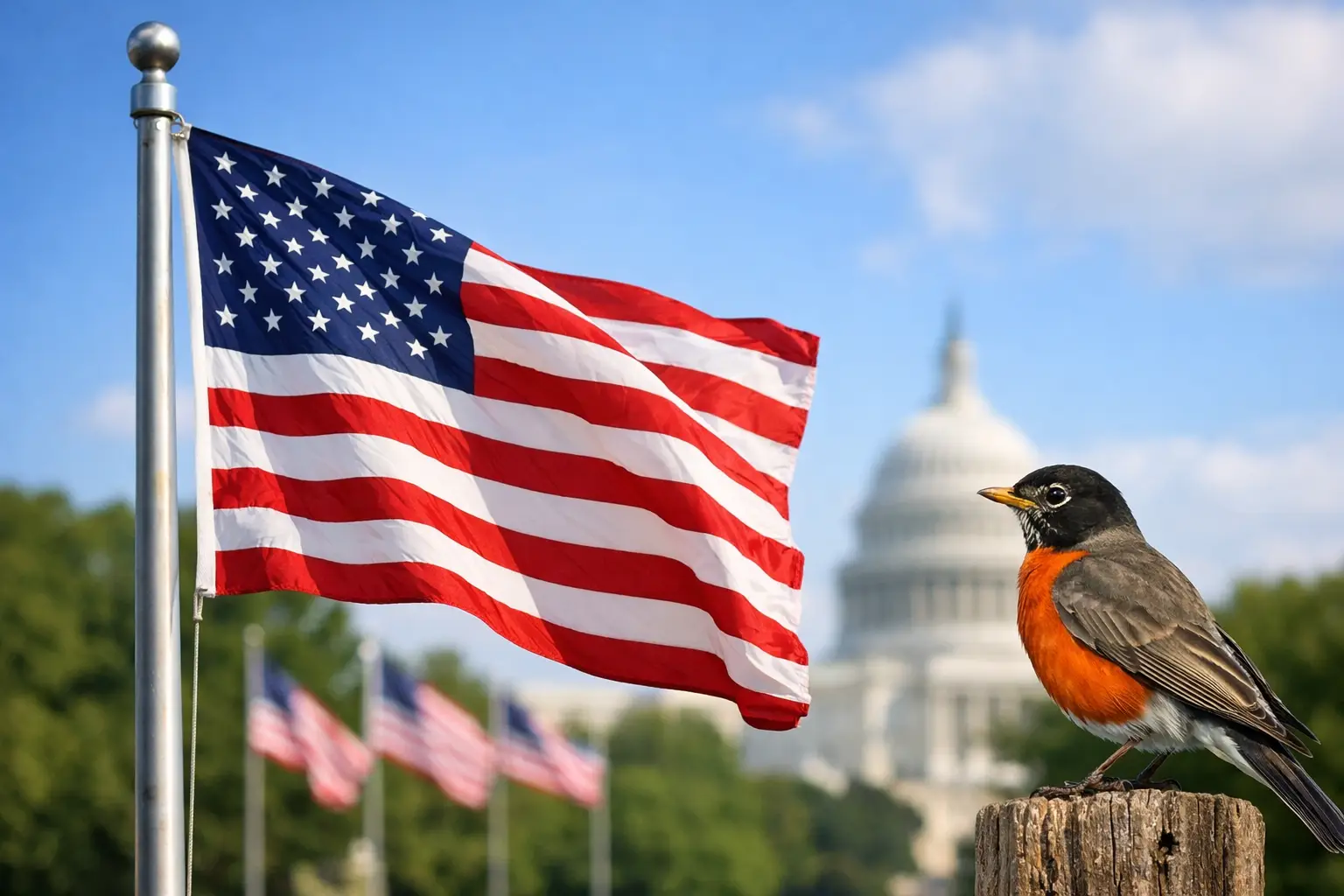
USA Flag Day is observed annually on June 14 to commemorate the adoption of the national flag of the United States in 1777. On that date, the Second Continental Congress approved a resolution stating that the flag would feature 13 stripes, alternating red and white, with 13 white stars on a blue field. That early design represented the original states.
The day is not the same as Independence Day. July 4 celebrates the nation’s declaration of independence. Flag Day focuses specifically on the flag as a national emblem. That distinction may sound narrow, but symbols carry weight. The flag appears at schools, courthouses, military bases, sports events, memorials, protests, and homes. A dedicated observance gives that symbol context.
Unlike major federal holidays, Flag Day does not usually shut down offices or trigger a national day off. Pennsylvania is the exception, recognizing it as a state holiday. Elsewhere, observance tends to be local and voluntary, which is part of its character. It is less about time off and more about civic recognition.
Why June 14 matters
June 14 ties directly to the 1777 flag resolution, but the road to official recognition was much longer. Flag Day did not become established overnight. During the 19th century, several educators, civic groups, and patriotic organizations promoted a special day for flag exercises and public observance.
One frequently cited milestone came in 1885, when Wisconsin schoolteacher Bernard Cigrand encouraged students to celebrate June 14 as the flag’s birthday. Other advocates followed, and by the late 1800s and early 1900s, the idea had gained wider support in schools and civic ceremonies.
President Woodrow Wilson issued a proclamation in 1916 establishing June 14 as Flag Day. Congress later made the date permanent in 1949 when President Harry Truman signed legislation recognizing National Flag Day. That path matters because it shows how many U.S. observances start - not from one dramatic event, but from years of local practice that gradually become national custom.
The history behind the Stars and Stripes
The U.S. flag has changed over time, even if its core look remains instantly recognizable. The 13 stripes have stayed constant to honor the original colonies. The stars changed as new states entered the Union.
Today’s flag has 50 stars, reflecting all 50 states. The current version became official in 1960 after Hawaii joined the United States. That means the flag most Americans know is relatively modern, even though its roots are from the Revolutionary era.
There is also a difference between history and myth. Many Americans grew up hearing that Betsy Ross designed the first flag. The story is deeply familiar, but historians continue to debate how much of it is supported by evidence. Francis Hopkinson, a signer of the Declaration of Independence, is often credited by researchers as a likely contributor to the early design.
That does not lessen the power of the symbol. If anything, it highlights a recurring feature of American history: the line between folklore and documented fact is not always clean. Flag Day often brings both into the same conversation.
What the flag represents today
For some Americans, the flag is primarily a patriotic emblem tied to service, sacrifice, and national identity. For others, it represents constitutional freedoms, including the freedom to criticize the government. Those two views can overlap, but they can also create tension.
That tension is part of why Flag Day still matters in news and public life. The flag is not a neutral object. It shows up in celebrations, military funerals, citizenship ceremonies, political rallies, disaster response, and moments of national grief. It can unify, but it can also become contested when people disagree over who gets to define patriotism.
In practical terms, the flag remains one of the country’s most visible symbols because it works across settings. It is official enough for government use and familiar enough for a front porch. It belongs to institutions, but it also belongs to ordinary households. That wide reach helps explain why even a relatively low-key observance like Flag Day continues to attract attention.
How USA Flag Day is observed
There is no single national script for USA Flag Day. Observance varies by community, school district, veterans’ organization, and local government. Some places hold parades and public ceremonies. Others run educational programs focused on flag history, etiquette, and the meaning of the colors and stars.
Schools have long played a major role. Students may recite the Pledge of Allegiance, study the history of the flag, or take part in assemblies. Veterans’ groups and civic organizations often host retirement ceremonies for worn flags, a practice that reflects the idea that the flag should be treated with respect throughout its use.
At the household level, many Americans mark the day simply by displaying the flag at home. Businesses, municipal buildings, and public institutions may also fly it more prominently. News coverage often includes archival features, historical explainers, local event listings, and updates from official proclamations.
The observance can be modest or ceremonial. That flexibility is one reason it has lasted. It does not demand one kind of participation.
Flag etiquette and common questions
Flag Day often renews interest in U.S. flag etiquette. The U.S. Flag Code provides guidance on display and treatment, though many parts are customary rather than criminally enforced. Readers often want the practical basics.
The flag should generally be displayed from sunrise to sunset, though night display is acceptable if it is properly illuminated. It should not touch the ground. When flown with other flags, the U.S. flag should hold the place of honor according to accepted display rules. A worn or damaged flag should be retired respectfully, often by burning in a dignified ceremony conducted by an appropriate organization.
That said, real-world use is not always neat. Printed flags appear on clothing, paper goods, advertising, and seasonal merchandise. Some people see that as patriotic visibility. Others see it as casual misuse of a national symbol. The gap between formal etiquette and commercial culture is wide, and Flag Day tends to bring that contrast into sharper focus.
Why Flag Day still shows up in modern coverage
Some observances fade into the background because they no longer connect with current life. Flag Day has avoided that, even without the scale of a major holiday. It remains relevant because it touches several ongoing stories at once: education, military service, public protest, national identity, and civic ritual.
It also fits the way people consume information now. Readers may come to the topic through a local parade listing, a school event, a history feature, a White House proclamation, a veterans’ ceremony, or a social media debate about patriotism and free speech. For a broad news and features audience, that range matters. A date like June 14 is not just a history note. It is a live content moment with cultural, political, and community angles.
That is why media platforms continue to surface related videos, event coverage, public reactions, and historical background around the date. It serves both readers looking for quick facts and those tracking the broader meaning behind public symbols.
A national symbol with different meanings
The strongest case for taking Flag Day seriously is not that everyone sees the flag the same way. It is that they do not. For veterans, it may mean duty and remembrance. For immigrants, it may signal belonging and a hard-won new chapter. For critics and activists, it can represent ideals the country has not fully met.
That range is not a weakness. It is part of the reason the flag endures. National symbols stay relevant when people keep returning to them, arguing over them, and reinterpreting them across generations.
On June 14, the point is not only to display the flag. It is to pause long enough to ask what the country asks that symbol to carry - and whether public life is living up to it.