A pickleball court can look busy for a game played with a plastic ball, a paddle, and a net. The pace is quick, the rules have a few unusual names, and newcomers often hear “kitchen” before they have hit a shot. Learning how to play pickleball is much easier once you understand the court, the serve, and the two-bounce rule.
Pickleball combines elements of tennis, badminton, and table tennis, but it has its own rhythm. It is commonly played as doubles, although singles is also popular. The game rewards placement, patience, communication, and controlled shots more than raw power, which helps explain why players of many ages can enjoy it together.
What You Need to Start Playing
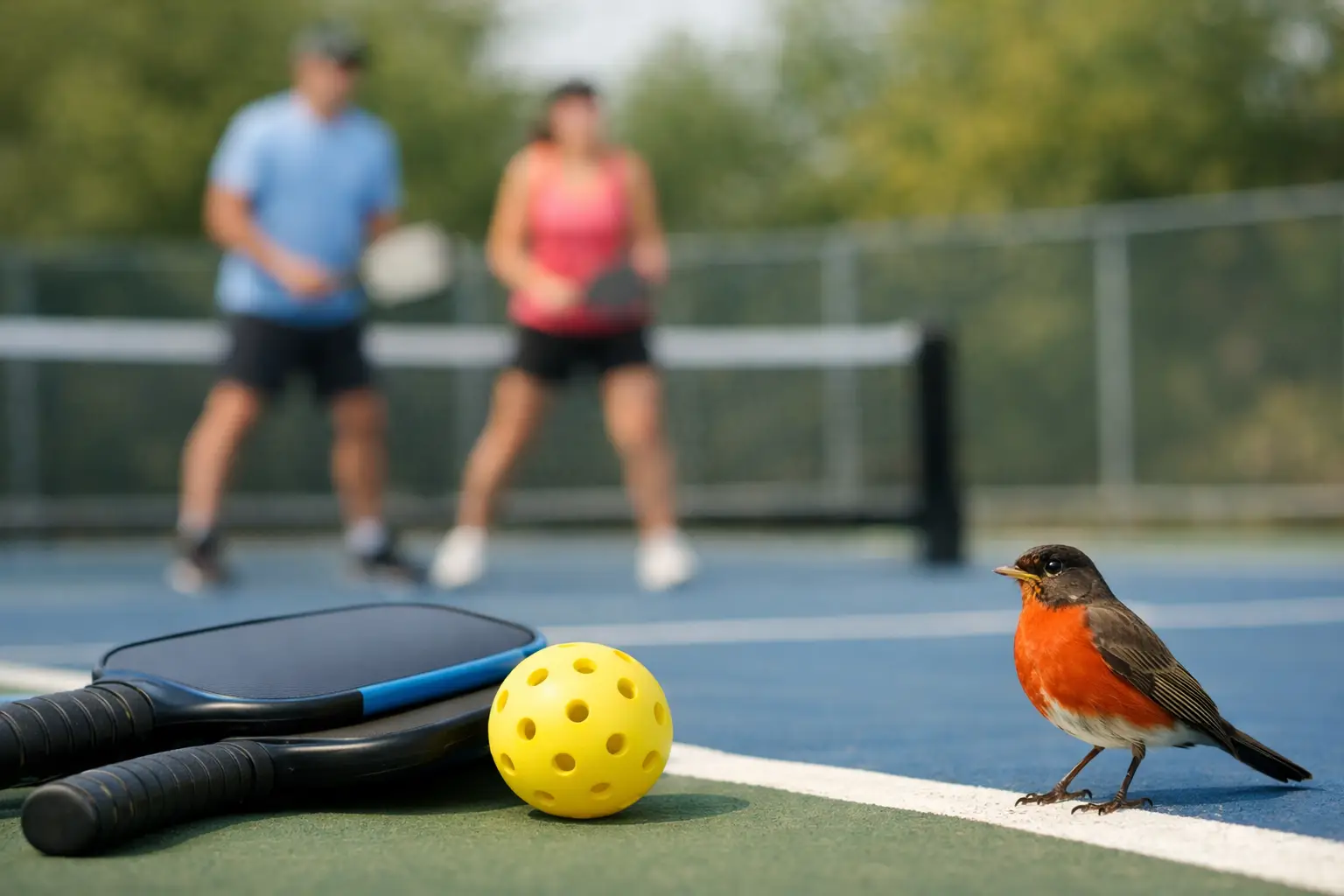
You need a pickleball paddle, a perforated plastic pickleball, a net, and a court. A standard court is 20 feet wide by 44 feet long, the same size used for doubles badminton. Many recreation centers and public parks have dedicated courts, while some tennis courts are marked for pickleball.
Wear athletic shoes with good side-to-side support. Running shoes can work for a casual first session, but court shoes are a safer option if you play regularly because pickleball involves frequent stops, pivots, and short lateral movements. Bring water, especially for outdoor games, and dress for the temperature rather than assuming a smaller court means an easy workout.
A basic paddle is enough to begin. Expensive paddles may offer different balance, surface texture, or power, but solid contact and sound positioning matter much more than premium equipment during your first games.
Understand the Pickleball Court
The net divides the court into two sides. On each side, a line seven feet from the net creates the non-volley zone, widely called the kitchen. The court behind that line is split into left and right service areas.
The kitchen is the rule that changes the game most for beginners. You cannot hit a volley - a ball struck out of the air - while standing in the kitchen or touching its boundary line. You also cannot volley if your momentum carries you into the kitchen after the shot. This prevents players from crowding the net and smashing every return at close range.
You can enter the kitchen to hit a ball that has bounced. In fact, players often step in to return a short, soft shot known as a dink. The restriction applies to volleys, not to all shots played near the net.
How to Play Pickleball: The Serve
Every rally starts with a serve from behind the baseline. The server stands on the right side when the team’s score is even and on the left when it is odd. The serve must travel diagonally across the net and land in the opponent’s opposite service court, beyond the kitchen line.
For a traditional volley serve, contact the ball below the waist, with the paddle moving upward. The highest part of the paddle cannot be above the wrist at contact. A drop serve is also allowed: simply drop the ball, let it bounce, and strike it. Do not throw or propel the ball downward before it bounces.
Unlike tennis, there is no second serve. If the serve lands in the net, goes out, or lands in the kitchen, it is a fault. Keep your first serves simple. Aim deep into the correct service box with a controlled motion instead of trying to hit an ace.
After a successful serve, the receiver should let the ball bounce before returning it. Then the serving side must also let that return bounce before hitting the ball. This is called the two-bounce rule, though it is more precisely a two-bounce sequence. Once each side has played a groundstroke, either team may volley, provided players follow the kitchen rule.
Scoring Without the Confusion
Most recreational doubles games use side-out scoring. Only the serving team can score a point. Games are usually played to 11 points, and a team typically must win by two. Some organized play uses games to 15 or 21, so check the format before you start.
In doubles, the score is called as three numbers: serving team’s score, receiving team’s score, and the server number. For example, “4-2-1” means the serving team has four points, the receiving team has two, and the first server is serving.
At the start of a game, the opening team begins with only one server to limit an early advantage. The score begins as “0-0-2.” When that player loses the rally, service goes to the other team. After that, both players on a team serve before the other team gets the ball, unless the serving team keeps winning rallies and scoring.
Here is the practical version: if your team is serving and wins the rally, you get a point and switch sides with your partner. If you lose the rally, the serve moves to your partner, or to the other team if both players have already served. The receiving team does not rotate when it wins a rally; it simply earns the right to serve.
In singles, scoring is simpler because there is only one server on each side. You serve from the right when your score is even and from the left when it is odd.
The Best Positions for Beginners
In doubles, the receiving team usually starts with one player deep to return serve and the partner closer to the kitchen line. After returning, the receiver should move forward when possible so both partners can establish position near the kitchen line.
The serving team begins at the baseline because it must allow the return to bounce. After hitting that third shot, both players work their way forward. This is why the third shot is so important. A hard drive can be effective if opponents are out of position, but a soft third-shot drop that lands in the kitchen can give the serving team time to reach the net.
At the kitchen line, stand roughly level with your partner and avoid leaving a large opening down the middle. Communicate clearly. Calling “mine,” “yours,” or “bounce it” can prevent the hesitation that gives away many beginner points.
Basic Shots Worth Practicing
Start with a dependable serve and return, then add control shots. A return of serve should usually be deep, giving you time to move toward the kitchen line. Keep the ball low over the net when you can, since high balls invite an aggressive reply.
A dink is a soft shot that drops into the opponent’s kitchen. It may look gentle, but it is a strategic shot that forces both teams to stay patient and search for an opening. Try to hit dinks with a compact swing and a relaxed grip. The goal is not to win every dink exchange immediately; it is to avoid giving opponents an easy ball above net height.
A volley is best used when you are balanced at the kitchen line. Keep the paddle up in front of your chest and use short punches rather than large swings. Fast exchanges happen quickly, so preparation often matters more than strength.
A drive is a firmer shot hit from deeper in the court. It can pressure opponents, especially when aimed at their feet or between two players. Still, constant hard hitting is rarely the best plan. A drive that sits up can be volleyed back sharply, while a well-placed soft shot may create more useful space.
Common Beginner Mistakes
New players often rush to the net before the two-bounce rule is complete, volley while stepping into the kitchen, or forget to call the full score before serving. These errors are normal and disappear with repetition.
Another common mistake is trying to hit every ball hard. Pickleball favors decision-making. A patient crosscourt dink, a deep return, or a shot at an opponent’s feet can be more effective than a powerful swing toward the baseline.
Do not stand still after your shot. Recover to a balanced position, face the ball, and keep your paddle ready. If you are playing doubles, move with your partner rather than independently. When one player advances, the other usually needs to advance as well.
Play Fair and Keep It Enjoyable
Most public pickleball games rely on players to make fair line calls on their own side of the court. If you are unsure whether a ball was in or out, give your opponent the benefit of the doubt. Call the score clearly, retrieve stray balls safely, and wait for nearby points to finish before crossing behind another court.
The quickest way to become comfortable is to play short games with people willing to explain the flow. Ask before the game whether the group uses standard side-out scoring or a local variation. Rules can be updated over time, and community play may have its own customs, but the fundamentals remain consistent.
Your first few games may feel like a blur of serves, bounces, and kitchen calls. Stay with it. Once you can return serves deep, reach the kitchen line with your partner, and keep a few soft shots in play, pickleball becomes less about remembering rules and more about enjoying the next smart rally.