Paris changes pace before sunrise on July 14. Central streets close, security lines form early, and crowds gather for a national holiday that is at once ceremonial, local, and celebratory. For travelers planning Bastille Day 2026 celebrations in France, the key is not trying to see everything. It is choosing the experience that matters most, then building the day around transport, access rules, and the possibility of last-minute changes.
Known in France as La Fete Nationale or le 14 Juillet, the holiday marks the storming of the Bastille in 1789 and the Fete de la Federation in 1790. It is a public holiday across the country, with military tradition in Paris and a more neighborhood-focused atmosphere in many towns and cities. In 2026, July 14 falls on a Tuesday, so visitors can expect a busy long-weekend feel in popular destinations even though the holiday itself is midweek.
What to Expect for Bastille Day 2026 in France
The biggest public events are usually concentrated in Paris, but France does not celebrate in only one way. A village may hold a communal meal, dance, or small fireworks display. A coastal city may center its evening around the waterfront. Larger cities often combine concerts, civic ceremonies, fire service dances, and fireworks.
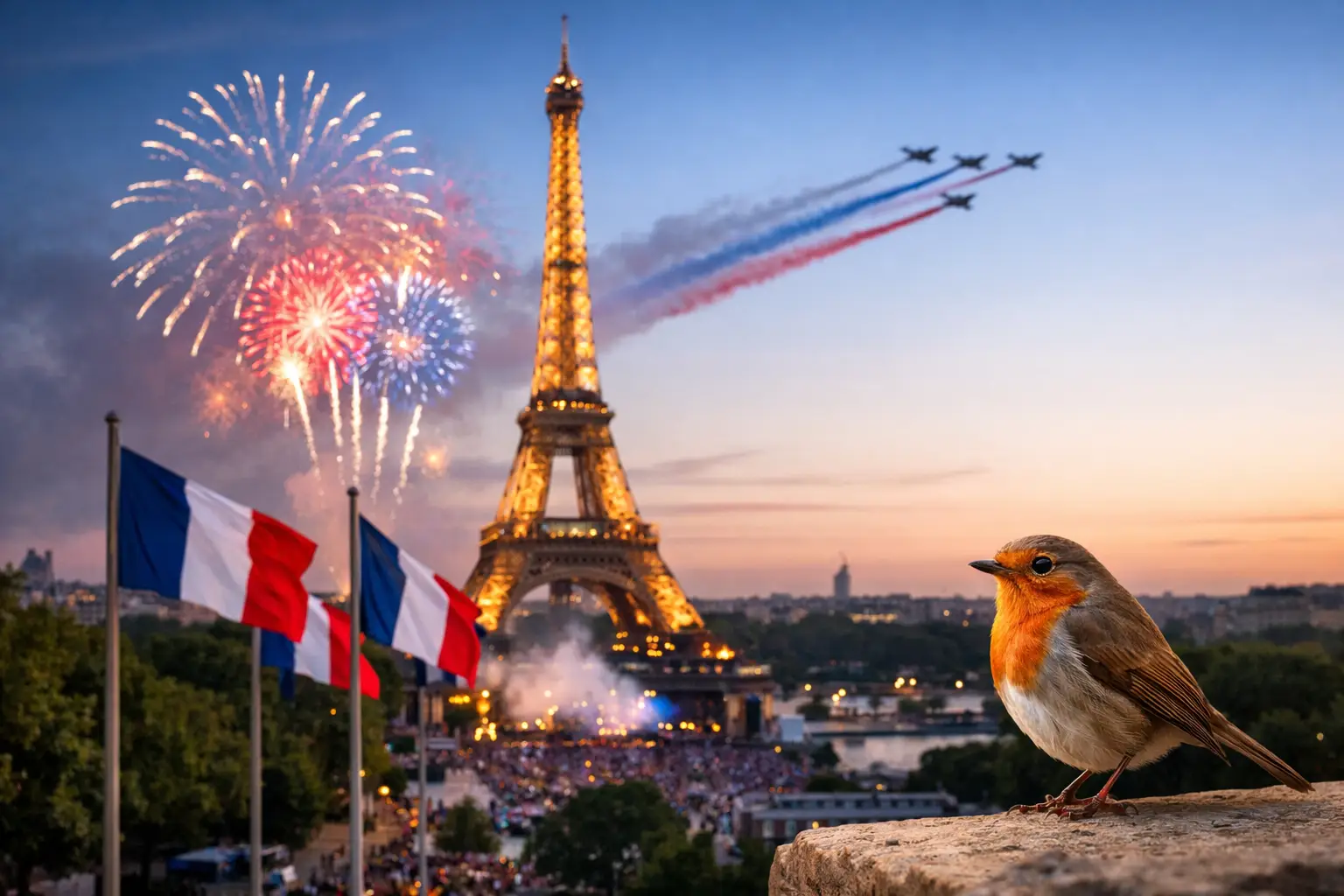
The most widely recognized Paris traditions are the military parade, generally held along the Champs-Elysees, and an evening fireworks display associated with the Eiffel Tower and Champ de Mars area. These are longstanding features, not guarantees of a fixed 2026 program. Parade routes, viewing zones, fireworks locations, entry requirements, and start times can be adjusted for security, weather, construction, or public policy.
That distinction matters when booking a hotel, restaurant, or rail ticket. Treat the traditional program as a planning framework, then confirm official city, transit, and event announcements closer to the date. Major celebrations can draw very large crowds, and central Paris may be difficult to navigate for much of the day.
The Paris Military Parade
For many visitors, the morning parade is the headline event. It typically features military units, mounted guards, aircraft flyovers, official guests, and a formal review. Viewing from public areas can mean arriving hours before the event begins, especially near the most desirable portions of the route.
There is a trade-off between proximity and comfort. A prime spot may require an early start, extended standing, limited shade, and a slow departure afterward. Watching from a less central location, or following the broadcast from a cafe or hotel after seeing the flyover, can be the better choice for families, older travelers, and anyone who dislikes tightly packed crowds.
Expect bag checks and restricted access around major landmarks. Bring only what you can comfortably carry and be prepared for streets or Metro stations to close without much warning. Glass containers, large bags, and certain items may be prohibited in controlled areas.
Fireworks, Concerts, and Evening Crowds
Paris traditionally turns its attention to the Eiffel Tower area after dark. The appeal is obvious: an iconic backdrop, music, and a major fireworks display. It is also the part of the day when crowd density is highest and departures can take time.
If fireworks are your priority, choose your viewing plan early. The lawns and open public spaces around Champ de Mars have historically been popular, but capacity controls or closures are possible. Some visitors prefer a view from farther away, where the display is smaller but the experience can be more manageable. River areas, elevated neighborhoods, and certain hotel terraces may offer alternatives, though reservations and access conditions vary widely.
Do not assume you can leave immediately after the finale. Allow extra time for walking, station queues, and rerouted public transit. A hotel within walking distance of your planned viewing area can be valuable, but only if you are comfortable with street noise and movement late into the night.
Bastille Day 2026 Celebrations Beyond Paris
A France itinerary does not need to begin or end in the capital. In fact, regional celebrations can offer a more relaxed way to experience July 14. Local programs are often announced later than Paris events, but many follow familiar patterns: a civic ceremony in the morning, entertainment or dining in the afternoon, and fireworks after nightfall.
In southern cities such as Marseille or Nice, look for waterfront activity and evening crowds along promenades or harbor areas. In Lyon, Bordeaux, Strasbourg, Toulouse, and other major urban centers, public squares, parks, riverbanks, and central avenues may become focal points. Smaller towns can be especially appealing if you want a community atmosphere rather than a landmark-driven spectacle.
The practical catch is transportation. Smaller places may have fewer late-night trains, limited taxis, and reduced services on a public holiday. If you are staying outside the center, decide how you will get back before the fireworks begin. Walking routes can be pleasant, but only when they are well-lit, realistic in distance, and not affected by event closures.
Firefighters' Balls Offer a More Local Night Out
One of the most distinctive traditions is the firefighters' ball, often held on July 13 and sometimes July 14. Fire stations in Paris and other communities may host music, dancing, and fundraising events that range from family-friendly gatherings to late-night parties.
These events are not identical from place to place. Some have controlled entry, some request donations, and some are more popular than others. They are worth considering for travelers who want a social celebration rather than hours spent holding a place for fireworks. Check the local details shortly before you go, and plan a safe route home.
Smart Travel Planning for July 14
Bastille Day is not a typical sightseeing day. Museums, shops, supermarkets, pharmacies, and restaurants may operate on modified hours or close entirely, particularly outside major tourist districts. Attractions that remain open can be crowded, while restaurant tables and hotel rooms in high-demand areas may disappear early.
Book the essentials first: lodging, long-distance rail travel, and any restaurant reservation that would disappoint you to miss. Then keep the rest of the day flexible. Overplanning creates frustration when streets close or a Metro entrance is inaccessible.
A few practical habits make a noticeable difference:
- Carry water, a portable phone charger, photo identification, and a small amount of cash in addition to payment cards.
- Use comfortable shoes. A short map distance can become a long walk when bridges, avenues, or stations are closed.
- Download maps and transit information before leaving your hotel, since mobile service can slow in dense crowds.
- Keep a meeting point if traveling with others, and choose one away from the main event zone in case you become separated.
Families should think carefully about the parade-versus-fireworks decision. Doing both can make for a very long day, particularly with young children. One strong experience, a proper meal, and a calm return journey can be more memorable than racing across Paris to check every box.
Follow Updates, Not Assumptions
Because July 14 involves national security planning and large-scale traffic management, the final event setup may not be clear months in advance. The most useful updates will usually concern restricted zones, station closures, prohibited items, weather advisories, and adjusted schedules. These details affect the experience more than a generic list of attractions.
For readers tracking the holiday from abroad, live news coverage can also add context to the military parade and official ceremonies. For people on the ground, local alerts matter more: they tell you whether a planned viewing point is open and how to get home when the celebration ends.
France on July 14 can feel formal in the morning and spontaneous after dark. Leave room for both. Choose a city or neighborhood that fits your travel style, arrive earlier than you think you need to, and let the celebration be the reason to slow down rather than another itinerary item to rush through.