On August 24, Ukrainians mark a national holiday rooted in a decision that changed Europe’s political map. The Ukraine Independence Day 2026 meaning reaches beyond a date on the calendar: it recognizes the country’s declaration of independence from the Soviet Union in 1991, the public vote that affirmed that choice, and the continuing right of Ukrainians to determine their own future.
For readers following global affairs, the day also provides a useful lens for understanding Ukraine’s history, its place in Europe, and why questions of sovereignty remain so personal for millions of people in Ukraine and across its worldwide diaspora. In 2026, the holiday carries added weight as the 35th anniversary of independence.
What Ukraine Independence Day 2026 Means
Ukraine Independence Day is observed every year on August 24. It commemorates the day in 1991 when the Verkhovna Rada, Ukraine’s parliament, adopted the Act of Declaration of Independence. The move came during the final, unstable months of the Soviet Union, after an attempted hard-line coup in Moscow raised fears that political freedoms could be reversed.
The declaration was not simply a procedural change. It stated that Ukraine would be an independent, democratic state and that its territory was indivisible and inviolable. For a nation with a long, complex history of foreign rule, imperial pressure, and interrupted efforts at self-government, that language carried lasting force.
Independence was then put directly to voters. On December 1, 1991, more than 90 percent of participating voters supported independence in a nationwide referendum. Every region recorded a majority in favor. That vote matters because it shows that Ukrainian statehood was not imposed by a small political group or created only after the Soviet collapse. It received a clear democratic mandate from the public.
The 2026 observance marks 35 years since the declaration. Anniversaries can invite ceremony, but this one is also a reminder that independence is not a finished historical event. It requires institutions, civic participation, cultural confidence, and the ability to defend a country’s borders and political choices.
Why August 24 Has Deep Historical Weight
Ukraine’s modern independence began in 1991, but the national story did not begin there. Ukrainian identity developed through language, local traditions, religious life, literature, and efforts to preserve self-rule under changing powers. Different parts of present-day Ukraine spent periods under the Russian Empire, the Austro-Hungarian Empire, Poland, the Soviet Union, and other authorities.
There was also an earlier twentieth-century struggle for statehood. Following the collapse of the Russian Empire, the Ukrainian People’s Republic declared independence in 1918. That effort was short-lived amid war, revolution, and competing military forces. Ukraine was later incorporated into the Soviet Union, where Ukrainian culture and political life faced severe restrictions at different times.
For that reason, August 24 is often understood as both a restoration and a new beginning. It restored an aspiration for statehood that had survived previous defeats. At the same time, it began the demanding work of building a contemporary country with its own constitution, elected government, economy, armed forces, diplomatic relationships, and public institutions.
The distinction is useful when reading coverage of the holiday. Independence Day is not the same as Constitution Day, which Ukraine observes on June 28, nor is it solely a military commemoration. It is a civic holiday. Its central idea is that the people of Ukraine have the right to decide how their country is governed and where it belongs politically and culturally.
The role of the 1991 referendum
The December referendum remains one of the most significant parts of the independence story. Ukrainians voted months after the August declaration, giving the new state democratic legitimacy at a pivotal moment. Soon afterward, the Soviet Union formally dissolved.
That sequence helps explain why references to Ukraine’s sovereignty are more than diplomatic language. The country’s independence was affirmed through a national public vote and recognized internationally. For many Ukrainians, defending sovereignty means defending a choice their families and communities made in 1991.
Independence, Identity, and Resilience
Public observances of Independence Day often include official speeches, flag displays, concerts, cultural programs, memorial events, and community gatherings. The exact format can change depending on security conditions, local decisions, and the national mood. In wartime, large public celebrations may be limited or adapted, while remembrance and support for service members and civilians can take a more prominent role.
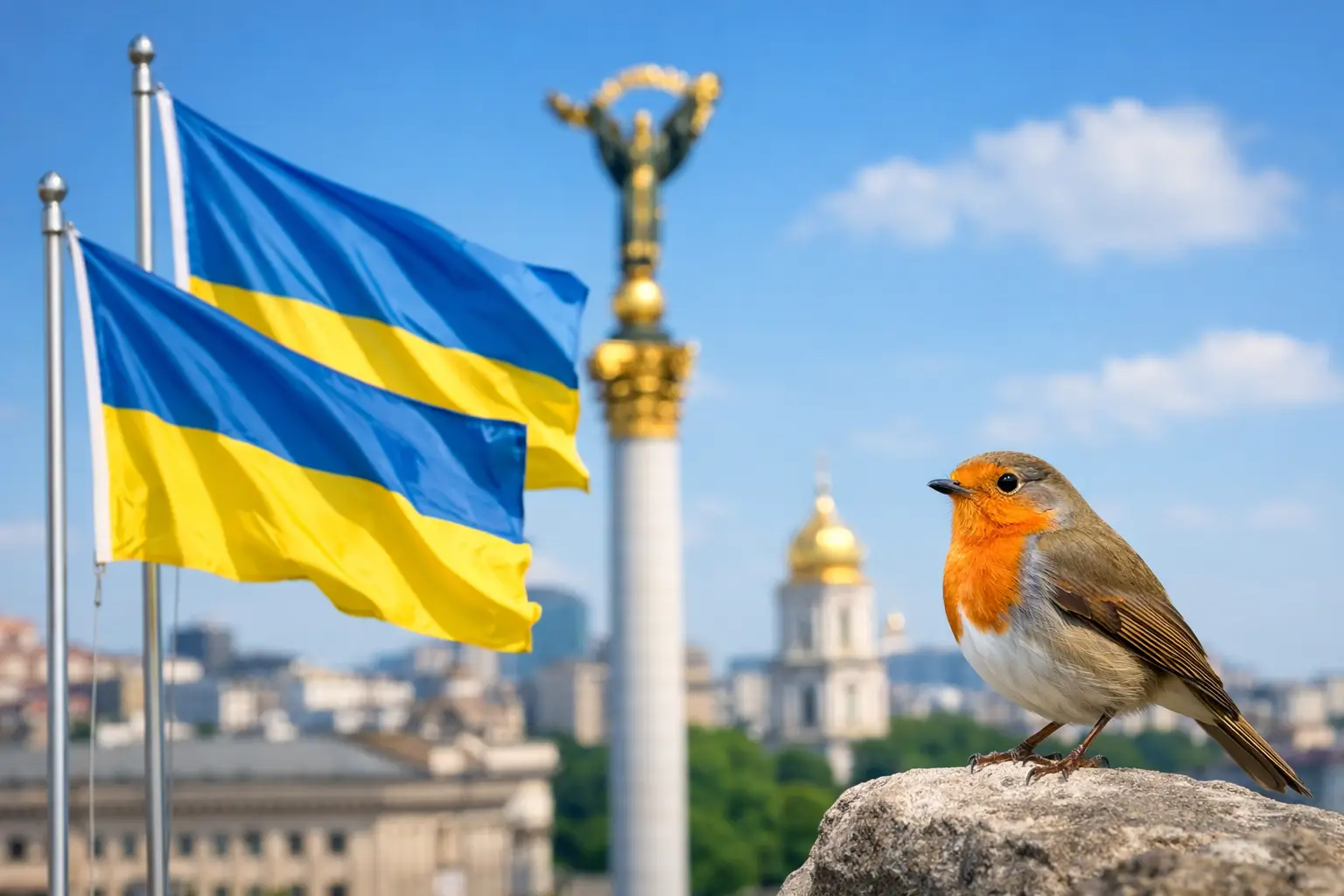
Blue and yellow, the colors of Ukraine’s national flag, are highly visible around the holiday. They are commonly understood to represent blue skies over golden wheat fields, though their official history is more layered than a single interpretation. The colors have become a widely recognized sign of national unity and support for Ukraine.
Language and culture are central to the day as well. Ukrainian music, poetry, food, embroidery, and local customs are not side details to the national story. They are among the ways people have maintained continuity through periods when Ukrainian identity was pressured, restricted, or dismissed. Independence Day can therefore be celebratory, reflective, and defiant at the same time.
For families displaced by war or living abroad, August 24 may be marked through community events, church services, vigils, fundraisers, and educational programs. These gatherings connect people to home while helping younger generations understand why the holiday has such significance. The experience differs from city to city and family to family, but the underlying message remains consistent: Ukraine is a sovereign nation with its own people, culture, and political will.
How to Read Ukraine Independence Day Coverage in 2026
News coverage around August 24 can move quickly between history, diplomacy, security, culture, and public events. A useful approach is to separate the lasting meaning of the holiday from the specific headlines of a given year.
First, watch for references to the 1991 declaration and referendum. These facts provide the core historical context. Second, consider how Ukrainian leaders, local communities, and international partners frame sovereignty. Their messages may differ in emphasis, but Independence Day statements commonly address self-determination, democratic institutions, national unity, and security.
Third, pay attention to cultural coverage, not only official ceremonies. A concert, museum program, school event, or diaspora gathering may reveal how ordinary people relate to the holiday. National identity is expressed in public policy, but it is also lived through family memory, language, art, and community traditions.
It is equally worth avoiding a common oversimplification: treating Ukraine solely as a country defined by conflict. War has shaped the meaning of recent Independence Days, and it cannot be ignored. Yet Ukraine’s independence story also includes democratic participation, cultural renewal, economic change, volunteer networks, local civic life, and decades of state-building since 1991.
For a broad news audience, that fuller view is essential. Headlines may focus on leaders and military developments, while the holiday itself points to a wider national question: who gets to decide a country’s future?
A 35th Anniversary With a Forward Focus
The 35th anniversary gives Ukraine Independence Day 2026 a natural historical milestone. Still, the strongest meaning of August 24 is forward-looking. It asks what independence requires after a declaration is signed and a referendum is won.
For Ukraine, the answer has included protecting territorial integrity, strengthening democratic accountability, preserving cultural life, and maintaining ties among communities at home and abroad. Progress in any of these areas can be difficult and uneven. Independence does not remove political disagreements or economic challenges. Instead, it establishes the public’s right to address those challenges within its own state.
That is why August 24 resonates far beyond Ukraine. It speaks to a principle recognized across the world: national borders, identity, and government should not be dictated by outside force. As 2026 coverage and commemorations unfold, the most helpful way to view the day is not as a distant anniversary, but as an ongoing expression of public choice, memory, and resolve.