For generations, Friday the 13th has carried a reputation for bad luck, strange coincidences, and stories that seem too unbelievable to be true. Most years, the date passes with little more than jokes, memes, and references to superstition. This year, however, Friday the 13th delivered a series of events that left many Americans wondering if the calendar itself had become part of the story.
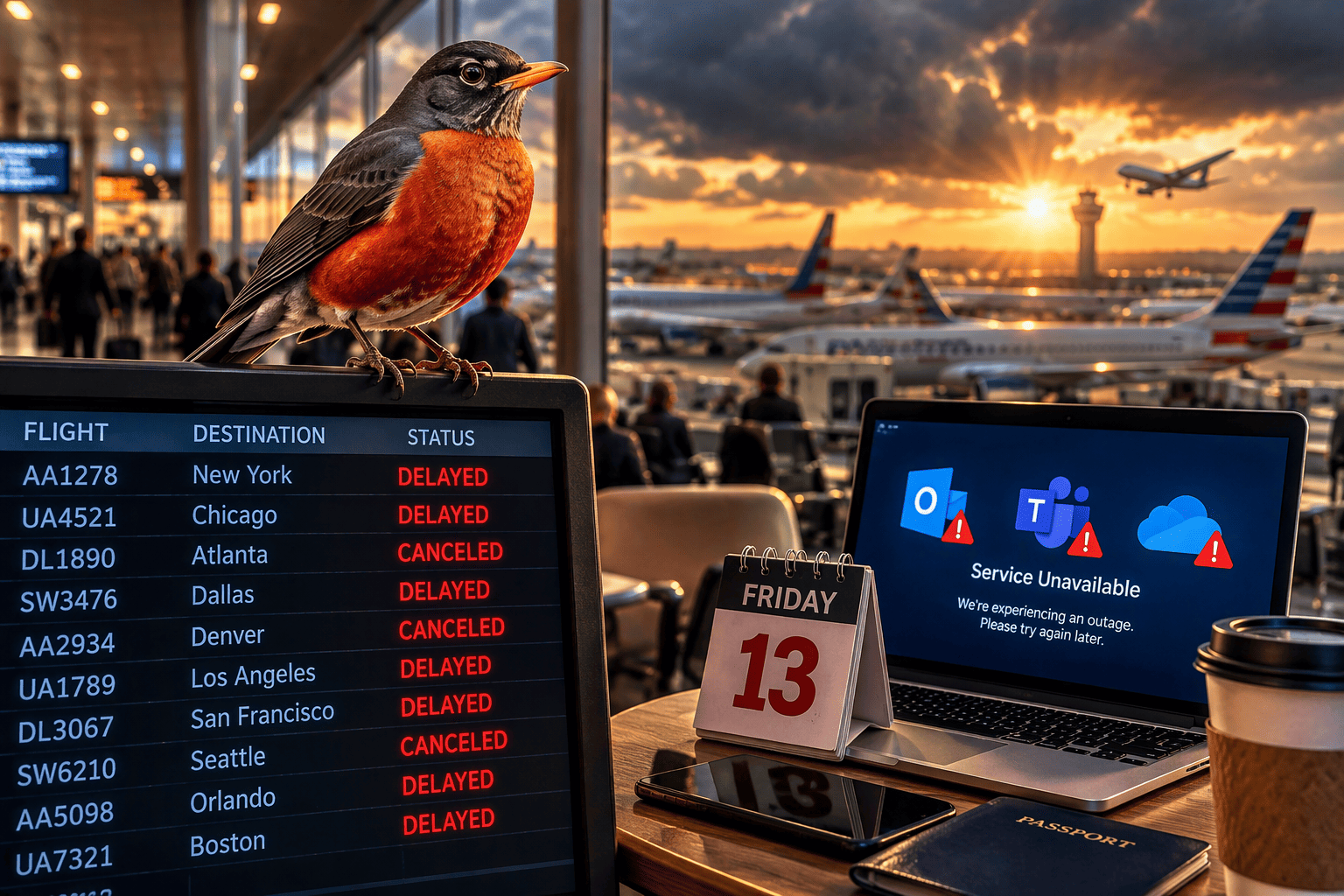
What began as a day of technical disruptions quickly escalated into one of the most talked-about news cycles of the year. A widespread Microsoft outage disrupted communication and productivity tools used by businesses, governments, schools, and consumers worldwide. Then came an even more dramatic development: a nationwide FAA ground stop that temporarily halted departing flights across the United States, creating travel chaos and triggering concerns about the reliability of critical infrastructure.
While officials emphasized that the events were unrelated, the timing fueled public anxiety and sparked intense discussion across social media platforms.
The Microsoft Disruption
Millions of users rely on Microsoft services every day for email, collaboration, cloud storage, and business operations. When service interruptions began affecting Outlook, Teams, and other Microsoft 365 products, workers around the world found themselves scrambling for alternatives.
For many organizations, the outage served as a reminder of how heavily modern business depends on cloud-based systems. When a major technology platform experiences problems, even for a relatively short period of time, the effects can ripple through industries, workplaces, and households.
The outage quickly became one of the top trending topics online, with users sharing screenshots, outage reports, and humorous commentary about suddenly being unable to access tools they use every day.
Then the Planes Stopped
As attention remained fixed on the Microsoft situation, a second and even more startling development emerged.
The Federal Aviation Administration issued a nationwide ground stop because of communications-related issues impacting air traffic operations. Flights across the country were delayed, canceled, or held at airports while officials worked to assess and resolve the problem.
Travelers found themselves stranded in terminals, airlines struggled to adjust schedules, and airports experienced growing congestion as aircraft and passengers waited for updates.
For many Americans, the image of a nationwide halt in air travel was particularly striking because such events are exceedingly rare. The disruption immediately raised questions about infrastructure, system reliability, and the challenges of maintaining complex networks that millions of people depend upon every day.
Social Media Erupts
If there was one place where the day unfolded in real time, it was social media.
Posts ranged from genuine concern to dark humor.
Many users joked that Friday the 13th was finally living up to its reputation. Others questioned whether the separate disruptions could somehow be connected. Speculation spread quickly, as often happens during major breaking news events.
Memes comparing the day to a disaster movie circulated widely. Travelers posted photos of crowded airports. Remote workers shared stories about productivity coming to a standstill. Technology enthusiasts debated infrastructure resilience while conspiracy theories flourished in comment sections.
In a matter of hours, Friday the 13th transformed from a date on the calendar into a shared online experience.
A Wake-Up Call About Infrastructure
Beyond the headlines and social media reactions, the events highlighted a larger issue.
Modern society depends on vast networks of interconnected technology. Air traffic systems, cloud computing platforms, communication networks, transportation systems, and business operations all rely on infrastructure that most people rarely think about until something goes wrong.
When one critical system experiences difficulties, the effects can be significant. When multiple high-profile systems experience disruptions on the same day, public attention naturally turns toward questions of reliability, redundancy, and preparedness.
Experts have long warned that maintaining and modernizing critical infrastructure requires constant investment. Friday's events reignited that conversation.
Other Friday the 13ths That Made Headlines
This is not the first time a Friday the 13th has found itself associated with memorable events.
Throughout history, the date has often attracted attention whenever unusual news stories, market swings, weather events, or transportation disruptions have occurred. Whether coincidence or superstition, the day frequently becomes a magnet for public fascination.
What makes this particular Friday the 13th stand out is not merely that bad things happened, but that multiple unrelated disruptions occurred within hours of one another while millions of people watched the story unfold online.
The result was a sense that everyone was experiencing the same strange day together.
Lessons for Businesses and Consumers
The events offered several important reminders.
- Maintain backup communication channels.
- Develop contingency plans for cloud-service outages.
- Build flexibility into travel schedules whenever possible.
- Stay informed through official sources during disruptions.
- Recognize how interconnected modern infrastructure has become.
Businesses should continue investing in contingency planning and alternative communication methods. Organizations that rely heavily on a single platform should evaluate backup procedures before outages occur.
Consumers can benefit from maintaining flexibility during travel, keeping alternative contact methods available, and recognizing that even highly reliable services can occasionally experience unexpected disruptions.
The Day People Will Remember
Friday the 13th is often treated as a harmless superstition. Yet this year's edition became something far more memorable.
- A major technology outage.
- Grounded flights across the nation.
- Extended travel delays.
- Endless social media discussion.
- Renewed debate about critical infrastructure.
Each event alone would have been significant. Together, they created one of those rare news days that people are likely to remember long after the disruptions themselves have been resolved.
Sometimes history is defined by a single event.
Sometimes it is defined by a very unusual Friday.