Rockin Robin SongFlying The Web For News.


Global World Topics

Introduction

Presidents Day, officially known as Washington's Birthday, is a federal holiday celebrated on the third Monday of February each year. In 2025, Presidents Day falls on February 17th. This holiday honors all U.S. presidents, with a particular focus on George Washington and Abraham Lincoln, whose birthdays are in February.

History of Presidents Day

The origins of Presidents Day date back to the early 19th century. Following George Washington's death in 1799, his birthday, February 22nd, became a day of remembrance. Washington was revered as a pivotal figure in American history, and his birthday was celebrated with various events, including the reading of his farewell address in the Senate.

In 1885, Congress designated February 22nd as a federal holiday for all federal workers. Nearly a century later, in 1971, the Uniform Monday Holiday Act moved the holiday to the third Monday in February to create more three-day weekends for the nation's workers. This act also led to the holiday being popularly known as Presidents Day, as it falls between the birthdays of Washington and Lincoln.


Presidents Day 2025: A Comprehensive Guide Including History, Celebrations, Retail Sales

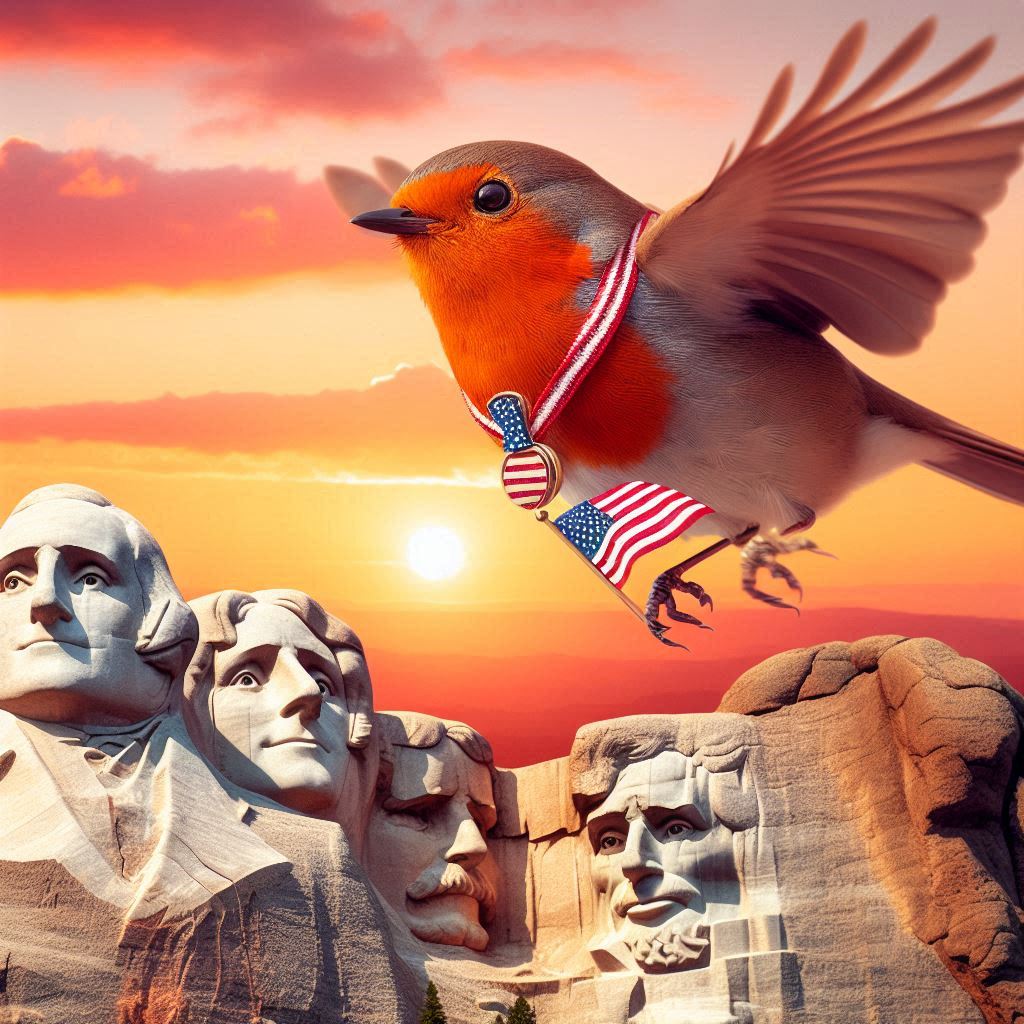
Presidents on Mount Rushmore

  1. George Washington
  2. Thomas Jefferson
  3. Theodore Roosevelt
  4. Abraham Lincoln

Government Offices, Banks, and Businesses Closed

On the Presidents Day holiday, several government offices and businesses will be closed. Here is a list of what to expect:

  • Government Offices: Federal, state, and county offices will be closed. This includes the U.S. Postal Service, which will not deliver mail.
  • Banks: Most banks will follow the Federal Reserve holiday schedule and will be closed.
  • Schools: Many public schools, colleges, and universities will be closed.
  • Businesses: While most retail stores and grocery stores will remain open, some businesses may have modified hours.

Celebration Ideas and Events

Presidents Day is celebrated in various ways across the country. Here are some ideas and events to consider:

  • Historical Reenactments: The National Constitution Center will host events featuring historical reenactors portraying presidents like Thomas Jefferson, Abraham Lincoln, and Theodore Roosevelt.
  • Educational Activities: Many museums and historical sites offer special programs and exhibits related to U.S. presidents. For example, the John F. Kennedy Presidential Library and Museum in Boston offers a re-creation of JFK's Oval Office.
  • Parades and Festivals: Some cities host parades and festivals to celebrate the holiday. Check local listings for events in your area.
  • Family Activities: Engage in family-friendly activities such as presidential trivia, costume contests, and voting booth activities.

Retail Sales Deals

Presidents Day is also known for its retail sales. Many stores offer significant discounts on various products. Here are some of the best deals to look out for:

  • Walmart: Massive discounts on TVs, home appliances, laptops, and more.
  • Amazon: Deals on Apple AirPods, Puma sneakers, and other popular items.
  • Target: Discounts on Dyson vacuums and other household items.
  • Best Buy: Savings on Samsung smart TVs and other electronics.

Protests and Controversy

In recent years, Presidents Day has also become a day of protest for some groups. In 2025, the 50501 Movement and Political Revolution are organizing a nationwide day of action called "Not My President's Day"; to oppose policies enacted by President Donald Trump. These protests are expected to be in all 50 states and concentrate on immigration policy, federal agency restructuring, and other executive actions.

Conclusion

Presidents Day 2025 is a day to honor the legacy of U.S. presidents, reflect on the nation's history, and enjoy various celebrations and sales. Whether you participate in historical reenactments, take advantage of retail deals, or join in protests, there are many ways to observe this federal holiday.

References


More News From This Category
Everyday Ways To Reduce Land and Soil Damage
Fri, 02 Oct 2026 08:03:06 +0000

Three adults are wearing gloves, kneeling on grass, and planting a small shrub with hand tools beside green trees.

Healthy soil does far more than hold plants in place. It stores water, supports insects and microorganisms, and helps vegetation grow without constant intervention. Once soil loses structure or washes away, rebuilding that living layer takes time.

Read More ...


Why International Day of Non-Violence Matters
Fri, 02 Oct 2026 04:12:37 +0000

A heated protest, a political argument that turns personal, a stream of violent images from abroad - these are familiar parts of the modern news cycle. The international day of non-violence, observed each year on October 2, asks a more demanding question than simply whether violence is wrong: What does it take to confront injustice without reproducing the harm being challenged?

For readers following world news, the observance is not only a date on the calendar. It is a useful lens for viewing conflicts, public demonstrations, elections, community safety, and the increasingly aggressive language that circulates online. Nonviolence can sound idealistic when events feel urgent. Its history, however, shows that it has often been used as a practical method for organizing people, applying public pressure, and defending human dignity.


Why International Day of Non-Violence Matters

What is the International Day of Non-Violence?

The United Nations established the International Day of Non-Violence in 2007 and selected October 2 because it is the birthday of Mohandas Karamchand Gandhi, widely known as Mahatma Gandhi. The day recognizes his philosophy and his role in advancing India’s independence movement through nonviolent resistance.

The UN’s purpose is broader than commemorating one historical figure. The observance calls attention to the value of education and public awareness in promoting nonviolence. That reaches from international diplomacy to the choices made in schools, workplaces, neighborhoods, and families.

Gandhi’s ideas were influential, but nonviolent action does not belong to one country, faith, or political tradition. Civil rights campaigns in the United States, democratic movements across Eastern Europe, anti-apartheid organizing in South Africa, labor campaigns, and local peacebuilding efforts have all drawn on versions of the same central idea: people can resist unfair power without treating opponents as less than human.

Nonviolence is not the same as doing nothing

One reason the day can be misunderstood is that nonviolence is sometimes presented as quietness, politeness, or a refusal to take sides. In practice, it can require unusual discipline. A nonviolent strike disrupts business as usual. A boycott can impose economic costs. A march can make an ignored issue impossible for leaders and news outlets to overlook.

The distinction matters. Avoiding physical harm does not mean accepting abuse, discrimination, corruption, or repression. It can mean documenting wrongdoing, organizing a lawful protest, withholding cooperation, protecting vulnerable neighbors, challenging false claims, or demanding accountability through courts and democratic institutions.

Nonviolence also differs from pacifism, though the two can overlap. Pacifism is generally a moral opposition to war or violence. Nonviolent action is often a strategy for specific conditions. Participants may disagree strongly about policy, urgency, and even the limits of self-defense, while still choosing methods intended to reduce harm and widen public support.

That choice comes with trade-offs. Nonviolent tactics are not guaranteed to work quickly, and they can expose participants to arrest, intimidation, job loss, or retaliation. A call for calm can also be misused by those in power to dismiss legitimate anger. Responsible coverage and public discussion should recognize both truths: violence carries grave human costs, and people facing injustice should not be told to wait silently for change.

Why October 2 still belongs in the news conversation

The International Day of Non-Violence arrives at a time when many public disputes are shaped by speed and spectacle. A short video can travel farther than a careful explanation. Outrage can be rewarded with attention. Online arguments often turn opponents into stereotypes before anyone has examined the facts.

That environment raises the stakes for language. Dehumanizing labels, threats, and conspiracy claims may not be physical violence, but they can help create conditions in which harassment and real-world harm become more likely. Nonviolence therefore includes standards for public speech: verify before sharing, avoid celebrating injury, distinguish criticism from humiliation, and reject calls to punish whole communities for the actions of a few people.

For a broad news audience, the day is also a reminder to read beyond the most dramatic image. When following protests or conflict, ask who is affected, what participants are demanding, what events led to the confrontation, and whether accounts from different sources support the same facts. Context does not excuse harm. It helps audiences understand it accurately.

How nonviolent action works in real communities

Nonviolence becomes meaningful when it moves from a slogan to a practiced habit. At the community level, that may involve mediation programs, trauma-informed school policies, credible violence-interruption teams, safe reporting channels, and support for people leaving abusive situations. These approaches are not interchangeable, and each needs funding, training, and local trust.

In a workplace, the same principle can mean raising a concern through clear documentation rather than public retaliation. In a school, it can mean teaching students how to disagree without threats and ensuring that bullying reports are handled seriously. In local government, it can mean creating public meetings where residents can speak, be heard, and receive follow-up rather than being managed out of the room.

The most effective response depends on the problem. A disagreement between neighbors may benefit from mediation. A pattern of domestic abuse requires safety planning and professional intervention, not a joint conversation. Organized hate or political intimidation may require firm enforcement of the law alongside outreach to those at risk. Nonviolence is not a substitute for public safety. It is a commitment to use power with restraint, accountability, and respect for rights.

A useful checklist for following conflict coverage

When news reports, videos, and social posts focus on a tense event, readers can use a few questions to slow the rush to judgment. What is confirmed, and what is still being alleged? Are people being described as individuals or reduced to a label? Is the report showing the event’s cause as well as its most dramatic moment? What options for de-escalation were available, and who had the authority to use them?

These questions do not make every conflict morally ambiguous. Some actions are plainly abusive or unlawful. They do help prevent the false choice between indifference and escalation. Better information gives communities more room to respond thoughtfully.

For families and educators, October 2 can be an opening for a direct conversation about conflict. Instead of asking children only whether fighting is bad, ask what they could do when they feel insulted, excluded, or frightened. Naming trusted adults, practicing how to leave an escalating situation, and learning how to report threats are concrete skills, not abstract ideals.

The legacy is a continuing test

Gandhi’s legacy, like that of many major historical figures, deserves honest examination rather than uncomplicated hero worship. His philosophy inspired movements around the world, while aspects of his life and views have also prompted serious criticism and debate. Recognizing complexity does not weaken the day’s purpose. It makes the public conversation more credible.

The stronger lesson is not that one person provided a universal script for every crisis. It is that methods matter. Communities are shaped not only by what they demand, but by how they pursue it. The tools people choose can either expand fear and division or create pathways for accountability and repair.

On the International Day of Non-Violence, the most useful response may be modest but specific: pause before amplifying a threat, seek a fuller account of a conflict, support an institution that protects people from harm, or practice a disagreement without contempt. Those choices will not solve every crisis, but they can make the public spaces around us harder to poison and easier to repair.

Read More ...


Creating a Garage That Works for More Than Just Parking
Thu, 01 Oct 2026 08:00:50 +0000

A car is backed up into a garage, and there is a workbench on the opposite side of the garage.

A garage can easily become one of the most underused spaces in a home. While its primary purpose may be to shelter vehicles, the available square footage can support far more than parking. With thoughtful planning, homeowners can create room for storage, hobbies, household projects, exercise, maintenance tasks, and other activities without sacrificing the garage's basic functionality.

Read More ...


How to Find Consumer Alerts Before You Buy
Thu, 01 Oct 2026 04:12:31 +0000

A bargain can stop being a bargain the moment a product is recalled, a subscription hides a costly renewal term, or a convincing message turns out to be a scam. Knowing how to find consumer alerts gives you a practical pause button before you buy, sign up, download, donate, or hand over personal information.

Consumer alerts are not limited to dramatic national recalls. They can cover unsafe toys, contaminated food, vehicle defects, deceptive advertising, identity theft schemes, airline disruptions, data breaches, fake delivery texts, and local service complaints. The useful part is not simply seeing an alert. It is finding the original notice, checking whether it applies to you, and acting before a small problem becomes an expensive one.


How to Find Consumer Alerts Before You Buy

Start With the Type of Alert You Need

The fastest way to search is to identify what could go wrong. A product safety concern, for example, belongs in a different place than a suspected investment scam or a medical-device warning. Broad searches for “consumer alert” can return old stories, opinion pieces, and unrelated social posts. Start with the product, company, issue, and date when you can.

For household goods, children’s products, furniture, electronics, and similar items, look for notices from the Consumer Product Safety Commission. For food, check Food and Drug Administration alerts and U.S. Department of Agriculture food-safety notices. Vehicle owners should review National Highway Traffic Safety Administration recall information using the vehicle identification number when available.

Financial and fraud concerns require a different route. The Federal Trade Commission publishes scam warnings and reporting guidance, while the Consumer Financial Protection Bureau covers consumer financial products and complaint patterns. Your state attorney general’s office can also be especially useful for regional scams, settlement notices, charity fraud, ticketing complaints, and deceptive business practices.

This division matters because the best source depends on the risk. A national product recall may be confirmed by a federal agency, while a sudden water-service advisory or utility-payment scam may first appear through a local government or provider notice.

How to Find Consumer Alerts From Trusted Sources

Search the official organization responsible for the issue before relying on a reposted headline. Use clear terms such as the brand name plus “recall,” “safety alert,” “warning,” “scam,” or “consumer complaint.” Add a model number, lot code, vehicle year, or location if you have it.

When reading an alert, check four details immediately: the publication date, the exact product or service named, the geographic area, and the action consumers should take. A recall from three years ago may still be relevant if an item remains in your home, but it should not be confused with a new incident. Likewise, a warning about one product model does not automatically apply to an entire brand.

A dependable notice usually explains the hazard in plain terms and provides identifying information. That may include photographs, serial-number ranges, package codes, affected dates, retailer details, or refund and repair instructions. Vague posts that say only “share this urgently” deserve extra caution.

Newsrooms and aggregation services can help you spot developing issues across multiple categories. A broad stream of consumer coverage, including the consumer and public-interest updates available through RobinsPost, can surface reports you might not otherwise search for. Treat that discovery step as a starting point, then confirm the details with the regulator, manufacturer, retailer, bank, utility, or local authority responsible for the notice.

Check the Company, but Do Not Stop There

Manufacturers and retailers often publish recall pages, account notices, and customer-service updates. These can be useful because they may contain return instructions, replacement options, or store-specific deadlines. However, a company statement is only one piece of the picture.

Compare it with the regulator’s notice when safety, health, or money is involved. The two sources should generally agree on the product identifiers, risk, dates, and remedy. If they conflict, follow the most current official alert and contact the agency or company using a phone number or website you locate independently, not through an unexpected message.

Set Up Alerts Before There Is a Problem

Searching after a viral post appears is reactive. A better habit is to choose a small number of alerts that match the products and services you actually use. Most people do not need notifications from every agency every day. Too many alerts create noise, and noise is how meaningful warnings get missed.

Start with email notifications or recall lookups for the categories that affect your household: vehicles, food, medications, financial accounts, children’s items, travel bookings, or smart-home devices. If you own a car, register it with the manufacturer and keep your mailing address current. For appliances and electronics, product registration can help with direct recall contact, although it may also lead to marketing messages. Read the privacy choices before submitting more information than necessary.

For scams, official consumer-protection newsletters can provide useful pattern recognition. They show how fraud changes language and targets current events. A tax-season impersonation scam, a storm-repair pitch, or a fake package notification may look new, but the pressure tactics are familiar: urgency, secrecy, payment by gift card or crypto, and requests for passwords or verification codes.

You can also create targeted news alerts for a major brand, a product category, or a local service. Keep the search narrow enough to be useful. “Airline refund rules” is more actionable than “travel problems,” and “lithium-ion battery recall” is more focused than “electronics news.”

Verify Viral Warnings Before You Share Them

A consumer alert can be real and still be misleading when it is stripped of context. Photos of damaged products, screenshots of emails, and copied warning posts travel quickly. Some are outdated; others misidentify the brand, state, or model involved. A few are created to harvest clicks or frighten people into sharing personal details.

Before forwarding a warning, look for the original source and confirm the date. Search a distinctive phrase from the post along with the named agency or company. If a message claims your bank, delivery service, or government office needs immediate action, do not use the embedded link, QR code, or phone number. Open the official app, type the known website yourself, or call the number on your card or statement.

Be particularly careful with alerts that demand a payment to “release” a refund, fix a recall, stop an account closure, or remove a virus. Legitimate recalls may ask you to return an item or arrange a repair, but they should not require you to disclose a one-time passcode or pay with an unusual method to receive help.

Know What to Do When an Alert Applies to You

The right response depends on the alert. For a food recall, check the package, lot number, and use-by date, then follow disposal or return guidance. For an unsafe product, stop using it if instructed, keep it away from children, and document the model number and purchase details. For a vehicle recall, schedule the repair promptly, especially if the notice involves braking, steering, airbags, fire risk, or a “do not drive” instruction.

For a suspected scam or data breach, speed matters. Change compromised passwords, secure financial accounts, monitor transactions, and contact the institution through verified channels. Save screenshots, emails, order confirmations, and transaction records. These details can support a dispute, insurance claim, complaint, or law-enforcement report.

Do not assume a recall means an automatic refund. Remedies vary. You may be offered a repair, replacement part, store credit, refund, inspection, or software update. Ask whether shipping is covered, whether proof of purchase is required, and whether there is a deadline. If you bought the item secondhand, you may still be eligible for a safety repair, but the process can differ.

Build a Simple Consumer-Alert Routine

A short monthly check is usually enough for most households. Review recent alerts for the items you own, scan your bank and card activity, and search for updates on any unresolved complaint or recall. After a major purchase, save the receipt, model number, and warranty information in one easy-to-find place. That small bit of organization can make an alert far easier to verify later.

Consumer alerts work best as a practical habit, not a source of constant anxiety. Check trusted sources, match the notice to your specific product or account, and slow down whenever a message pressures you to act immediately. A few minutes of verification can protect your money, your privacy, and the people who rely on you to make informed choices.

Read More ...


Why Electrical Panels Are the Heart of Warehouse Operations
Wed, 30 Sep 2026 07:58:54 +0000

A man wearing a white helmet, holding a laptop while checking the connections inside a small electrical panel box.

Warehouses rely on electricity from the first moments of a shift until operations end. Power moves through the facility constantly and supports the equipment employees depend on for productive work. When that electrical supply becomes unreliable, even a well-organized warehouse can face sudden delays.

Read More ...


Related Bing News Results
News of the World: What you missed this week internationally
Sat, 15 Aug 2026 15:26:00 GMT
They are ready to guac and roll. Operations at Michoacán, Mexico’s lead avocado producer, have been resumed by the US government after it halted production due to security concerns. After the ...

News of the World: What you missed this week internationally
Sat, 25 Jul 2026 14:35:00 GMT
They got the short end of the stick. London pizza restaurant Dinner for One Hundred hosted a dating event that banned people 6-foot tall and above. The owners said they did it in response to the ...

Everything that happened during the second week of the 2026 World Cup as the knockout bracket started to take shape
Sun, 21 Jun 2026 21:04:00 GMT
The 2026 FIFA World Cup is in progress in the United States, Canada and Mexico, and you can follow the latest tournament news and analysis right here. We will be live every minute of every day for all ...

World News - Latest and Breaking Coverage - Yahoo News
Mon, 19 Jan 2026 11:02:00 GMT
The latest world news and headlines from Yahoo News and international publishers, breaking stories, ongoing events, and coverage ...

Latest World News
Sun, 03 Aug 2014 23:42:00 GMT
Get latest & breaking international news from US, UK, Europe, UAE and rest of the world including current affairs, politics, business, entertainment, bollywood, sports & more online at India.com ...


Blow Us A Whistle


RobinsPost Print On Demand Refund Policy With Printify
Printify

Related Product Search/Búsqueda de productos relacionados

Amazon Logo