A sudden green glow moving across a dark winter sky can feel like more than a weather event. The northern lights meaning has long included scientific explanation, cultural storytelling, spiritual reflection, and the simple human response to seeing something rare and beautiful overhead.
For modern viewers, the aurora may arrive as an alert on a phone, a live camera feed, or a planned trip north. Yet the spectacle still carries the same sense of surprise it held for people who watched it centuries ago. Understanding both the physics and the history behind the lights adds context without taking away their mystery.
What the Northern Lights Mean in Science
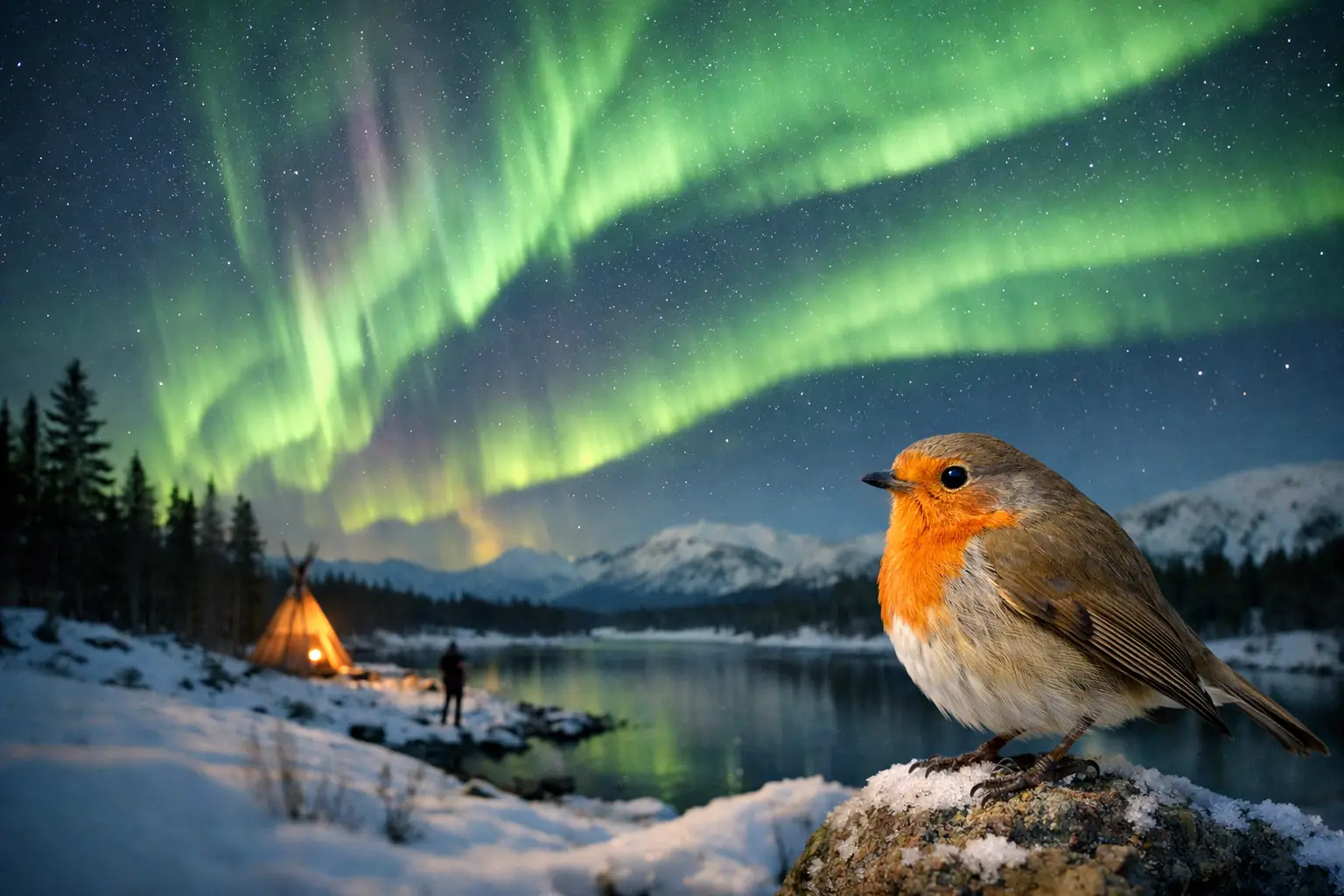
The northern lights, also called the aurora borealis, occur when charged particles from the sun reach Earth and interact with gases high in the atmosphere. Earth’s magnetic field guides many of these particles toward the polar regions, which is why auroras are most common in northern locations such as Alaska, Canada, Iceland, Norway, Sweden, Finland, and parts of Scotland.
When the particles collide with oxygen and nitrogen atoms, energy is released as light. Oxygen usually produces the familiar green color, particularly at lower auroral altitudes. It can also create red light higher in the atmosphere. Nitrogen contributes blue, violet, and pink shades. The exact mix of color, brightness, and movement depends on solar activity and atmospheric conditions.
This explanation matters because the lights are connected to space weather. Strong solar winds and coronal mass ejections can create more active auroras, sometimes visible much farther south than usual. They can also affect satellite communications, GPS accuracy, radio signals, and electrical infrastructure. A colorful sky may therefore be part of a larger solar event being tracked by scientists and news organizations.
Science explains the mechanism, but it does not prescribe an emotional meaning. A person can understand the solar physics and still feel awe, calm, excitement, or a sense of connection while looking upward.
Northern Lights Meaning in Folklore and Tradition
Before atmospheric science provided an answer, communities developed stories to make sense of the moving lights. These traditions are not one single northern-lights belief. They differ by region, language, faith, and local experience.
In parts of Scandinavia, the lights were sometimes associated with spirits, omens, or messages from another realm. Some traditional stories treated the aurora with caution, advising people not to whistle, wave, or draw attention to it. In other accounts, the lights were linked to battle, fire, or the souls of the dead.
Several Indigenous peoples of the Arctic and sub-Arctic also have rich, distinct understandings of auroras. In some traditions, the moving light was connected with ancestors or spirits at play. Other communities saw it as a sign that required respect and careful behavior. These beliefs should not be reduced to a single tourist-friendly legend. They belong to living cultures with their own histories and voices.
In Finland, one well-known folk explanation involves the fox fire, or revontulet. The story imagines an Arctic fox running through the snow and sweeping sparks into the sky with its tail. It is a vivid example of how people used familiar landscapes and animals to explain a distant, shifting light.
For some viewers today, these stories offer a way to appreciate how earlier generations interpreted the world around them. They are not scientific evidence, but they are meaningful records of imagination, place, and community.
Are the Northern Lights a Spiritual Sign?
Many people searching for the northern lights meaning are asking a personal question: Does seeing an aurora mean something for me? There is no universal answer, and no scientific basis for claiming that the lights predict a specific event, relationship, or future outcome.
Still, people often use the experience as a moment for reflection. The scale of the sky can make everyday concerns feel smaller. A family may remember a shared trip for decades. Someone grieving a loss may find comfort in a tradition that connects lights with ancestors. Others simply see a reminder that nature remains active beyond city streets, schedules, and screens.
The useful distinction is between personal meaning and factual prediction. Personal meaning can be real and valuable without being presented as a guaranteed message. If the aurora inspires gratitude, curiosity, or a renewed interest in the natural world, that response does not need scientific validation. It does, however, benefit from honesty about what the lights physically are.
Why the Aurora Feels So Powerful
The northern lights combine several experiences that people rarely encounter at once. They appear at night, often in cold and quiet places. They move rather than staying fixed like stars. Their shapes can change from a pale haze to curtains, arcs, rays, and fast-moving ribbons in minutes.
They are also unpredictable. Forecasts can identify favorable conditions, but cloud cover, local light pollution, timing, and solar activity all affect what a person actually sees. A traveler may wait several nights for a brief display, while another may unexpectedly see a bright aurora from a backyard during a major geomagnetic storm.
That uncertainty is part of the appeal. The experience cannot be fully scheduled or recreated. Photos and videos can be striking, but cameras often capture color more strongly than the human eye. A weak aurora may look pale gray or green in person, while a long-exposure image reveals intense color. During stronger activity, however, vivid greens, reds, and pinks can be clearly visible without a camera.
A Practical Way to Watch With Context
Viewing the northern lights is easiest away from urban light pollution, under clear skies, and during a period of elevated auroral activity. The darkest hours around local midnight are often productive, although displays can happen earlier or later. In the United States, northern states may occasionally get a view during stronger solar events, while Alaska remains one of the most dependable destinations.
Patience is usually more valuable than expensive equipment. Warm layers, a thermos, a chair or blanket, and a clear view toward the northern horizon can make a long wait more comfortable. If taking photos, a tripod and a camera mode designed for low light can help, but spending the entire event adjusting settings can mean missing the moment itself.
It also helps to follow reliable space-weather forecasts rather than viral claims. Reports about a “once-in-a-lifetime” aurora may be based on changing solar conditions, and local clouds can still block a strong display. Treat predictions as useful planning tools, not promises.
The Meaning Changes With the Viewer
There is no single definition that settles what the northern lights mean. For scientists, they are visible evidence of the relationship between the sun, Earth’s magnetic field, and the upper atmosphere. For cultures that have lived beneath auroral skies for generations, they may carry stories of ancestors, animals, warnings, or wonder. For visitors, they may become a travel highlight, a family memory, or a reason to pay closer attention to the night sky.
That range of meaning is worth preserving. The aurora is not less remarkable because it has a scientific explanation, and cultural stories are not less valuable because they are not meteorology. The next time the forecast points north, bring practical gear, keep expectations flexible, and leave room for the possibility that the most memorable part of the lights will be the meaning you make of seeing them.