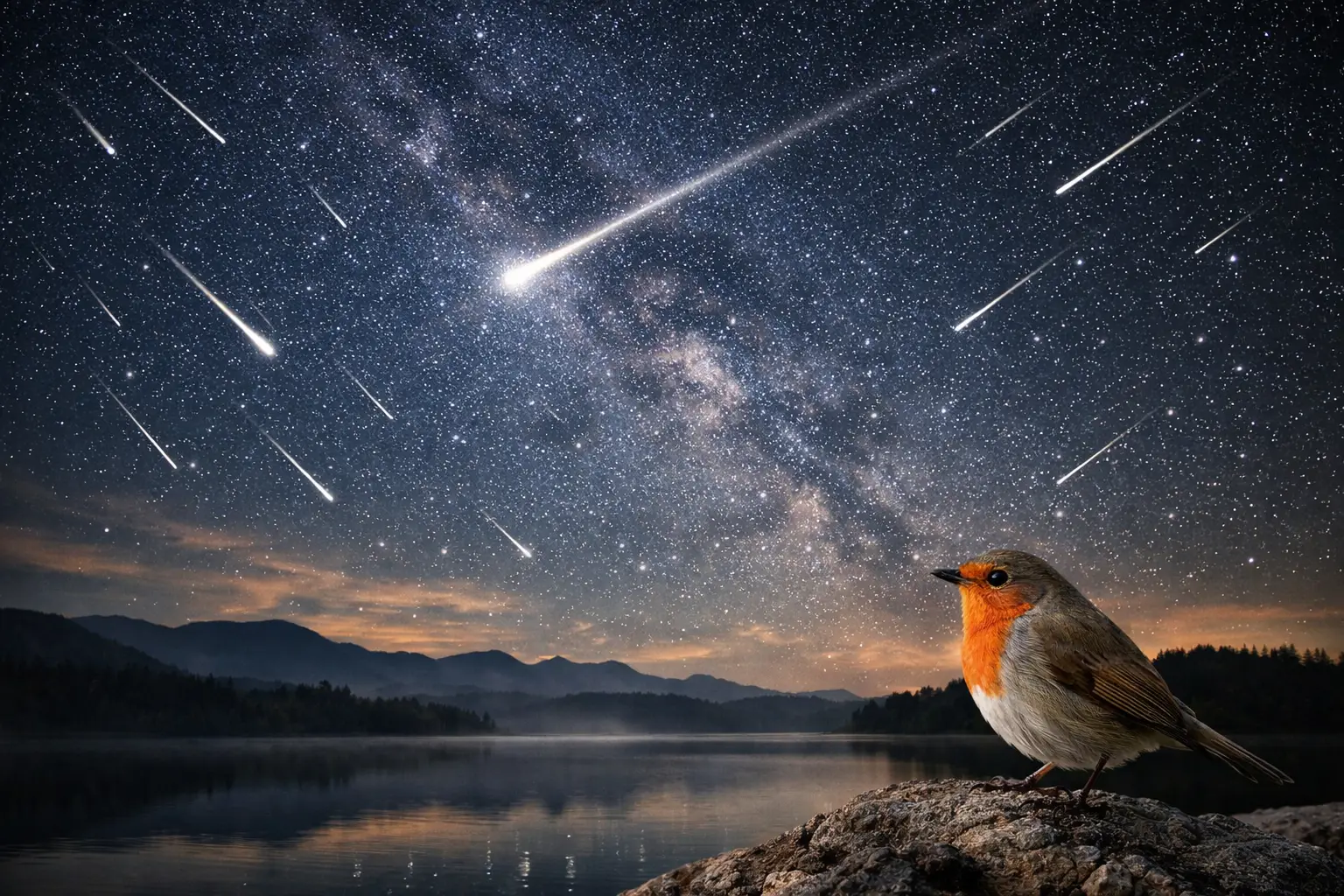
The meteor shower schedule 2026 offers several strong reasons to look up, but one date stands apart for U.S. skywatchers: the Perseids are expected to peak close to the August new moon. That combination can turn an ordinary late-summer night into a memorable viewing event, provided clouds, local light pollution, and patience cooperate.
Meteor showers do not require a telescope, a paid ticket, or expert astronomy knowledge. They do require realistic expectations. Published hourly rates assume a very dark sky with the shower radiant high overhead, conditions few people have for an entire night. From a backyard or local park, seeing a handful of meteors can still be a successful outing.
Meteor shower schedule 2026 at a glance
The dates below identify the overnight period around each shower's expected peak for viewers in the United States. Peak timing can shift slightly by time zone, and the Moon's position matters as much as the calendar date. A bright Moon does not erase a shower, but it hides the faintest meteors.
| Meteor shower | Best nights to watch in 2026 | Typical potential under dark skies | Moonlight outlook | |---|---:|---:|---| | Quadrantids | January 3-4 | Up to 40-120 meteors per hour | Poor - near the full Moon | | Lyrids | April 21-22 | About 10-20 per hour | Good - evening crescent Moon | | Eta Aquariids | May 5-6 | About 10-30 per hour | Challenging - bright waning Moon | | Southern Delta Aquariids | July 29-30 | About 15-20 per hour | Poor - near the full Moon | | Perseids | August 11-13 | About 50-100 per hour | Excellent - near the new Moon | | Draconids | October 8-9 | Usually low, occasionally unpredictable | Good - near the new Moon | | Orionids | October 21-22 | About 10-20 per hour | Fair - Moon may affect late-night viewing | | Southern Taurids | November 4-5 | About 5-10 per hour | Good - little moonlight before dawn | | Northern Taurids | November 11-12 | About 5-10 per hour | Good - early waxing Moon | | Leonids | November 16-18 | About 10-15 per hour | Fair - first-quarter Moon | | Geminids | December 13-14 | About 50-120 per hour | Very good - a young evening Moon | | Ursids | December 21-22 | About 5-10 per hour | Good - Moon sets earlier in the night |
Rates are estimates, not a promise. The meteor count from a city balcony may be dramatically lower than the count from a dark rural overlook. Conversely, a patient observer under clear skies can see a bright fireball even during a modest shower.
The best dates on the 2026 meteor shower calendar
Perseids: August 11-13
The Perseids are the major event to circle in 2026. Their peak falls around August 12, close to the new Moon, leaving skies dark for much of the night. The shower is also popular because the weather is generally warmer across much of the country and the meteors tend to be bright, fast, and plentiful.
Begin watching after 10 p.m., then stay out through the pre-dawn hours if possible. The radiant rises in the northeast, but do not stare at it. Meteors can appear anywhere in the sky, and many of the longest trails will be seen some distance away from the radiant.
Geminids: December 13-14
For pure meteor potential, the Geminids often rival or exceed the Perseids. In 2026, the Moon should be only a slim evening presence around the peak, leaving much of the night darker. The trade-off is December weather. Clear, dry air can make for excellent transparency, but cold temperatures can cut a viewing session short fast.
The Geminids are unusually reliable and often produce slower, bright meteors in multiple colors. They are one of the best choices for viewers who can reach a dark site and dress for a long winter night.
Lyrids: April 21-22
The Lyrids offer the first widely watched spring shower. Their typical rates are lower than the Perseids or Geminids, but 2026 brings a favorable Moon setup, with only a young crescent visible early in the evening. After midnight, the sky should be darker and the shower's radiant will be better placed.
Lyrids occasionally produce surprise bursts, although those are impossible to schedule with confidence. Treat this as a worthwhile spring skywatch rather than a guaranteed high-count event.
Orionids: October 21-22
The Orionids are linked to debris from Halley's Comet and are known for swift meteors that can leave persistent trails. In 2026, moonlight may interfere with part of the night, so the most useful strategy is to watch after the Moon has moved lower or set. The predawn period is usually the stronger window.
The shower is dependable enough to merit an early alarm, especially for observers away from urban lighting. Its speed can make even a moderate display feel active.
Good shows with a catch
The Quadrantids can be among the year's strongest showers, but their 2026 peak arrives near a full Moon. Their peak is also brief, often lasting only a few hours. Dedicated observers may still catch brighter meteors by finding a location where a building, hill, or tree line blocks the Moon, but this is not the easiest event for casual viewing.
The Eta Aquariids and Southern Delta Aquariids face a similar moonlight problem in 2026. Both are better suited to southern U.S. observers because their radiants rise higher there. The Eta Aquariids are especially active before dawn and can reward early risers, even when lunar glare reduces the total count.
The Taurids deserve attention for a different reason. They are not prolific, but they are associated with occasional bright fireballs. Watch the Southern Taurids in early November and the Northern Taurids about a week later. Think of these as relaxed, low-pressure observing nights rather than a meteor-count challenge.
The Draconids are the wild card. Most years they are quiet, but this shower has produced dramatic outbursts in the past when Earth encountered a denser trail of comet debris. The 2026 new Moon timing is favorable if activity develops, making October 8-9 a date worth monitoring in astronomy news updates.
How to get more from a meteor shower night
Choose darkness over convenience when you can. A state park, open beach, campground, or rural field can reveal far more meteors than a brightly lit neighborhood. Before heading out, check site rules, closing times, weather, and whether parking is available after dark.
Arrive 30 minutes before your intended watch time so your eyes can adjust. Put away white phone screens, or use a red-light setting if you need to check a map or weather radar. A reclining chair is more useful than binoculars because meteors move quickly and can streak across a wide section of sky.
Face the darkest open part of the sky, not necessarily north, south, east, or west. Keep your gaze about halfway up from the horizon, where you have a broad field of view without neck strain. Give each session at least an hour. Meteor activity is naturally uneven, with quiet stretches followed by several meteors in quick succession.
For families, the Perseids and Geminids are the easiest headline events, but younger viewers may enjoy a shorter evening watch before bedtime. Bring layers, water, insect repellent in summer, and a blanket or sleeping bag. If clouds arrive, consider it a weather delay rather than a failed plan: meteor showers recur annually, and the night sky always offers another reason to step outside.
A useful final rule for 2026 is simple: schedule the date, but follow the sky. Clear conditions, a dark horizon, and an unhurried hour outdoors can matter more than chasing the highest forecast number.